
REVIEW · BORDEAUX
Workshop Bordeaux wine tasting: 4 reds & charcuterie pairing
Bordeaux can feel like a wine puzzle, with its famous banks, estates, grape blends, and grand names. This one-hour class makes the subject manageable through four red wines, one mystery glass, and charcuterie pairings. You learn by tasting, not by sitting through a long lecture.
I like the small size, capped at six people, and the friendly teaching style of Cécilia and Mathilde, both trained at the Université du Vin. I also like the useful contrast between Left Bank Cabernet Sauvignon and Right Bank Merlot, plus the chance to taste a mature wine. The main drawback is the short running time: one hour gives you a clear introduction, not a full study of Bordeaux.
Key points to know before booking
- Four Bordeaux reds plus a mystery glass: The selection shows different grapes, blends, estates, and stages of maturity.
- A lesson built around comparison: You explore Left Bank and Right Bank styles rather than tasting unrelated bottles.
- Charcuterie with every tasting: Food helps you understand how texture, salt, fat, and wine work together.
- Aroma game included: You get a practical way to identify scents without needing a trained palate.
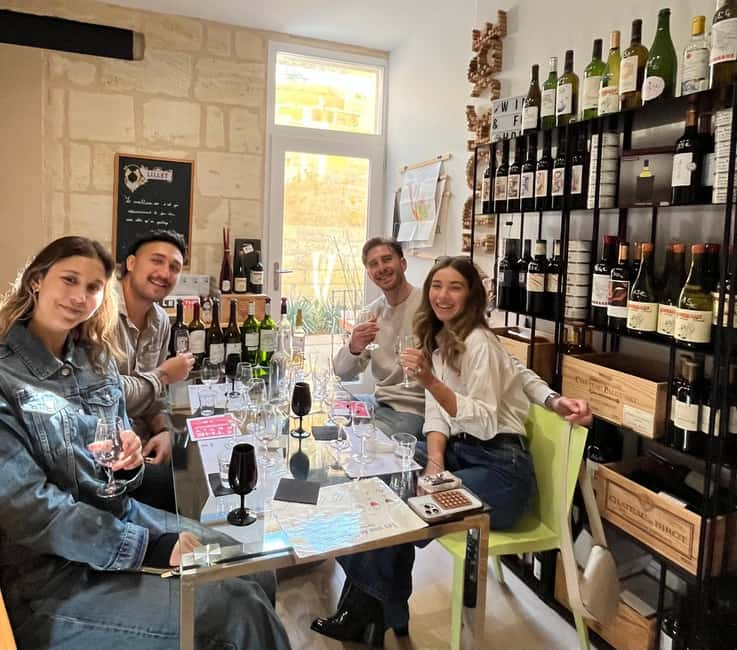
- Small group near tram A: The tasting room is 100 meters from the Stalingrad stop at 25 Avenue Thiers.
- A booklet to take home: You leave with notes on Bordeaux wines and a basic tasting method.
Why this short Bordeaux class works
The clever part of this experience is its scale. Bordeaux is too large and varied to explain well in an hour through a list of vineyard names. Instead, the class uses a few glasses to show how grape choice, place, blending, winemaking, and age affect what you taste.
You begin with the basics of tasting. That means looking at the wine, smelling it, tasting it, and thinking about its texture and finish. The aroma game keeps this from becoming stiff or overly formal. It gives you a way to talk about wine even if your nose does not immediately detect every scent in the glass.
I appreciate this approach because it helps you form your own impressions. You do not need to arrive knowing the difference between Médoc and Saint-Émilion. The class gives you a framework first, then lets the wines provide the examples.
The session is led in English, French, or Spanish. Cécilia and Mathilde are trained wine educators, and the teaching style is designed to feel conversational. That matters in a small room. You can ask a question, admit that a wine does not suit you, or compare your thoughts with the rest of the group without feeling out of place.
More Wine Tours in Bordeaux
- Bordeaux: Cité du Vin Entry Ticket and Wine Tasting
★ 4.6 · 3,885 reviews - Bordeaux: River Garonne Cruise with Glass of Wine and Canelé
★ 4.5 · 3,630 reviews - From Bordeaux: Afternoon Saint-Emilion Wine Tasting & snack
★ 4.8 · 1,581 reviews
Four glasses that explain Bordeaux
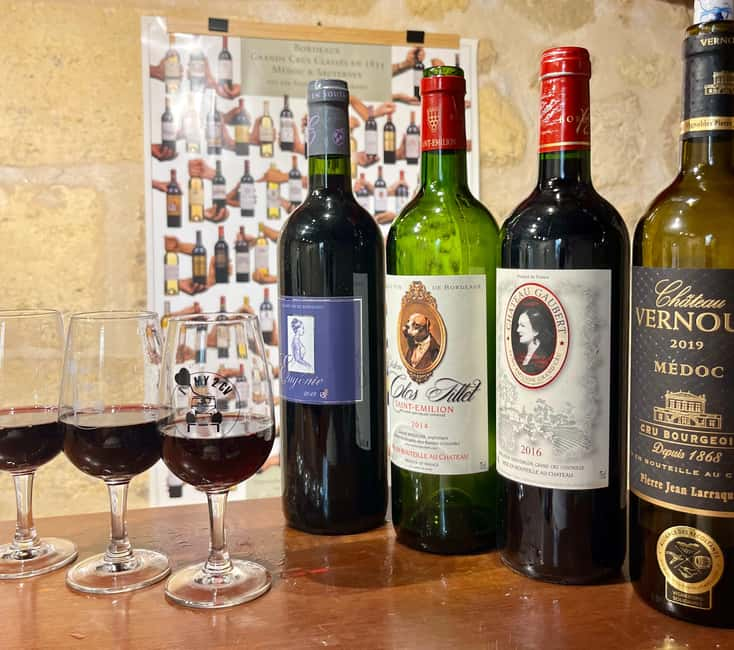
The tasting focuses on four red Bordeaux wines, each selected to show a different side of the region. You may encounter single-varietal examples that make the character of Merlot or Cabernet Sauvignon easier to understand. You may also taste blends from family-run organic estates and more prestigious Grand Cru examples.
That range gives the class a clear purpose. Bordeaux is best known for blended wines, but tasting a single grape first can help you understand what later goes into the blend. Cabernet Sauvignon can bring structure, darker fruit, and a firmer frame. Merlot often feels rounder and more fruit-led. The class connects those broad descriptions to what is in your glass.
You also look at the difference between the Left Bank and Right Bank. The Left Bank is presented through the more structured, age-worthy Cabernet Sauvignon style associated with places such as the Médoc. The Right Bank is linked with the smoother, fruit-forward character often associated with Merlot and Saint-Émilion.
These are useful guideposts, not rigid rules. Bordeaux wines vary by vintage, producer, soil, and blend. A good class should help you spot patterns without pretending every bottle from one side tastes the same. This tasting appears to use the regional contrast as a starting point, then adds examples that show how much variety exists within Bordeaux.
One of the four wines is mature. That is especially valuable for first-time Bordeaux drinkers, since many people only taste young bottles. An older wine can show softer edges and different aromas, giving you a glimpse of why people cellar Bordeaux in the first place.
The mystery glass and the aroma game
The mystery glass adds a little play to the lesson. You taste without knowing exactly what is being poured, then use the clues from aroma, flavor, texture, and structure to think it through.
You should not treat this as an exam. The point is not to guess perfectly. It is to train yourself to notice more. That small shift can change how you buy wine later. Instead of asking only if you like a bottle, you begin to ask what makes it appealing: fruit, acidity, tannin, oak, freshness, weight, or age.
The aroma game works in the same way. Wine descriptions can sound grand and confusing, especially when someone starts listing fruit, flowers, herbs, spice, or earthy notes. A guided game gives you a simple way to connect a smell with a word. You may not identify every aroma, but you will have a better method for describing what you notice.
This playful format is one reason the experience suits beginners. It also gives experienced wine drinkers something to do beyond simply sipping and nodding. The group setting keeps the mood relaxed, and the six-person limit leaves room for conversation.
Charcuterie makes the lesson practical
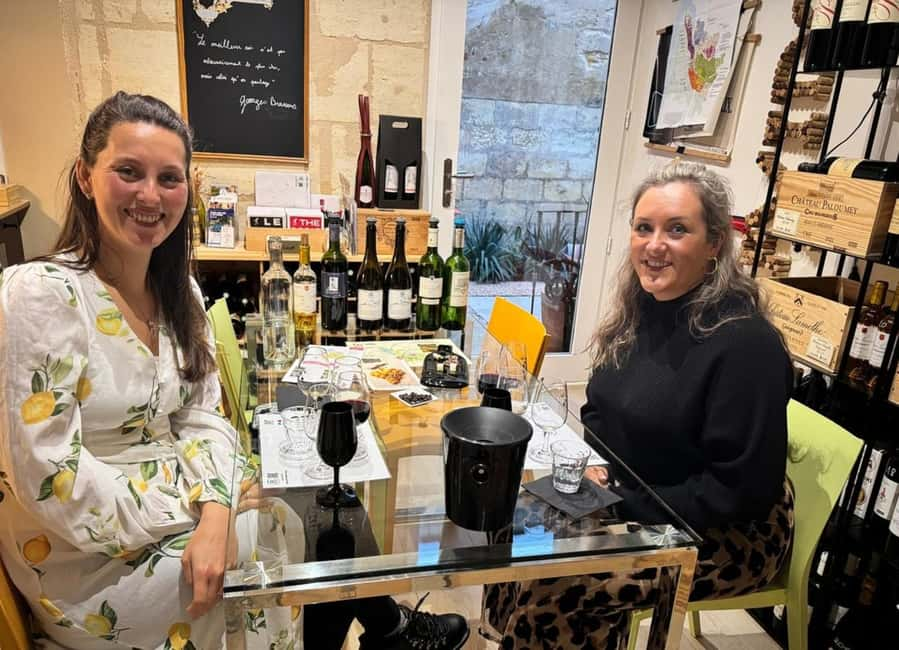
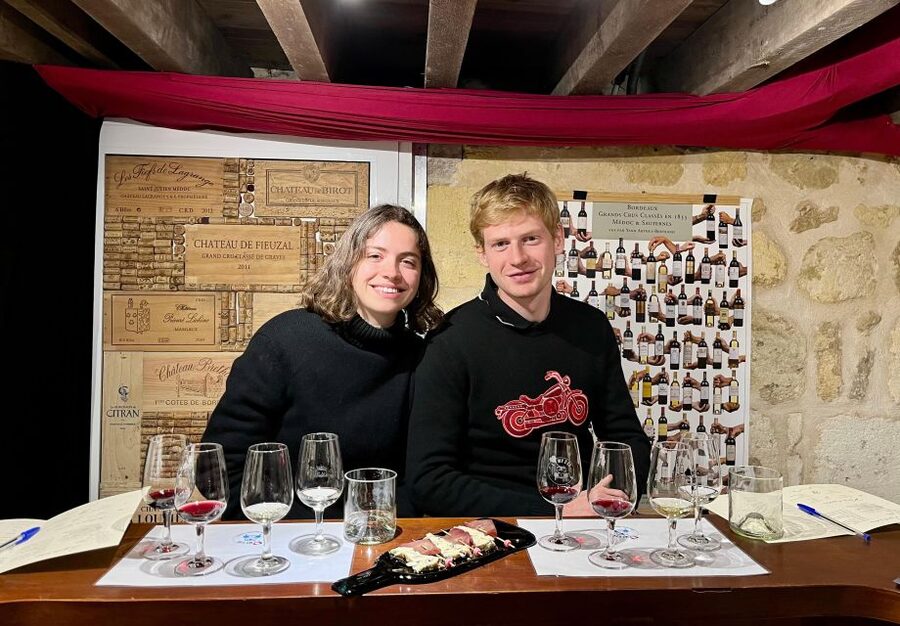
The food pairing is not just a snack placed beside the wine. Each glass is paired with artisanal charcuterie selected to work with its flavors and texture.
That lets you test the basic rules of pairing in real time. Salt and fat can change the way tannin feels. A firm, structured red may seem different beside food than it does on its own. A smoother, fruitier wine may feel especially easy to drink with charcuterie.
I like this part because it takes wine out of the abstract. You are not only learning appellations and grape names. You are seeing how the wine behaves at the table, which is where most people actually drink it.
The amount and exact selection of charcuterie can vary, so I would not book this expecting a full meal. It is a food pairing designed to support the tasting. If you want dinner afterward, plan something separately.
More food-paired tastings in Bordeaux:
- Tasting of 6 Bordeaux wines and pairing charcuterie & cheese
★ 5.0 · 199 reviews - Guided Bordeaux Wine Tasting Class with 6 Wines and pairings
★ 4.9 · 181 reviews - Introduction to Bordeaux wines paired with cheeses & charcuterie
★ 5.0 · 175 reviews - Bordeaux Wines Masterclass paired with cheeses & charcuterie
★ 5.0 · 110 reviews
The setting changes with the season
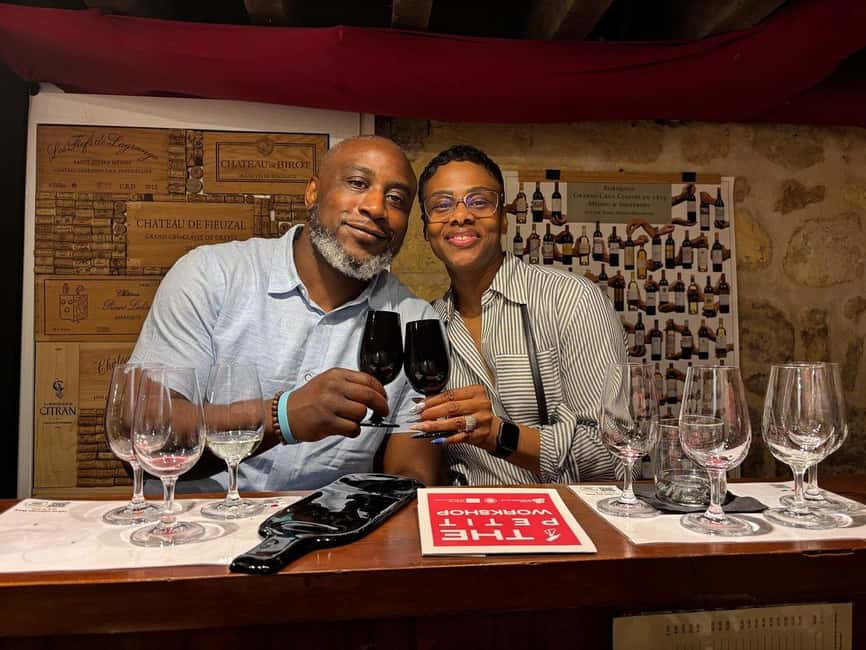
The address is 25 Avenue Thiers in Bordeaux, only 100 meters from tram A at Stalingrad. That makes the experience easy to add to a day in the city without arranging a vineyard transfer.
The tasting room is behind a building rather than directly on a prominent storefront. Look for the Guy Hoquet panel, then the gray door beside it. The bell is marked I Love Tasting. This is a small but useful detail, since the entrance may not be obvious if you are arriving for the first time.
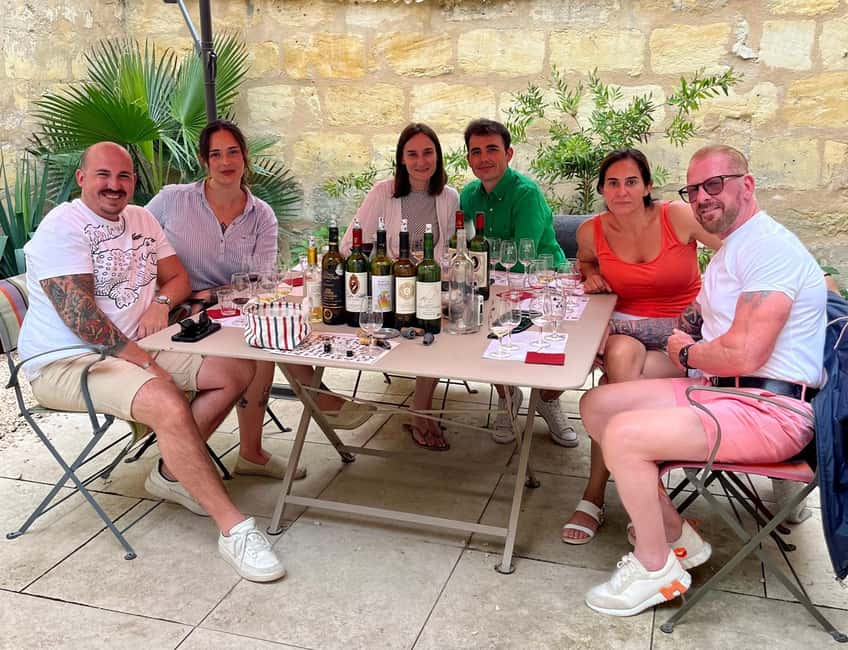
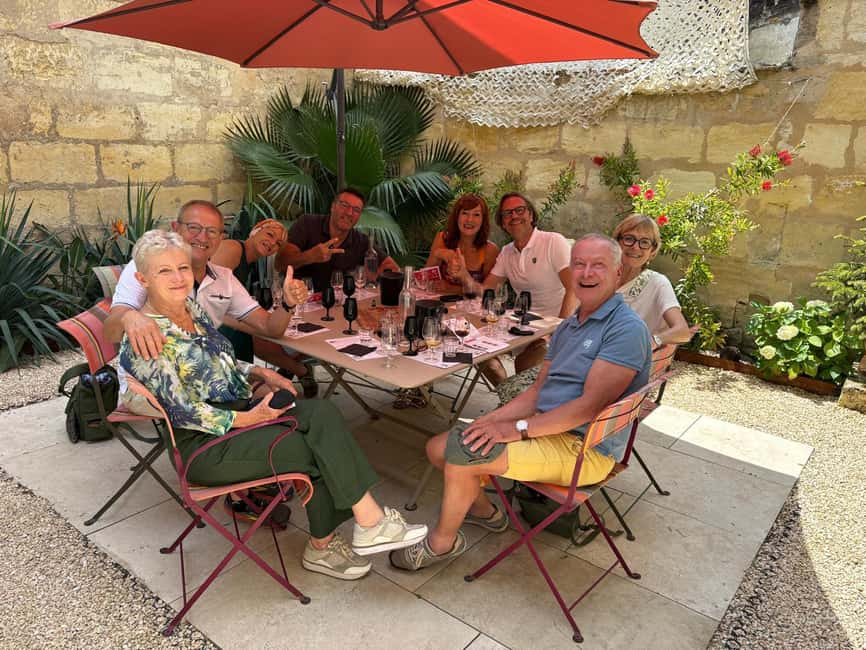
Depending on the season, the class takes place in a stone-built tasting room, a private courtyard, or an underground cellar. The cellar setting has a clear atmospheric appeal, while the courtyard may feel more open in suitable weather. The exact room is not guaranteed, so think of the changing setting as part of the experience rather than a feature you can request.
There is no hotel pickup or drop-off. You make your own way to the address, but the nearby tram stop keeps that simple. The activity is not suitable for people with mobility impairments, so check the access needs carefully before booking.
Is one hour enough for Bordeaux?
One hour is enough to learn a useful tasting method and understand several major differences. It is not enough to cover Bordeaux’s full classification system, detailed vintage variation, or a large number of appellations.
That limit can be a strength. If you have just arrived in Bordeaux, a compact lesson gives you a foundation before visiting other wine areas. You may find it easier to follow a Médoc or Saint-Émilion excursion afterward because you already understand the broad regional split and the role of Cabernet Sauvignon and Merlot.
The class also works well late in a city itinerary. You do not need to give up half a day for transport, and the tasting is short enough to fit between other plans. The tradeoff is that the session moves quickly. If you ask many questions or want a very detailed discussion of every bottle, the hour may feel brief.
For that reason, I would treat this as an introduction with real substance, not as a replacement for a full-day wine trip. The booklet helps extend the lesson after you leave.
What the booklet adds after the tasting
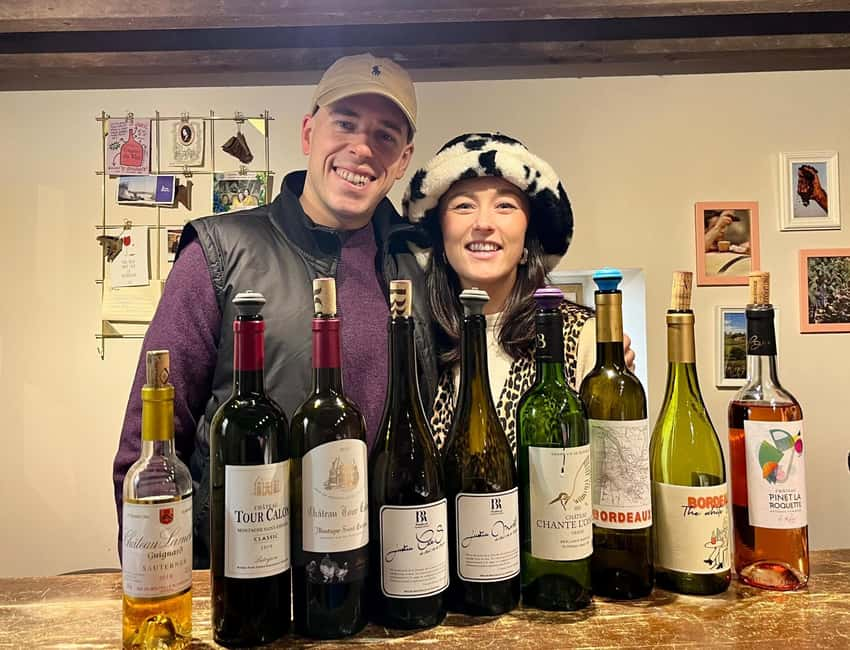
You receive a personal booklet covering Bordeaux wines and the tasting method. This is more useful than a generic souvenir because it gives you something to consult when you open a bottle later.
Use it to record what you tasted, what you liked, and how each wine changed with food. The booklet can also help you remember the difference between aroma and flavor, and between structure and body. Those small distinctions become easier with practice.
The guide can also offer suggestions for the rest of your Bordeaux visit. Several people have found the advice useful for choosing food and wine afterward. If you want personal recommendations, ask during the session rather than rushing out when the hour ends.
Wines tasted during the class are available to buy on site. That is convenient if you find a bottle you want to share at home, though you should compare prices and remember that availability can change.
The $46 price and what you receive
At $46 per person, the cost is reasonable for a private-feeling, six-person wine lesson in Bordeaux. You are paying for four wine pours, a mystery glass, charcuterie, an aroma activity, guided instruction, and the take-home booklet.
The value depends on what you want. If your priority is drinking a large number of wines, this will not be the best match. The pours are part of a structured lesson, not a free-flowing bar tasting.
If you want to understand what is in your glass, the price makes more sense. You get a focused comparison of Bordeaux styles without spending a full day traveling to several estates. The opportunity to taste an older wine and compare food pairings adds value that a basic counter tasting may not provide.
The small group is also important. With a maximum of six participants, the class should feel more personal than a large commercial tasting. It also means the experience can work well for a couple, a family group, or solo visitors who want conversation without joining a bus-sized crowd.
You can cancel up to 24 hours before the activity for a full refund, and you can reserve now and pay later. Those policies are useful if your Bordeaux schedule is still shifting.
Who should book this tasting?
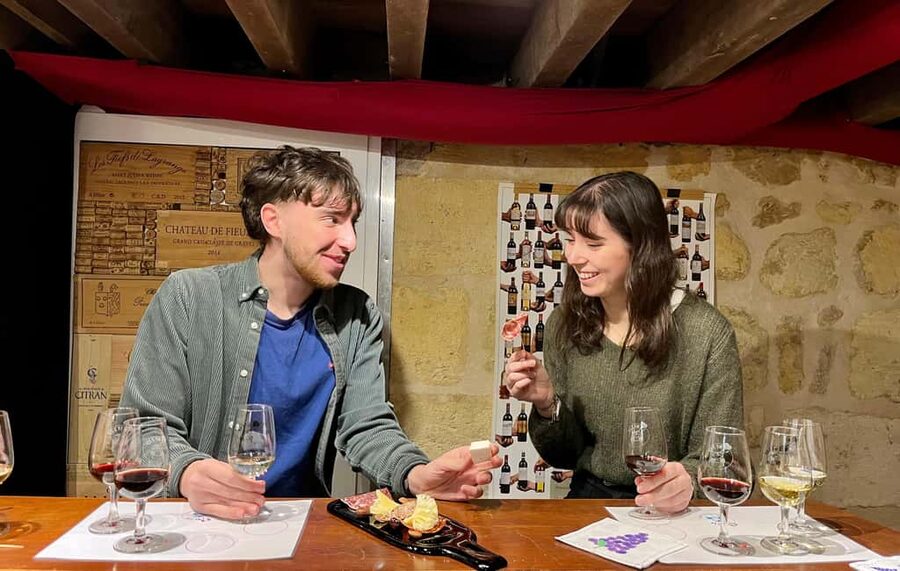
I would recommend it to first-time Bordeaux visitors who want a clear starting point. You get the major grape and regional ideas without needing prior wine knowledge.
It also suits people who have already planned trips to Médoc and Saint-Émilion. A city tasting gives you a vocabulary for those visits, and the side-by-side format may help you notice differences more clearly at the estates.
Couples and small groups should find the setting comfortable, while solo visitors can expect a natural chance to talk with the guide and other participants. The relaxed teaching style is a strong fit if formal wine classes make you nervous.
If someone in your party prefers white wine, tell the organizers in advance. A white Bordeaux tasting can be arranged. That is worth noting, since the main class is built around red wines.
Who may want a different experience?
Skip this if you want a full vineyard day, estate tours, or long time outdoors. The activity takes place in or around the tasting room and lasts one hour.
It may also disappoint serious Bordeaux collectors who want a technical discussion of specific vintages, classifications, or rare bottles. The class covers important foundations, but it is designed to be accessible rather than highly specialized.
The mobility limitation is another practical concern. The setting may involve a cellar or older building, and the activity is not suitable for people with mobility impairments.
Finally, do not count on the charcuterie to replace lunch or dinner. It supports the pairing lesson. Plan another meal if you need something substantial.
Should you book it?
Book this class if you want Bordeaux to make more sense by the end of your first day. The combination of four contrasting reds, one mature wine, charcuterie, and a hands-on aroma game gives you plenty to work with in a short time.
I especially like it for visitors who want a friendly introduction before spending money on bottles or booking a winery excursion. Cécilia and Mathilde bring a personal teaching style, and the six-person limit keeps the session from feeling like a production line.
Choose another activity if you want extensive estate visits or a long tasting menu. For a compact, useful lesson close to central Bordeaux, though, this is a smart buy at $46.
FAQ
How long does the Bordeaux wine tasting last?
The tasting lasts one hour.
Where does the tasting take place?
It takes place at 25 Avenue Thiers, 33100 Bordeaux. The location is 100 meters from tram A at the Stalingrad stop.
How do I find the tasting room?
The room is behind a building. Look for the Guy Hoquet panel, then use the gray door beside it. The bell is marked I Love Tasting.
How many people can join the tasting?
The activity is limited to six participants.
Which languages are available?
The live guide can lead the experience in English, French, or Spanish.
How many wines will I taste?
You will taste four Bordeaux red wines, along with one mystery glass.
Is food included?
Yes. The wines are paired with artisanal charcuterie.
Is a wine guide or booklet included?
Yes. You receive a personal tasting booklet, and the session includes an aroma game and instruction in wine tasting.
Can I taste white Bordeaux wines instead?
If someone in your group prefers white wine, a white Bordeaux tasting may be arranged. Contact the organizers in advance.
More Food & Drink in Bordeaux
- Bordeaux Wine and Trade Museum Admission Ticket with Wine Tasting
★ 4.5 · 599 reviews - Bordeaux: Vineyards Wine Tasting Half-Day Trip
★ 4.2 · 470 reviews - From Bordeaux: Saint-Émilion Half-Day Tour with Wine Tasting
★ 4.9 · 389 reviews - From Bordeaux: Saint-Emilion Guided Wine Tasting Tour
★ 4.8 · 319 reviews
More Wine Tastings in Bordeaux
- Medoc or Saint Emilion Wine Tasting and Chateau from Bordeaux
★ 5.0 · 1,415 reviews - Saint Emilion Day Trip with Sightseeing Tour & Wine Tastings from Bordeaux
★ 5.0 · 1,120 reviews - Saint Emilion Half-Day Trip with Wine Tasting & Winery Visit from Bordeaux
★ 4.5 · 1,034 reviews - From Bordeaux: Half-Day Saint-Émilion Tour and Wine Tasting
★ 4.7 · 699 reviews
Just added around Bordeaux
- Bordeaux Wines Masterclass paired with cheeses & charcuterie★ 5.0 · 110 reviews
- Bordeaux Médoc Region Private Wine Lovers Tour with Chateau Visits & Tastings★ 5.0 · 40 reviews
- Bordeaux Food and Wine Tour : Authentic Artisanal Flavors★ 5.0 · 62 reviews
- Saint-Emilion Winery Morning Tour with Local Guide★ 5.0 · 67 reviews
- Médoc luxury wine tour aboard a Citroën DS Limousine Convertible★ 5.0 · 41 reviews
- Saint Emilion Morning Wine Tour – Winery & Tastings from Bordeaux★ 5.0 · 186 reviews
- Introduction to Bordeaux wines paired with cheeses & charcuterie★ 5.0 · 175 reviews
- Free Walking Bordeaux Tour ENG + 1 glass of wine (Tip based)★ 5.0 · 90 reviews
Wine Tours in Bordeaux, compared.
River Garonne Cruise with Glass of Wine and Canelé
Read our review →
Afternoon Saint-Emilion Wine Tasting & snack
Read our review →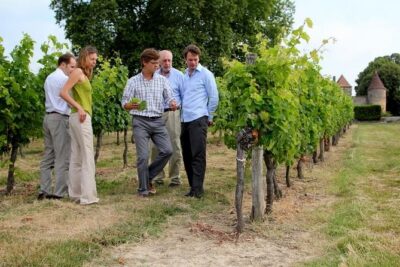
Medoc or Saint Emilion Wine Tasting and Chateau from Bordeaux
Read our review →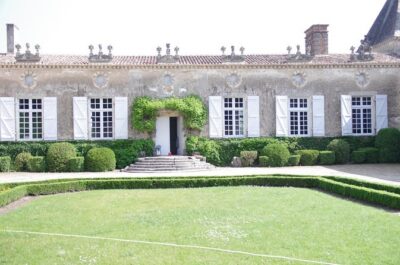
Saint Emilion Day Trip with Sightseeing Tour & Wine Tastings from Bordeaux
Read our review →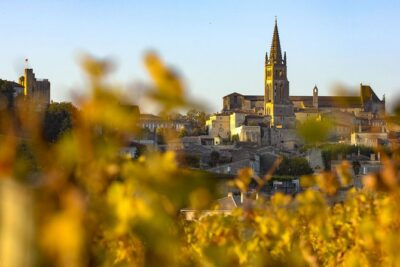
Saint Emilion Half-Day Trip with Wine Tasting & Winery Visit from Bordeaux
Read our review →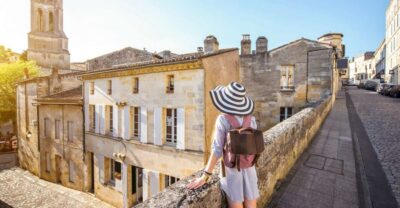
Browse the lists this tour appears in