
REVIEW · BORDEAUX
Tasting of 6 Bordeaux wines and pairing charcuterie & cheese
Bordeaux wine can seem like a code until someone explains the labels, riverbanks, grapes, soils, and blends in plain English. This 75-minute tasting turns that code into something you can use when choosing a bottle at a shop or restaurant.
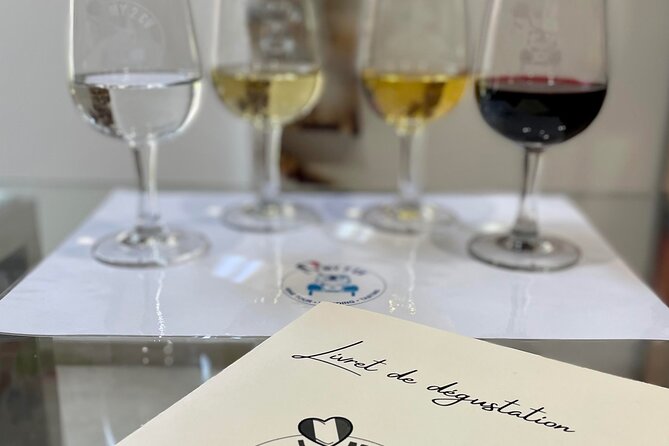
I like the small group limit of six, which gives Mathilde or Cécilia room to answer questions. I also like the range: dry whites from both banks, red blends, a mystery wine, and a sweet wine, with aroma exercises and a tasting booklet to take home.
The main point to watch is the food pairing. Charcuterie and cheese are included, but the portions are tasting-size, and the food may arrive as a small selection rather than a separate pairing for every wine. If your schedule is tight, check the start time carefully, especially if you are coming from a cruise port.
Key points to know before booking
- Six Bordeaux wines: Expect a guided lineup including dry whites, red blends, a mystery wine, and a soft or sweet wine. The exact selection can vary.
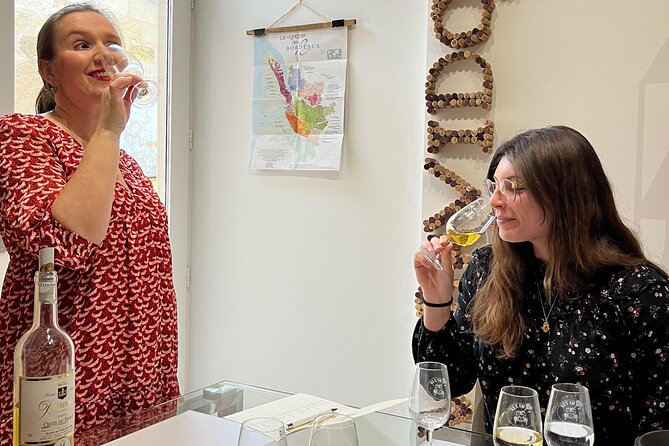
- Left Bank versus Right Bank: Soil, grape varieties, and blending are used to explain why Bordeaux wines taste different from one another.
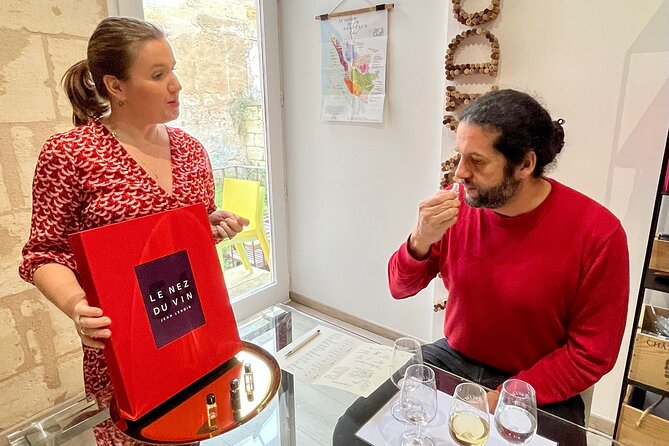
- Aroma training: You will smell sample aromas and practice identifying what appears in the glass.
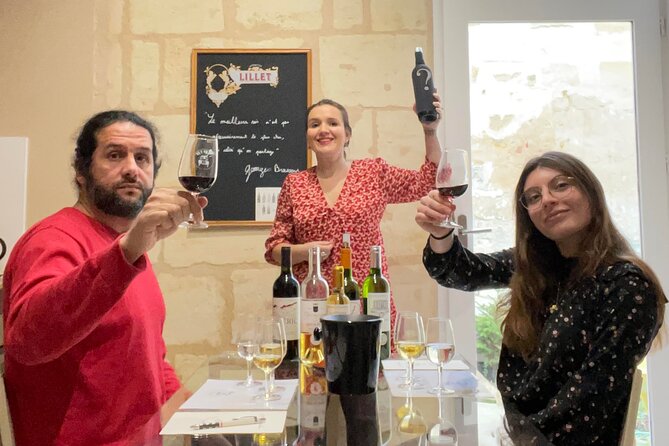
- Small, personal setting: The group is limited to six, with the tasting held in a courtyard, cellar, or furnished room depending on the season.
- Charcuterie and cheese included: Food supports the wine lesson, but portions are modest rather than a full meal.
- English-language instruction: Mathilde and Cécilia lead the English sessions, with other hosts appearing on some dates.
Why this Bordeaux tasting is more useful than a simple pour
A standard wine tasting can leave you with a few pleasant flavors and little idea what to do with them later. This one aims to give you a system. You learn how Bordeaux is divided, how its wines are blended, how to read French labels, and how soil and grape choice affect the drink in your glass.
That matters in Bordeaux because the bottle often tells you more about its place than its grape. A beginner may look for Merlot or Cabernet Sauvignon on the label, but Bordeaux bottles commonly emphasize the estate, appellation, or classification instead. The session helps connect those names with style.
I especially like the use of both family estates and Grands Crus Classés, including organically farmed wines. That mix gives you a wider view than a tasting built only around expensive famous labels. You get a sense of Bordeaux as both a grand wine region and a working place with smaller producers.
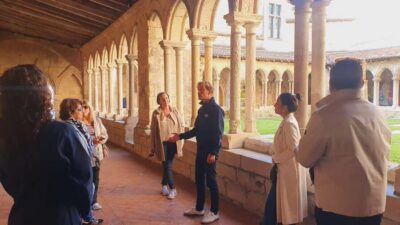
The setting is intentionally intimate. Depending on the season, you may sit in a private courtyard, cellar, or furnished tasting room. None of these spaces is presented as a vineyard visit, so you should book this for the wine lesson, not for sweeping countryside views.
More Wine Tours in Bordeaux
- Bordeaux: Cité du Vin Entry Ticket and Wine Tasting
★ 4.6 · 3,885 reviews - Bordeaux: River Garonne Cruise with Glass of Wine and Canelé
★ 4.5 · 3,630 reviews - From Bordeaux: Afternoon Saint-Emilion Wine Tasting & snack
★ 4.8 · 1,581 reviews
The six-glass lineup and the Bordeaux puzzle
The tasting is described as six wines, though the category list appears to add up to seven if every item is served separately: one mystery wine, two dry whites, three reds, and one soft wine. In practice, the lineup can vary, and examples from different sessions include white, red, rosé, and Sauternes-style sweet wine.
You should expect a broad introduction rather than a deep look at one château. The tasting may begin with a mystery glass, which gives you a chance to use your senses before being told what you are drinking. That is a clever way to prevent the label from doing all the thinking for you.
The dry whites are presented from the Left Bank and Right Bank. This comparison is useful because it shows that Bordeaux is not one single flavor. The same region can produce crisp, dry whites and powerful reds, and the riverbank discussion gives you a simple way to organize the differences.
The reds focus on blends. Bordeaux is famous for combining several grape varieties instead of relying on one alone, so you learn why the final wine can have more than one personality. One red may feel fuller and more structured, while another may seem softer or fruitier.
A sweet wine closes or rounds out the range. It is an important inclusion because many first-time visitors think of Bordeaux only as red wine. A sweet glass changes the pace and gives you a clear example of how dessert wines fit into the region’s traditions.
Left Bank, Right Bank, and what you can actually taste
The riverbank lesson is one of the strongest reasons to book this session. It gives you a practical way to understand a subject that can otherwise feel like a list of French place names.
Mathilde and Cécilia explain how terroir, the combination of soil, place, climate, and growing conditions, affects the grapes. They also discuss the grape varieties used in Bordeaux blends and why producers combine them. You are not expected to memorize every appellation. The goal is to notice patterns in the glass.
That makes the tasting useful for people who already drink wine, too. You may have a clearer idea of why you prefer a bold red, a fruitier style, or a dry white after comparing the samples side by side. One session even used a biologist as the guide, adding a science-based explanation of aromas and winemaking.
The label lesson is practical. French wine labels can seem sparse compared with bottles that print the grape prominently on the front. By the end, you should have a better sense of how to read the producer, appellation, and classification information.
Do not expect a formal wine qualification. This is a friendly introduction, taught by hosts trained at the University of Wine. You get useful vocabulary and tasting habits without having to sit through a lecture.
Smelling, tasting, and learning to trust your senses
The aroma exercise adds more value than simply pouring six glasses. You smell different aromas and then try to find related notes in the wines. At first, this can feel like a guessing game. That is normal. The point is to sharpen your attention, not to prove that you have a perfect nose.
The guides keep the tone relaxed. Cécilia is known for explaining wine clearly and with humor, while Mathilde is described as warm, easy to talk with, and good at adapting the lesson to the group’s level. Some dates may be led by Ilona or another host, so the exact personality and teaching style can vary.
The tasting booklet is a useful small extra. It lets you record what you liked and continue practicing at home. If you are buying a bottle during your stay, the guide can help you connect your preferences with a choice, and the wines tasted are available for sale.
That buying advice may be especially valuable if you are not visiting a château. You can leave with a bottle for about the cost of a casual restaurant wine, depending on your selection. One participant bought a bottle for €15 after receiving guidance, which shows how this can help you shop with more confidence.
More food-paired tastings in Bordeaux:
- Guided Bordeaux Wine Tasting Class with 6 Wines and pairings
★ 4.9 · 181 reviews - Introduction to Bordeaux wines paired with cheeses & charcuterie
★ 5.0 · 175 reviews - Bordeaux Wines Masterclass paired with cheeses & charcuterie
★ 5.0 · 110 reviews - Workshop Bordeaux wine tasting: 4 reds & charcuterie pairing
★ 5.0 · 72 reviews
Charcuterie and cheese: a pairing lesson, not lunch
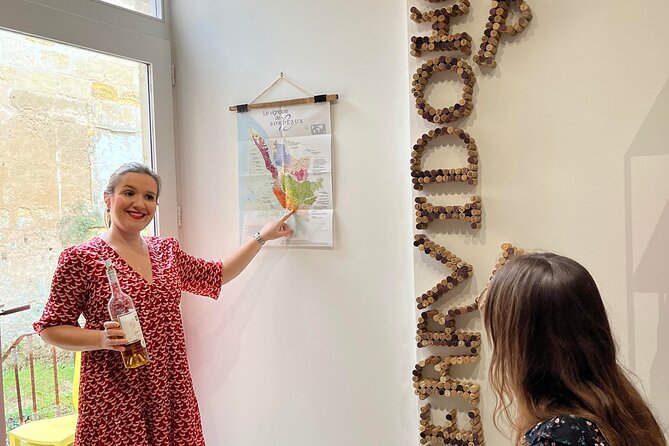
Food is included, but you should set your expectations correctly. The charcuterie and cheese are there to show how food changes the wine, not to provide a full meal.
The portions are generally small, bite-sized samples. Some sessions include two cheeses and two meats, and the food may be served together near the end rather than paired individually with each glass. If you imagined a full board with a carefully matched bite for every wine, you may find this part lighter than expected.
Still, the idea is sound. Salt, fat, creaminess, and sweetness can change how wine feels in your mouth. A small bite is enough to demonstrate that a wine can taste sharper, softer, fruitier, or more balanced alongside food.
If you need lunch, reserve the optional picnic with local products separately. It is not included in the $54.44 price. Vegetarians should state their needs clearly when booking and confirm them again, since one session did not properly honor a vegetarian request.
A 75-minute schedule that needs careful planning
The activity lasts about one hour and 15 minutes. That is enough time for a focused introduction, six tasting pours, aroma work, food pairing, and questions, but it is not generous if the session starts late or must be delivered in two languages.
One mixed French and English group ended abruptly because the presentation had to serve both languages. If you are booking on a busy day, ask whether the scheduled session is English-only. The listed language is English, but the pace can still be affected by the group’s makeup.
Cruise passengers need extra care with the clock. The address is 25 Av. Thiers in Bordeaux, and the activity ends at the same meeting point. A long train ride from the port and an early last train can turn a relaxed tasting into a rushed one. An 11:30 a.m. option is available and may work better than a later start for a ship schedule.
Arrive on time. A host may try to accommodate a late arrival, but a shortened tasting means less time for questions and less room to enjoy each wine. The operator has sometimes welcomed people early when transport problems arose, but that should not be treated as a guarantee.
Is $54.44 good value?
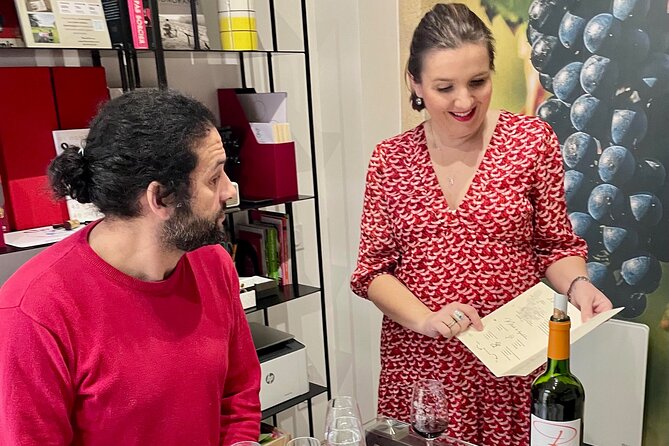
At $54.44 per person, this costs more than a casual glass of wine and a snack, but you are paying for instruction, six tasting pours, food pairing, and a small-group format. For someone who wants to understand Bordeaux rather than simply drink it, the price is fair.
The value improves if you are not visiting vineyards outside the city. A château excursion takes more time and usually involves transport. This tasting gives you a compact regional overview without asking you to spend half a day on the road.
The value is less convincing if you mainly want a generous cheese board or full glasses. The food is modest, and the 75-minute session is structured around teaching. It is also not the best use of money if you already know Bordeaux well and want only a relaxed drinking session.
I see the price as paying for a short wine class with real pours, not for lunch and not for a luxury tasting room. The booklet and bottle advice add practical value after the session ends.
Who will enjoy this most?
I would choose this for a first visit to Bordeaux, especially if French wine labels leave you puzzled. It also suits solo visitors because the small group creates an easy setting for questions and conversation.
Couples and small groups will appreciate the personal format. The maximum of six means you are less likely to disappear into a crowd, and the hosts can adjust explanations to different levels of experience.
It is a good fit for anyone who wants both red and white wine. The specialized tastings for only red or only white may suit repeat visitors, but first-timers should choose the mixed format if available. The broad range gives you a clearer picture of Bordeaux.
I would be cautious if you need a full meal, dislike charcuterie, have strict dietary needs that have not been confirmed, or have a tight transport connection. Service animals are allowed, most people can participate, and the meeting point is near public transportation, but the schedule still deserves attention.
How to get the most from the tasting
Read a little about Bordeaux before you arrive, but do not try to memorize every appellation. Bring one question you want answered, such as how to spot a Right Bank style or how to choose a bottle for dinner.
Use the mystery wine as a test. Smell first, taste slowly, and write down your first impression before the guide explains it. The booklet makes this easier and gives you something useful to refer to later.
Tell the host what you normally like. If you prefer bold reds or fruitier wines, that information can make the Left Bank and Right Bank discussion more meaningful. If you are unsure, taste both styles without trying to pick a winner immediately.
I would also plan a meal afterward rather than treating the pairing as lunch. The charcuterie and cheese are a pleasant support for the wines, but they are not meant to fill you up.
Should you book it?
Book this tasting if you want a clear, friendly introduction to Bordeaux wine in the city, with enough variety to compare whites, reds, blends, and a sweet wine. The strongest parts are the small-group teaching, the Left Bank and Right Bank explanation, and the practical help with aromas and French labels.
Think twice if you expect a large food spread, a vineyard setting, or a long, leisurely evening. Check the start time, confirm dietary needs, and remember that the exact lineup and host may vary.
For most first-time Bordeaux visitors, I would book it, especially near the beginning of a trip. You will have more confidence choosing wine at dinner, shopping for a bottle, and understanding the names on the menu.
FAQ
Where does the Bordeaux wine tasting start?
It starts at 25 Av. Thiers, 33100 Bordeaux, France.
Where does the activity end?
The tasting ends back at the meeting point at 25 Av. Thiers.
How long does the tasting last?
The activity lasts approximately one hour and 15 minutes.
How much does the tasting cost?
The listed price is $54.44 per person.
How many wines are included?
Six glasses of wine are included. The described categories include a mystery wine, dry whites, red wines, and a soft or sweet wine, though the exact selection can vary.
Is food included?
Yes. A food and wine pairing with charcuterie and cheese is included. The portions are tasting-size, not a full lunch.
Is the tasting offered in English?
Yes. English is an offered language, and Mathilde and Cécilia lead the English sessions. Other hosts may lead some dates.
How large is the group?
The activity has a maximum of six travelers.
Can I cancel for a full refund?
Yes. You can cancel at least 24 hours before the local start time for a full refund. Cancellations or changes made less than 24 hours before the start time are not accepted for a refund.
More Cheese in Bordeaux
- Amsterdam: Classic Saloon Boat Cruise with Cheese & Wine
★ 4.6 · 27,035 reviews - Paris: Montmartre Cheese, Wine & Pastry Guided Walking Tour
★ 4.8 · 2,255 reviews - Amsterdam: Evening Candle Light Cruise With Wine & Cheese
★ 4.6 · 1,774 reviews - Amsterdam: Cozy Cheese & Wine Cruise Tasting Experience
★ 4.5 · 1,156 reviews
More Wine and Cheese Tastings in Bordeaux
- Bordeaux: Wine Masterclass with Cheese and Charcuterie Board
★ 4.9 · 184 reviews - Bordeaux Gourmet Experience: Cheese & Wine Tasting
★ 4.6 · 169 reviews - Bordeaux Afternoon Food Tour : Sweets, Wine and Cheese
★ 5.0 · 38 reviews - Blind Tasting: 4 Bordeaux Natural Wine + Cheese experience
★ 4.8 · 35 reviews
Just added around Bordeaux
- Bordeaux Wines Masterclass paired with cheeses & charcuterie★ 5.0 · 110 reviews
- Bordeaux Médoc Region Private Wine Lovers Tour with Chateau Visits & Tastings★ 5.0 · 40 reviews
- Bordeaux Food and Wine Tour : Authentic Artisanal Flavors★ 5.0 · 62 reviews
- Saint-Emilion Winery Morning Tour with Local Guide★ 5.0 · 67 reviews
- Médoc luxury wine tour aboard a Citroën DS Limousine Convertible★ 5.0 · 41 reviews
- Introduction to Bordeaux wines paired with cheeses & charcuterie★ 5.0 · 175 reviews
- Saint Emilion Morning Wine Tour – Winery & Tastings from Bordeaux★ 5.0 · 186 reviews
- Free Walking Bordeaux Tour ENG + 1 glass of wine (Tip based)★ 5.0 · 90 reviews
Wine Tours in Bordeaux, compared.
River Garonne Cruise with Glass of Wine and Canelé
Read our review →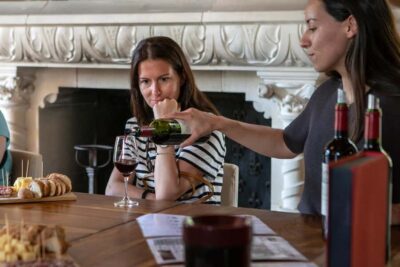
Afternoon Saint-Emilion Wine Tasting & snack
Read our review →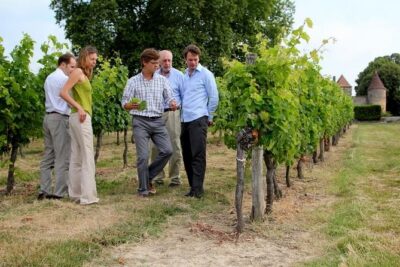
Medoc or Saint Emilion Wine Tasting and Chateau from Bordeaux
Read our review →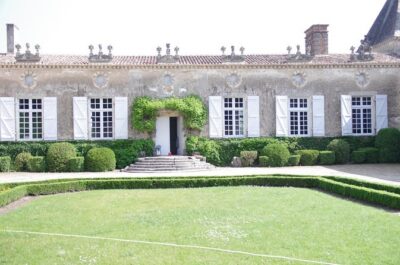
Saint Emilion Day Trip with Sightseeing Tour & Wine Tastings from Bordeaux
Read our review →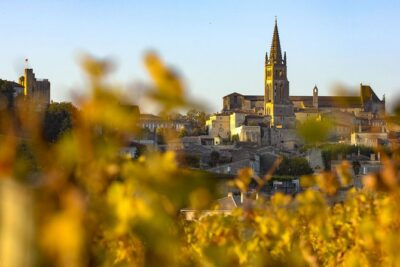
Saint Emilion Half-Day Trip with Wine Tasting & Winery Visit from Bordeaux
Read our review →
Browse the lists this tour appears in