
REVIEW · BORDEAUX
Bordeaux: Introduction to Bordeaux Wines Tasting Workshop
Bordeaux wine can feel like a code at first: left bank, right bank, appellation, château, blend. This one-hour workshop gives you a useful key. You taste one white and two reds, including a Grand Cru, while a guide explains how soil, weather, grape varieties, and blending shape the wine in your glass.
I like the dedicated tasting room near the Grand Théâtre, rather than a rushed corner of a bar. I also like the practical mix of aroma exercises, tasting steps, local cheese, and charcuterie. The main drawback is simple: an hour goes quickly, and one participant felt the opening explanation lasted a little too long before the wine began.
Key points at a glance
- Three Bordeaux wines in one hour: Taste one white and two reds, including a Grand Cru.
- Aroma practice, not just sipping: You may use scent tests or an aroma kit to identify familiar smells.
- Local food pairing: Cheese, charcuterie, and baguette give you a chance to see how food changes a wine’s flavor.
- Bordeaux made easier: Learn terroir, grape varieties, appellations, blending, and the basic production process.
- Central location: The tasting takes place just a short walk from the Grand Théâtre, though the exact meeting point depends on the option booked.
- Good value at $34: The price covers the guide, three wines, food, water, and information brochures.
A clear introduction to Bordeaux wine
Bordeaux is not the easiest French wine region to understand. Bottles often emphasize the place or château rather than the grape variety, and many wines combine several grapes. That system can leave you staring at a wine list and hoping you recognize something.
This workshop starts with the building blocks. You learn what terroir means, how soil and climate affect grapes, why an appellation matters, and how blending creates a finished wine. The guide also puts Bordeaux wine into historical context, so the lesson is not just a string of tasting terms.
I like this approach because it gives you something useful for the rest of your visit. If you are planning a winery visit in Saint-Émilion or another Bordeaux area, the vocabulary will help you follow the conversation instead of simply nodding at the château names.
The session is aimed at beginners, but you do not need to arrive knowing nothing. If you already understand basic wine tasting, you can use the question period to ask about Bordeaux styles, food pairing, or your own preferences.
More Wine Tours in Bordeaux
- Bordeaux: Cité du Vin Entry Ticket and Wine Tasting
★ 4.6 · 3,885 reviews - Bordeaux: River Garonne Cruise with Glass of Wine and Canelé
★ 4.5 · 3,630 reviews - From Bordeaux: Afternoon Saint-Emilion Wine Tasting & snack
★ 4.8 · 1,581 reviews
What happens during the one-hour session
The exact order can vary with the guide and group, but the workshop generally moves through four connected parts: an introduction to Bordeaux, a look at how wine is made, guided tasting, and food pairing.
You begin with the region and its wines. The guide explains the main ideas behind Bordeaux production, including grape varieties, appellations, and blending. You should expect a teaching session rather than a simple flight of wine poured without explanation.
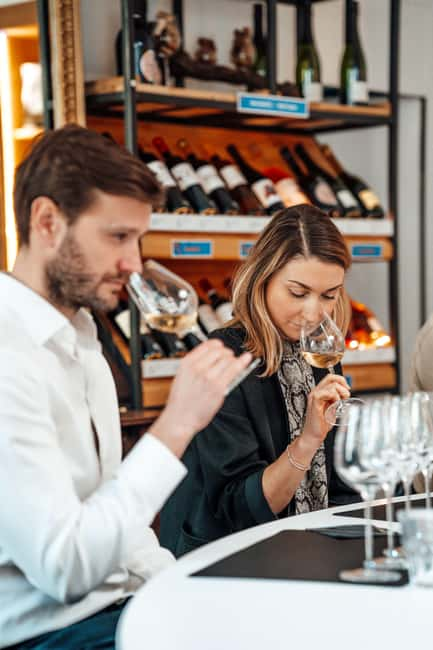
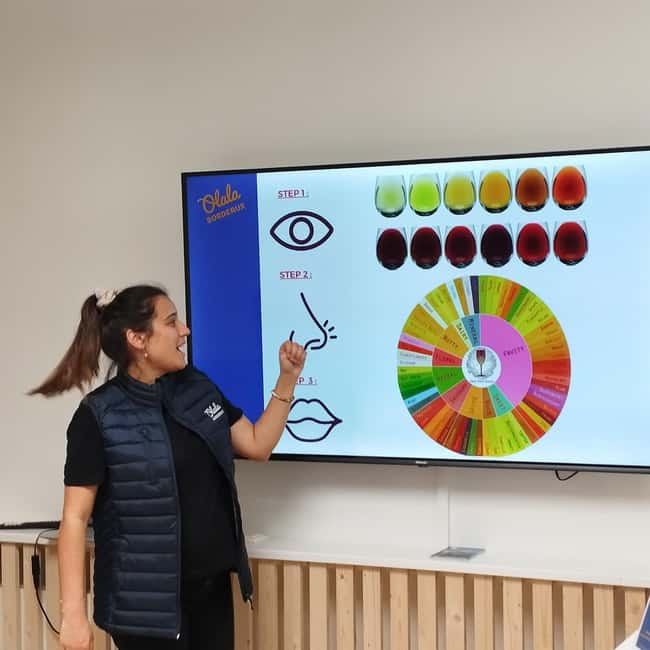
Then comes the tasting method. You learn to look at the wine, smell it, taste it, and consider how the finish changes. The point is not to produce fancy descriptions. It is to give you a repeatable way to notice acidity, fruit, structure, aroma, and balance.
The session may also include a blind tasting or a scent exercise. One activity uses different aromas to help you connect smells with what you notice in wine. That makes the lesson more active, and it helps if you are the sort of person who thinks wine tasting sounds intimidating.
The tasting includes a white Bordeaux and two red Bordeaux wines. One of the reds is a Grand Cru, giving you a chance to compare wines at different levels of style and prestige. The selection can change, so you should not book this expecting a specific château or vintage.
The final part brings in food. A board of local cheeses and charcuterie is served with baguette, and the guide explains how pairing can alter the way a wine tastes. You may notice a wine seeming softer with cheese, or a savory food bringing out different aromas in a red.
Why the aroma exercise matters
Many new wine drinkers assume that tasting means trying to guess the correct answer. That is not the goal here. The aroma practice helps you slow down and notice what is actually in front of you.
You may be asked to identify familiar scents before applying the same attention to the wine. This can make terms such as fruit, spice, floral notes, or earthy aromas less abstract. You do not need an unusually sharp sense of smell. You just need a willingness to try.
I especially like this part for first-time tasters. It turns the exercise into a game rather than a test. You can be wrong without making a fool of yourself, and the group format gives you a chance to compare impressions.
The workshop also appears to use visual material or handouts. One session included a helpful sheet describing qualities used to assess wine, while another had a strong visual presentation. The information brochures are useful if you want a reminder later, especially before a full-day wine outing.
Three wines, with a Grand Cru in the lineup
Three wines is a sensible amount for a one-hour lesson. You get enough variety to compare styles without turning the class into a long drinking session. The white gives you a different starting point from the two reds, and the red wines let you consider how Bordeaux handles structure, fruit, and blending.
The Grand Cru adds interest, but it is important to keep expectations in check. This is an introductory tasting, not a private château visit or a vertical tasting of several expensive vintages. You are sampling one Grand Cru as part of a wider lesson.
That is still useful. You can ask what makes the wine different, how its appellation affects its identity, and how the guide evaluates it. The value comes from the explanation as much as from the pour.
A short class also means the guide must keep the pace moving. Most sessions appear to balance instruction and tasting well, and some participants found the hour unhurried. One person thought the opening discussion could have involved the group sooner, so if you prefer immediate tasting, be aware that the first section may be more lecture-like.
A few more wine days around Bordeaux worth comparing
- Medoc or Saint Emilion Wine Tasting and Chateau from Bordeaux
★ 5.0 · 1,415 reviews - Saint Emilion Half-Day Trip with Wine Tasting & Winery Visit from Bordeaux
★ 4.5 · 1,034 reviews - From Bordeaux: Half-Day Saint-Émilion Tour and Wine Tasting
★ 4.7 · 699 reviews - Bordeaux Wine and Trade Museum Admission Ticket with Wine Tasting
★ 4.5 · 599 reviews
Cheese, charcuterie, and the practical side of pairing
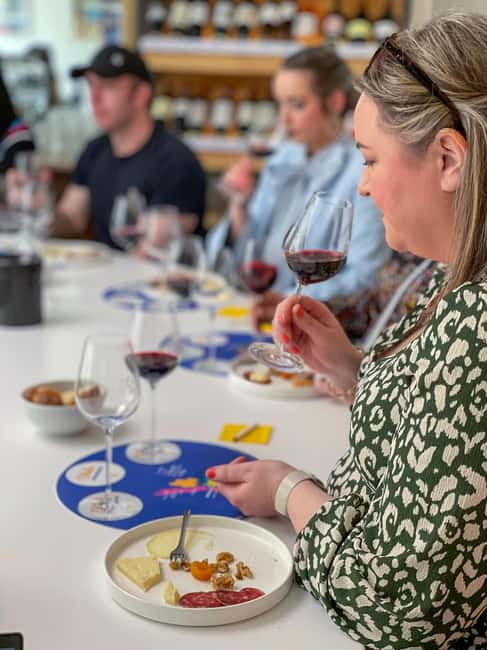
The food board is more than a snack. It gives you a small laboratory for tasting. Cheese, cured meat, and baguette can change the wine’s texture and intensity, and you get to test that effect in real time.
You should not expect a full meal. The board is a refined local selection designed to accompany the wine, not replace lunch or dinner. Still, it adds real value to a $34 experience, especially in central Bordeaux where a tasting with three wines can cost more once food is added.
I like that the pairing is local and simple. It keeps the focus on Bordeaux rather than adding an elaborate menu. You can also carry this lesson into restaurants: if a wine tastes too sharp or too heavy on its own, food may change the balance.
The guide can answer questions about your preferences, too. If you usually drink white wine, dislike tannic reds, or want a bottle for a particular meal, this is a good moment to ask for direction.
The setting near the Grand Théâtre
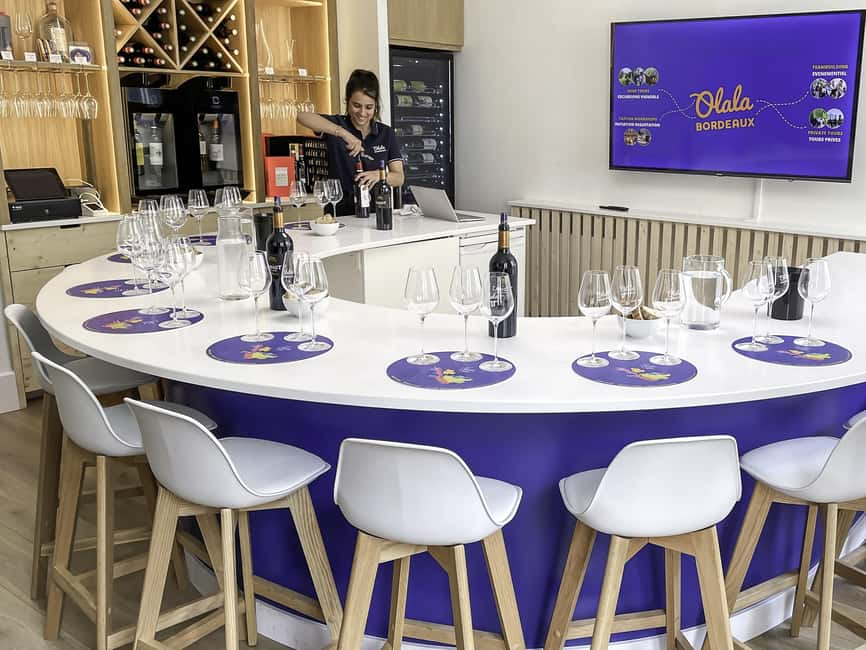
The workshop is held in central Bordeaux, just a few steps from the Grand Théâtre. That makes it easy to fit into a day of sightseeing, especially before dinner or after exploring the historic center.
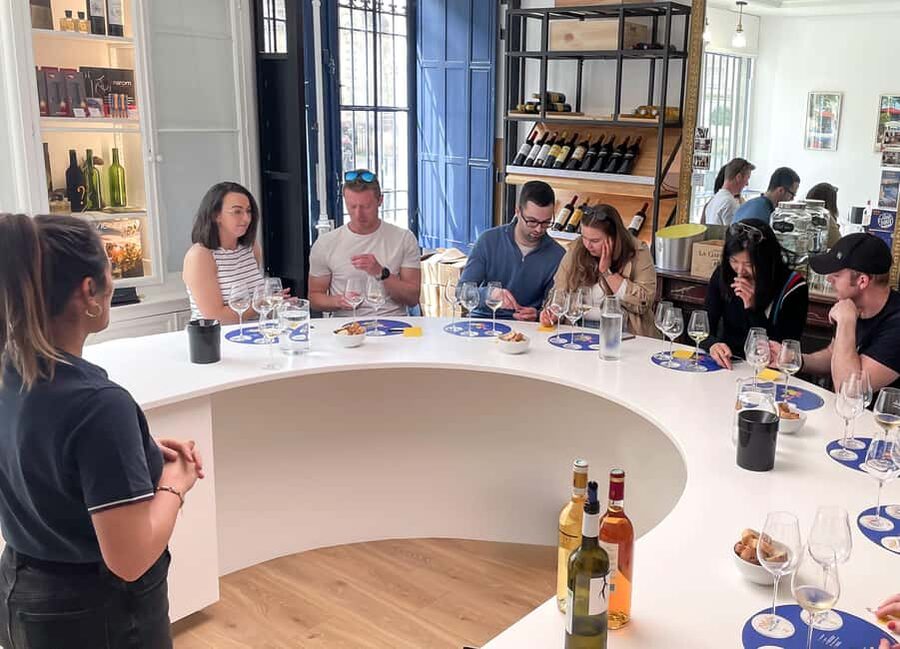
A dedicated Olala tasting space has been described as small, bright, and well suited to the activity. White tables may sound like a minor detail, but they make it easier to see the color and clarity of the wine. You are not simply sitting at the back of a noisy restaurant while someone rushes through three pours.
The central position also makes the workshop a useful first stop. You can take the new vocabulary with you to a wine shop, restaurant, or later winery visit. One participant used the class as preparation for a full-day wine tour the next day, which is a smart way to arrange it.
Your exact meeting point may vary depending on the option you book, so check the booking details before setting off. The activity is not a vineyard visit, and there is no transport into the countryside. You remain in Bordeaux for the full class.
The guides and teaching style
The instructor teaches in English or French. Past sessions have been led by guides including Antoine, Anna, Noe, Eva, Pierre, Enzo, Olivier, Juliette, and Paulina. The experience can therefore have a slightly different personality depending on the person leading your class.
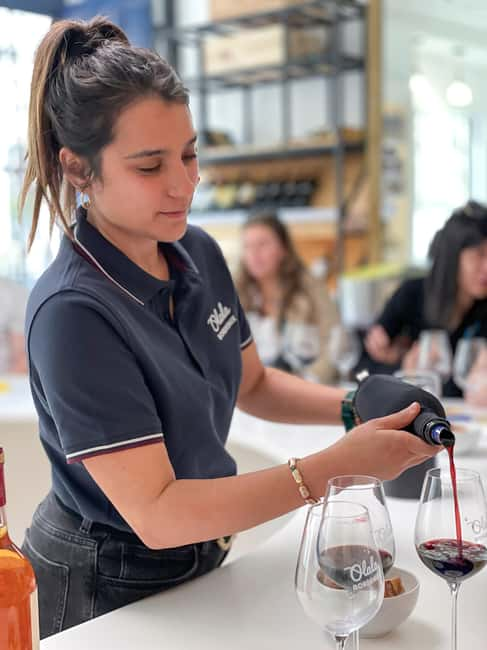
The strongest teaching style here is interactive. Guides invite questions, discuss preferences, and use aroma or blind tasting exercises to keep the lesson from becoming a lecture. Antoine and Anna have been particularly praised for making the session both clear and entertaining, while Noe received strong marks for professional explanations.
That does not mean every minute will feel identical. Wine instruction depends on the group. A curious group may spend more time on Bordeaux’s history or regional distinctions, while a quieter group may move through the material more directly.
For you, the key point is that this is not a scripted audio presentation. You can ask why one wine feels drier, what a label means, or how to choose a bottle after the trip. That personal exchange is one of the better reasons to choose a small group.
Is $34 a fair price?
At $34 per person, I consider this good value if you want an introduction rather than a luxury wine event. The price includes the guide, three wines, local cheese and charcuterie, baguette, water, and information brochures.
The food and the Grand Cru help justify the cost, but the main value is time saved. Bordeaux has a lot to teach, and a well-structured hour can give you enough grounding to make later tastings more rewarding.
You should not compare it directly with a full-day vineyard tour. This workshop does not include transport, château visits, countryside scenery, or a large number of wines. It is a compact city activity with a teaching focus.
For a first afternoon in Bordeaux, I like the price. You get a quick introduction without committing half a day. If you already know Bordeaux wines well, the experience may feel basic unless you use the question time to explore more specific subjects.
Who should book this tasting?
This suits you best if you are new to Bordeaux wine, want a short indoor activity, or plan to visit Saint-Émilion or another wine area soon. It is also a good choice for solo visitors. The group can include pairs and people attending on their own, and the interactive format helps avoid an awkward hour at the table.
Couples and friends will appreciate the relaxed setting and shared food. The class is also useful for anyone who wants a little confidence before ordering wine in France. You will leave with a simple process for tasting and a better grasp of labels and blends.
It is not suitable for children under 16, unaccompanied minors, or pets. You should also skip it if you want a vineyard tour, a long cellar visit, or a large-scale tasting with many wines.
The one-hour format is both its strength and its limit. It fits neatly between other plans, but it cannot cover every Bordeaux appellation or grape in detail. Think of it as a well-built first lesson, not a complete wine education.
Booking details worth knowing
The activity costs $34 per person and lasts one hour. English and French are available, and a small-group format may be offered depending on the option you select.
You can cancel up to 24 hours before the activity for a full refund. A reserve-now, pay-later choice is also available, which helps if your Bordeaux schedule is still changing.
The guide, one white wine, two red wines, food board, baguette, water, and brochures are included. Personal expenses are not included. Since the meeting point can vary, check the selected option carefully rather than assuming every session begins at the same door.
FAQ
How long does the Bordeaux wine workshop last?
The workshop lasts one hour.
How many wines are included?
You taste one white Bordeaux wine and two red Bordeaux wines. One of the red wines is a Grand Cru.
Is food included?
Yes. The tasting includes local cheese, charcuterie, and baguette, along with water.
What does the workshop teach?
You learn about terroir, grape varieties, appellations, blending, Bordeaux wine styles, wine production, tasting steps, aromas, and food pairing.
Is the activity held near the Grand Théâtre?
The experience takes place in central Bordeaux, a few steps from the Grand Théâtre. The exact meeting point may vary with the option booked.
Are the sessions available in English?
Yes. The instructors speak English and French.
Is this a small-group activity?
A small-group option is available, depending on the booking choice.
Can children join?
The activity is not suitable for children under 16. Unaccompanied minors are not allowed.
Are pets allowed?
No. Pets are not allowed.
Can I cancel for a refund?
Yes. You can cancel up to 24 hours in advance for a full refund.
Should you book it?
I would book this workshop if you want a short, central, useful introduction to Bordeaux wine. The combination of three wines, local food, aroma practice, and a guide who can answer questions gives you more than a basic pour-and-smile tasting.
Book it early in your Bordeaux stay if you plan to visit wineries later. The lesson can make château visits and restaurant wine lists easier to follow. Skip it if you already have strong knowledge of Bordeaux or want a countryside excursion instead.
For $34, this is a sensible way to get your bearings with the region’s wine culture, without giving up half a day of sightseeing.
More Workshops in Bordeaux
- Bordeaux Super Saver Wine Tasting class and St Emilion region
★ 5.0 · 184 reviews - Guided Bordeaux Wine Tasting Class with 6 Wines and pairings
★ 4.9 · 181 reviews - Workshop Bordeaux wine tasting: 4 reds & charcuterie pairing
★ 5.0 · 72 reviews - Bordeaux:Wine Masterclass & Blending workshop with appetizer
★ 4.8 · 54 reviews
Just added around Bordeaux
- Bordeaux Médoc Region Private Wine Lovers Tour with Chateau Visits & Tastings★ 5.0 · 40 reviews
- Bordeaux Wines Masterclass paired with cheeses & charcuterie★ 5.0 · 110 reviews
- Bordeaux Food and Wine Tour : Authentic Artisanal Flavors★ 5.0 · 62 reviews
- Saint-Emilion Winery Morning Tour with Local Guide★ 5.0 · 67 reviews
- Médoc luxury wine tour aboard a Citroën DS Limousine Convertible★ 5.0 · 41 reviews
- Saint Emilion Morning Wine Tour – Winery & Tastings from Bordeaux★ 5.0 · 186 reviews
- Introduction to Bordeaux wines paired with cheeses & charcuterie★ 5.0 · 175 reviews
- Free Walking Bordeaux Tour ENG + 1 glass of wine (Tip based)★ 5.0 · 90 reviews
Wine Tours in Bordeaux, compared.
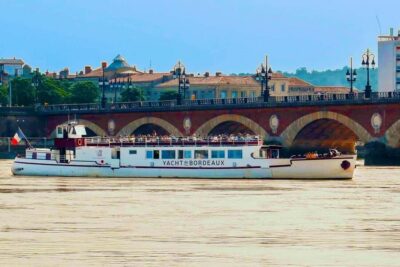
River Garonne Cruise with Glass of Wine and Canelé
Read our review →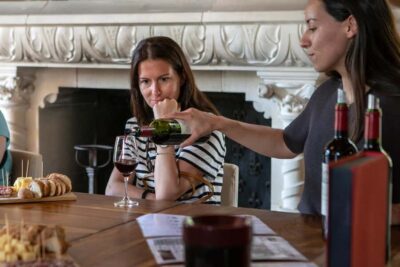
Afternoon Saint-Emilion Wine Tasting & snack
Read our review →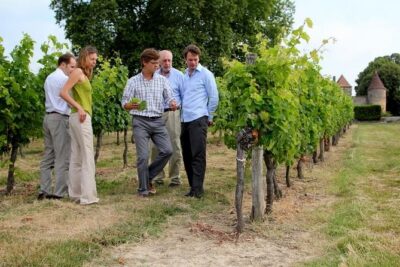
Medoc or Saint Emilion Wine Tasting and Chateau from Bordeaux
Read our review →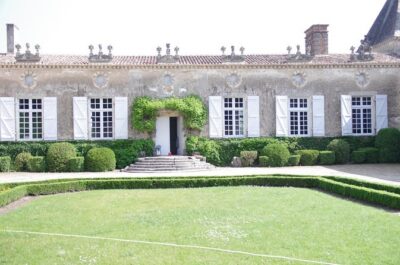
Saint Emilion Day Trip with Sightseeing Tour & Wine Tastings from Bordeaux
Read our review →
Saint Emilion Half-Day Trip with Wine Tasting & Winery Visit from Bordeaux
Read our review →
Browse the lists this tour appears in