
REVIEW · BORDEAUX
Bordeaux:Wine Masterclass & Blending workshop with appetizer
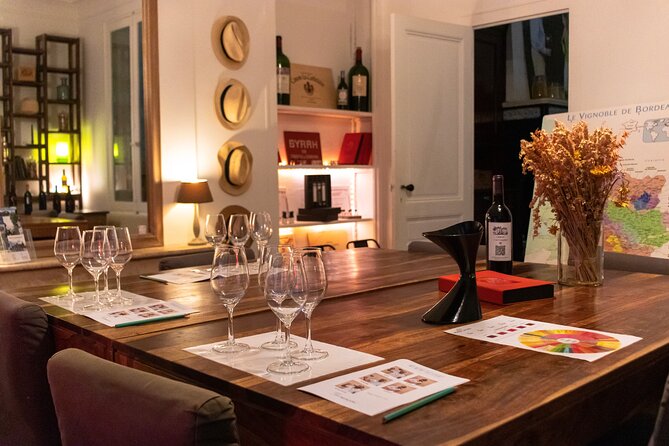
Bordeaux’s wine culture can feel intimidating, but this small-group workshop makes it practical. In 90 minutes, you taste six French wines, compare grape varieties, and blend your own cuvée instead of simply listening to a lecture. The class meets at À la Française’s apartment at 3 Rue d’Enghien, a central Bordeaux address.
I like the way the session moves from simple tasting basics to the more puzzling art of Bordeaux blending. I also like the generous food pairings: fresh bread, sausage, cheese, and dark chocolate give your palate something useful to compare with the wine. The main consideration is that a very small group can feel personal, but it may also feel intense if you are shy about sharing your tasting thoughts.
Key points to know
- Six wines in one 90-minute session: You taste white and red wines, single-varietal examples, blended wines, and a famous Bordeaux wine blind.
- A hands-on blending workshop: You create your own cuvée and see why Bordeaux producers combine grape varieties.
- Merlot and Cabernet Sauvignon explained: The class gives you a useful starting point for understanding Bordeaux’s main grapes.
- French apéritif included: Cheese, charcuterie, bread, and dark chocolate are served alongside the wines.
- Small groups of up to 12: The format leaves room for questions, though a tiny group can put more attention on each person.
- English guide and easy timing: The class runs from 10:30 a.m. to noon, with an English-speaking wine educator.
What the Bordeaux wine workshop is really about
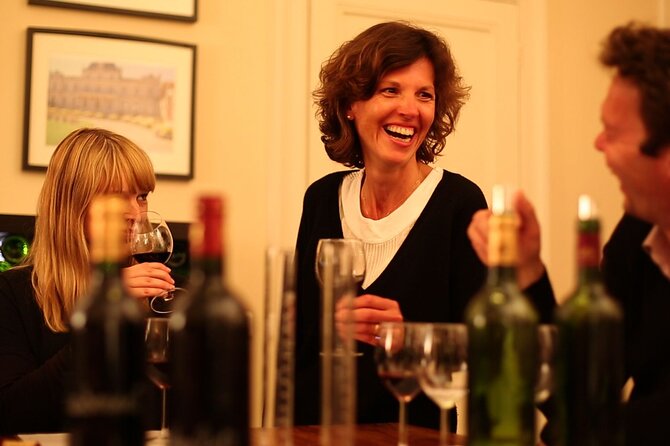
This is not a vineyard visit or a tour of grand château cellars. It is a focused tasting class in Bordeaux, designed to help you understand what is in your glass and why Bordeaux wines taste the way they do.
That makes it a good choice if you have limited time in the city. You do not need to spend half a day reaching the surrounding wine country. Instead, you get a compact introduction to Bordeaux’s grapes, blending traditions, tasting language, and food pairings.
The setting is À la Française’s apartment at 3 Rue d’Enghien. You should arrive by 10:25 a.m. for the 10:30 start. The class is conducted in English, and the group can include up to 12 people. The provider requires at least two participants to operate the session, so a booking could be cancelled if only one person is scheduled.
At $53 per person, the price is fair if you want instruction rather than just wine samples. Six tastings, a professional educator, a blending exercise, and a French appetizer platter are included. You are paying for the guided comparisons and the chance to ask questions, not just for six pours.
More Wine Tours in Bordeaux
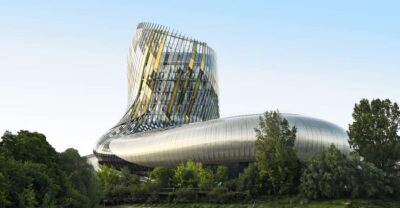
- Bordeaux: Cité du Vin Entry Ticket and Wine Tasting
★ 4.6 · 3,885 reviews - Bordeaux: River Garonne Cruise with Glass of Wine and Canelé
★ 4.5 · 3,630 reviews - From Bordeaux: Afternoon Saint-Emilion Wine Tasting & snack
★ 4.8 · 1,581 reviews
Starting with white wine and basic tasting skills
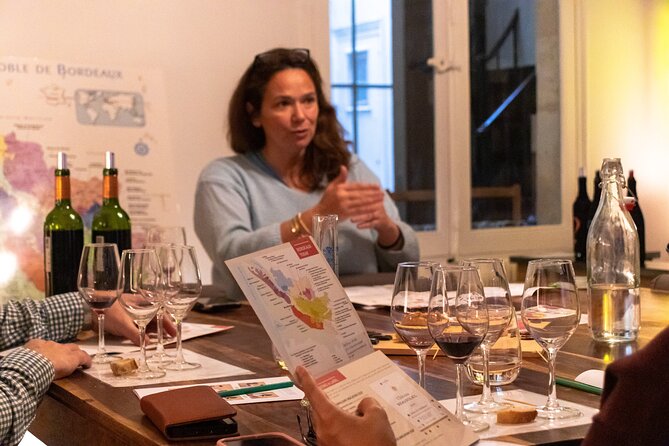
The class begins with a welcome glass of white wine. This is a smart entry point because it gives you a gentle way to start noticing color, aroma, texture, and finish before the red wines arrive.
You will be shown how to taste in a structured way, similar to the approach used by sommeliers. That does not mean you need a polished vocabulary. The useful lesson is that you can break tasting into small steps rather than trying to guess the perfect answer.
I like this part for first-time wine drinkers. A restaurant wine list can seem like a test, especially in France, where the label may name a region instead of a grape. Learning how to look, smell, sip, and compare gives you a little more confidence when choosing wine later.
The class also encourages you to identify your own tasting profile. That is more helpful than memorizing a long list of technical terms. You may find that you prefer softer, fruitier wines, or that you enjoy wines with more structure and a firmer finish.
The instructor’s tone matters here. The stated format is friendly and professional, but one particularly small session drew a concern from a participant who felt too much attention was placed on individual answers. If your group has only two people, be prepared for a more direct exchange. Most people will find that useful, but anyone who dislikes speaking about personal impressions may prefer a fuller group.
Understanding Bordeaux through Merlot and Cabernet Sauvignon
The next stage introduces the history of Bordeaux wines and the region’s main grape varieties. Merlot and Cabernet Sauvignon receive special attention, and you taste two single-varietal wines before working with blends.
This is where the workshop becomes especially useful. Bordeaux is famous for blended wines, and a single grape does not tell the whole story. Tasting the varieties separately lets you notice what each contributes before you taste them combined.
A single-varietal wine can help you focus on one set of qualities at a time. The point is not to reduce every wine to a checklist. It is to give you a clearer reference point, so a later blend makes more sense.
If you have already visited Bordeaux’s Left Bank or Right Bank wine areas, this session can still add something. The class gives you a more organized way to think about the wines you may have tasted at estates. One participant who had already taken a Left Bank and Right Bank wine tour found the workshop more informative for learning about the region.
That is a useful distinction. A château visit can show you a property, a cellar, or a vineyard setting. This class concentrates on the glass itself. You get the basic regional context, but the focus stays on tasting and comparison.
Creating your own Bordeaux cuvée
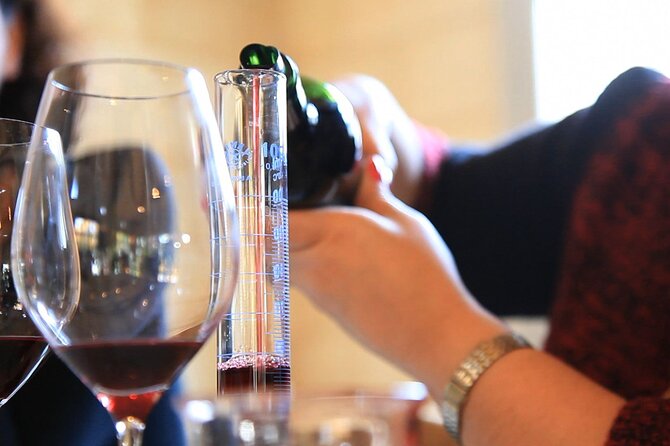
The blending workshop is the most distinctive part of the experience. After tasting the single-varietal wines, you work with the idea of a cuvée and create your own blend.
You also taste two blended wines prepared in front of you. This helps show how the finished wine changes when different components are combined. The exercise is not about producing a bottle to take home. It is about seeing how proportions and grape character affect the final result.
I like this hands-on approach because Bordeaux blending can otherwise sound abstract. A guide can explain that one grape brings fruit, another offers structure, and another may add balance. Once you compare the wines yourself, the idea becomes easier to grasp.
You may discover that your preferred blend is not the same as the one selected by someone else in the room. That is part of the value. The workshop treats taste as personal while still giving you a method for describing what you notice.
The exercise also gives you a better reason to pay attention to Bordeaux labels and regional terms later. You will not leave as a winemaker, but you should understand why a producer might combine grapes instead of bottling each one alone.
A few more wine days around Bordeaux worth comparing
- Bordeaux: Introduction to Bordeaux Wines Tasting Workshop
★ 4.8 · 196 reviews - Bordeaux Super Saver Wine Tasting class and St Emilion region
★ 5.0 · 184 reviews - Guided Bordeaux Wine Tasting Class with 6 Wines and pairings
★ 4.9 · 181 reviews - Workshop Bordeaux wine tasting: 4 reds & charcuterie pairing
★ 5.0 · 72 reviews
The blind tasting and the famous Bordeaux wine
Later, you taste a famous Bordeaux wine without being told where it comes from. You are asked to guess its origin.
This is a playful test, but it also reinforces the class’s central lesson: tasting is about observation, not about proving that you are an expert. The blind format removes the influence of the label and lets you focus on what is in the glass.
Do not worry about getting the answer right. The useful part is thinking through your guess and hearing how the guide explains the wine afterward. If you already know a little about Bordeaux, this section may test whether you can connect regional identity with aroma, body, and finish.
With only 90 minutes, the blind tasting also gives the class a clear ending. You have moved from basic technique, to grape varieties, to blends, and finally to an unidentified example that asks you to use what you learned.
Pairing wine with cheese, charcuterie, and chocolate
The tasting comes with a French apéritif platter. Expect fresh bread, sausage, cheese, and dark chocolate. These foods are not a full lunch, but they make the wine comparisons more enjoyable and more practical.
Food changes how wine tastes. Cheese can soften a wine’s sharper edges, sausage brings salt and savory flavors, and dark chocolate offers a stronger final pairing. You get to notice how the same wine behaves differently with different bites.
This also gives the session a distinctly French social feel. Wine is not treated as an isolated product. It is part of a meal, a conversation, and a pattern of small pairings.
The food is described as an appetizer, not lunch. If you are hungry after a morning activity, plan a separate meal. The platter should be enough to support the tasting, but it is not intended to replace lunch.
An optional lunch is listed as not included, so check the current booking details if that option matters to your plans. The core experience includes the appetizer platter and six wines.
Six wines, one short morning
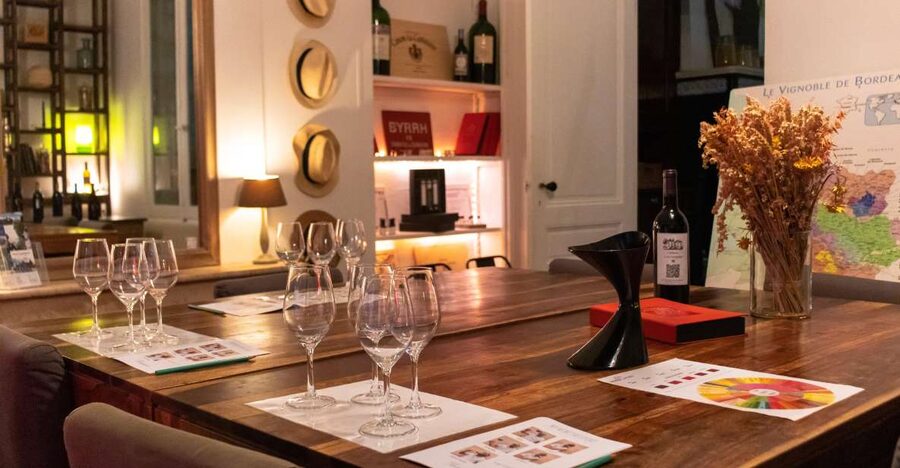
The schedule is easy to fit into a Bordeaux itinerary. You meet at 10:30 a.m. and finish at noon. That leaves the afternoon open for museums, a meal, or another city activity.
The six wines are served in a progression:
- A welcome white wine introduces the tasting method.
- A welcome red wine brings you into Bordeaux’s red wine style.
- Two single-varietal wines focus on grape character.
- Two blended wines show how combinations change the result.
- A famous Bordeaux wine is served blind for you to identify.
The exact order may vary slightly with the educator and available wines, but the structure gives you a good range without becoming exhausting. Six glasses in 90 minutes is enough to compare styles, yet short enough to keep the class focused.
You should pace yourself. This is still alcohol, and the class is built around tasting rather than drinking quickly. The food helps, but you may want to avoid scheduling a demanding activity immediately afterward if wine affects you strongly.
How the small group affects the experience
The maximum group size is 12 people, which is a useful middle ground. You get more interaction than in a large public tasting, but you are not necessarily placed in a private lesson.
A small group gives the educator time to answer questions. That was one of the strongest parts of the experience for people who wanted to understand the Bordeaux region in more detail. It also means you can follow up when a flavor, grape, or blending term is unclear.
There is a tradeoff. If the group is very small, the guide may ask you directly for your impressions after each wine. One participant felt discouraged by the way answers were handled in a two-person session, even though the instructor was described as nice. That does not mean every small group will feel this way, but it is worth knowing if you prefer to listen quietly.
My advice is to treat your answers as observations, not exams. Wine tasting has room for personal perception. If you smell something different from the person beside you, that does not automatically make either answer wrong.
Who will get the most from this class
I would choose this workshop for several types of visitors:
- First-time wine drinkers who want a clear introduction without a full day in the countryside.
- Couples or friends looking for a relaxed Bordeaux activity with food.
- People who have visited wineries but still find blending and grape varieties confusing.
- Wine fans who want a structured comparison of Merlot, Cabernet Sauvignon, and Bordeaux blends.
- Visitors who want an English-language class in the city rather than transportation to an estate.
It may be less suitable if your main goal is to visit vineyards, walk through cellars, or meet winemakers at their properties. None of those elements is included in the information provided for this session.
The activity is also not suitable for people with mobility impairments, according to the stated conditions. Pets are not allowed.
Is $53 a fair price?
At $53, the value depends on what you want from a wine experience. If you only want to sample French wine, you may find a bar or shop tasting less expensive. But that would not normally include a guided blending workshop, a blind tasting, six wines, and a food platter in a 90-minute class.
The strongest value is educational. You get a framework you can use for the rest of your time in Bordeaux. Afterward, you may feel more comfortable reading a wine list, comparing a single grape with a blend, or explaining what you like.
The group size also supports the price. A maximum of 12 people allows time for questions without making the session feel like a large presentation. If you happen to be in a tiny group, the personal attention can be excellent, though the discussion may feel more exposed.
Free cancellation up to 24 hours before the activity and the option to reserve now and pay later make it easier to fit into a changing schedule. The operator may cancel if only one person is booked, and a full refund is provided in that case.
Should you book the Bordeaux wine blending workshop?
Book it if you want a practical, city-based introduction to Bordeaux wine rather than a vineyard excursion. The six-wine lineup, food pairings, blind tasting, and cuvée exercise offer more substance than a basic tasting flight.
I would especially recommend it if you are new to Bordeaux or have already visited wine estates but still want a clearer grasp of blending. Arrive ready to taste, ask questions, and accept that your impressions may differ from everyone else’s.
Skip it if you need a full meal, a château visit, or a longer countryside tour. Also think twice if you dislike being asked to describe what you smell and taste. For everyone else, the $53 fee buys a compact lesson that can make the rest of your Bordeaux wine experience easier to understand.
FAQ
How long does the Bordeaux wine workshop last?
The activity lasts 90 minutes. It begins at 10:30 a.m. and ends at noon.
Where is the meeting point?
Meet at À la Française’s apartment, 3 Rue d’Enghien, 33000 Bordeaux. You should arrive by 10:25 a.m.
How many wines are included?
Six wines are included. The session covers white and red wine, two single-varietal wines, two blended wines, and a blind tasting of a famous Bordeaux wine.
Is the workshop offered in English?
Yes. The activity includes a live English-speaking guide and a professional wine educator.
Is food included?
Yes. A French appetizer platter is included, with items such as fresh bread, sausage, cheese, and dark chocolate. Lunch is not included, though an optional lunch may be available.
Can I cancel the booking?
You can cancel up to 24 hours in advance for a full refund. The activity may also be cancelled if only one participant is booked, since at least two people are required to operate it.
Just added around Bordeaux
- Bordeaux Wines Masterclass paired with cheeses & charcuterie★ 5.0 · 110 reviews
- Bordeaux Médoc Region Private Wine Lovers Tour with Chateau Visits & Tastings★ 5.0 · 40 reviews
- Bordeaux Food and Wine Tour : Authentic Artisanal Flavors★ 5.0 · 62 reviews
- Saint-Emilion Winery Morning Tour with Local Guide★ 5.0 · 67 reviews
- Médoc luxury wine tour aboard a Citroën DS Limousine Convertible★ 5.0 · 41 reviews
- Saint Emilion Morning Wine Tour – Winery & Tastings from Bordeaux★ 5.0 · 186 reviews
- Introduction to Bordeaux wines paired with cheeses & charcuterie★ 5.0 · 175 reviews
- Free Walking Bordeaux Tour ENG + 1 glass of wine (Tip based)★ 5.0 · 90 reviews
Wine Tours in Bordeaux, compared.
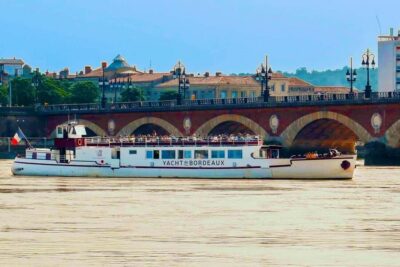
River Garonne Cruise with Glass of Wine and Canelé
Read our review →
Afternoon Saint-Emilion Wine Tasting & snack
Read our review →
Medoc or Saint Emilion Wine Tasting and Chateau from Bordeaux
Read our review →
Saint Emilion Day Trip with Sightseeing Tour & Wine Tastings from Bordeaux
Read our review →
Saint Emilion Half-Day Trip with Wine Tasting & Winery Visit from Bordeaux
Read our review →
Browse the lists this tour appears in