
REVIEW · BORDEAUX
Bordeaux: Wine Masterclass with Cheese and Charcuterie Board
Bordeaux gives you a fast, useful introduction to one of France’s great wine regions without sending you out of the city. In 90 minutes, you taste one white and five reds while learning how to look, smell, and taste wine with purpose. The lesson is practical, not just a line-up of glasses.
I especially like the clear comparison between left-bank and right-bank wines, and the way the class uses cheese, charcuterie, baguette, and water to make the tasting feel like part of Bordeaux life. Guides including Antoine, Hugo, Enzo, Anna, Noe, and Vincent have been praised for warm, funny teaching. The main drawback is simple: this is a compact class, not a vineyard visit, so you will not see vines, cellars, or château grounds.
Key points at a glance
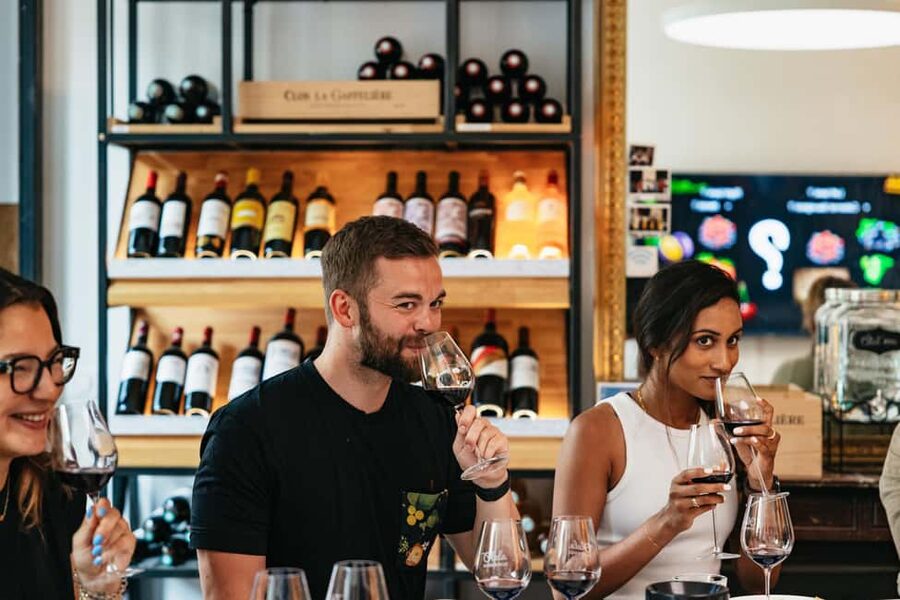
- Six Bordeaux wines: Start with one white, then taste three regional single-grape reds and two finer wines, including one Bordeaux Grand Cru.
- A useful left-bank and right-bank comparison: You taste the two sides side by side, a helpful way to understand Bordeaux’s main regional styles.
- Hands-on tasting technique: Learn how to assess a wine by sight, aroma, and taste, with sensory exercises and, in some sessions, an aroma sample kit.
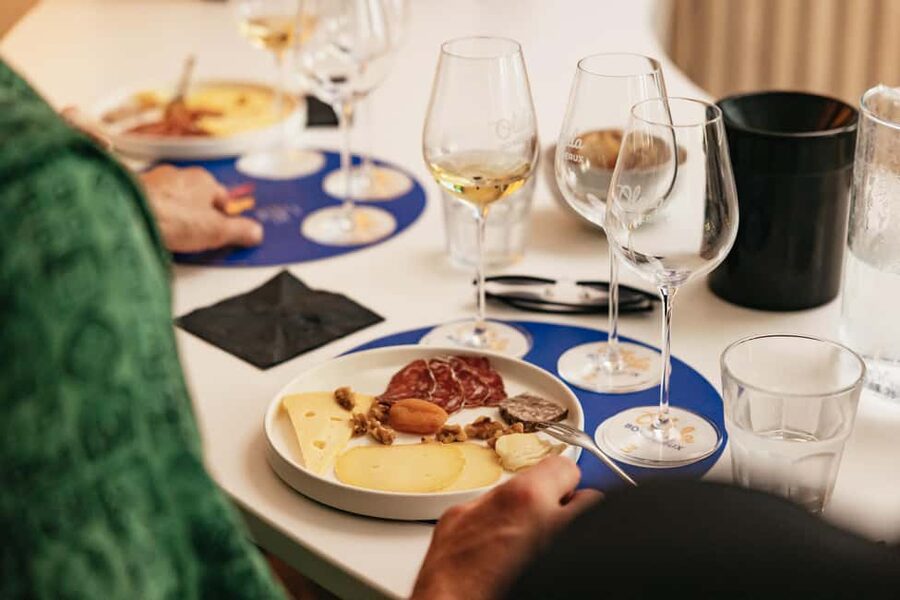
- Local food included: Cheese, charcuterie, baguette, and water accompany the wines and introduce basic food-pairing ideas.
- Central Bordeaux setting: Olala Bordeaux is about a five-minute walk from the Quinconces tram stop and close to the Grand Théâtre.
- Best for curious adults: Children under 16 and pets are not allowed, and the class is aimed at people who want to learn as well as drink.
Why this short Bordeaux class works
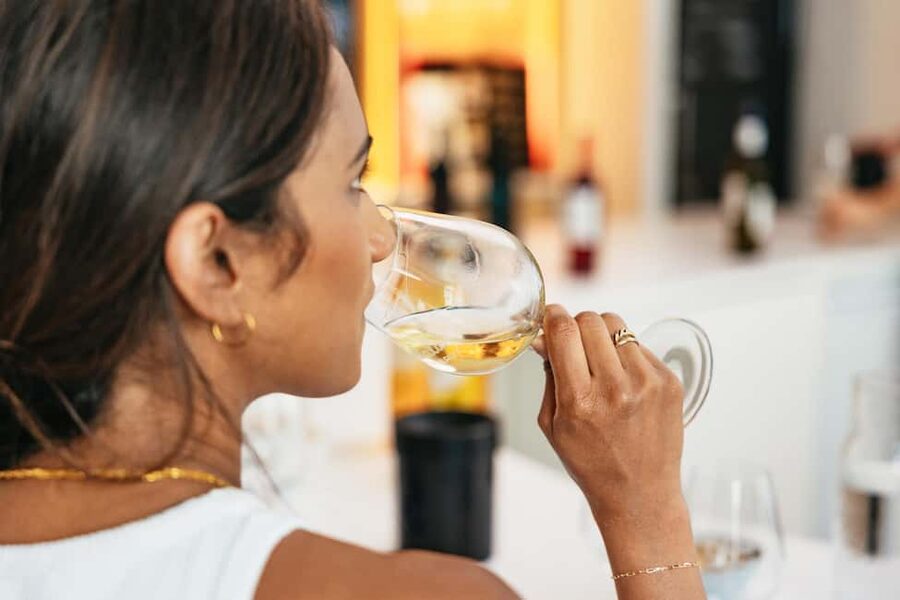
Wine tasting can go two ways. It can become a parade of grand names and technical terms, or it can teach you how to make sense of the glass in front of you. This class aims for the second option. You learn the basic vocabulary of Bordeaux, then use your own senses to test what the guide has explained.
That makes it a good first activity in the city. After the class, a restaurant wine list or a bottle shop should feel less intimidating. You will not become a sommelier in 90 minutes, but you can leave with a working method and a better idea of what you like.
The setting also helps. You meet at Olala Bordeaux, a wine shop and tasting space near the Grand Théâtre. It is not a grand château, and that is part of the appeal. You are learning about Bordeaux wine in the center of Bordeaux, with the city outside the door and a practical retail setting around you.
The atmosphere is described as small, comfortable, and relaxed. That matters because wine questions can feel awkward in a formal setting. Here, the teaching style is meant to be friendly and accessible. Enzo, Anna, Hugo, Antoine, Noe, and Vincent are among the guides who have led sessions, with particular praise for humor, patience, and an easy way of explaining complicated subjects.
More Wine Tours in Bordeaux
- Bordeaux: Cité du Vin Entry Ticket and Wine Tasting
★ 4.6 · 3,885 reviews - Bordeaux: River Garonne Cruise with Glass of Wine and Canelé
★ 4.5 · 3,630 reviews - From Bordeaux: Afternoon Saint-Emilion Wine Tasting & snack
★ 4.8 · 1,581 reviews
Starting with the language of wine
The class begins with the building blocks: terroir, grape varieties, appellation, classification, winemaking, aging, storage, and service. These terms can sound abstract when you meet them on a wine label. They become more useful when the guide connects each one to the wines in your glass.
Terroir refers to the place and conditions behind a wine, including the soil, climate, and setting. Appellation tells you about the defined wine area and its rules. Classification helps explain why some Bordeaux bottles carry prestigious designations and why names on a label can matter as much as the grape itself.
You also learn about vinification, the process that turns grapes into wine, along with aging and storage. The class does not treat wine as a mysterious art reserved for experts. Instead, it gives you a framework for asking sensible questions: How was the wine made? What role did aging play? How should it be stored and served?
This opening section is especially useful if Bordeaux labels have always seemed difficult. Bordeaux is famous for its château names and appellations, and the grape variety may not be displayed as prominently as you expect. A short explanation at the start helps you read the bottle rather than simply trust the price.
The first white wine and the tasting method
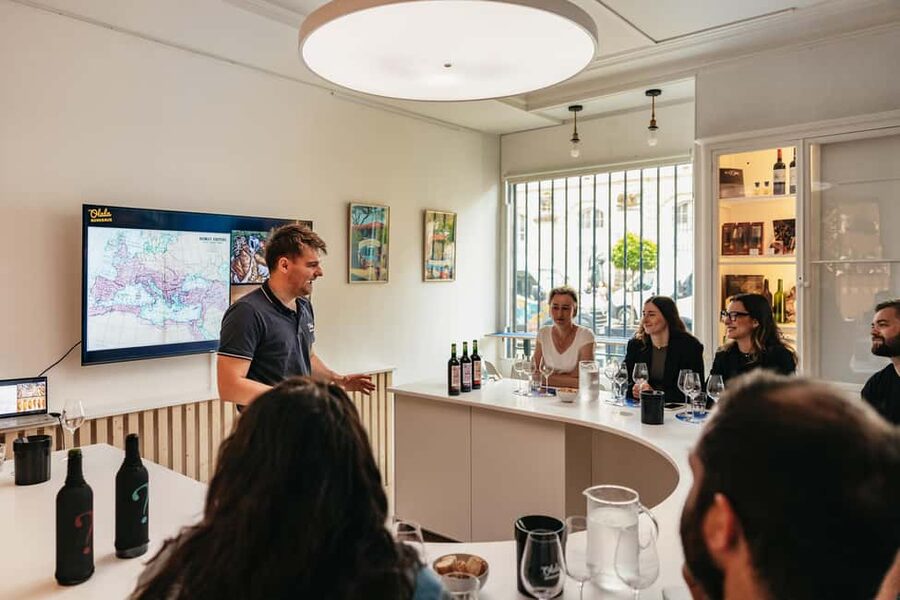
Your first glass is a white wine. Its job is not only to refresh your palate. It gives you a gentle introduction to the standard tasting process before the more serious red wines arrive.
You are shown how to examine the wine, consider its color, smell it, and then taste it. This visual, aromatic, and flavor-based method is repeated through the session, so you get a chance to practice rather than hear a single explanation and move on.
The sensory work is one of the strongest parts of the experience. You may be asked to identify ingredients or winemaking effects through aroma and taste. Some sessions have included an aroma sample kit, which gives the exercise a more concrete feel. You do not need a trained nose. The point is to notice more than simply sweet, dry, strong, or smooth.
I like this approach because it makes the class active. You are not just waiting for the guide to announce the correct answer. You first form your own impression, then compare it with the explanation. That makes the lesson easier to remember.
Do not worry if you cannot name every aroma. The value is in learning to pay attention. You may leave better able to describe a wine in a restaurant, even if your vocabulary remains modest.
Three single-grape reds show the building blocks
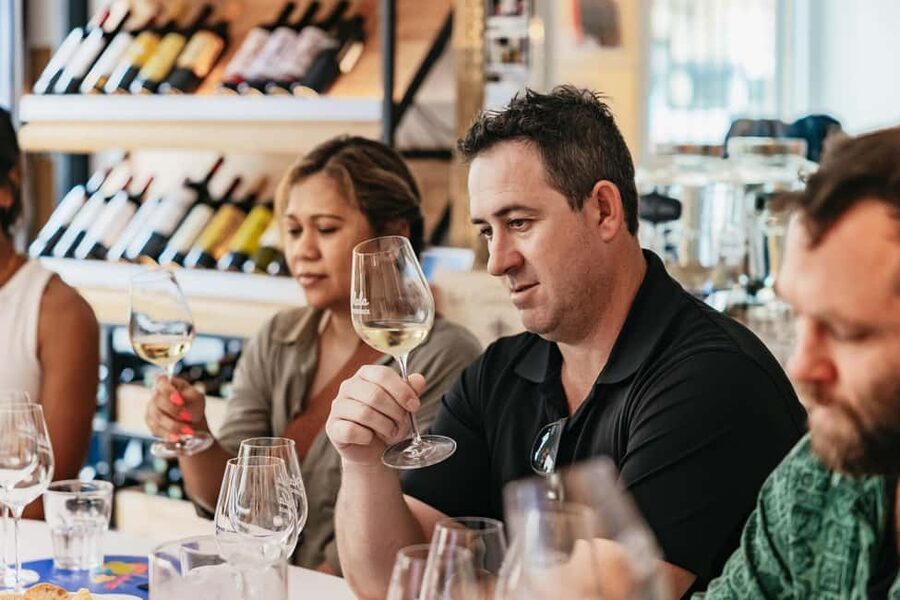
The next section focuses on three red wines made from single grape varieties associated with Bordeaux. Tasting them separately gives you a clearer sense of their individual traits before the class moves into blends.
Blending is central to Bordeaux wine. A finished bottle may combine several grape varieties, each contributing something different. One can add structure, another fruit, another fragrance or freshness. Sampling single-grape wines first helps you understand the ingredients before tasting how they work together.
This is a smart order for a beginner. If you taste only finished blends, it can be hard to work out what each grape contributes. With three separate examples, you can compare color, aroma, body, acidity, tannin, and finish in a more direct way.
The guide explains the characteristics of the regional red grapes and how they are used in Bordeaux. You may not remember every technical term, but you should start to understand why two wines from the same broad region can taste quite different.
For experienced wine drinkers, this section may feel familiar, but it still gives useful local context. Bordeaux is not just a single style. The variety comes from grapes, soils, bank, producer, vintage, and blending choices. The class keeps that idea tied to actual glasses rather than a lecture alone.
More wine and cheese tastings in Bordeaux:
- Tasting of 6 Bordeaux wines and pairing charcuterie & cheese
★ 5.0 · 199 reviews - Bordeaux Gourmet Experience: Cheese & Wine Tasting
★ 4.6 · 169 reviews - Bordeaux Afternoon Food Tour : Sweets, Wine and Cheese
★ 5.0 · 38 reviews - Blind Tasting: 4 Bordeaux Natural Wine + Cheese experience
★ 4.8 · 35 reviews
Left bank, right bank, and one Grand Cru
The final tasting moves from individual grape examples to two fine wines, one from Bordeaux’s left bank and one from the right bank. This is the comparison many people will remember most clearly.
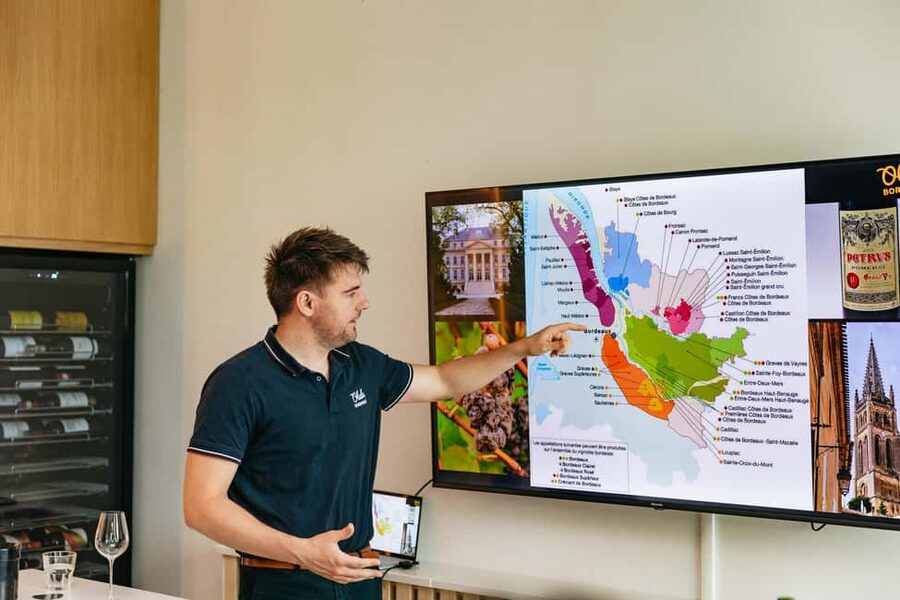
The left-bank and right-bank areas are often discussed as two broad parts of Bordeaux, with different traditions and grape balances. Tasting them in the same session gives you a simple reference point. You can pay attention to how each wine feels, smells, and finishes, while the guide explains the regional reasons behind those differences.
One of the two wines is a Bordeaux Grand Cru. That gives the class a chance to discuss classification and prestige through a real example, rather than treating those subjects as label trivia. Several participants have singled out the Grand Cru as a favorite, but the useful point is not simply that it is the most expensive or famous glass. It is learning what you notice and whether the difference matters to your own palate.
This part can also help you plan future wine visits. If you later visit a château or Saint-Émilion, Médoc, or another Bordeaux area, you will have a basic map in your head. The class does not replace a day among the vineyards, but it can make that day more rewarding.
Cheese, charcuterie, and the Bordeaux table
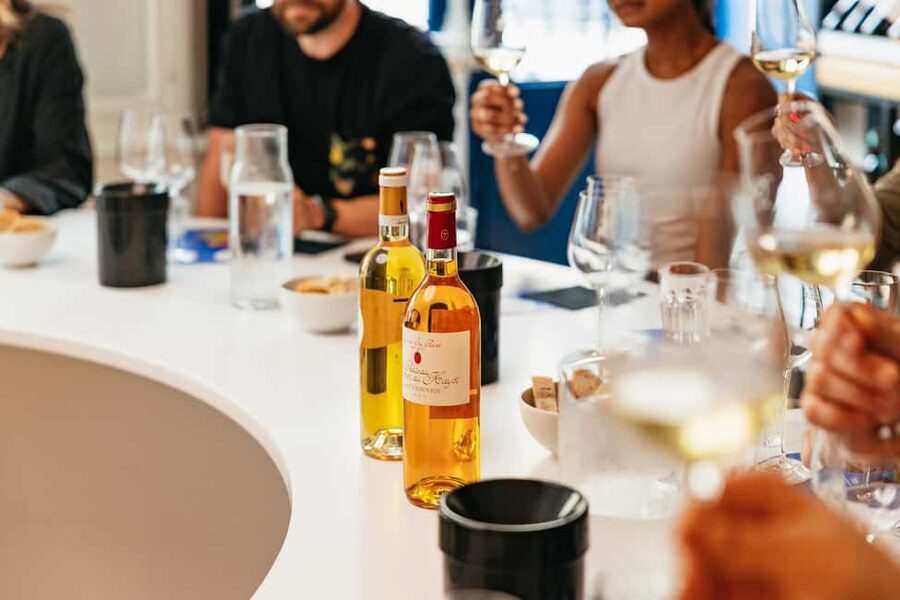
The wine comes with a board of local cheese and charcuterie, plus baguette and water. This is more than a snack between pours. It gives you a chance to see how food changes your impression of wine.
Salt, fat, texture, and acidity can make a wine seem different from the way it tasted alone. You learn some basic pairing ideas while eating, which is more useful than memorizing rigid rules. A cheese that softens a wine’s tannins or a cured meat that brings out its fruit can make the lesson easier to grasp.
The food also keeps the experience tied to local culture. Bordeaux wine is not meant only for formal tasting rooms. It belongs at the table, with bread, cheese, preserved meats, conversation, and a relaxed pace.
The portions are described as generous enough to make the pairings satisfying, though this should not be treated as a full meal. If you arrive hungry, have something beforehand or plan lunch afterward. The class includes food to accompany the wine, not a restaurant-style meal.
Water is provided, which is important when tasting six wines in a short period. Use it. If you are sensitive to alcohol, the compact schedule and number of pours are worth considering before you book.
A 90-minute city-center plan
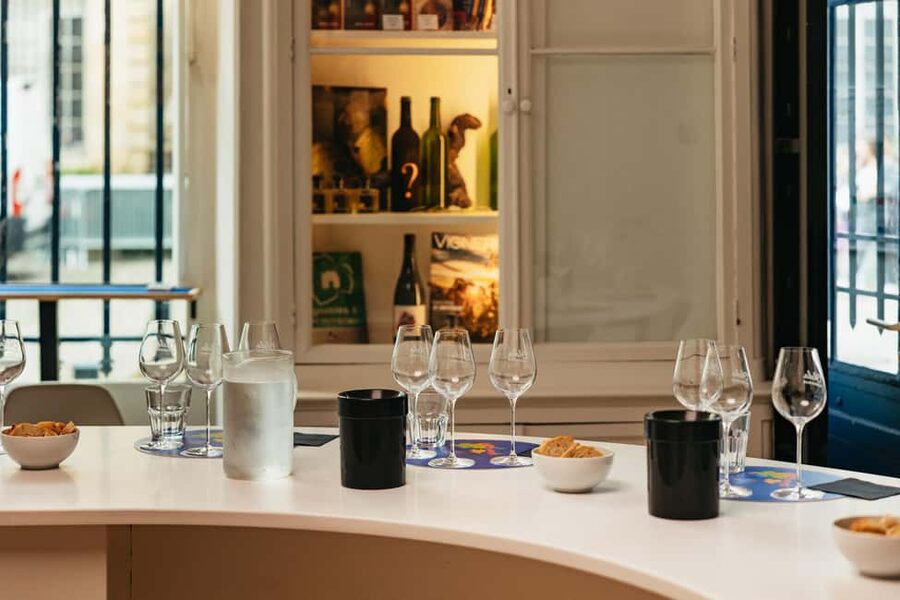
The 90-minute length is one of the experience’s strengths. It fits neatly into a morning or afternoon without taking over your day. You can pair it with sightseeing around the Grand Théâtre, the Quinconces area, or central Bordeaux.
The meeting point is Olala Bordeaux, about five minutes from the Quinconces tram stop. Tram lines B, C, and D serve the stop, so reaching the class is straightforward if you are using public transport.
Arrive with enough time to find the shop and settle in. The class involves several stages, and arriving late could mean missing the introduction to tasting technique or the explanation of Bordeaux’s wine regions.
The short format also creates a limit. You will not get an extended question period or a slow tasting of each bottle. The wines and schedule may change, although the intended quality and structure remain the same. If you want a particular château, vintage, or grape, this is not the right format to request it.
Still, for a first look at Bordeaux wine, 90 minutes is a sensible amount of time. It gives you variety without requiring a full day outside the city.
Price and what you receive for $53
At $53 per person, the class is not the cheapest way to drink wine in Bordeaux. You could buy a bottle and some cheese for less. But that comparison misses the main value: you are paying for six wines, an expert-led lesson, food, a central location, and a method you can use after the class.
The Grand Cru sample alone adds interest, though the exact wines can vary. You also receive explanations of regional grapes, appellations, classification, vinification, aging, storage, and service. For someone new to Bordeaux, that is a lot of context packed into a manageable session.
I would call the price good value for a first-time wine drinker, a couple wanting an easy cultural activity, or anyone planning a vineyard visit later. It is less compelling for an experienced Bordeaux collector who wants rare bottles, a private guide, or a château tour.
The small-group feel improves the value. You can ask questions, compare impressions, and take part in blind or sensory exercises when included in the session. Several people have found the format social enough to continue talking over wine afterward, which is a pleasant bonus but not something to count on.
Who should book this experience
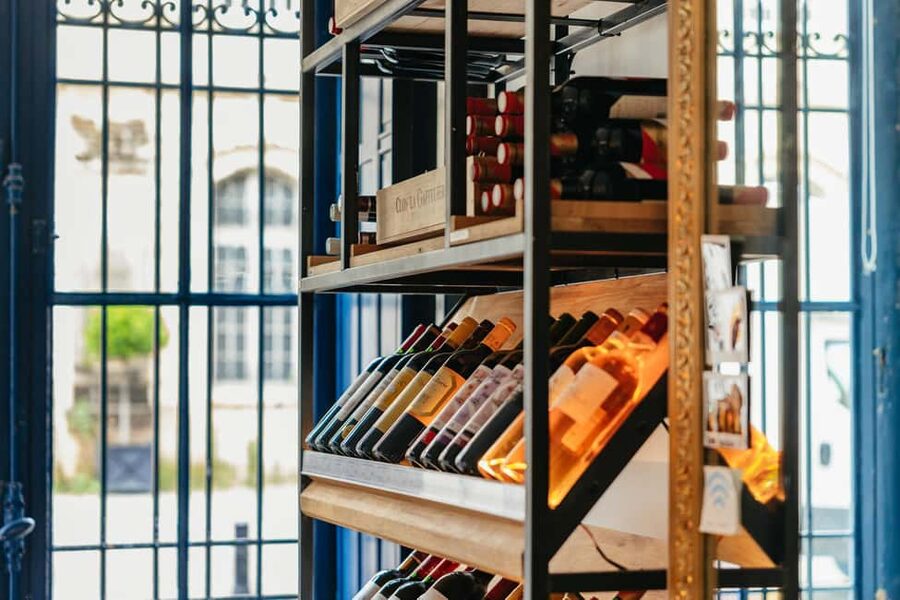
This class suits adults who want more from Bordeaux wine than a quick tasting at a bar. Beginners get a clear structure, and intermediate drinkers gain a useful regional comparison.
I would recommend it for:
- Couples who want a relaxed Bordeaux activity close to the city center
- Solo visitors looking for a social class with a clear subject
- Wine beginners who feel lost by Bordeaux labels
- People planning a château or vineyard day and wanting basic context first
- Food lovers who enjoy cheese and charcuterie with their wine
- Visitors who prefer English instruction, with French also available
It is not suitable for children under 16, and unaccompanied minors are not allowed. Pets are not permitted. You should also skip it if your main goal is to walk through vineyards, tour cellars, or see production firsthand.
The class is about understanding and tasting. It is not a party tasting or a simple drinking session. You need to be willing to listen, smell, compare, and think a little.
Booking details worth knowing
You can cancel up to 24 hours before the experience for a full refund, and the reserve-now-pay-later option gives you some flexibility while planning. Check the available start times because the class schedule can vary.
Instruction is offered in English and French. The guide may be Antoine, Hugo, Enzo, Anna, Noe, Vincent, or another member of the team, so the exact teaching style can differ. The recurring strength of the format is the combination of friendly instruction, clear explanations, and plenty to taste.
The wines themselves and the order of the session may change. Think of the advertised selection as a guide to the experience, not a promise of specific labels. The reliable elements are one white wine, five reds, food pairings, and a lesson on Bordeaux wine.
Should you book the Bordeaux wine masterclass?
Book it if you want a practical introduction to Bordeaux wine in the heart of the city. The strongest reasons are the six-wine progression, the left-bank and right-bank comparison, the sensory training, and the food pairings. The guides are praised for making the subject friendly rather than stiff, and the 90-minute format is easy to fit into a city break.
Skip it if you want a château visit, vineyard views, or a highly specialized tasting built around rare bottles. For most curious adults, though, the $53 fee buys more than six pours. It gives you a way to taste with confidence, understand Bordeaux’s basic structure, and make better choices at the next restaurant or wine shop.
FAQ
Where does the Bordeaux wine masterclass meet?
Meet your guide at Olala Bordeaux, about a five-minute walk from the Quinconces tram stop. Tram lines B, C, and D serve Quinconces.
How long does the experience last?
The class lasts 90 minutes. Start times vary, so check availability when booking.
How many wines are included?
You receive one white wine and five red wines, for six wines in total. The selection and schedule may vary.
What food is served with the wine?
The experience includes a cheese and charcuterie board, baguette, and water. The food is used to introduce basic wine and food pairing ideas.
Is the class available in English?
Yes. The instructor can teach in English or French.
Are children allowed to attend?
Children under 16 are not allowed. Unaccompanied minors are also not permitted.
Can I cancel and receive a refund?
You can cancel up to 24 hours in advance for a full refund. The reserve-now-pay-later option is also available.
More Cheese in Bordeaux
- Amsterdam: Classic Saloon Boat Cruise with Cheese & Wine
★ 4.6 · 27,035 reviews - Paris: Montmartre Cheese, Wine & Pastry Guided Walking Tour
★ 4.8 · 2,255 reviews - Amsterdam: Evening Candle Light Cruise With Wine & Cheese
★ 4.6 · 1,774 reviews - Amsterdam: Cozy Cheese & Wine Cruise Tasting Experience
★ 4.5 · 1,156 reviews
Just added around Bordeaux
- Bordeaux Wines Masterclass paired with cheeses & charcuterie★ 5.0 · 110 reviews
- Bordeaux Médoc Region Private Wine Lovers Tour with Chateau Visits & Tastings★ 5.0 · 40 reviews
- Saint-Emilion Winery Morning Tour with Local Guide★ 5.0 · 67 reviews
- Médoc luxury wine tour aboard a Citroën DS Limousine Convertible★ 5.0 · 41 reviews
- Bordeaux Food and Wine Tour : Authentic Artisanal Flavors★ 5.0 · 62 reviews
- Saint Emilion Morning Wine Tour – Winery & Tastings from Bordeaux★ 5.0 · 186 reviews
- Introduction to Bordeaux wines paired with cheeses & charcuterie★ 5.0 · 175 reviews
- Free Walking Bordeaux Tour ENG + 1 glass of wine (Tip based)★ 5.0 · 90 reviews
Wine Tours in Bordeaux, compared.
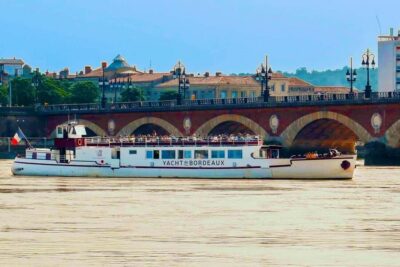
River Garonne Cruise with Glass of Wine and Canelé
Read our review →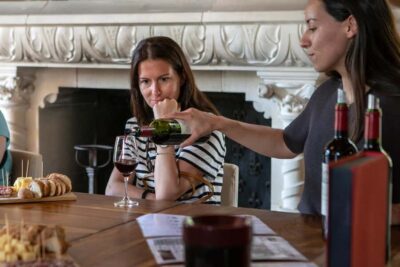
Afternoon Saint-Emilion Wine Tasting & snack
Read our review →
Medoc or Saint Emilion Wine Tasting and Chateau from Bordeaux
Read our review →
Saint Emilion Day Trip with Sightseeing Tour & Wine Tastings from Bordeaux
Read our review →
Saint Emilion Half-Day Trip with Wine Tasting & Winery Visit from Bordeaux
Read our review →
Browse the lists this tour appears in