
REVIEW · BORDEAUX
Blind Tasting: 4 Bordeaux Natural Wine + Cheese experience
Bordeaux wine can feel like a secret code, but this one-hour tasting gives you a friendly way in. I like the blind format, which makes you focus on aroma and flavor before a famous name or price changes your mind. I also like the useful spread of four local wines: one white, two reds, and a sweet wine, each from a different Bordeaux area.
The cheese and two types of dry meat give you something practical to test with each glass. The main consideration is time: one hour goes quickly, and the tasting can be lively enough to run well beyond the official schedule. You’ll also need to meet near Saint Michel Church, not at a winery in the countryside.
Key points to know before booking
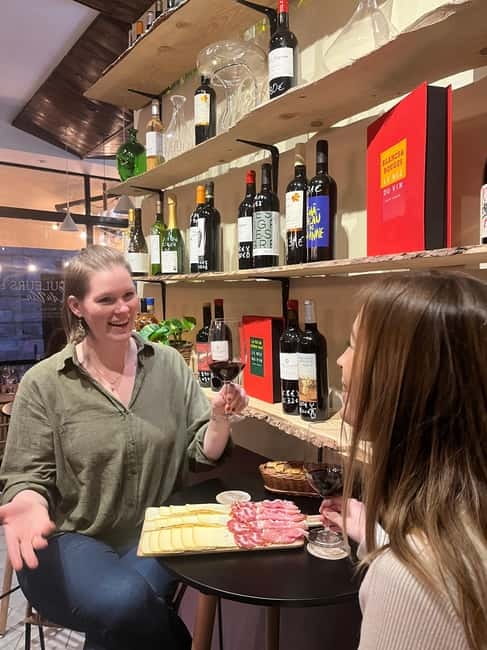
- Four Bordeaux wines served blind: Taste one white, two reds, and one sweet wine before learning what is in your glass.
- A lesson you can use later: Your sommelier covers Bordeaux grapes, regions, labels, food pairing, and the 1855 classification.
- Local, organic, small-family production: All four wines come from local small family chateaux and are described as organic.
- Cheese and dry meat included: Three kinds of cheese and two types of dry meat turn the tasting into a small food pairing session.
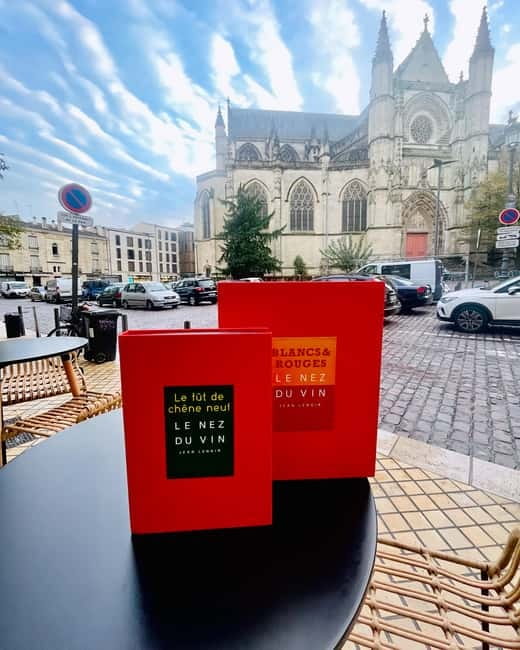
- A central Bordeaux meeting point: Find the group in front of the Flamboyant Saint Michel Church in Nouvelle-Aquitaine.
- Best for adults who enjoy questions: The experience is not suitable for children under 18 or pregnant women, and allergies should be declared in advance.
Four blind glasses that make Bordeaux easier to understand
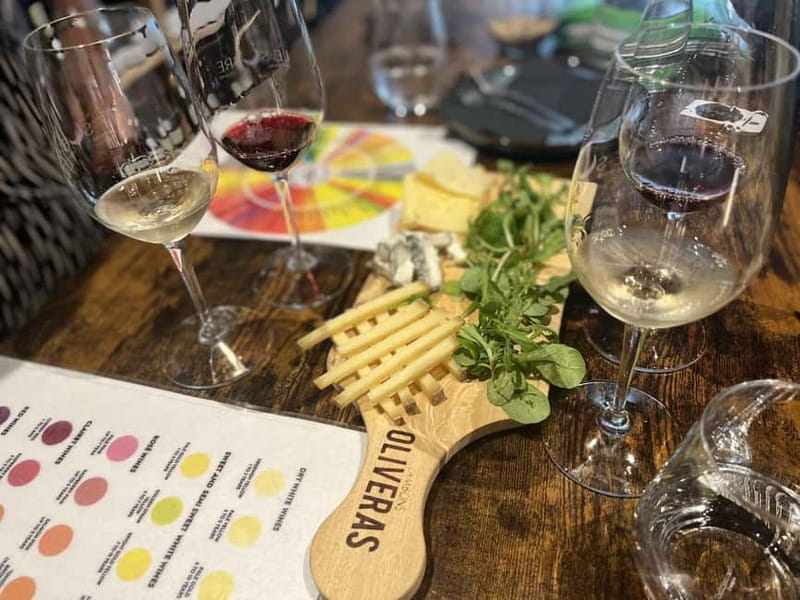
The heart of the experience is simple: four Bordeaux wines arrive without their identities being revealed at first. You taste before you know the grape, region, producer, or style. That small act removes some of the pressure many people feel around French wine.
You do not need to arrive with a polished vocabulary. You can pay attention to color, smell, sweetness, acidity, body, and the way the wine feels with food. The sommelier helps connect those impressions to Bordeaux’s grape varieties and wine regions.
The flight includes one white, two reds, and one sweet wine. That range matters because Bordeaux is often reduced to red blends, especially the famous wines from the Left Bank and Right Bank. A white and a sweet wine show you a wider picture of the region.
The tasting also uses wines from different Bordeaux areas. The exact chateaux and vintages can vary, so you should not book expecting a fixed producer list. The point is comparison: four glasses, several styles, and a chance to notice how place and grape affect the result.
More Wine Tours in Bordeaux
- Bordeaux: Cité du Vin Entry Ticket and Wine Tasting
★ 4.6 · 3,885 reviews - Bordeaux: River Garonne Cruise with Glass of Wine and Canelé
★ 4.5 · 3,630 reviews - From Bordeaux: Afternoon Saint-Emilion Wine Tasting & snack
★ 4.8 · 1,581 reviews
What the blind tasting adds
A blind tasting is not a test you can fail. It is a way to notice your own preferences without being guided by a label. You may prefer the wine that seems less grand, or you may discover that a sweet wine works better with savory food than you expected.
The format also makes the learning active. Instead of listening to a long lecture about Bordeaux and then trying to remember it, you make a guess, hear the explanation, and taste again. That sequence helps the information stick.
The sommelier reveals the wines after you have had time to form an impression. You then hear the stories of the winemakers, the vintage, and the wine’s place within Bordeaux. The experience is designed to be conversational, so bring questions. Ani, one of the hosts praised for her teaching and readiness to answer questions, is a name you may encounter when booking.
One useful lesson concerns hangovers. The session addresses the common belief that wine’s sulphur is the main culprit, then explains that fruits and vegetables can contain more sulphur than a bottle of wine. This is a practical myth-busting detail, though it should not be read as a reason to drink more. You still have four alcoholic pours in a short period, so pace yourself.
From grape varieties to the 1855 classification
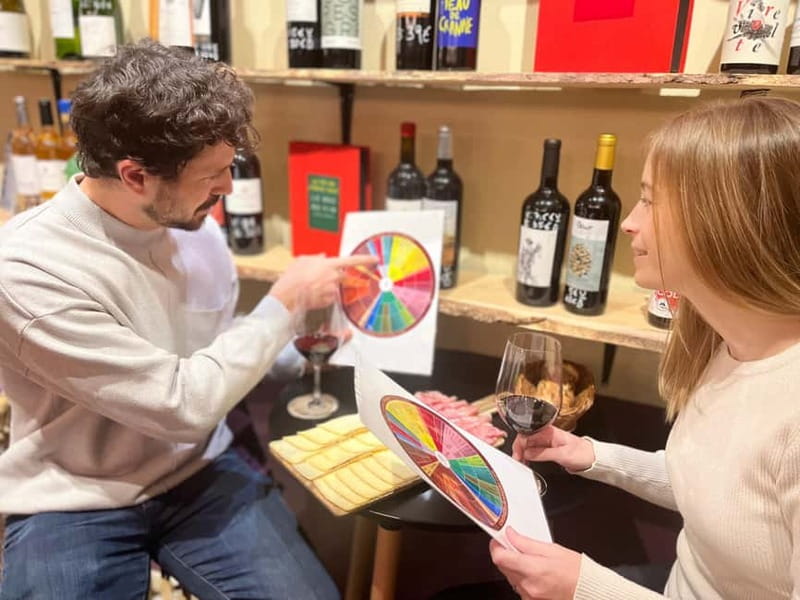
Bordeaux can be confusing because its labels often emphasize the chateau and appellation more than the grape variety. The sommelier explains the main grapes used in the region and shows you how they relate to the wines in front of you.
You will also learn about the important wine regions of Bordeaux. The lesson is especially useful if you plan to buy a bottle later, since regional names can tell you more than a quick glance at the front label. You are taught how to read a French wine label like a professional, including the kind of information that helps you identify origin and style.
The 1855 classification receives its own explanation. This historical ranking is one reason Bordeaux labels can seem intimidating, with classified growths and chateau names carrying so much weight. A short introduction gives you context without requiring you to memorize a long list of properties.
The blind approach keeps this historical detail from becoming a dry classroom exercise. You first taste the wine as a drink, then learn how its name, place, and status fit into the larger Bordeaux system. That order is helpful for beginners and still interesting for people who already know a little about French wine.
Cheese, dry meat, and the practical side of pairing
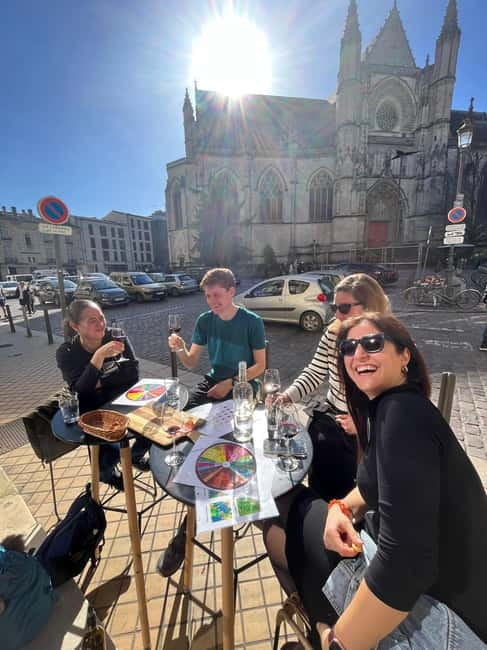
Three kinds of cheese and two types of dry meat are included. This is more than a snack, since the food lets you compare how the same wine changes beside salt, fat, creaminess, and savory flavors.
You might find that a wine you did not favor on its own works better with cheese. The sweet wine can also show why dessert-style Bordeaux is not limited to the end of a meal. The exact cheeses and meats are not specified, so do not expect a fixed menu.
The food portion makes the $34 price easier to assess. You are not paying only for four small pours. You are also paying for a guided lesson, local organic wines from small family chateaux, three cheeses, two dry meats, and direct access to a sommelier for questions.
Still, the value depends on what you want. If your goal is a full meal or generous glasses, this is not the right purchase. Extra drinks and food from the bar are not included. If you want a compact introduction to Bordeaux with enough food to make the tasting comfortable, the price is fair.
More wine and cheese tastings in Bordeaux:
- Tasting of 6 Bordeaux wines and pairing charcuterie & cheese
★ 5.0 · 199 reviews - Bordeaux: Wine Masterclass with Cheese and Charcuterie Board
★ 4.9 · 184 reviews - Bordeaux Gourmet Experience: Cheese & Wine Tasting
★ 4.6 · 169 reviews - Bordeaux Afternoon Food Tour : Sweets, Wine and Cheese
★ 5.0 · 38 reviews
Why the small family chateaux detail matters
All the wines are described as 100 percent local, organic, and made by small family chateaux. That gives the tasting a clear focus on producers rather than only famous labels.
You should keep the wording in perspective. Organic does not mean every wine will suit your taste, and small production does not automatically mean better wine. What it does offer is a chance to hear about family winemakers and their methods while tasting wines selected for a teaching experience.
The use of natural wine is another reason this tasting may appeal to curious drinkers. Natural wine is not a single flavor profile, so four glasses can give you a sense of the range rather than one fixed idea. The sommelier’s role is important here, since clear explanations can help you separate the wine’s style from assumptions about the category.
The event also promises the stories of the winemakers and vintages. Those stories add human scale to a subject that can otherwise feel dominated by prestigious names and complicated classifications.
Meeting at Saint Michel Church
The meeting point is in front of the Flamboyant Saint Michel Church. This is convenient if you are already exploring Bordeaux, but it is not a vineyard visit. You will not be touring a chateau, walking through vines, or traveling into the surrounding wine country during this one-hour activity.
That urban setting is both a benefit and a limit. You can fit the tasting into a day of sightseeing without arranging transport to a distant estate. On the other hand, you should choose a separate countryside visit if your priority is seeing cellars, vineyards, or winemaking equipment.
Check the starting time when you book, since the activity has a one-hour duration but no single universal start time. A host may continue talking after the scheduled hour. One account describes the session lasting well beyond the formal duration, so allow extra time if your evening plans are tight.
The experience is offered in French and English, and it is wheelchair accessible. You should mention any allergies before attending, especially because cheese and dry meat are part of the included food.
How the hour is likely to unfold
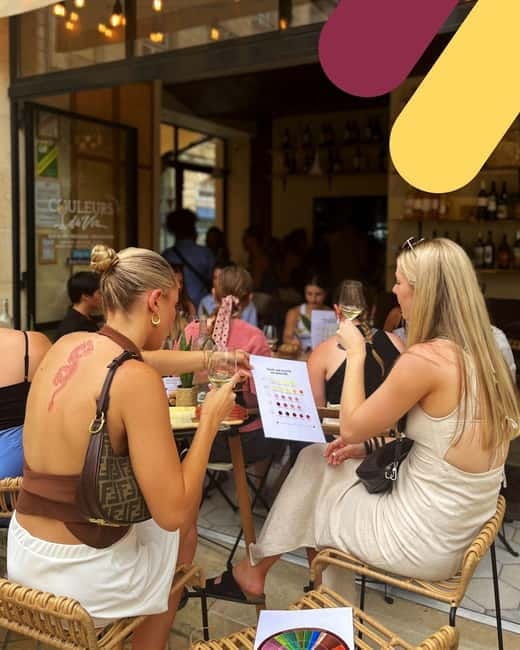
The session begins with an introduction to Bordeaux wine and the blind tasting method. You receive the first glass without the usual label clues, then begin comparing what you smell and taste.
The sommelier guides you through the four wines, one white, two reds, and one sweet wine. The conversation covers grape varieties and the major Bordeaux regions, giving you a framework for understanding why the glasses differ.
As the tasting progresses, you pair the wine with the included cheese and dry meat. This is where the session becomes hands-on. Instead of receiving general advice about food pairing, you can taste the combination yourself.
The sommelier then connects the glasses to winemakers, vintages, and the 1855 classification. You learn how to read a French label, hear an explanation of sulphur and hangovers, and get the chance to ask questions before the final reveal.
The formal duration is one hour. In practice, the pace may depend on the group and the host. That can be a plus if you enjoy conversation, but it can be inconvenient if you have a timed reservation afterward.
Who will get the most from this tasting
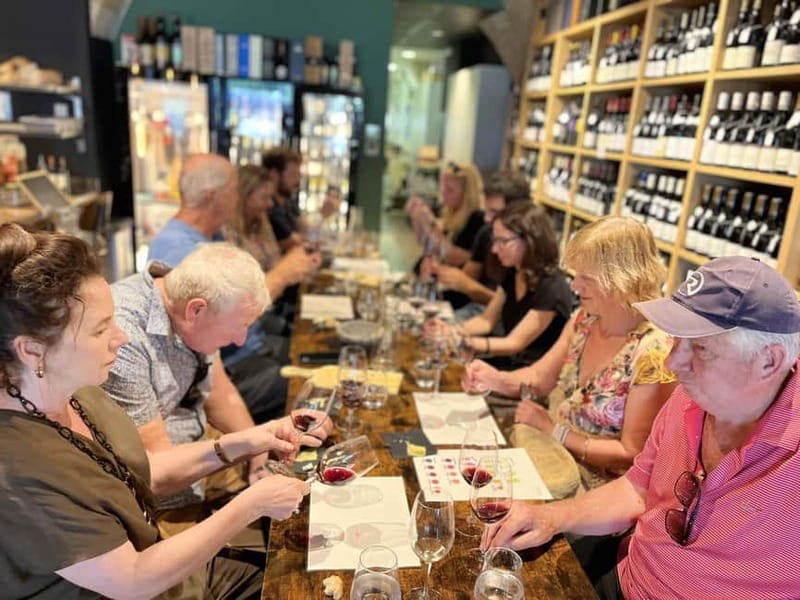
I would choose this for a first visit to Bordeaux if you want wine knowledge without committing half a day to a vineyard excursion. It also suits people who already enjoy wine but want a clearer grasp of French labels, Bordeaux regions, and the differences between red, white, and sweet styles.
The activity works particularly well for couples, friends, and families with adult members. The playful act of smelling and guessing makes it less formal than a technical tasting, and the food gives the group something to discuss between glasses.
It is not suitable for children under 18 or pregnant women. It is also a poor fit if you dislike alcohol, want a large meal, or expect to choose bottles from a long menu. Extra drinks and food are not included.
People with allergies should speak up before the tasting. The included items contain cheese and dry meat, but the specific ingredients are not listed, so you should not wait until the first plate arrives to ask.
Price, timing, and cancellation
At $34 per person, this is priced as an accessible introduction rather than a luxury wine event. Four local organic wines, a sommelier-led lesson, three cheeses, and two types of dry meat make the cost reasonable for anyone who wants both tasting and instruction.
The value is strongest if you use the lesson later. Knowing how to read a Bordeaux label and how to compare wine with food can help you order with more confidence at restaurants and shops. If you already have extensive Bordeaux knowledge, the relaxed setting and selection of small family chateau wines may matter more than the basic explanations.
You can cancel up to 24 hours in advance for a full refund. You can also reserve now and pay later, which helps if your Bordeaux schedule is still changing. Check the available starting times before booking, and leave room in your day in case the conversation lasts longer than one hour.
Should you book the Bordeaux blind tasting?
I would book it if you want a short, central, good-value introduction to Bordeaux wine. The strongest reasons are the four-style comparison, the practical label lesson, and the chance to taste organic wines from small local family chateaux with cheese and dry meat.
I would skip it if your main goal is a vineyard visit, a full meal, or a long technical seminar. For most adults spending time in Bordeaux, though, this is a friendly way to replace wine guesswork with a few useful tools. Arrive ready to smell, taste, ask questions, and accept that your favorite glass may not be the one you expected.
FAQ
Where does the Bordeaux wine tasting meet?
The meeting point is in front of the Flamboyant Saint Michel Church in Bordeaux.
How long does the experience last?
The listed duration is one hour. The conversation may continue longer, so allow extra time if you have plans afterward.
How many wines are included?
Four Bordeaux wines are included in the tasting.
What types of wine will I taste?
The selection includes one white wine, two red wines, and one sweet wine.
Are the wines tasted blind?
Yes. The activity is a blind tasting, with the wine details revealed as part of the experience.
What food is included?
You receive three different types of cheese and two different types of dry meat.
Are the wines local and organic?
The wines are described as 100 percent local and organic, and they come from small family chateaux.
Which languages are available?
The experience is offered in French and English, with a live guide.
Is the activity wheelchair accessible?
Yes, the activity is wheelchair accessible.
Can children attend the tasting?
No. The activity is not suitable for children under 18, and it is also not suitable for pregnant women.
What should I do if I have an allergy?
You should mention any allergies before attending, since cheese and dry meat are included.
Can I cancel my booking?
Yes. You can cancel up to 24 hours in advance for a full refund.
Can I reserve before paying?
Yes. A reserve-now-and-pay-later option is available, subject to the booking conditions.
More Food & Drink in Bordeaux
- Medoc or Saint Emilion Wine Tasting and Chateau from Bordeaux
★ 5.0 · 1,415 reviews - Saint Emilion Half-Day Trip with Wine Tasting & Winery Visit from Bordeaux
★ 4.5 · 1,034 reviews - From Bordeaux: Half-Day Saint-Émilion Tour and Wine Tasting
★ 4.7 · 699 reviews - Bordeaux Wine and Trade Museum Admission Ticket with Wine Tasting
★ 4.5 · 599 reviews
More Cheese in Bordeaux
- Amsterdam: Classic Saloon Boat Cruise with Cheese & Wine
★ 4.6 · 27,035 reviews - Paris: Montmartre Cheese, Wine & Pastry Guided Walking Tour
★ 4.8 · 2,255 reviews - Amsterdam: Evening Candle Light Cruise With Wine & Cheese
★ 4.6 · 1,774 reviews - Amsterdam: Cozy Cheese & Wine Cruise Tasting Experience
★ 4.5 · 1,156 reviews
Just added around Bordeaux
- Bordeaux Wines Masterclass paired with cheeses & charcuterie★ 5.0 · 110 reviews
- Bordeaux Médoc Region Private Wine Lovers Tour with Chateau Visits & Tastings★ 5.0 · 40 reviews
- Bordeaux Food and Wine Tour : Authentic Artisanal Flavors★ 5.0 · 62 reviews
- Saint-Emilion Winery Morning Tour with Local Guide★ 5.0 · 67 reviews
- Médoc luxury wine tour aboard a Citroën DS Limousine Convertible★ 5.0 · 41 reviews
- Saint Emilion Morning Wine Tour – Winery & Tastings from Bordeaux★ 5.0 · 186 reviews
- Introduction to Bordeaux wines paired with cheeses & charcuterie★ 5.0 · 175 reviews
- Free Walking Bordeaux Tour ENG + 1 glass of wine (Tip based)★ 5.0 · 90 reviews
Wine Tours in Bordeaux, compared.
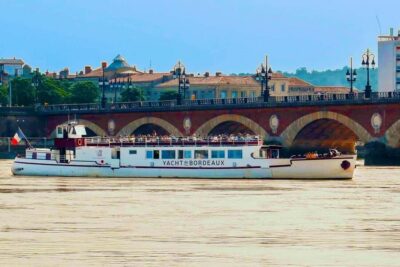
River Garonne Cruise with Glass of Wine and Canelé
Read our review →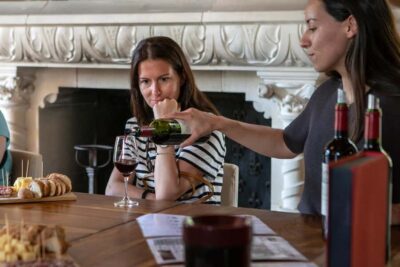
Afternoon Saint-Emilion Wine Tasting & snack
Read our review →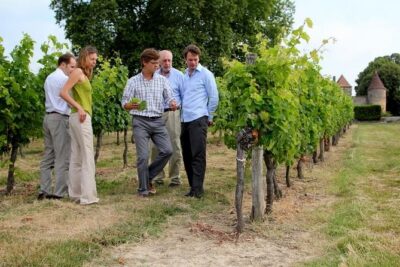
Medoc or Saint Emilion Wine Tasting and Chateau from Bordeaux
Read our review →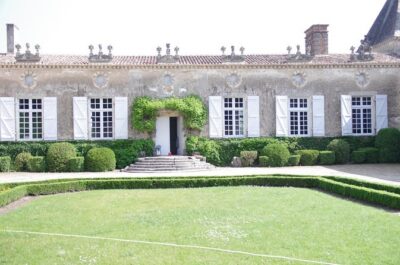
Saint Emilion Day Trip with Sightseeing Tour & Wine Tastings from Bordeaux
Read our review →
Saint Emilion Half-Day Trip with Wine Tasting & Winery Visit from Bordeaux
Read our review →
Browse the lists this tour appears in