
REVIEW · FRANCE
Château de Luc: Unique visit and wine tasting
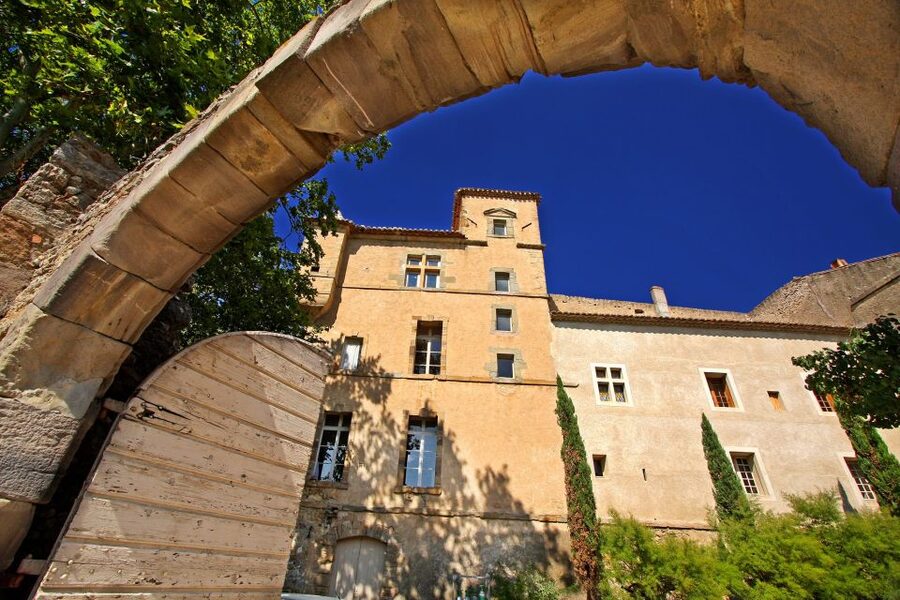
The oldest surprise here is below your feet: a 14th-century underground cellar beneath Château de Luc. The visit connects the old rooms of the château with the rise, crisis, and revival of wine in the Languedoc, then ends with organic wines in a converted stable.
I like two things right away. First, the family connection gives the visit a personal feel, especially when Jeanne leads the tour and explains both the estate and the work behind its bottles. Second, the $15 price includes three to six wines, not just a token sip. The main consideration is that the tour is not suitable for wheelchair users, and one critical assessment found the visit short and the wines unconvincing.
Key points
- A cellar dating to the 14th century: Go underground to see the oldest part of the visit and connect the building with centuries of local wine production.
- A focused story about the Midi wine region: Learn about the 19th-century golden age and the major wine revolt of 1907.
- Organic wines from several southern French appellations: Tasting choices can include IGP Pays d’Oc, AOC Languedoc, Corbières, and Minervois.
- Family-led guiding: Jeanne has been praised for her simple, personal explanation of the château, the wine, and the family’s work.
- Three languages and a low price: The tour is offered in French, English, and Spanish, with tasting included for $15.
- A useful stop for wine questions: You can ask about vineyard care, winemaking, and places to see around the area.
Starting at a family-run château
Château de Luc is not presented as a grand monument where you simply walk through polished rooms and admire old stone. The point is the link between the building, the Fabre family, and the wine made here.
That makes the opening part of the visit useful. You begin in the historic rooms, moving through the château’s past before the tour turns toward the vineyards and cellar. I like this order because it gives the tasting a setting and a story. You are not just sampling a bottle with a French name. You are seeing the place where the family’s wine work has developed over time.
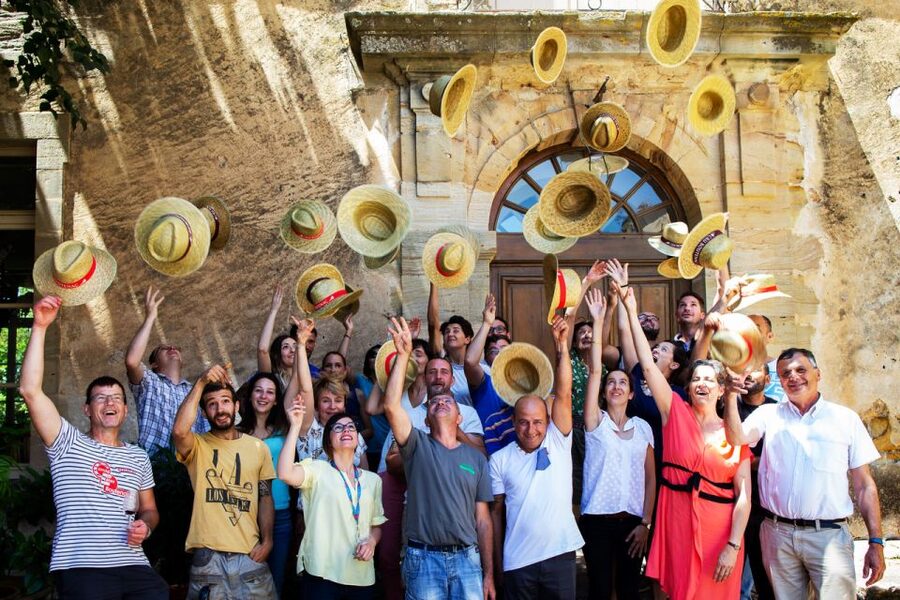
The family-run character also shapes the tone. Jeanne, one of the guides, has been singled out for her passion, expertise, and straightforward manner. Another family member has led a private-feeling visit for a small group, explaining the estate and winery before taking the group below the old home. That kind of family contact is one of the best reasons to choose this experience over a generic tasting room.
You should still keep your expectations in check. This is a compact cultural and wine visit, not a full-day vineyard expedition with a long meal or a broad tour of every production area. The published duration is listed as one day for booking purposes, while the actual guided visit is described by one participant as short. If you want a tightly focused stop, that works well. If you want hours among the vines, ask before booking.
More tastings around France:
- Bordeaux: Cité du Vin Entry Ticket and Wine Tasting
★ 4.6 · 3,885 reviews - Montmartre Hill French Gourmet Food and Wine Tasting Walking Tour
★ 5.0 · 2,588 reviews - From Paris: Loire Valley Castles Day Trip With Wine Tasting
★ 4.6 · 1,727 reviews
The château rooms put the bottles in context
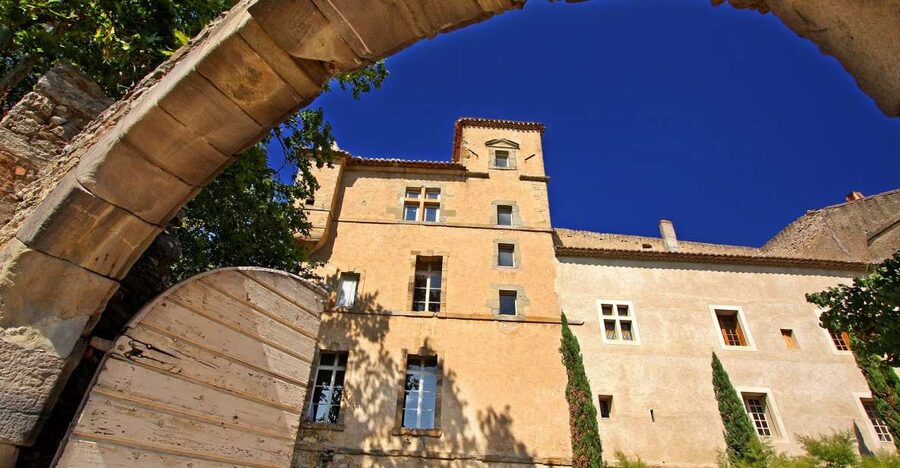
The first section takes you through the historic rooms of Château de Luc. The important idea is not simply the age of the walls. You are following the story of a property that has seen the wine trade change from one century to the next.
The guide brings in the larger story of the Languedoc and the Midi wine region. The 19th century was a major period for local wine production, followed by serious trouble and the great revolt of 1907. That revolt is an important part of southern French wine history, and it helps explain why wine here is tied so closely to work, local identity, and politics.
I appreciate this regional frame. Many tastings give you grape names and tasting notes but skip the forces that shaped the industry. Here, the history is meant to explain the place. You hear about the good years, the difficult years, and the people whose lives depended on wine.
The guide’s approach matters. The strongest descriptions point to explanations that are complete but easy to follow, with a warm welcome and a clear family connection. The visit can feel especially personal when the guide speaks about the château as part of an ongoing family business rather than as a frozen historic property.
Still, this section may not satisfy you if you want a formal architectural tour. The available details focus on the wine story and the family’s role, not on a room-by-room inventory of furniture, art, or design. Think of the rooms as the first chapter of a wine history lesson.
Going below ground into the 14th-century cellar
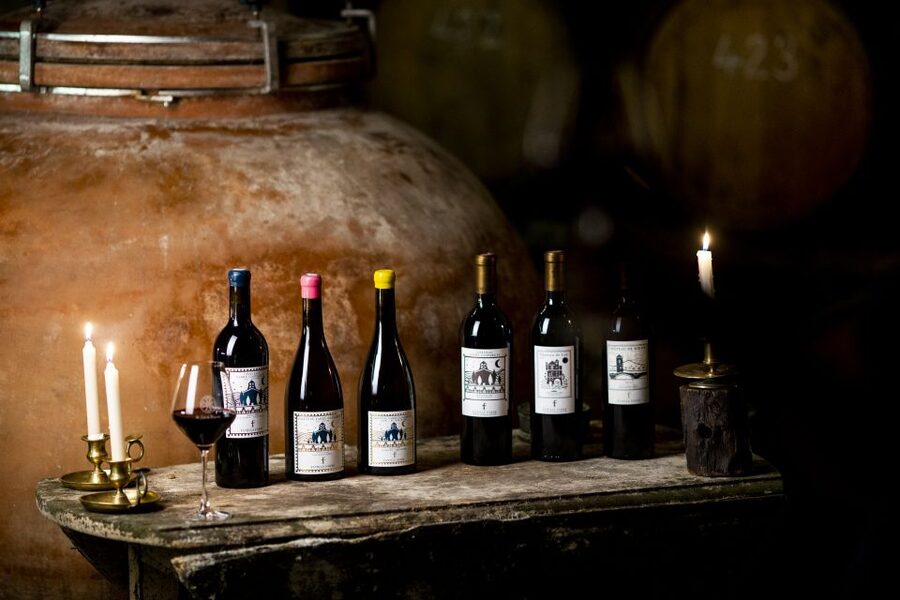
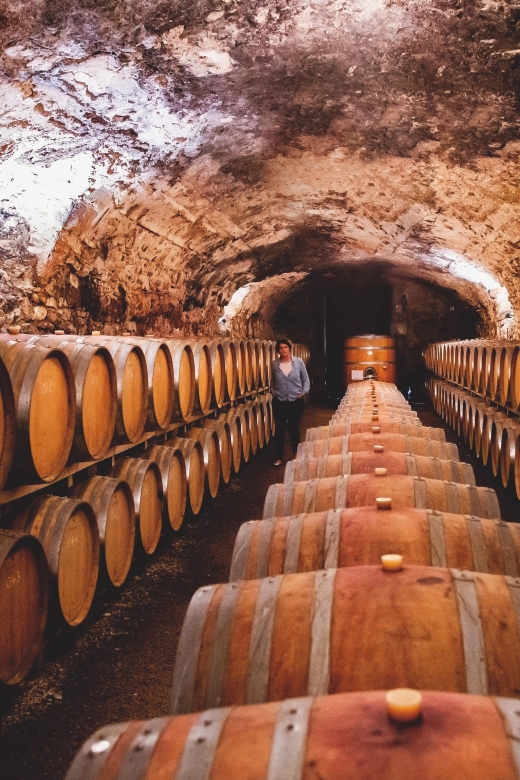
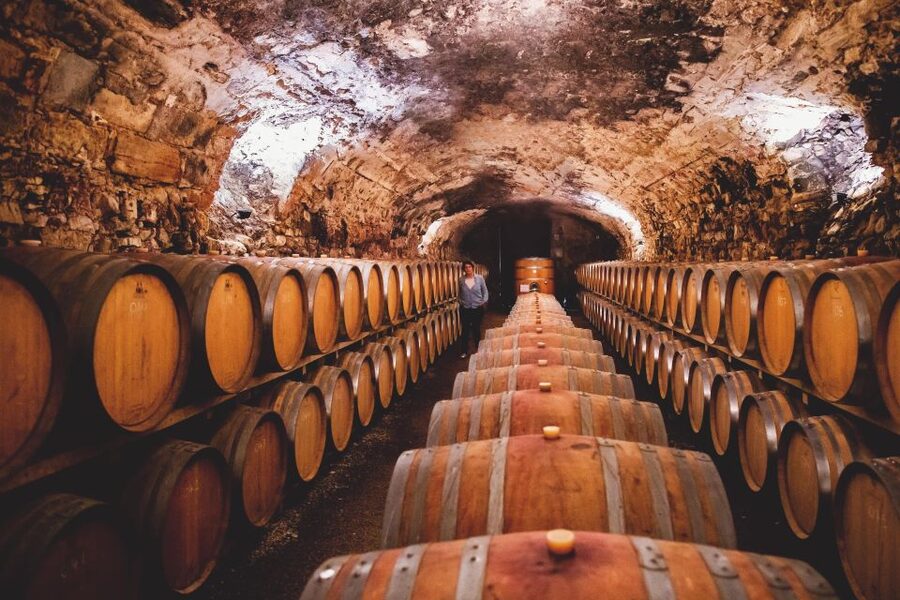
The underground cellar is the visit’s strongest physical feature. You pass beneath the old château into a space dating from the 14th century, where the setting shifts from historic rooms to the practical world of storage and aging.
This is where the age of the property becomes tangible. Above ground, history can feel abstract. Below ground, old stone and cellar space make the connection easier to grasp. The visit has also included a look at aging barrels, giving you a chance to see where wine is held before it reaches the bottle.
I like that the cellar is not treated as a quick photo stop. It links the medieval building to the estate’s current wine work. You see how an old structure can remain part of a living business instead of serving only as decoration.
The cellar may be less comfortable for some people. Château de Luc is not suitable for wheelchair users, and underground historic spaces can require extra care. The information provided does not specify the number of stairs, floor surfaces, or lighting, so ask the château directly if those details matter to you.
The cellar also rewards a little curiosity. Ask how the old space is used today, what wines age there, and how the family balances historic buildings with modern winemaking. Questions about vineyard management and production are welcome, so you do not need to limit yourself to the standard tasting vocabulary.
The 1907 revolt and the story of southern wine
The stop in the cellar is part of a larger account of the Midi wine region. The visit highlights the 19th-century golden age and the great revolt of 1907, a period when wine was not merely a drink or an export product. It was central to local work and family income.
That context makes the tasting more meaningful. When you try a Languedoc or Corbières wine after hearing about the region’s difficult past, the bottle represents more than a style label. It belongs to a place that has had to adjust to changing markets, production methods, and public taste.
I would pay attention here if you are interested in Occitan history as well as wine. One French participant particularly valued the account of the family and château, along with the broader history of Occitania. The tour gives you a way to connect local events with the buildings and vineyards around you.
The historical section is also the best reason to book this experience even if you are not a serious wine collector. You do not need to know much about appellations in advance. The guide can give you a basic framework, then the tasting lets you try the results.
A few more wine days around France worth comparing
- Authentic Parisian Gourmet Food Tour with 10 Local Dishes & Wines
★ 5.0 · 4,754 reviews - From Bordeaux: Afternoon Saint-Emilion Wine Tasting & snack
★ 4.8 · 1,581 reviews - Medoc or Saint Emilion Wine Tasting and Chateau from Bordeaux
★ 5.0 · 1,415 reviews - Saint-Émilion: Grand Cru Classé Winery Visit and Tasting
★ 4.6 · 1,118 reviews
Tasting organic wines in the former stable
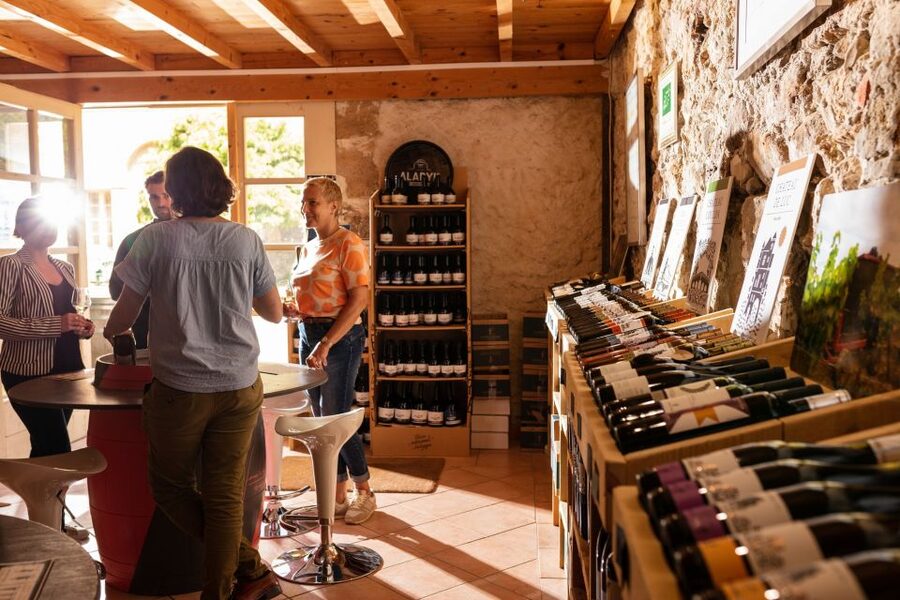
The tasting takes place in an old stable that now serves as the tasting cellar. This is a good choice for the setting. The stable keeps a working, rural character, while the tasting gives you a comfortable place to compare bottles and ask questions.
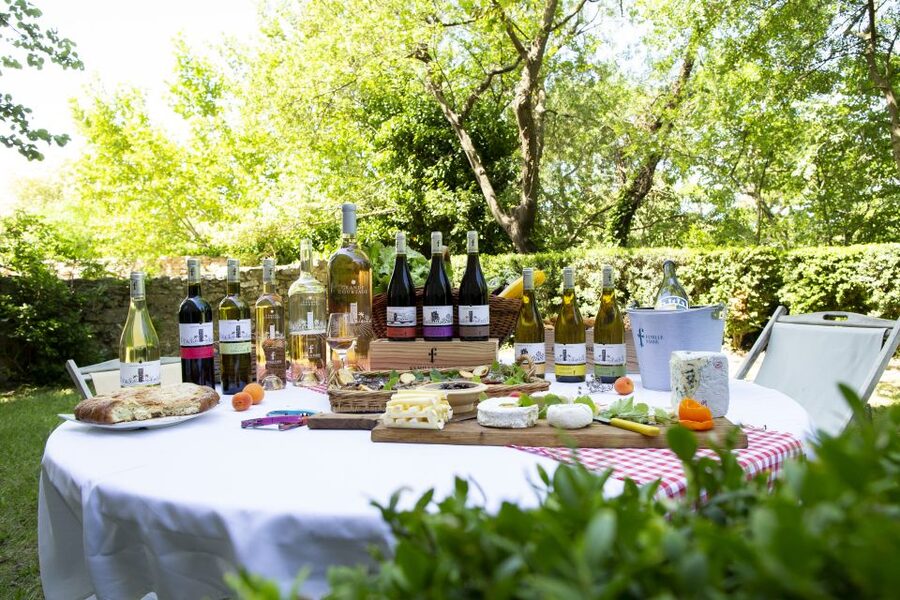
You receive a selection of three to six organic wines. The range can include IGP Pays d’Oc, AOC Languedoc, Corbières, and Minervois. That spread lets you compare wines from different southern French designations rather than tasting only one house style.
The number of wines may vary, so do not assume you will taste six every time. Even at the lower end, three wines for a $15 visit is a fair deal, particularly because the cellar tour and historical guiding are included. Under-age children can visit free, though the tasting itself is naturally for adults.
The wines are the one area where I would keep your judgment independent. Most of the available feedback is strongly positive about the welcome, the guide, and the overall experience. One participant, however, found the wines low in quality and felt the visit lacked interest. That is a useful warning. Organic production does not guarantee that every bottle will match your taste.
The better approach is to use the tasting as a comparison. Tell the guide what you usually like, ask about the grapes and production methods, and try more than one style before deciding. Several bottles are available for purchase, and the prices have been described as reasonable. If you find a favorite, buying directly from the producer can be a practical end to the visit.
What makes the guide important
A family wine visit rises or falls on the person speaking. At Château de Luc, the strongest descriptions focus on guides who are welcoming, motivated, and able to explain the estate without making the experience feel stiff.
Jeanne has received particular praise for passing on her passion for wine and for the family’s domains with simplicity and authenticity. That is the tone I would hope for here: clear answers, local stories, and enough technical detail to help you understand what is in the glass.
The tour is offered in French, English, and Spanish. That makes it easier to follow the historical material and ask questions in the language you prefer. Language is especially important during the cellar portion, where a short explanation about aging, production, or regional labels can add a lot to the experience.
Timing may also be handled with some flexibility. One group arrived later because of a time problem and was still accommodated. I would not treat that as a guarantee, but it suggests that contacting the château is worthwhile if your plans slip.
Who will get the most from this $15 visit
I would choose Château de Luc if you want a compact combination of wine, family history, and an old building. It suits you especially well if you enjoy understanding how a drink connects to the place that produces it.
This is a good match for:
- Wine drinkers who want to compare several organic southern French bottles.
- History-minded visitors interested in the Languedoc and Occitania.
- Couples or small groups who prefer a family-run setting over a large commercial tasting.
- Parents traveling with under-age children, since children can visit free.
- English- or Spanish-speaking visitors who want a guided tour in their language.
- Anyone looking for a modestly priced stop with both sightseeing and tasting.
I would think twice if your main goal is a long vineyard walk, an elaborate food pairing, or a highly technical wine course. The information available points to historic rooms, the underground cellar, and a tasting in the former stable. It does not promise a meal, a detailed vineyard trek, or a full production tour.
Accessibility also needs attention. Wheelchair users cannot take this experience as listed. Ask about stairs and the cellar layout if anyone in your party has limited mobility.
Practical value, timing, and booking flexibility
At $15 per person, the price is strong for what is included. You receive the guided history of the château, access to the 14th-century underground cellar, and three to six organic wines. That is more useful than a tasting alone, especially in a region where a small amount of local context can change how you understand the bottle.
The value is best for people who would otherwise pay separately for a wine tasting and a historic site. Here, the two parts are joined. The family story gives the tasting purpose, while the wine gives the historic visit a present-day connection.
The booking terms are also forgiving. You can cancel up to 24 hours before the experience for a full refund, and you can reserve now and pay later. The activity is listed as valid for one day, with starting times checked through availability. Since the exact visit length is not clearly stated, I would confirm the start time and expected duration if you are arranging transport or another timed activity.
Directions deserve a little care. One participant found the visitor-area directions unclear. I would check the meeting point before setting out rather than relying on a last-minute search. That small step can keep a relaxed wine visit from becoming a rushed arrival.
Should you book Château de Luc?
I would book it if you want an affordable, family-led introduction to Languedoc wine with a genuine historic setting. The 14th-century cellar, the account of the 1907 revolt, and the chance to taste three to six organic wines give the visit more substance than a standard pour-and-leave stop.
I would skip it if you need wheelchair access, want a long half-day activity, or care only about finding the highest-rated wine. One person found the tasting disappointing, and the visit may feel brief if you expect a large estate tour.
For most wine-curious visitors, the balance is favorable. Come for the cellar and regional story, listen closely to the guide, and treat the tasting as a chance to compare rather than a promise that every bottle will suit you. At $15, that is a sensible way to spend part of your time in southern France.
FAQ
How much does the Château de Luc visit cost?
The experience costs $15 per person. Under-age children can visit free.
How many wines are included?
The tasting includes a selection of three to six organic wines.
Which wines might I taste?
The selection can include IGP Pays d’Oc, AOC Languedoc, Corbières, and Minervois wines.
What languages are available?
The live guided tour is offered in French, English, and Spanish.
Is the tour suitable for wheelchair users?
No. The activity is listed as unsuitable for wheelchair users.
Can I cancel my booking?
Yes. You can cancel up to 24 hours in advance for a full refund.
Can I reserve without paying immediately?
Yes. The reserve-now, pay-later option lets you book your place without paying at the time of reservation.
Just added around France
- Bordeaux Wines Masterclass paired with cheeses & charcuterie★ 5.0 · 110 reviews
- Bordeaux Médoc Region Private Wine Lovers Tour with Chateau Visits & Tastings★ 5.0 · 40 reviews
- Bordeaux Food and Wine Tour : Authentic Artisanal Flavors★ 5.0 · 62 reviews
- Saint-Emilion Winery Morning Tour with Local Guide★ 5.0 · 67 reviews
- Médoc luxury wine tour aboard a Citroën DS Limousine Convertible★ 5.0 · 41 reviews
- Saint Emilion Morning Wine Tour – Winery & Tastings from Bordeaux★ 5.0 · 186 reviews
- Introduction to Bordeaux wines paired with cheeses & charcuterie★ 5.0 · 175 reviews
- Bordeaux Afternoon Food Tour : Sweets, Wine and Cheese★ 5.0 · 38 reviews
Wine Tours in France, compared.
Authentic Parisian Gourmet Food Tour with 10 Local Dishes & Wines
Read our review →
Loire Valley Castles Day Trip from Paris with Complementary Wine
Read our review →

River Garonne Cruise with Glass of Wine and Canelé
Read our review →
Montmartre Hill French Gourmet Food and Wine Tasting Walking Tour
Read our review →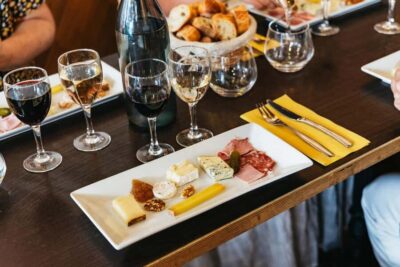
Montmartre Cheese, Wine & Pastry Guided Walking Tour
Read our review →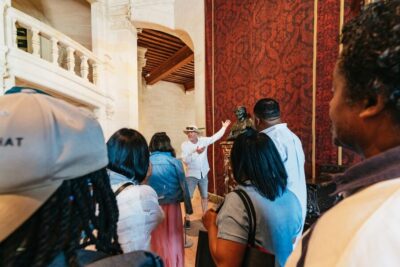
Loire Valley Castles Day Trip With Wine Tasting
Read our review →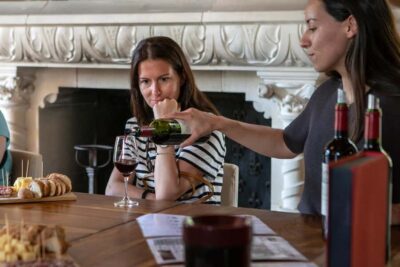
Afternoon Saint-Emilion Wine Tasting & snack
Read our review →Browse the lists this tour appears in