
REVIEW · BORDEAUX
Make your own cuvée of Bordeaux wine
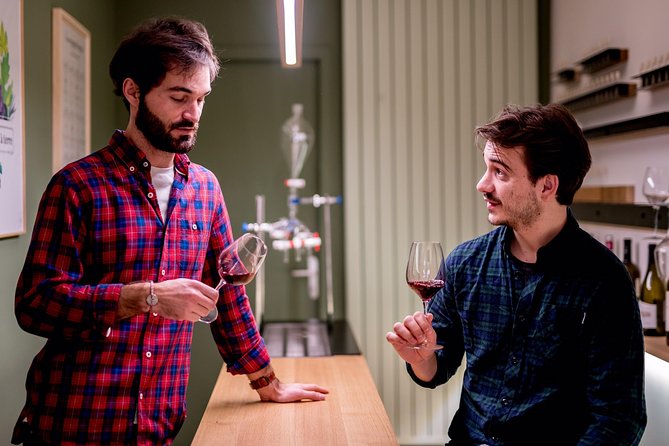
The best part of this Bordeaux experience is that you do more than taste wine. You build a blend from Merlot, Cabernet Sauvignon, and Cabernet Franc, adjusting the proportions until the result suits your palate. It turns Bordeaux’s famous art of blending into something you can see, smell, and taste.
I like the clear, practical teaching and the chance to leave with a bottle made to your own formula. The Basque cheese and charcuterie add a welcome food break, too. One thing to keep in mind: this is a red-wine workshop, and a small number of participants have found the session shorter or less hands-on than expected, so confirm the blending portion when you arrive.
Key points
- Create your own Bordeaux blend: Use selected single-varietal wines, tubes, and pipettes to make a personal cuvée.
- Learn why Bordeaux blends work: See how Merlot, Cabernet Sauvignon, and Cabernet Franc affect tannin, aroma, acidity, and balance.
- Taste before you mix: The workshop includes guided tasting, food, and a blind-tasting exercise.
- Take home a named bottle: Your finished cuvée can be bottled and labeled with your name.
- Small-group setting: The cellar accepts a maximum of 12 people, which helps keep the instruction personal.
- Central Bordeaux meeting point: Start and finish at Le Pied à Terre, 22 Rue Judaïque.
Why blending is the right Bordeaux lesson
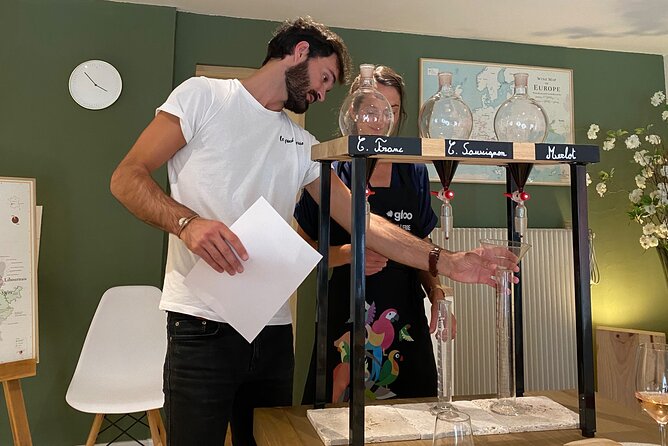
Bordeaux is not best understood as a place where one grape does all the work. Its classic red wines are blends, and the character of the finished bottle depends on how varieties are combined.
That idea can be hard to grasp from a normal tasting flight. You may hear that Cabernet Sauvignon adds structure or that Merlot brings softness, but the words become much clearer when you taste the components separately and then combine them yourself.
This workshop gives you that chance. You begin with single-varietal wines selected for the exercise. Then you compare their aromas, texture, acidity, and tannins before deciding how they might work together.
I like this approach because it puts the theory in your hands. You are not simply told that one grape is powerful and another is generous. You get to test the claim in your glass.
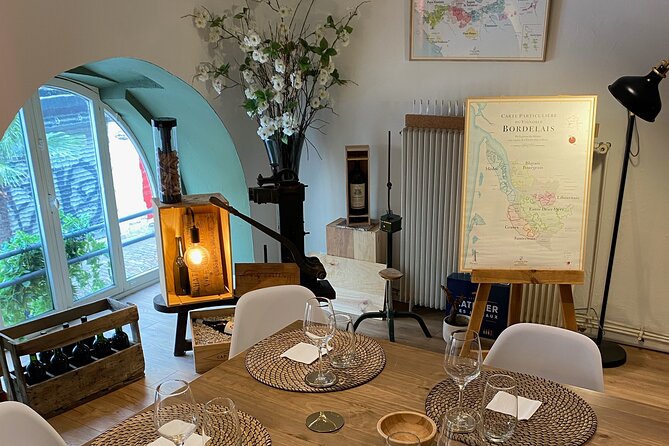
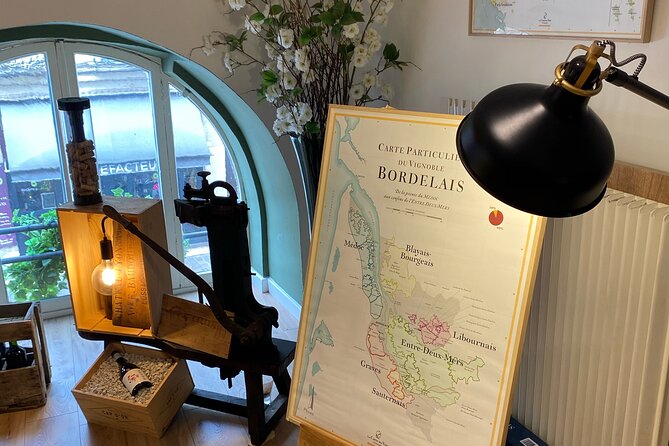
The session also introduces the main Bordeaux areas, including the Left Bank, Right Bank, and Entre-Deux-Mers. That regional lesson helps explain why wines from the same broad area can taste quite different. Soil samples are used as a visual aid, giving the discussion a physical side rather than leaving it as a list of French names.
More Wine Tours in Bordeaux
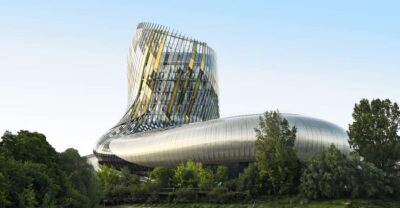
- Bordeaux: Cité du Vin Entry Ticket and Wine Tasting
★ 4.6 · 3,885 reviews - Bordeaux: River Garonne Cruise with Glass of Wine and Canelé
★ 4.5 · 3,630 reviews - From Bordeaux: Afternoon Saint-Emilion Wine Tasting & snack
★ 4.8 · 1,581 reviews
Arriving at Le Pied à Terre
The experience begins at Le Pied à Terre, a wine shop and tasting workshop at 22 Rue Judaïque in Bordeaux. You return to this same address at the end, so there is no need to arrange separate transport between parts of the activity.
The location is near public transportation, making it practical to fit into a day of sightseeing. The meeting point is also useful for anyone who wants to browse Bordeaux bottles after the workshop, since the shop has a selection of wines at different prices.
The format is offered in English, an important point if you want to discuss wine without struggling through technical French vocabulary. The teaching style is intended to be friendly and accessible, not a formal lecture for wine professionals.
The experience normally lasts about two and a half hours. That is long enough for a real lesson rather than a quick pour and a goodbye. Still, allow some flexibility. The exact pace can vary, and a few participants have reported spending less than the advertised time or receiving less blending work than expected.
The opening tasting and food pairing
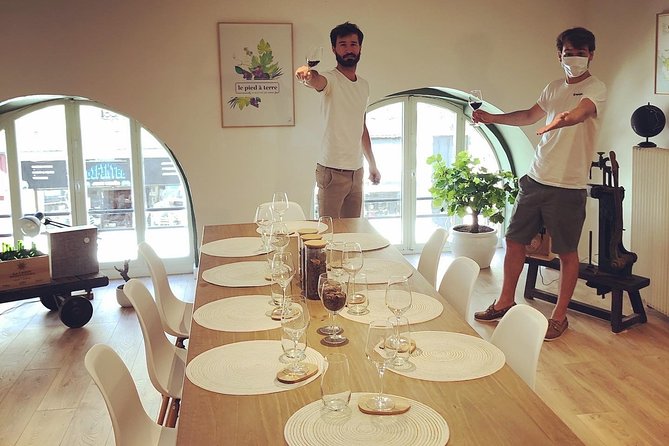
The workshop begins with an introduction to Bordeaux grapes and the basic vocabulary of tasting. You work through aroma, flavor, acidity, tannin, and the general structure of a red wine.
The tasting includes three wines, with the wines served alongside cheese and charcuterie from the Basque Country. This is more than a snack. Food changes how wine feels, especially when tannins are involved, so tasting with cheese and cured meats gives you a more realistic sense of how the wines behave at the table.
You should expect generous enough pours to study the wines, but this is still a guided tasting rather than an evening of unlimited drinking. The goal is to notice differences and remember them for the blending exercise.
The instructors use visual material and soil samples to make the lesson easier to follow. That is helpful if you are new to Bordeaux, since the region’s names and classifications can feel like a maze at first.
The teaching team has included James, Pierre, and Geoffroy. The workshop information identifies James as the guide, while descriptions of other sessions refer to brothers Pierre and Geoffroy. Their shared approach is relaxed and conversational, with room for questions and discussion.
Learning to taste before making decisions
A strong feature of the experience is that it does not rush you straight to the pipettes. First, you learn how to assess what is in the glass.
The tasting may include a guided comparison, a more independent tasting, and a blind-tasting exercise. Blind tasting is useful here because it asks you to rely on your senses instead of labels or expectations.
You might focus on whether a wine feels firm or soft, fresh or heavy, fruity or earthy. You also start to notice how tannin affects your mouth and how aroma can suggest fruit, herbs, spice, or other notes.
This is where the workshop has value even if you have no interest in making wine at home. After the session, Bordeaux menus and wine-shop shelves should feel less intimidating. You will have a basic method for comparing bottles instead of choosing only by price or a familiar grape name.
The class is not designed to turn you into a professional winemaker in one afternoon. It does, however, give you a useful working vocabulary and a better sense of what you like.
A few more wine days around Bordeaux worth comparing
- Medoc or Saint Emilion Wine Tasting and Chateau from Bordeaux
★ 5.0 · 1,415 reviews - Saint Emilion Day Trip with Sightseeing Tour & Wine Tastings from Bordeaux
★ 5.0 · 1,120 reviews - Saint Emilion Half-Day Trip with Wine Tasting & Winery Visit from Bordeaux
★ 4.5 · 1,034 reviews - From Bordeaux: St. Emilion Village Half-Day Wine Tour
★ 4.7 · 728 reviews
Using tubes and pipettes to make your cuvée
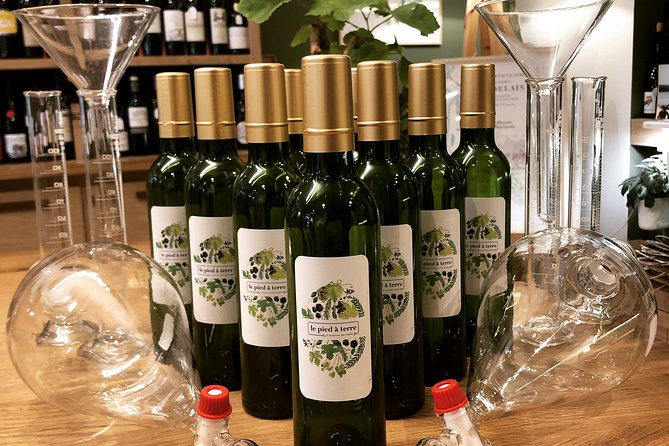
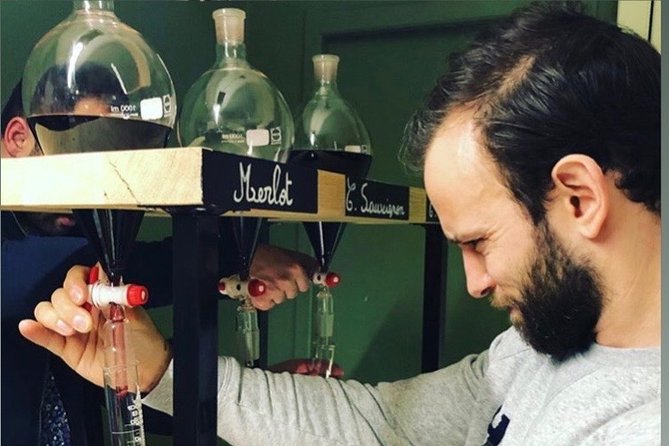
The hands-on section is the reason to book this experience instead of an ordinary tasting. You receive samples of the selected Bordeaux varieties and use small tubes and pipettes to measure your blend.
Merlot, Cabernet Sauvignon, and Cabernet Franc each bring something different to the mixture. The proportions are not just decoration. A change in percentage can affect the wine’s firmness, fruit character, aroma, and overall balance.
You taste the components, choose a starting formula, and then adjust it. The process is playful, but it also shows why blending is a serious part of Bordeaux winemaking. A wine can taste too hard, too soft, too simple, or out of balance until the proportions move closer to your preference.
One useful way to approach the exercise is to take notes as you go. Write down the percentage of each grape in your preferred version, especially if you are making the activity with a partner or family member. You may enjoy comparing the formulas later, even if everyone starts with the same three wines.
The amount of personal control is a key point to clarify. The advertised experience includes creating a cuvée and taking home a bottle, and most descriptions of the activity reflect that. Yet a couple of people booked expecting a full winemaking session and instead received a tasting and lecture. If hands-on blending is essential to your plans, ask the guide to confirm the day’s format before the session begins.
Bottling and the named souvenir
Once you settle on a blend, the final step is to create your bottle. Having a physical bottle with your name on it gives the activity a stronger finish than a tasting alone.
This souvenir is personal in a way that a standard Bordeaux purchase is not. You are taking home a record of your own choices, not simply a bottle selected by a shop assistant. If you are visiting with friends or family, the different formulas can also become a small tasting project for later.
Do not think of this as producing a mature château wine from vineyard to cellar. The workshop gives you a controlled blending experience using prepared wines. The value is in understanding the decision-making process and leaving with a bottle linked to that lesson.
That distinction matters because the phrase make your own wine can suggest more than the activity provides. You are not harvesting grapes, fermenting juice, or aging a barrel. You are creating your own blend from finished single-varietal wines, then bottling it.
What the $71.20 price gets you
At $71.20 per person, this costs more than a short tasting but less than many full-day excursions into the Bordeaux wine country. The price makes the most sense if you want instruction and participation, not just three glasses of wine.
You are paying for about two and a half hours, an English-language lesson, a food pairing, several stages of tasting, the blending exercise, and a named bottle to take home. The small maximum of 12 people also matters. It gives the guide more room to respond to questions and help with the mixing.
The value is especially good for a first visit to Bordeaux. You get context about the main grape varieties and regional divisions before facing the city’s wine shops and restaurant lists. It can also work well late in a France trip, when you have already tasted other wines and can use the workshop to pull the information together.
The price is less convincing if you only want to sample wine casually. In that case, a simple tasting may be cheaper and quicker. It is also poor value if the blending section is not included on your date, so verify the schedule rather than assuming every session follows the same format.
Who will enjoy this workshop most
I would recommend this for anyone who wants an activity with a clear purpose. You do not need advanced wine knowledge, and the format works for beginners because the lesson starts with the basics.
It suits couples, friends, and families with an interest in food and drink. One family used the finished bottles as the basis for a later blind tasting, which is a fun way to extend the experience beyond the cellar.
It also works well for people who have already done vineyard tours. A château visit shows you the setting and production story. This workshop shows you what happens when the winemaker decides how the finished wine should be assembled. Those are different lessons.
You may want to skip it if you only drink white wine. The activity focuses on red Bordeaux varieties, and the format is not presented as a mixed red-and-white workshop.
It may also disappoint anyone expecting to make wine from raw grapes. The experience is about blending prepared wines. That is a genuine winemaking skill, but it is a more limited form of production than the title might suggest.
Practical details before you book
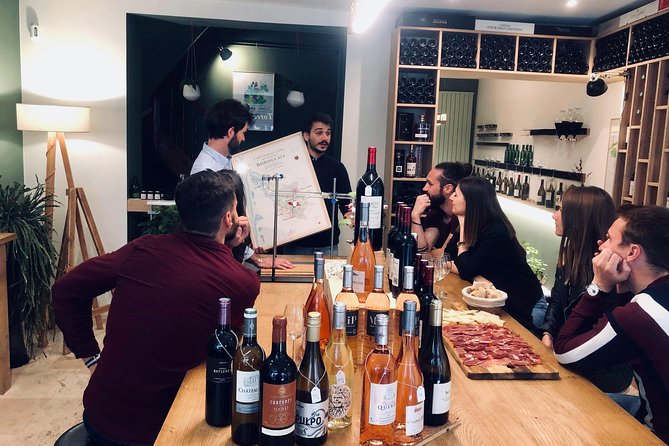
The workshop accepts a maximum of 12 people. That is small enough to keep the activity social without turning it into a private lesson.
You receive confirmation at the time of booking, and a mobile ticket is available. The meeting point is Le Pied à Terre, 22 Rue Judaïque, 33000 Bordeaux, and the activity ends there.
Service animals are allowed, and the location is near public transportation. The experience is offered in English.
Book ahead if your Bordeaux dates are fixed. The activity is often reserved around 45 days in advance, which suggests that popular dates can fill before a short city break begins.
Free cancellation is available up to 24 hours before the start time for a full refund. Changes or cancellations inside that 24-hour window are not accepted for a refund. The operator also notes that poor weather or an insufficient minimum number may cause cancellation, in which case you are offered another date, another experience, or a full refund.
Should you book Make Your Own Bordeaux Cuvée?
Book it if you want to understand Bordeaux by taking the wine apart and putting it back together. The strongest parts are the clear explanation of grape roles, the blind tasting, the food, and the chance to leave with a bottle based on your own formula.
I would make one check before paying: confirm that your session includes the hands-on blending and bottling. Most of the activity is built around that feature, but a small number of people have received a shorter tasting-focused format.
For a first Bordeaux visit, this is a practical choice at $71.20. For a serious wine fan, it offers a different lesson from a château tour. For a white-wine drinker or anyone expecting vineyard-to-bottle production, choose another activity. For everyone else, the combination of education, tasting, and a personal souvenir makes this a worthwhile two-and-a-half-hour stop in Bordeaux.
FAQ
Where does the Bordeaux blending workshop start?
It starts at Le Pied à Terre, Cave à vin & atelier dégustation, at 22 Rue Judaïque, 33000 Bordeaux, France.
Where does the experience end?
The activity ends back at the same meeting point, Le Pied à Terre.
How long does the workshop last?
The stated duration is approximately 2 hours and 30 minutes.
What language is the experience offered in?
The workshop is offered in English.
How many people can join the activity?
The maximum group size is 12 people.
Which grapes are used for the Bordeaux blend?
The workshop uses Merlot, Cabernet Sauvignon, and Cabernet Franc single-varietal wines.
Do I get to take home a bottle?
The experience includes the possibility of creating your own cuvée and taking home a bottle labeled with your name.
What is the cancellation policy?
You can cancel at least 24 hours before the start time for a full refund. Cancellations or changes made less than 24 hours before the start time are not refunded or accepted. If the operator cancels because of poor weather or too few participants, you are offered another date or experience, or a full refund.
Just added around Bordeaux
- Bordeaux Wines Masterclass paired with cheeses & charcuterie★ 5.0 · 110 reviews
- Bordeaux Médoc Region Private Wine Lovers Tour with Chateau Visits & Tastings★ 5.0 · 40 reviews
- Bordeaux Food and Wine Tour : Authentic Artisanal Flavors★ 5.0 · 62 reviews
- Saint-Emilion Winery Morning Tour with Local Guide★ 5.0 · 67 reviews
- Médoc luxury wine tour aboard a Citroën DS Limousine Convertible★ 5.0 · 41 reviews
- Introduction to Bordeaux wines paired with cheeses & charcuterie★ 5.0 · 175 reviews
- Saint Emilion Morning Wine Tour – Winery & Tastings from Bordeaux★ 5.0 · 186 reviews
- Free Walking Bordeaux Tour ENG + 1 glass of wine (Tip based)★ 5.0 · 90 reviews
Wine Tours in Bordeaux, compared.
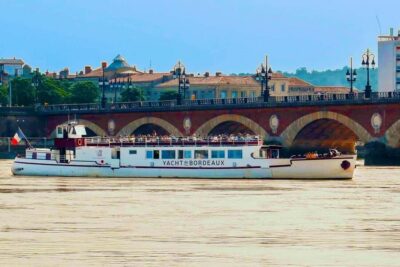
River Garonne Cruise with Glass of Wine and Canelé
Read our review →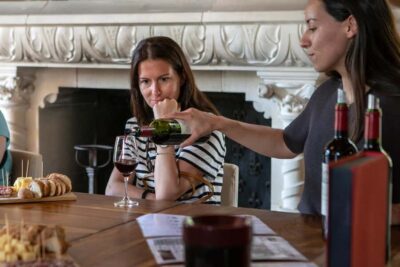
Afternoon Saint-Emilion Wine Tasting & snack
Read our review →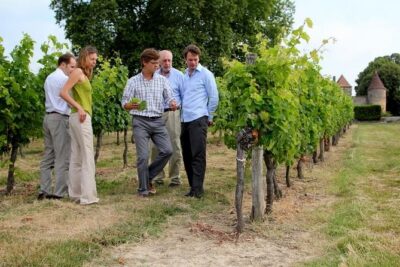
Medoc or Saint Emilion Wine Tasting and Chateau from Bordeaux
Read our review →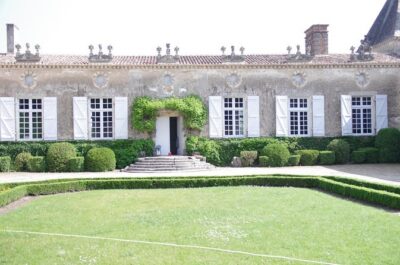
Saint Emilion Day Trip with Sightseeing Tour & Wine Tastings from Bordeaux
Read our review →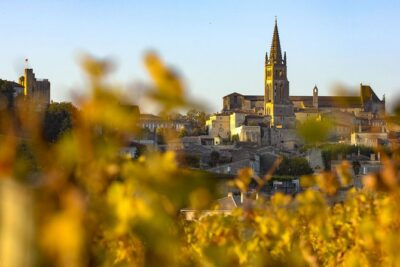
Saint Emilion Half-Day Trip with Wine Tasting & Winery Visit from Bordeaux
Read our review →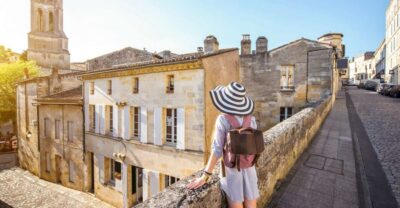
Browse the lists this tour appears in