
REVIEW · FRANCE
Champagne Vineyard Experience: Delve into the terroir
The most interesting part of this experience is the way it connects the bottle to the ground beneath your feet. You walk from the family garden and oldest vines into the cellar, then taste Champagnes shaped by the soils of Mareuil-le-Port, Épernay, and Tours-sur-Marne. I like the family-run setting and the clear focus on biodiversity. I also like that Ratafia Champenois joins the tasting, giving you something beyond the usual Champagne flight.
The main thing to consider is that this is a short visit, not a full-day wine course. You will walk among the vines and use stairs in the cellar, and one recent visit found the tasting less generous than expected. At $28, the value depends on how much you want the vineyard and production story, not simply how many glasses you receive.
Key points to know before you go
- Old vines first: Begin in the family garden and vineyard, including vines connected to the grandfather of the present family.
- A real cellar visit: Learn how Champagne is made in a historic cellar rather than stopping at a tasting room alone.
- Two distinctive wine areas: Taste Champagne alongside Ratafia Champenois, a regional fortified drink.
- Biodiversity matters: The producer explains organic and sustainable work in the vineyards.
- Friendly named guides: Sarah and Chléo have led visits praised for their clear explanations and warm manner.
- Easy planning: The visit lasts 90 minutes, costs $28 per person, and is offered in English or French.
From the family courtyard to the oldest vines
You begin at 8 Rue de la Fontaine, entering the courtyard of Champagne Harlin Père & Fils. Your guide is meant to meet you there. If the guide is not waiting at the exact moment you arrive, the meeting instructions say someone will greet you shortly, so give the visit a little breathing room at the start.
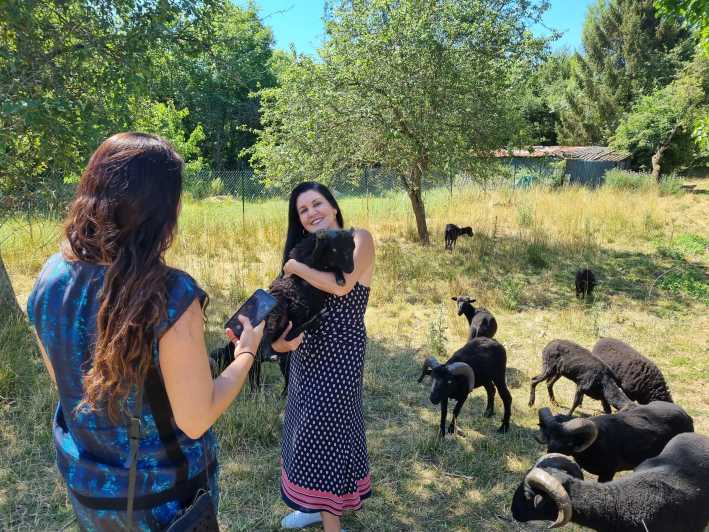
The setting matters. This is presented as a family Champagne house, and the tour begins with the family’s own story rather than with a sales pitch in a polished visitor center. The garden includes vines connected to the grandfather, which gives the opening a personal touch. You are not only looking at grapevines. You are seeing the working roots of the family’s wine business.
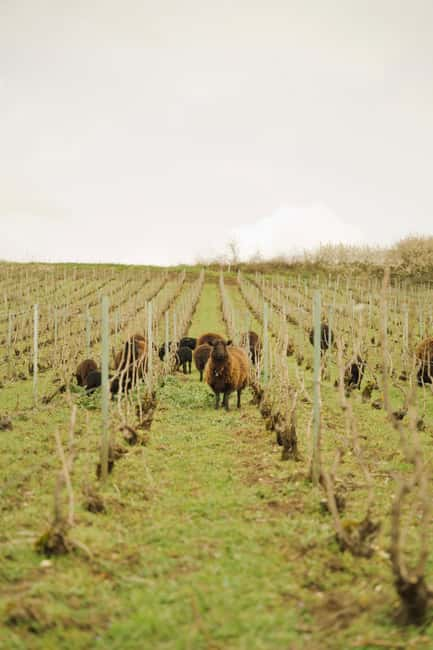
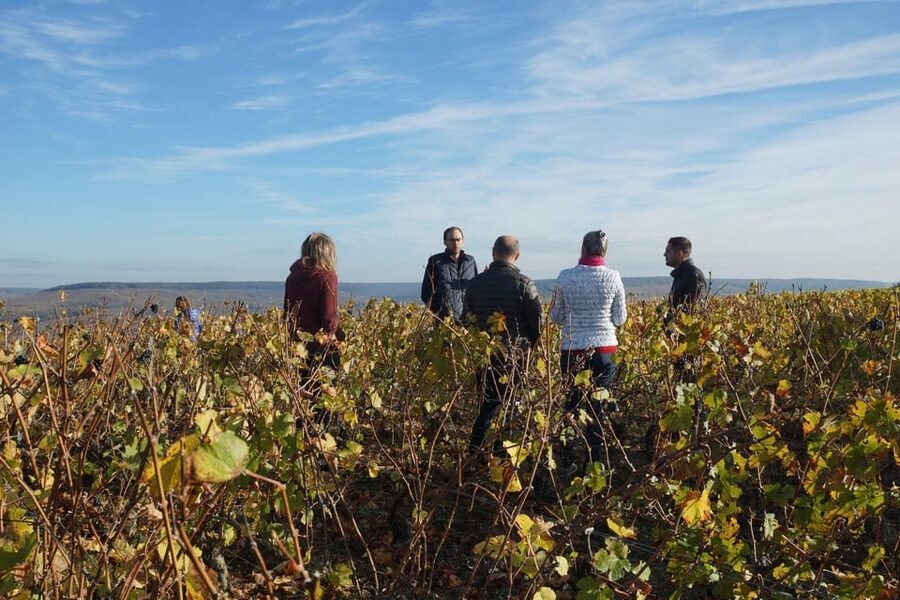
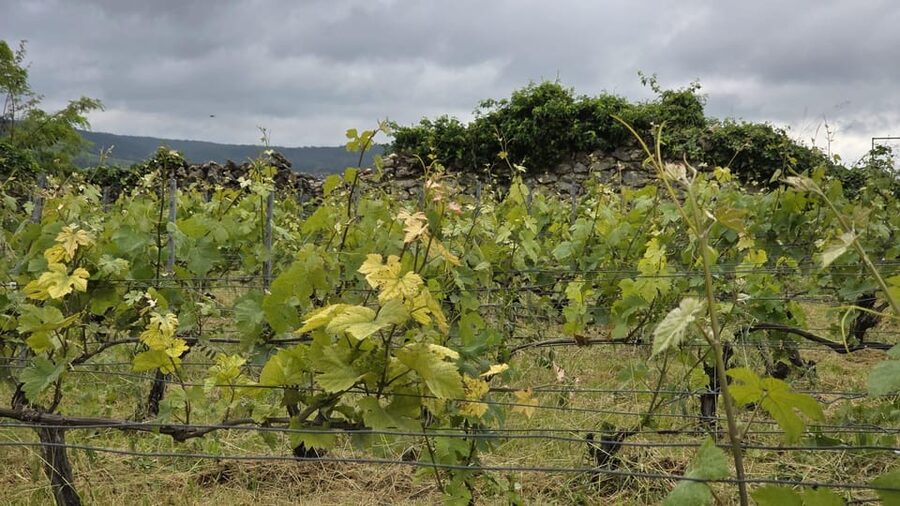
The first section takes you into the older vines and nearby vineyard area. It is a useful way to understand terroir, a word that can sound vague until you stand beside the soil and hear how the producer links it to the finished wine. The focus is on how different soils influence each cuvée, and on the work required to care for those soils.
This part is outdoors, so dress for the conditions rather than for a grand tasting room. The experience includes a small walk through the vines. It is not described as a long hike, but comfortable shoes make sense, especially if the ground is uneven or damp.
More vineyard walks in France:
- Saint-Émilion: Bordeaux Vineyard Tour and Wine Tasting
★ 4.8 · 578 reviews - Bordeaux: Vineyards Wine Tasting Half-Day Trip
★ 4.2 · 470 reviews - Half-Day Wine tour across Bordeaux’s Vineyards
★ 3.5 · 429 reviews
Why the vineyard talk matters
Many Champagne visits rush straight to bottles and brand history. Here, the vineyard comes first. That order helps you understand the producer’s emphasis on organic and sustainable viticulture.
The stated goal is biodiversity preservation. In practical terms, that means the tour gives attention to the health of the vineyard environment, not only to yield and production. The producer’s approach is part of the identity of the wines, so listen for the connection between soil care, grape growing, and the taste in your glass.
I like this element because it gives the tasting a reason. You are not asked to accept that one bottle is special simply because a label says so. You first hear how the producer works with the land, then taste the result. The experience is still brief, but this structure gives it more substance than a cellar stop followed by a quick pour.
The vineyards also help place the estate within the wider Champagne region. The tasting and explanation refer to terroirs in Mareuil-le-Port, Épernay, and Tours-sur-Marne. You should not expect a full technical lecture on every parcel, but these locations give useful context for why Champagne producers talk so much about place.
Down into the historic cellar
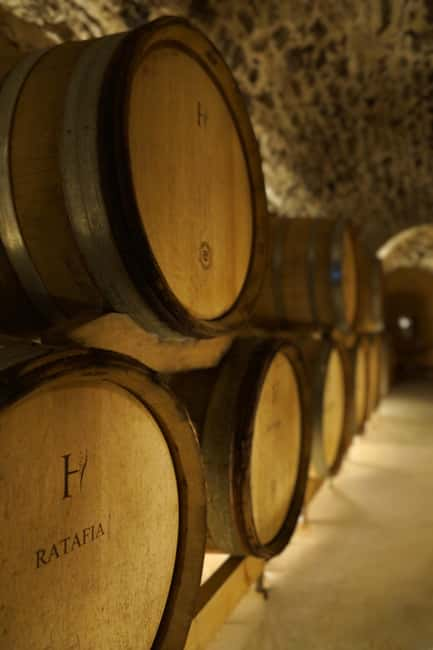
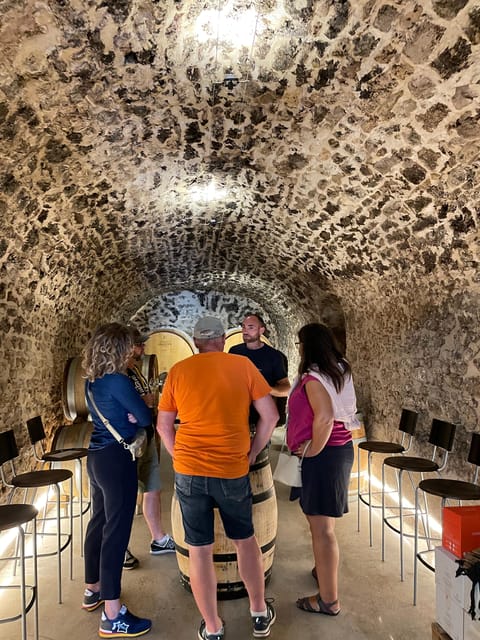
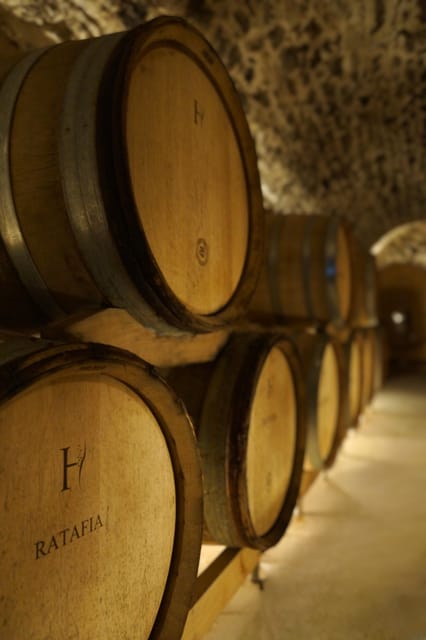
After the vineyard portion, you head into the historic cellar. This is where the visit shifts from farming to production. Your guide explains the stages behind Champagne, including the traditions and practical choices that shape what ends up in the bottle.
The cellar is described as cool and historic, so bring a light layer even if the day outside is warm. The visit also includes stairs. One detailed account specifically noted several steps in the cellar and on the way to the tasting room. If stairs are difficult for you, ask before booking because the supplied information does not give an alternative route.
The cellar portion is one of the strongest reasons to choose this activity. You see where the wine is handled and learn about the production process in the place associated with it. That can make technical subjects easier to follow. Fermentation, aging, blending, and bottle work mean more when you are standing below the family house than when they are explained only with diagrams.
The tour is guided in English or French. Sarah has been praised for clear explanations, and Sarah and Chléo led one particularly personal visit with two guides. You cannot assume those exact guides will lead every departure, but their presence gives you a useful idea of the tone to expect: direct, friendly, and focused on answering questions.
A tasting with Champagne and Ratafia Champenois
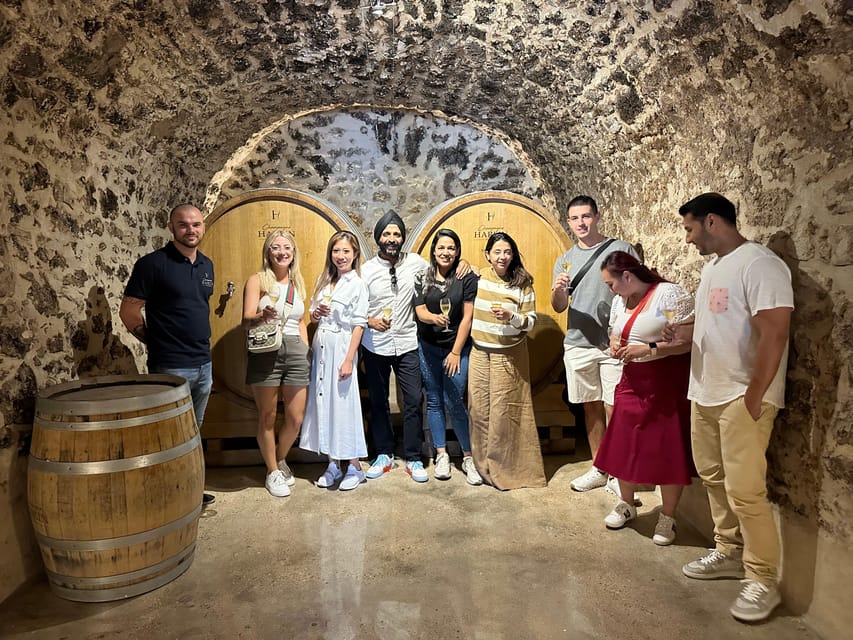
The final part takes place back at the Champagne house. You taste Champagne and the estate’s Ratafia Champenois, along with an explanation of how to approach the wines.
Ratafia is a worthwhile addition because it broadens the tasting beyond the familiar sparkling style. It is tied to the Champagne region but has a different character and place in local wine culture. If you have already visited large Champagne houses, this extra pour can make the experience feel more specific to the producer and area.
The tasting lasts about 30 minutes within the 90-minute experience. The exact number of wines is not specified, so do not book this expecting a long series of samples. The point is comparison and understanding, not a marathon session.
You will be shown how to taste, with attention to the relationship between flavor and terroir. This is especially helpful if Champagne labels and styles seem confusing. The guide can give you a framework for noticing differences instead of simply deciding which glass tastes sweetest or most familiar.
The tasting is also the part where expectations need a little care. One recent visitor felt the Champagne was expensive for what was offered and thought the tasting did not match the price. That is a fair caution. At $28, you are paying for the guide, vineyard walk, cellar access, and explanation as well as the wine. If your only goal is to drink several generous pours, you may find better value elsewhere. If you want the full producer visit, the cost is more reasonable.
More champagne houses worth the trip:
- Paris: Moulin Rouge Cabaret Show Ticket with Champagne
★ 4.7 · 16,088 reviews - Paris: Paradis Latin Cabaret Show with Optional Champagne
★ 4.6 · 2,231 reviews - Paris 3-Courses Gourmet Dinner Seine River Cruise with Champagne
★ 4.0 · 1,659 reviews - Top Private Cruises in Paris with French Champagne and surprises
★ 5.0 · 1,553 reviews
How the 90 minutes are used
The schedule is compact but well divided:
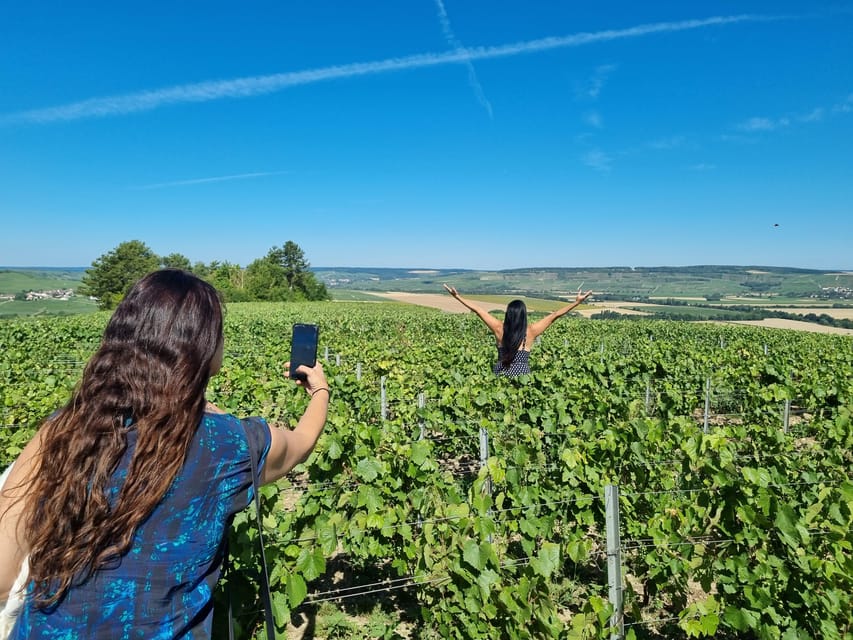
- Vineyard and family setting: About 45 minutes is allocated to the guided portion, taking you through the garden, oldest vines, and vineyard.
- Cellar and production visit: You then explore the historic cellar and learn how Champagne is produced.
- Tasting: The final half hour is set aside for Champagne and Ratafia Champenois.
- Return to the courtyard: The experience ends where it began at 8 Rue de la Fontaine.
The published timing contains a confusing reference to a 45-hour guided tour, but the overall duration is clearly stated as 90 minutes. Plan around the 90-minute total, not the obvious scheduling typo.
This length suits a day when you have other plans in the Champagne area. You get enough time to see the vines, hear the story, visit the cellar, and taste without giving up half a day. The tradeoff is that questions and discussion may need to stay focused.
What the biodiversity message adds
The producer’s commitment to biodiversity is not a side note. It shapes the way the vineyard is presented. You hear about the soil as a living part of the wine-making process, not merely a place where grapes grow.
That focus will appeal to you if you want to understand the decisions behind small-scale wine production. It also helps distinguish this experience from a purely commercial tasting stop. The family identity, old vines, and sustainable approach give the visit a sense of place.
Still, the available details do not promise a formal demonstration of every vineyard technique. You should expect an explanation and a walk through the vines, not a full farming workshop. That is enough for most visitors seeking a thoughtful introduction, but serious wine students may want a longer technical tour.
Who will get the most from this visit
I would choose this experience if you want a manageable introduction to Champagne production with a human scale. It suits couples, small groups, and anyone who prefers meeting a producer rather than touring a large brand facility.
It also works well for families. Children under 18 may accompany adults without buying a ticket, and fruit juice can be provided. French law means they cannot drink alcohol, but they can still take part in the vineyard and cellar visit.
This is a good match for you if:
- You want vineyard access as well as a tasting.
- You care about organic methods and biodiversity.
- You prefer a family producer to a large commercial house.
- You want a guide in English or French.
- You have about 90 minutes available.
- You are interested in trying Ratafia Champenois.
You may want another option if the tasting itself is your main priority. The wine selection and serving size are not specified, and one recent account found the value disappointing. You should also think twice if stairs or a short outdoor walk would be a problem.
Price, flexibility, and practical planning
The listed price is $28 per person. That is a moderate charge for a guided vineyard, cellar, and tasting experience, especially since the ticket includes the guide and tasting. I would judge the price as fair when you value access to the family estate and the explanation of how the wines are made.
The value is weaker if you compare it only with the amount of Champagne in your glass. This is not sold as an open-ended tasting. It is a compact educational visit with wine at the end.
You can reserve now and pay later, which helps if your Champagne route is still changing. Free cancellation is available up to 24 hours before the visit for a full refund. Starting times vary, so check availability when selecting your date.
The meeting point is simple: 8 Rue de la Fontaine, at the courtyard of Champagne Harlin Père & Fils. English and French are available. Alcohol and drugs are not permitted, and the activity is intended to remain a family-friendly visit apart from the legal drinking age.
Should you book Champagne Harlin?
Book it if you want to connect the wine with the vines, soil, cellar, and family behind it. The old vines, biodiversity message, historic cellar, and Ratafia tasting give the visit more character than a quick glass at a shop. I especially like the balance between outdoor vineyard time and indoor production talk.
Go in with sensible expectations. You are buying a 90-minute introduction, not a large tasting menu or a full professional wine seminar. If Sarah, Chléo, or another enthusiastic guide gives you the same clear and personal treatment described here, the experience should be a pleasant use of your time in Champagne.
At $28, I would recommend it most strongly to first-time Champagne visitors and curious wine drinkers. If you mainly want generous pours, compare other tastings first. If you want to understand why a bottle tastes connected to its place, Champagne Harlin makes the better case.
FAQ
Where does the Champagne Harlin experience begin?
It begins at 8 Rue de la Fontaine, in the courtyard of Champagne Harlin Père & Fils.
How long does the experience last?
The complete experience lasts 90 minutes.
What languages are available?
The live tour is available in English and French.
What does the visit include?
The ticket includes the guided visit, tasting, and guide.
What will I see during the tour?
You will visit the family garden, oldest vines, vineyard, historic cellar, and tasting area.
What will I taste?
The tasting includes Champagnes and Ratafia Champenois.
Can children attend?
Yes. Children under 18 may accompany adults and do not need a ticket.
Can children drink during the tasting?
No. French law does not permit children under 18 to drink alcohol, but fruit juice can be provided.
Are there stairs?
Yes. The visit includes some stairs in the cellar and on the way to the tasting room.
Can I cancel for a refund?
Yes. You can cancel up to 24 hours in advance for a full refund.
Just added around France
- Bordeaux Wines Masterclass paired with cheeses & charcuterie★ 5.0 · 110 reviews
- Bordeaux Médoc Region Private Wine Lovers Tour with Chateau Visits & Tastings★ 5.0 · 40 reviews
- Bordeaux Food and Wine Tour : Authentic Artisanal Flavors★ 5.0 · 62 reviews
- Saint-Emilion Winery Morning Tour with Local Guide★ 5.0 · 67 reviews
- Médoc luxury wine tour aboard a Citroën DS Limousine Convertible★ 5.0 · 41 reviews
- Saint Emilion Morning Wine Tour – Winery & Tastings from Bordeaux★ 5.0 · 186 reviews
- Introduction to Bordeaux wines paired with cheeses & charcuterie★ 5.0 · 175 reviews
- Free Walking Bordeaux Tour ENG + 1 glass of wine (Tip based)★ 5.0 · 90 reviews
Wine Tours in France, compared.
Authentic Parisian Gourmet Food Tour with 10 Local Dishes & Wines
Read our review →
Loire Valley Castles Day Trip from Paris with Complementary Wine
Read our review →
River Garonne Cruise with Glass of Wine and Canelé
Read our review →
Montmartre Hill French Gourmet Food and Wine Tasting Walking Tour
Read our review →
Montmartre Cheese, Wine & Pastry Guided Walking Tour
Read our review →
Loire Valley Castles Day Trip With Wine Tasting
Read our review →
Afternoon Saint-Emilion Wine Tasting & snack
Read our review →Browse the lists this tour appears in