
REVIEW · FRANCE
Champagne: Canard-Duchêne Champagne House Tour
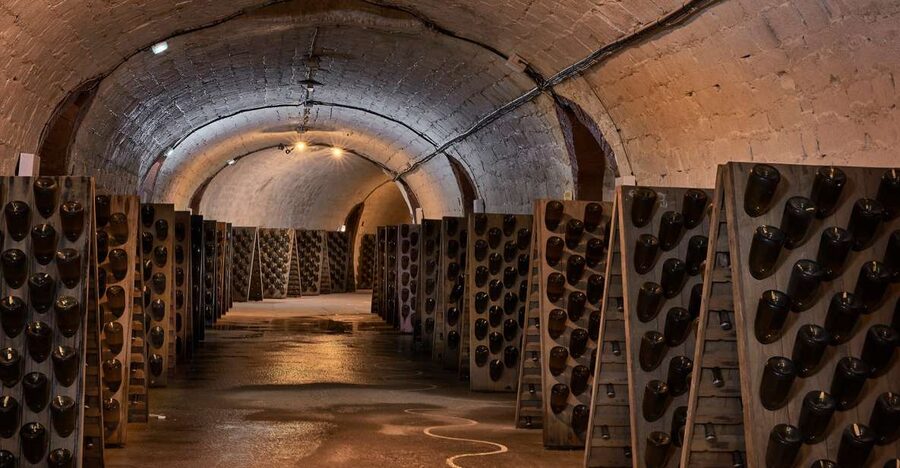
Canard-Duchêne puts the real work of champagne in view. You’ll walk through vineyards, inspect a vast underground cellar network, and see how cool, damp conditions help the wine mature. The best part is the contrast between the sunny grapevines above ground and the hand-carved tunnels far below.
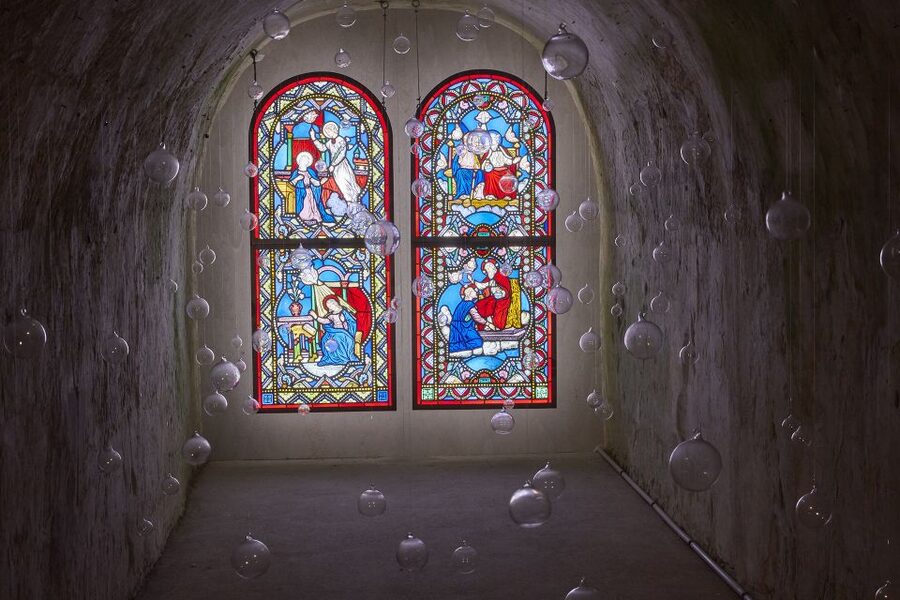
I like the 40 to 60-foot descent because it makes the cellar visit feel like more than a quick look at stacked bottles. I also like the restored chapel windows by Simon-Marq, a small but memorable art detail that gives the house more character than a plain production tour.
The main catch is the physical effort. You’ll manage 130 steps each way with no elevator, and the cellars reach only 50°F. Wear warm clothing and comfortable shoes, and think twice if stairs are difficult for you.
Key points to know before you book
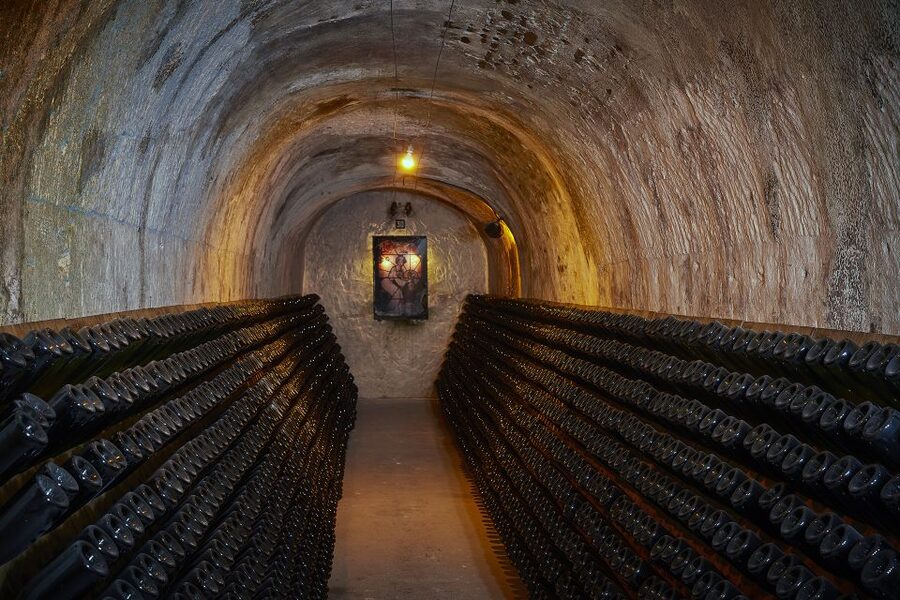
- Four cellar levels: Explore nearly four miles of underground passages carved in the 19th century.
- Vineyards are included: This is not only a cellar visit. You’ll also see where the champagne grapes are grown.
- Choose your tasting: Options range from one glass of brut or demi-sec to two glasses featuring Cuvée Léonie or Cuvée Bio P181.
- A chapel adds visual interest: The restored stained glass windows were renovated by the Simon-Marq workshop.
- One hour, tightly planned: You get the main elements of the estate, but not a long meal or leisurely winery day.
- English and French guides: You can choose a live tour in either language, subject to availability.
A short tour with more than a cellar stop
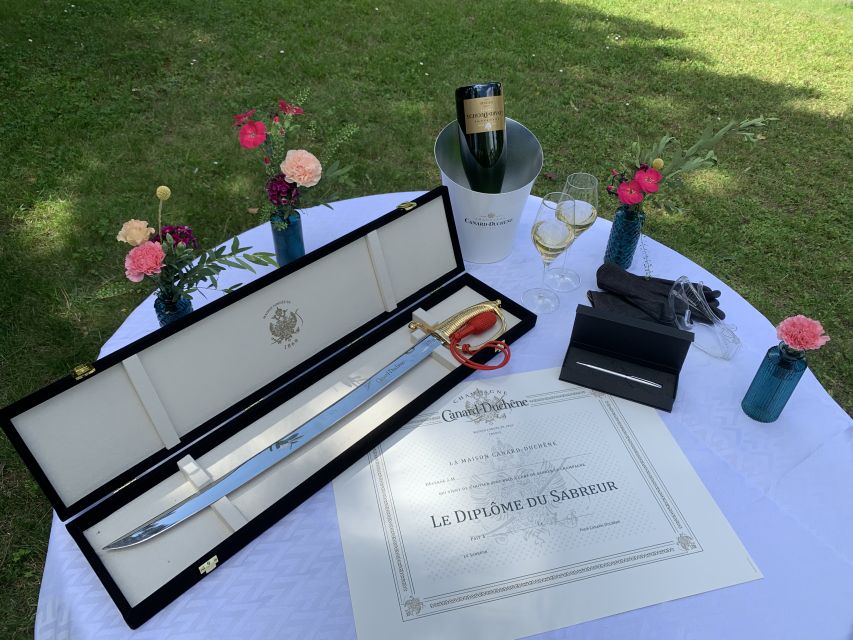
At $25 per person, this is a reasonably priced way to add a Champagne House visit to your time in the Grand Est. You get a guided cellar tour, a vineyard walk, and champagne tasting in one hour. That combination gives you a useful introduction without committing half a day to a large group excursion.
The short length is both a strength and a limit. I like it for a morning or afternoon slot between other plans. You’ll learn how the house works and get a taste of its wines, but you should not expect a full meal, an extended tasting lesson, or a long visit through every part of the property.
Arrive 15 minutes before the start time. The meeting point is at the Champagne Canard-Duchêne house, and the experience is led in English or French. Since starting times vary, check the available schedule before building your day around it.
More champagne houses worth the trip:
- Paris: Moulin Rouge Cabaret Show Ticket with Champagne
★ 4.7 · 16,088 reviews - Paris: Paradis Latin Cabaret Show with Optional Champagne
★ 4.6 · 2,231 reviews - Paris 3-Courses Gourmet Dinner Seine River Cruise with Champagne
★ 4.0 · 1,659 reviews
Above ground, grapes and house history
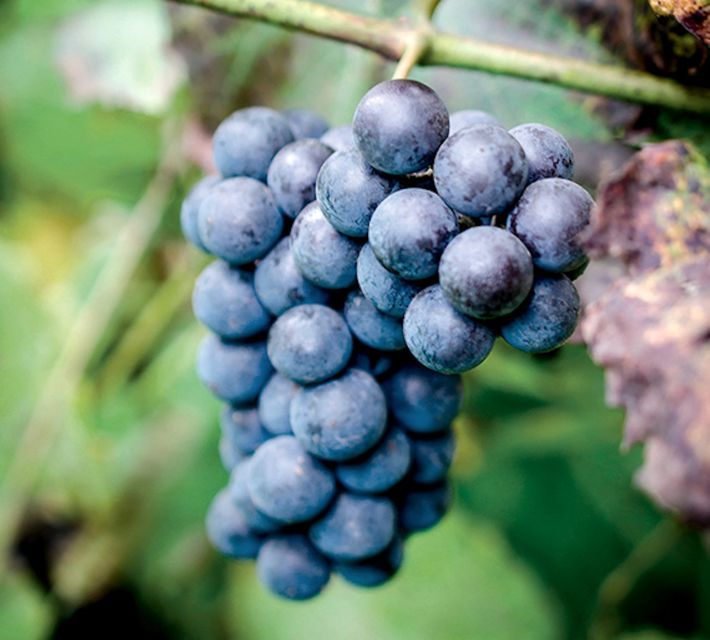
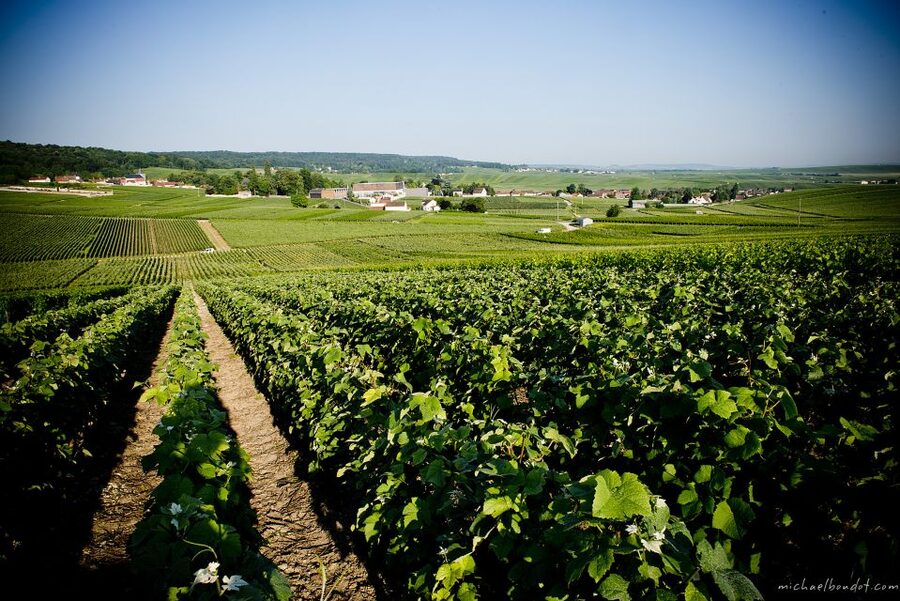
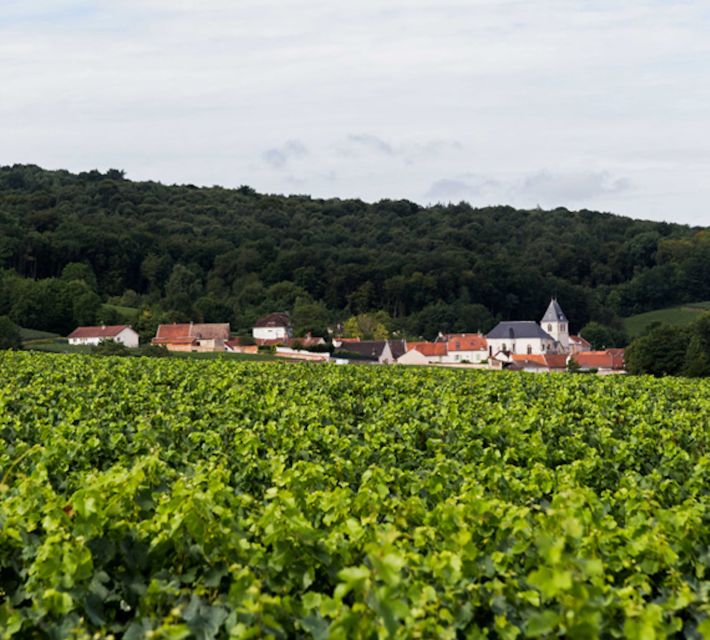
The tour begins with the setting of the Champagne House and its vineyards. This matters because champagne can seem like a finished luxury product in a shop or restaurant. Here, you connect the bottle with the rows of grapes that supply the wine.
The guided vineyard walk is not a long country hike. It is a chance to see how the grapes are grown and to place the cellar work in context. If you already know the Champagne region, this part may feel familiar. If this is your first winery visit, it gives you a clear starting point before you head below ground.
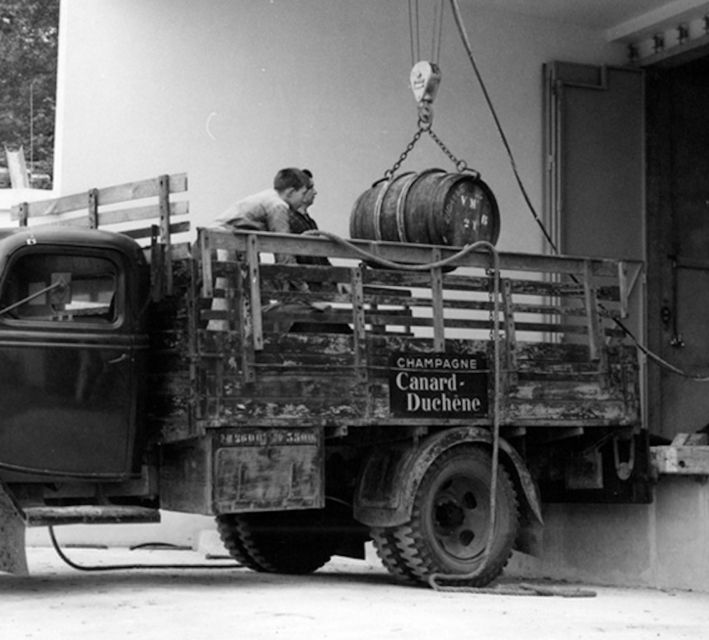
Your guide also explains the story of Canard-Duchêne. The house’s history is part of the tour rather than a separate museum lesson, so expect the information to be tied to the buildings, vineyards, cellars, and wines you are seeing.
That personal guidance is important in a one-hour visit. A self-guided route can show you the tunnels, but a live guide can explain why the spaces matter and connect the different stages of production. The available languages are English and French.
The 130 steps into the cellars
The cellar visit is the physical centerpiece. You descend 130 steps, reaching passages about 40 to 60 feet below ground. There is no elevator, so the route works best for anyone who can comfortably handle stairs in both directions.
Below the house, the network stretches nearly four miles across four levels. You will not walk all four miles in an hour, of course. The point is the scale of the underground system and the sense that you are entering a working world built for long-term wine storage.
The cellars contain hand-carved 19th-century architecture. That detail gives the route a strong sense of place. You are not simply looking at modern rooms with bottles arranged for display. The stonework and underground setting help you understand how earlier generations created spaces suited to champagne production and storage.
Bring a sweater, jacket, or other warm layer. The maximum temperature is 50°F, and the temperature change from the vineyards to the cellar can be sharp. Comfortable footwear is also a wise choice because of the stairs and underground walking.
The cellar’s cool temperature and humidity help the champagnes mature. Your guide explains how those conditions influence the wine’s development, taste, and complexity. This is one of the more useful parts of the visit because it connects the physical environment with what you later taste in your glass.
You should also allow yourself a moment to notice the atmosphere. The low temperature, carved walls, and long passages create a very different mood from the bright vineyard outside. That contrast is a big reason to choose a house tour instead of visiting only a tasting room.
Production explained without rushing past the details
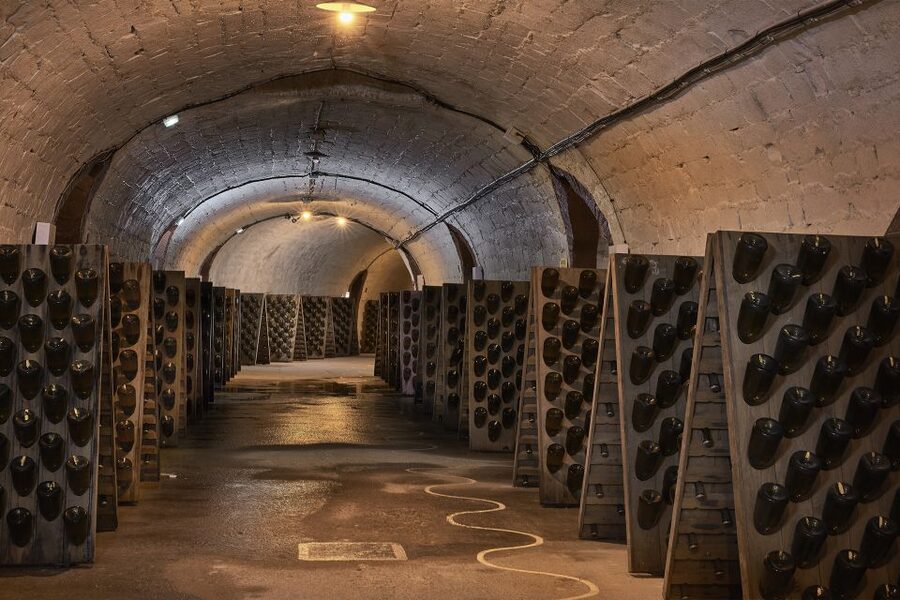
Canard-Duchêne uses the visit to show the different stages of champagne production. The tour does not simply lead you from one attractive room to the next. It explains how the facilities, vineyards, and cellars work together.
You’ll see the production setting and learn why cellar conditions matter while the champagne reaches maturity. The guide’s role is especially useful here because some of the process is not obvious from looking at bottles or equipment. Ask questions as you go if the schedule allows, especially if you want to understand how the house’s methods shape the final wines.
Keep your expectations sensible. The tour lasts one hour, and the cellar, vineyard, history, architecture, and tasting all fit into that time. You’ll get a clear overview, but not a technical master class. For many people, that balance is just right. You leave with a working understanding rather than a long lecture.
If your main goal is an in-depth lesson about grape growing or a detailed comparison of many vintages, a longer tasting class may suit you better. Canard-Duchêne is a broad introduction with several distinct stops.
A few more wine days around France worth comparing
- Authentic Parisian Gourmet Food Tour with 10 Local Dishes & Wines
★ 5.0 · 4,754 reviews - Loire Valley Castles Day Trip from Paris with Complementary Wine
★ 4.5 · 3,907 reviews - Bordeaux: Cité du Vin Entry Ticket and Wine Tasting
★ 4.6 · 3,885 reviews - Bordeaux: River Garonne Cruise with Glass of Wine and Canelé
★ 4.5 · 3,630 reviews
The old chapel and Simon-Marq windows
The renovated old chapel gives the tour a welcome change of pace. Its stained glass windows were restored by the Simon-Marq workshop, known here for its work as master glassmakers.
This stop matters because it adds art and architecture to an experience otherwise focused on grapes, bottles, and underground storage. Take a close look at the windows if the group has time. They provide one of the most distinctive visual details of the visit.
The chapel also helps explain why a Champagne House can feel like more than a factory. The property combines production spaces with older buildings and decorative features. You get a sense of the house as a place with its own identity, not only a brand name on a label.
Still, do not expect a full architecture tour. The chapel is one feature within a compact itinerary. Its value is in the pause and the setting, not in a long art history discussion.
Choosing between the tasting options
Champagne tasting comes at the end or as part of the visit, depending on how the tour is arranged. The exact number of glasses depends on the option you choose, so read the selection carefully when booking.
The Decouverte option includes a tasting of either a brut or demi-sec. This is the simplest choice and works well if you want the cellar and vineyard experience without making the tasting the main event.
The Liberté option includes Cuvée Léonie Brut and Cuvée Léonie Rosé, or Cuvée Bio P181. This gives you a broader look at the house’s wines and may be the better choice if you want to compare styles or prefer a rosé option.
The Charles VII option includes a tasting of Cuvée Charles VII. Choose this if that particular cuvée interests you or if you want a more focused tasting rather than two different glasses.
One practical point: there is no lunch included. The tasting is a small part of the tour, not a substitute for a meal. I would eat beforehand if you are visiting around lunchtime, especially since the tasting comes after stairs and walking.
A small snack with the champagne would be welcome, but none is included. The tasting is about the wine itself, so plan to enjoy it as a final sample rather than a food pairing.
What the $25 price really buys you
The $25 cost is fair for the mix of activities. A basic tasting alone can sometimes feel brief, while this visit adds a guided cellar route, vineyard access, house history, production information, and the chapel windows.
The strongest value comes from the underground network. Four cellar levels and nearly four miles of passages give the visit a sense of scale that a quick tasting room stop cannot provide. The vineyard walk adds another useful layer, especially for a first visit to the region.
The price is less compelling if you only want to sample champagne. You may find a simpler tasting elsewhere with less walking and fewer stairs. This experience makes the most sense when you want to understand the place behind the bottle.
The rating of 4.7 from 66 reviews fits the experience’s main strengths: clear explanations, a pleasant guide, and an attractive setting. One French-language review described the tour as complete and perfect, while noting that a biscuit or small toast would improve the tasting. Another called the house magnificent, and a December visit was praised for its friendly guide.
The shop has a limited selection, so do not count on a large retail stop with endless bottles or gifts. If you want to buy something, you can browse, but the visit’s real value is the cellar, vineyard, and guided explanation.
Who should choose this Canard-Duchêne visit?
I would recommend it to first-time visitors who want a compact introduction to Champagne production. It is also a good fit if you are staying nearby and want a house visit that does not take up a full morning or afternoon.
Wine lovers who enjoy architecture will get extra value from the carved cellars and restored chapel windows. The combination of underground stonework, vineyards, and stained glass gives the visit more variety than a standard tasting.
It suits visitors who can walk comfortably and manage stairs. The lack of an elevator is not a minor detail. You must climb 130 steps down and 130 back up, and the cellars are cold. The experience is listed as unsuitable for people with mobility impairments and for people over 70, so anyone in those categories should consider that warning seriously.
Families and older visitors should assess the stairs carefully before booking. Comfortable clothes and warm layers are practical, not optional extras.
You can cancel up to 24 hours before the activity for a full refund, and the reserve-now, pay-later option keeps your plans flexible. Those terms are useful if you are arranging a wider Champagne itinerary, but the physical demands should guide your decision more than the booking flexibility.
Should you book the Champagne House tour?
Book it if you want a short, good-value introduction that combines vineyards, production, underground cellars, history, architecture, and a champagne tasting. The 19th-century carved passages and Simon-Marq chapel windows give it enough character to avoid feeling like a routine cellar stop.
Skip it if stairs are a problem, if you need a warmer indoor activity, or if your main goal is a long technical tasting with food. For everyone else, Canard-Duchêne offers a focused hour that shows how the wine, the building, and the underground cellars fit together.
FAQ
How long does the Canard-Duchêne Champagne House tour last?
The guided experience lasts one hour.
What languages are available?
The live guide is available in English or French.
How many stairs are there in the cellar?
You must manage 130 steps each way. There is no elevator access.
How cold are the cellars?
The maximum temperature in the cellars is 50°F, so bring warm clothing.
Is champagne included?
Yes. The tasting includes one or two glasses, depending on the option you select.
What tasting choices are available?
The Decouverte option includes brut or demi-sec. The Liberté option includes Cuvée Léonie Brut and Cuvée Léonie Rosé or Cuvée Bio P181. The Charles VII option includes Cuvée Charles VII.
Is lunch included?
No. Lunch is not included in the experience.
Is the tour suitable for people with mobility impairments?
No. The tour is listed as unsuitable for people with mobility impairments because of the 130 cellar steps and lack of elevator access.
Just added around France
- Bordeaux Wines Masterclass paired with cheeses & charcuterie★ 5.0 · 110 reviews
- Bordeaux Médoc Region Private Wine Lovers Tour with Chateau Visits & Tastings★ 5.0 · 40 reviews
- Saint-Emilion Winery Morning Tour with Local Guide★ 5.0 · 67 reviews
- Médoc luxury wine tour aboard a Citroën DS Limousine Convertible★ 5.0 · 41 reviews
- Bordeaux Food and Wine Tour : Authentic Artisanal Flavors★ 5.0 · 62 reviews
- Saint Emilion Morning Wine Tour – Winery & Tastings from Bordeaux★ 5.0 · 186 reviews
- Introduction to Bordeaux wines paired with cheeses & charcuterie★ 5.0 · 175 reviews
- Free Walking Bordeaux Tour ENG + 1 glass of wine (Tip based)★ 5.0 · 90 reviews
Wine Tours in France, compared.
Authentic Parisian Gourmet Food Tour with 10 Local Dishes & Wines
Read our review →
Loire Valley Castles Day Trip from Paris with Complementary Wine
Read our review →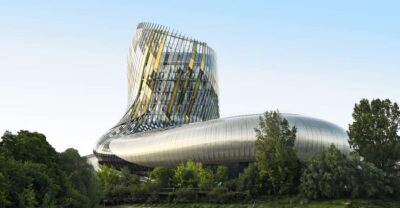
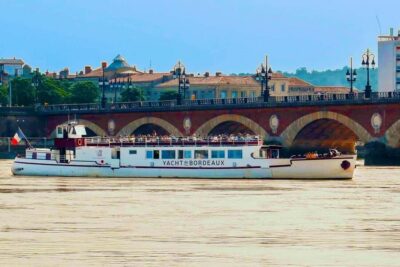
River Garonne Cruise with Glass of Wine and Canelé
Read our review →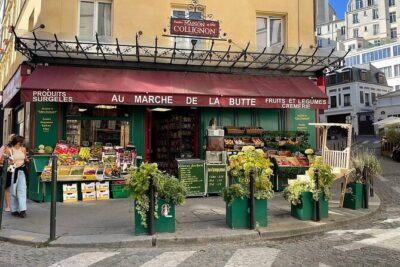
Montmartre Hill French Gourmet Food and Wine Tasting Walking Tour
Read our review →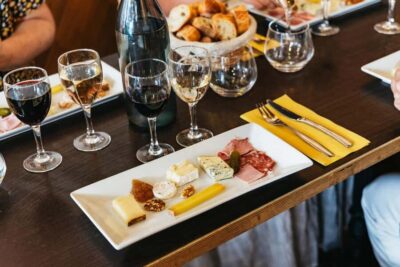
Montmartre Cheese, Wine & Pastry Guided Walking Tour
Read our review →
Loire Valley Castles Day Trip With Wine Tasting
Read our review →
Afternoon Saint-Emilion Wine Tasting & snack
Read our review →Browse the lists this tour appears in