
REVIEW · EPERNAY
From Epernay : Bubble Champagne Tour 6 tastings
The best part of this Épernay tour is that it gets you beyond the grand Champagne brands and into the working countryside. You visit a family grower in Oger, taste three Grand Cru or Premier Cru Champagnes, and see how the wine is made rather than simply walking through a polished brand showroom.
I especially like the stop at Hautvillers, where you can visit the church containing Dom Pérignon’s grave and take in a broad view over the Marne Valley. I also like the three additional tastings of Ratafia, Fine de la Marne, and Marc de Champagne, spirits that many first-time visitors miss. The main drawback is that you do not visit a large Champagne house or its famous underground cellars, so this suits you best if small producers and countryside matter more than industrial scale.
Key points at a glance
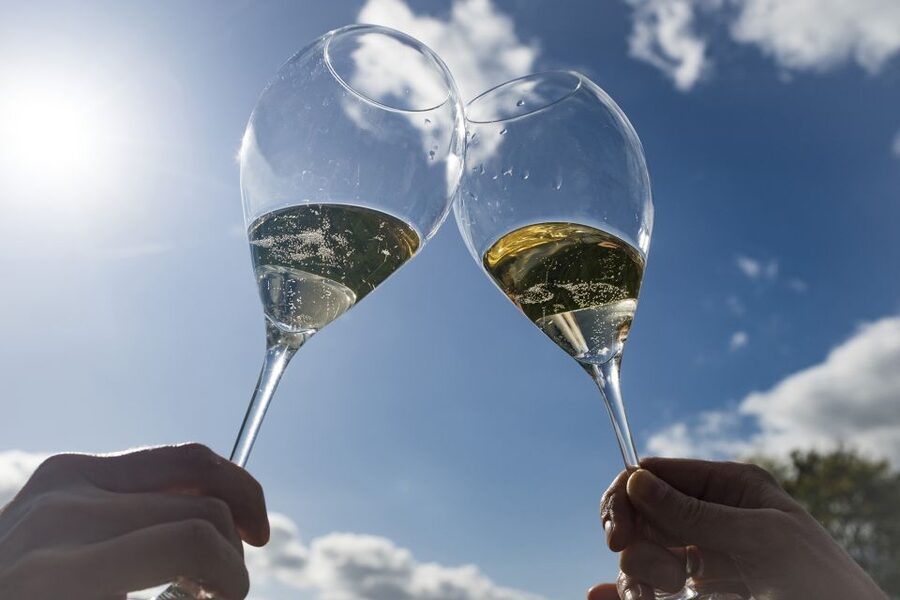
- Six drinks, not six Champagne pours: Taste three Grand Cru or Premier Cru Champagnes, followed by Ratafia, Fine de la Marne, and Marc de Champagne.
- A real family producer: In Oger, see the press, winery, and cellar, then learn how Champagne moves from grapes to bottle.
- Hautvillers with a purpose: Visit the church where Dom Pérignon is buried and stop at a viewpoint tied to his work.
- The Côte des Blancs route: Pass through Chardonnay country, including Chouilly, Oger, and Cramant.
- Small-group transport: The air-conditioned vehicle carries between two and eight people, with pickup and drop-off in Épernay.
- Local guides matter: Philippe, Victoria, Isabelle, Charlotte, Lucie, Marine, and others have been praised for clear explanations, warm conversation, and useful local tips.
Why this tour works better than a city-only tasting
Épernay is famous for the Avenue de Champagne, but the town alone cannot show you how much of Champagne is rural and agricultural. This half-day outing takes you into the vineyards and villages around the Marne Valley, where the roads become narrow, the views open up, and the famous names on shop fronts give way to family cellars.
You spend about three and a half hours on the road and at the stops. That is long enough to get a feel for the region without consuming an entire day. If you have only one free day in Épernay, the timing leaves room for lunch, another cellar visit, or a train connection later.
The group size is a real advantage. With a maximum of eight people, you can ask questions without trying to speak over a coach party. Several guides, including Philippe and Victoria, have been singled out for making the experience friendly and easy to follow. Some departures have ended up with only two people, creating an almost private outing, though you should not count on that.
More Wine Tours in Epernay
- From Reims: Champagne and Family-Run Wineries Tour
★ 4.8 · 671 reviews - From Epernay : Champagne tasting with a vintage car
★ 4.9 · 133 reviews - Champagne experience with a vintage van from Epernay – 3 hours
★ 5.0 · 108 reviews
Starting in Épernay and heading into Champagne country
Pickup and drop-off take place at the Épernay tourism office, with the exact meeting point depending on the option booked. Hotel pickup is not included, so plan to reach the stated meeting point on your own.
You travel in a premium air-conditioned vehicle. That matters here because Champagne villages are connected by small roads, and the ride between stops is part of the experience. You can watch the vines pass by while the guide explains the villages, grape varieties, and Champagne-making traditions.
The Marne Valley is mainly associated with Pinot Noir in this part of the route. Later, the Côte des Blancs brings Chardonnay into focus. This change is useful because it gives you a simple way to understand regional differences: grape variety, soil, exposure, and producer style all affect what ends up in your glass.
The guide also points out major properties along the way. You pass the production site of Moët & Chandon and Château de Saran, a prestigious LVMH property associated with brands such as Dom Pérignon and Veuve Clicquot. You do not tour these sites, but seeing them helps place the family grower in context. Champagne is made by both global houses and small independent producers, and this tour leans toward the latter.
Hautvillers and the church of Dom Pérignon
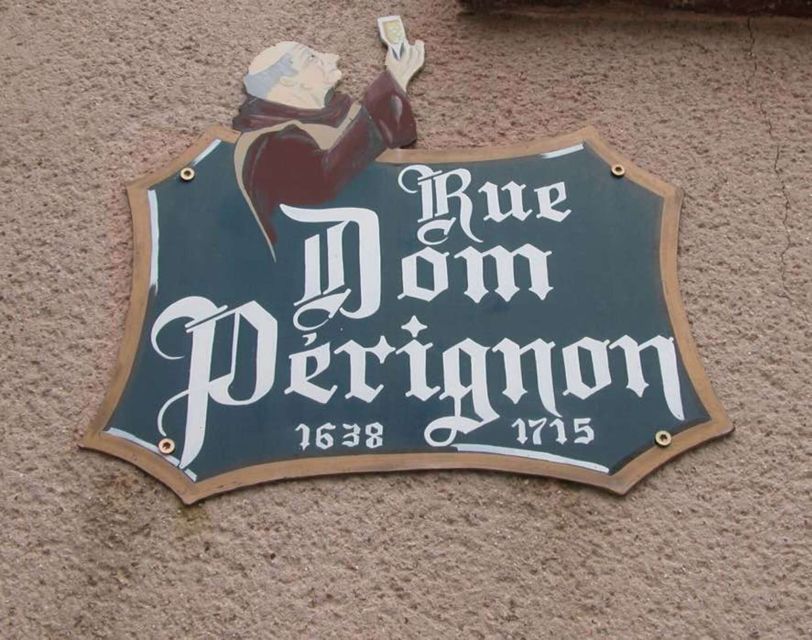
The first major stop is Abbaye Saint-Pierre d’Hautvillers. You have about 30 minutes for a guided visit to the church, including the grave of Dom Pérignon.
Hautvillers is often called the cradle of Champagne. Dom Pérignon is remembered as a key figure in the development of sparkling wine, and the church stop gives the subject a physical anchor. You are not simply hearing his name attached to a bottle. You are standing in the village connected with his work and visiting the place where he is buried.
The stop is compact, so do not expect a long abbey tour. Its value comes from the setting and the explanation. Guides such as Isabelle, Charlotte, and Victoria have been praised for giving the regional story some shape instead of treating the visit as a string of photo stops.
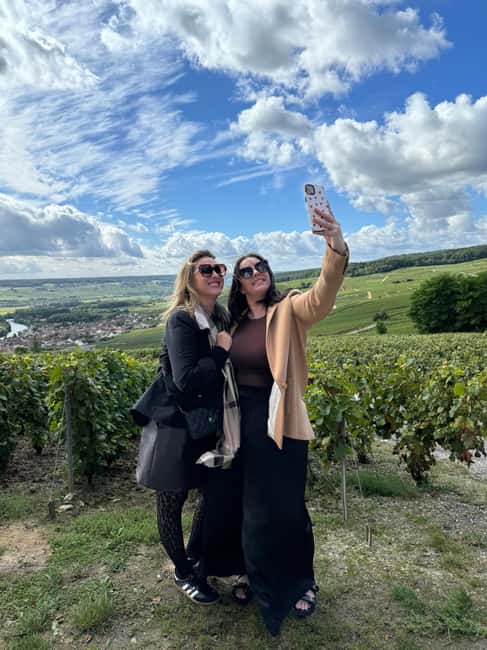
After the church, the route pauses at a viewpoint over the Marne Valley. This is one of the strongest photo opportunities of the outing. From the hillsides, you can see the vineyard country that earned UNESCO World Heritage recognition.
The view is also a good moment to talk about vineyard care. The tour covers sustainable viticulture and how the vineyards are managed. That is worthwhile because Champagne is not only about luxury branding. It is a farming region with demanding seasonal work, and the condition of the vines affects the quality and price of the final bottle.
Bring a jacket or rain layer. The tour runs in wet weather as well as sunshine, and the outdoor stops remain part of the program. The scenery can still be rewarding under clouds or mist, but visibility may be reduced, as one rainy, foggy outing made clear.
Through Chouilly and into the Côte des Blancs
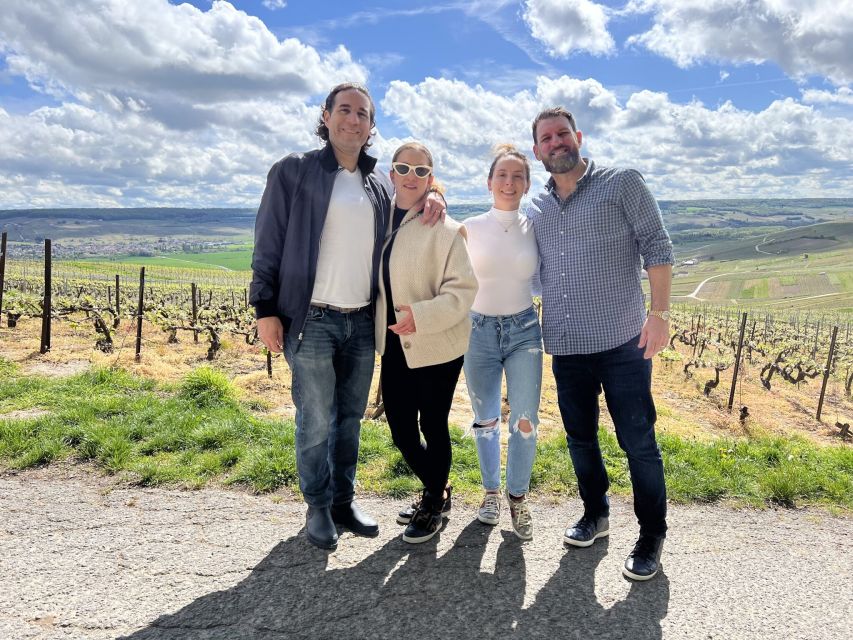
From Hautvillers, the van continues through the vineyards toward Chouilly and Oger. The route is not just transportation between tastings. Your guide points out villages, vineyard classifications, large producers, and the contrast between the Marne Valley and the Côte des Blancs.
The Côte des Blancs is especially important for Chardonnay. Its name refers to the white grapes that dominate the area, and this is where the tour broadens your understanding beyond Pinot Noir country. You might already know Champagne by famous labels, but the route shows you how strongly place and grape variety shape the region.
The drive includes photo stops, though the exact time at each view can vary. If photography matters to you, tell the guide early. Guides have often helped with pictures, which is useful when you are traveling as a couple or small family and want more than a quick arm’s-length snapshot.
One highlight along this section is Château de Saran. You see the property from the route rather than entering it. The same applies to Moët & Chandon’s production site. These glimpses are informative, but they will not satisfy you if your main goal is a large-scale cellar tour.
More champagne houses worth the trip:
- Paris: Moulin Rouge Cabaret Show Ticket with Champagne
★ 4.7 · 16,088 reviews - Paris: Paradis Latin Cabaret Show with Optional Champagne
★ 4.6 · 2,231 reviews - Paris 3-Courses Gourmet Dinner Seine River Cruise with Champagne
★ 4.0 · 1,659 reviews - Top Private Cruises in Paris with French Champagne and surprises
★ 5.0 · 1,553 reviews
The family grower in Oger
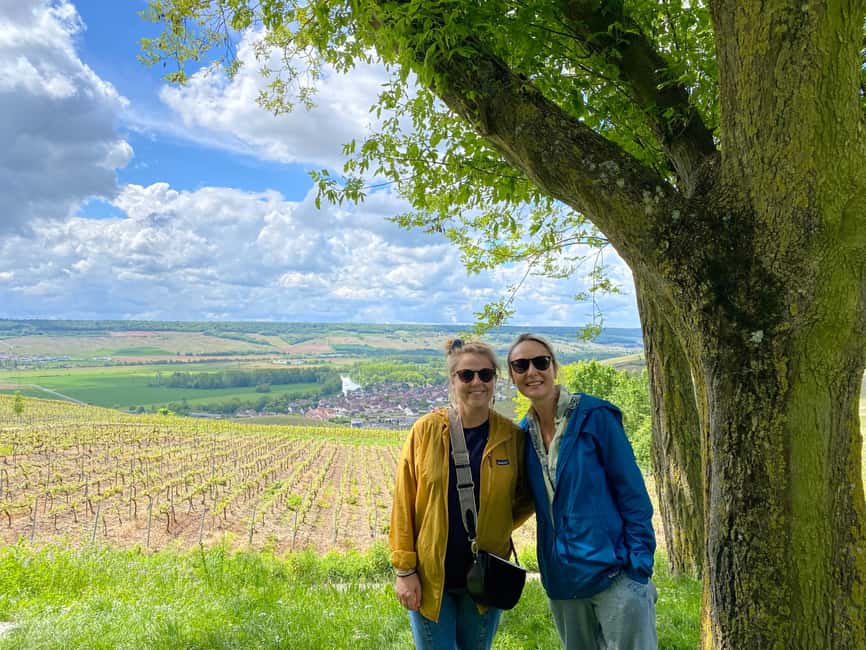
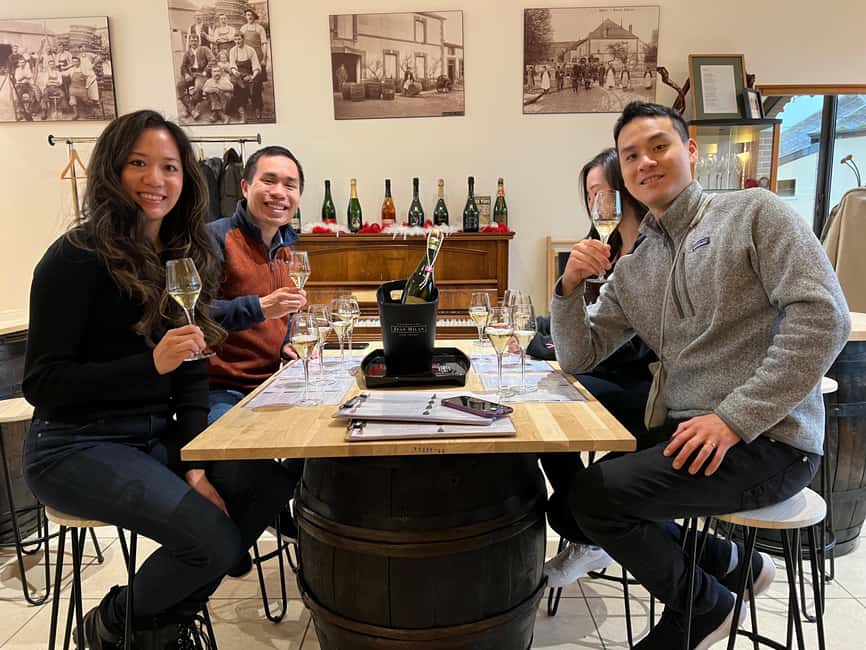
The heart of the tour is the visit to an independent producer in Oger. You see the press, winery, and cellar, then sit down for a guided tasting of three Champagnes classified Grand Cru or Premier Cru.
This is where the tour earns much of its price. A famous house can show you a polished version of Champagne production, but a family grower lets you see the working scale of a smaller operation. The experience connects the vines, equipment, cellar, and bottle in one visit.
You also get a clearer sense of why producer Champagne can be different from a major label. A small grower may work with grapes from a more limited patch of land and express the character of its own vineyards. The tour does not promise a particular producer or fixed tasting lineup, so the bottles can vary, but the focus is on quality classifications and local production.
The tasting is not treated as a quick sample before moving on. The visit and tasting together take about an hour and a half in the route schedule. You can ask about the production method, the cellar, and the differences between the wines. Several guides have been praised for explaining the process in plain English and answering questions without turning the session into a lecture.
The tasting format may feel modest if you expect large pours or a long formal flight. The emphasis is on comparison and learning. You may also have a chance to buy bottles directly from the producer. That can be appealing if you want a Champagne that is less familiar than the brands found in supermarkets and airport shops.
Three local drinks beyond Champagne
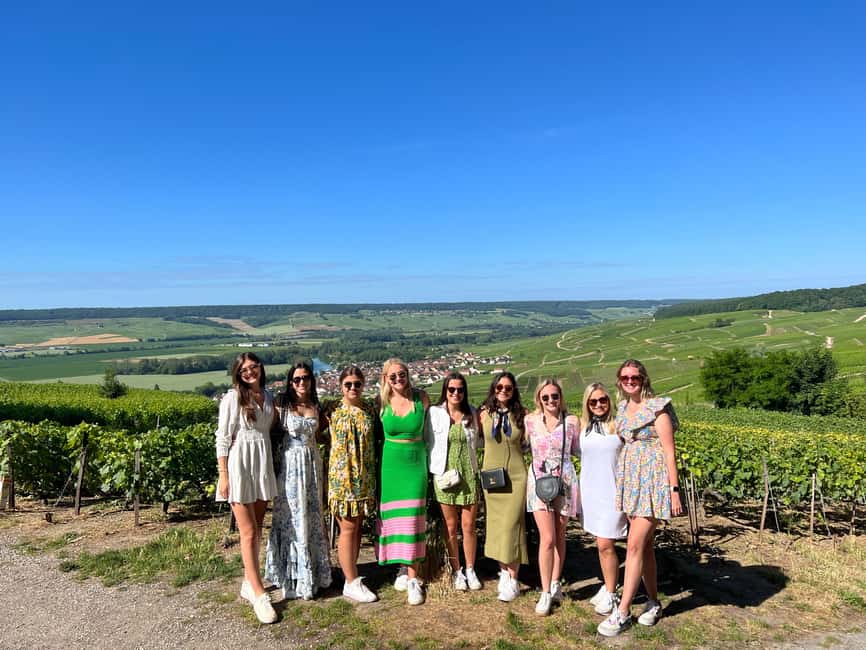
The tour adds three drinks that are not Champagne itself: Ratafia, Fine de la Marne, and Marc de Champagne. Each gives you a different view of local drinking culture and production.
Ratafia is an aperitif, while Fine de la Marne and Marc de Champagne are distilled spirits. The tasting provides a useful contrast with sparkling wine. After several glasses of Champagne, these stronger drinks make it clear that the region’s traditions do not stop at the bottle with the familiar pop and fizz.
The three pours also help explain how the wider Champagne economy uses grapes and wine. You are tasting products linked to the same region but made in different ways. The Goyard Distillery, identified as the oldest distillery in Champagne, is associated with these drinks.
This part may appeal especially to people who already know Champagne and want something less predictable. If you only enjoy light sparkling wine, remember that the spirits will be stronger and the tasting is not an additional set of Champagnes.
The stop is linked with Cramant and includes about 30 minutes for photographs, sightseeing, and the spirit tasting. As with any alcohol tour, pace yourself. Six tastings over three and a half hours is manageable, but you should eat beforehand because lunch is not included.
A brief ride down the Avenue de Champagne
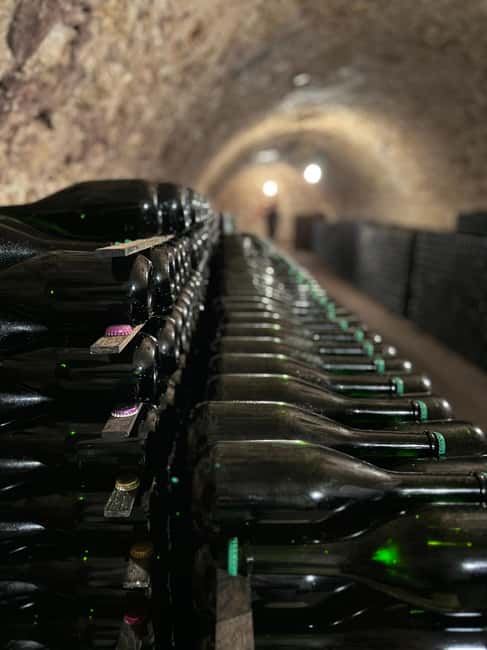
Near the end, the vehicle passes along Épernay’s Avenue de Champagne. This famous street is lined with grand mansions and production buildings connected with Champagne houses including Moët & Chandon, Perrier-Jouët, and Pol Roger.
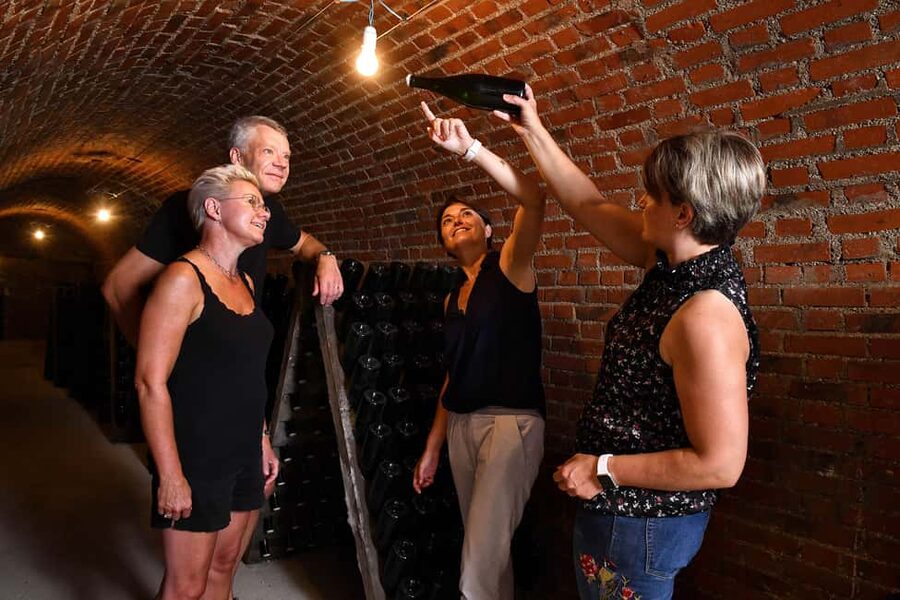
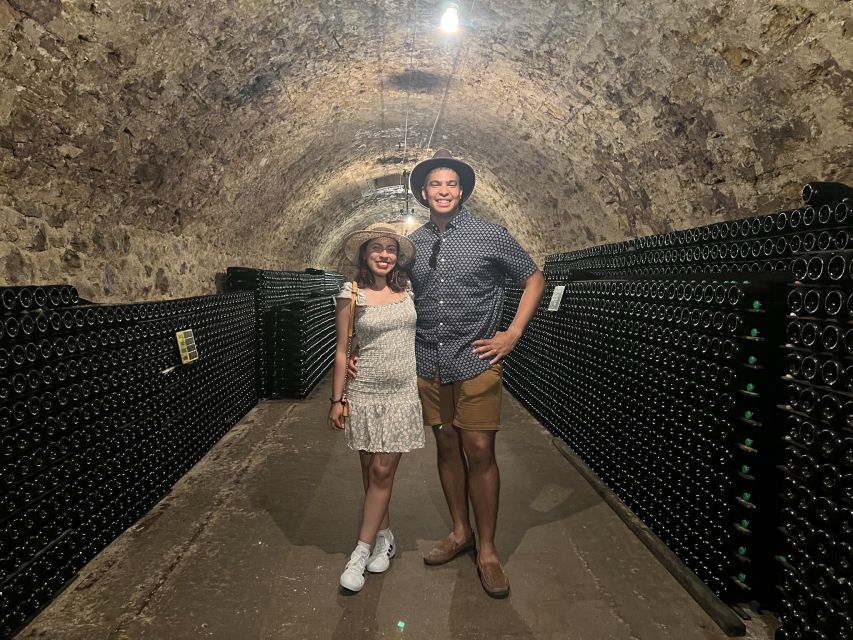
The word passes matters. This is a commented drive, not a full visit to the houses or their cellars. You get the visual introduction and the guide’s explanation, but you do not spend time underground in the kilometers of cellars beneath Épernay.
That limitation is the clearest tradeoff in the experience. One person specifically wished for a large cellar visit, and I understand the point. The major houses show Champagne at a scale that a family grower cannot. If underground tunnels, grand interiors, and brand history are your priority, consider adding a separate Épernay cellar tour.
Still, the Avenue of Champagne works well as a closing scene. After seeing a small producer and rural vineyards, you can compare that world with the grand houses that made Épernay famous.
What $194 includes, and what it does not
At $194 per person, this is not a cheap tasting. I would judge the price against the amount of ground covered rather than against the cost of a single glass in Épernay.
The price includes transport, an English-speaking guide and chauffeur, the visit to the family producer, three Grand Cru or Premier Cru Champagnes, and three additional regional drinks. It also includes pickup and return in Épernay. For a small group, that package is reasonable, particularly if you value a guide who can explain the region while someone else handles the narrow roads.
It does not include lunch, hotel transportation, or a visit to a large Champagne house. You should also remember that the tour is designed for up to eight people, not guaranteed as a private service.
For the best value, arrive having eaten and treat the outing as a regional introduction rather than a luxury tasting marathon. If you buy bottles from the producer, that is an extra cost, though direct purchase can be part of the appeal.
Timing, comfort, and practical limits
The tour lasts 210 minutes and runs with an English-speaking guide. An afternoon departure at 2 p.m. is also available through a separate option, which can suit you if you want a slow morning in Épernay.
The vehicle is air-conditioned, but the step up may be high for some people. One person specifically suggested a small stool to make boarding easier. The experience is not suitable for wheelchair users, and large bags or luggage are not allowed.
Wear shoes that can handle a vineyard or village stop, and bring a layer for the church, cellar, and outdoor viewpoints. The outing runs rain or shine, so a waterproof jacket is sensible even when the forecast looks uncertain.
The tour is a good fit for couples, friends, solo visitors, and families with older children who can manage the vehicle and tasting format. It is less suitable if you need step-free access, want a full meal, or prefer a fixed visit to a major Champagne brand.
The guides make the difference
The experience depends heavily on the guide, and the named guides have earned strong praise for different reasons. Philippe is described as personable and good at conversation. Victoria has been praised for enthusiasm and local insight. Isabelle is noted for combining history, humor, and clear explanations.
Charlotte has been valued for her familiarity with the area and willingness to stop for photographs. Lucie has helped with pictures and kept the route informative, while Marine has been described as warm and engaging.
You cannot choose among these guides from the information provided, but the pattern is useful. This is a guide-led regional tour, not a self-guided transfer with a few scripted facts. The guide shapes the pace, answers questions, and helps you notice details you would likely miss from the road.
Should you book this Champagne tour?
Book it if you want a small-group introduction to the Champagne region with a family producer, village views, and a mix of sparkling wine and local spirits. It is especially good for a first visit to Épernay when you want to see Hautvillers, the Côte des Blancs, and the vineyards in one compact outing.
Think twice if you mainly want an underground cellar tour at Moët & Chandon, Veuve Clicquot, or another major house. The Avenue de Champagne is seen from the vehicle, and the focus stays on the countryside and independent production.
For most people who want context, good scenery, and six varied tastings without giving up an entire day, this is a strong choice. Just eat before you go, pack light, and treat the family grower as the main event.
FAQ
Where does the tour start and finish?
Pickup and drop-off take place in Épernay. The meeting point may vary according to the option booked, and hotel pickup and drop-off are not included.
How long does the experience last?
The tour lasts 210 minutes, or three and a half hours.
How many drinks are included?
You taste three Grand Cru or Premier Cru Champagnes and three additional drinks: Ratafia, Fine de la Marne, and Marc de Champagne.
Is the tour conducted in English?
Yes. The tour includes a live English-speaking guide.
Does the tour visit a large Champagne house?
No large-house cellar visit is included. You pass the production site of Moët & Chandon, see Château de Saran from the route, and drive along the Avenue de Champagne.
Is lunch included?
No. Lunch is not included, so it is sensible to eat before the tour.
Can I bring luggage or use a wheelchair?
Large bags and luggage are not allowed. The experience is not suitable for wheelchair users.
Just added around France
- Bordeaux Wines Masterclass paired with cheeses & charcuterie★ 5.0 · 110 reviews
- Bordeaux Médoc Region Private Wine Lovers Tour with Chateau Visits & Tastings★ 5.0 · 40 reviews
- Bordeaux Food and Wine Tour : Authentic Artisanal Flavors★ 5.0 · 62 reviews
- Saint-Emilion Winery Morning Tour with Local Guide★ 5.0 · 67 reviews
- Médoc luxury wine tour aboard a Citroën DS Limousine Convertible★ 5.0 · 41 reviews
- Saint Emilion Morning Wine Tour – Winery & Tastings from Bordeaux★ 5.0 · 186 reviews
- Introduction to Bordeaux wines paired with cheeses & charcuterie★ 5.0 · 175 reviews
- Free Walking Bordeaux Tour ENG + 1 glass of wine (Tip based)★ 5.0 · 90 reviews
Wine Tours in Epernay, compared.
Champagne experience with a vintage van from Epernay – 3 hours
Read our review →
Moët & Chandon and Family-Run Winery Day Tour & Lunch
Read our review →
Champagne Munoz Bruneau : Half Day Visit and Tasting
Read our review →
Champagne Cellar Experience: Explore our historic cellars
Read our review →
Browse the lists this tour appears in