REVIEW · ITALY
Montepulciano: Pasta-Making Class with Tasting and Wine
The star here is pici, Siena’s thick, hand-rolled pasta. You knead and roll the dough by hand, learning the local technique called appiciare, then sit down to eat your work with wine. I like the small group of no more than 10 and the chance to learn sauces such as aglione, ragù, and cacio e pepe. I also like that the class takes place at a farmhouse rather than in a formal cooking school.
The main consideration is transport. The farmhouse address is sent only after booking, and no transportation is included. You will need to arrange your own way there and back, so this class works best if you have a car or have confirmed a practical taxi plan.
Key points to know
- Pici is the main lesson: Learn the thick, hand-rolled pasta that is closely tied to the Province of Siena.
- More than one pasta: Depending on the session, you may also prepare tagliatelle and ravioli.
- Sauces are part of the fun: Recipes can include meat ragù, aglione, and cacio e pepe.
- Farmhouse setting: Some sessions take place in beautiful rural homes with outdoor dining and ingredients grown on the property.
- Small-group format: The class accepts up to 10 people, with Italian and English available.
- A meal and keepsake are included: Eat your fresh pasta with a glass of wine and receive a Tuscan chef apron.
Why pici makes this class different
Many Italian cooking classes center on rolled sheets of pasta. This one gives pici the leading role, and that makes the experience feel particularly local to southern Tuscany.
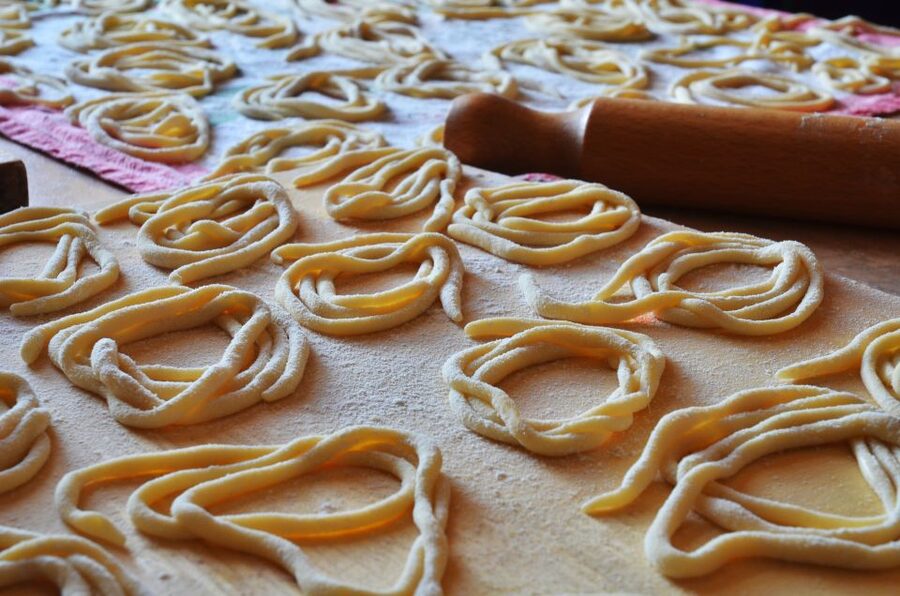
Pici looks a bit like fat spaghetti, but it is made without a pasta machine. You roll the dough into long strands between your palms, rubbing and stretching it until it reaches the right shape. The gesture is known locally as appiciare. It is simple enough for a first-time cook, but pleasingly hands-on.
I like this kind of lesson because you learn a food that does not require special equipment. At home, you can make pici with basic ingredients and your own hands. The method is rustic, forgiving, and easy to remember after you leave Montepulciano.
The class also puts pici in context. This is a peasant recipe, built around straightforward ingredients and practical kitchen skills. It is not about making perfect restaurant pasta. It is about learning a dish that Tuscan families can prepare without much fuss.
A few more wine days around Italy worth comparing
- Florence: Pasta Cooking Class with Unlimited Wine
★ 4.9 · 10,285 reviews - Florence: Pasta & Tiramisu Cooking Class with Unlimited Wine
★ 4.9 · 6,708 reviews - Florence: Pasta Cooking Class with Unlimited Wine
★ 5.0 · 6,413 reviews
The three-hour rhythm at the farmhouse
Allow about three hours from arrival to departure. The exact starting time depends on availability, and the farmhouse meeting point is communicated after your booking is confirmed. Read that message carefully, since the experience does not begin at a standard town-center meeting point.
The class starts with instruction on fresh pasta. You will work with the dough, learn how to shape pici, and may prepare other varieties such as tagliatelle and ravioli. The precise menu can vary, but the advertised focus is on typical Tuscan handmade pasta.
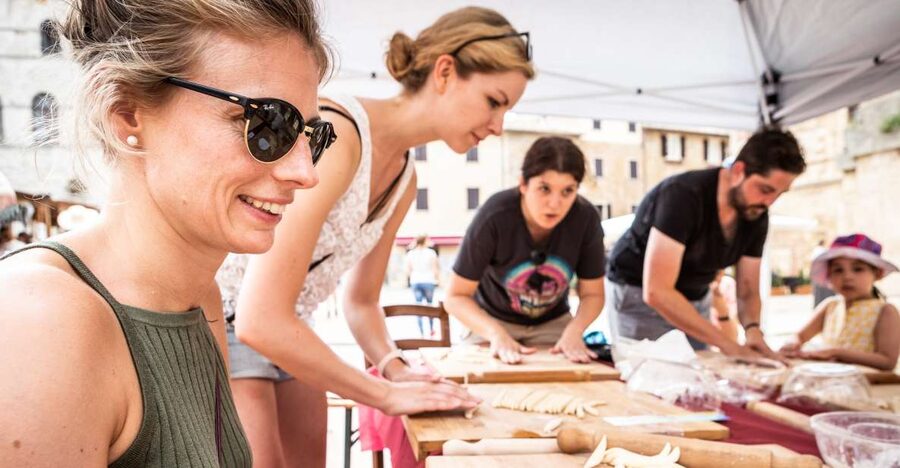
The cooking is usually shared across the group. That matters because a small class gives you room to work without feeling like you are standing in a crowded demonstration kitchen. With a maximum of 10 participants, you should have a better chance to ask questions and get help with dough texture and shaping.
The teaching is available in Italian and English. Several hosts associated with past sessions include Simonetta and Susanna, Daniela and Daniel, and Irene, Maria, Alister, and Carmela. The host team can vary, so do not book expecting one named instructor unless that person is confirmed directly.
After the pasta is ready, you eat it as lunch or dinner. The meal is included, along with a glass of wine, so the class has a clear finish rather than ending with a sample bite at the counter.
Learning sauces that make the pasta work
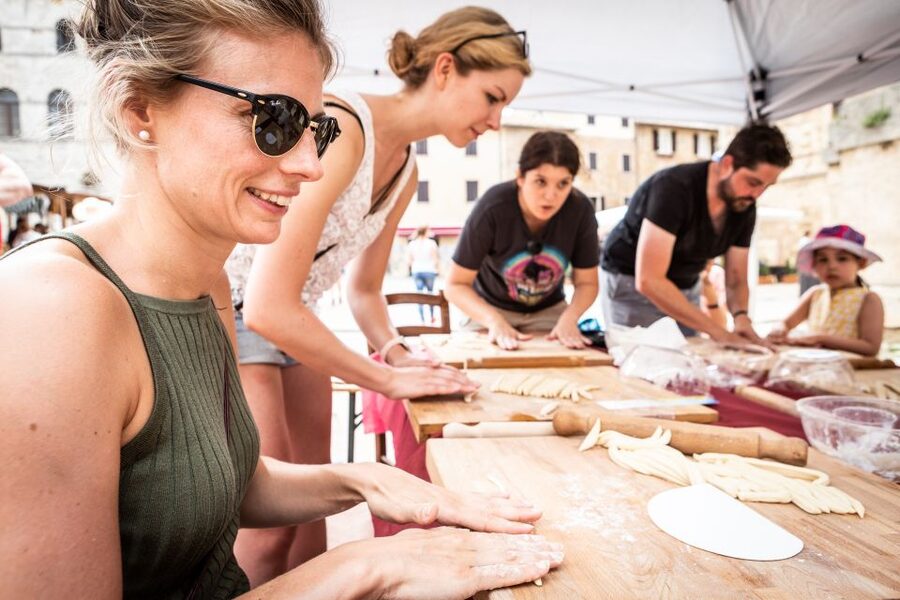
The pasta itself is only half the lesson. The sauces give you recipes you can use again at home.
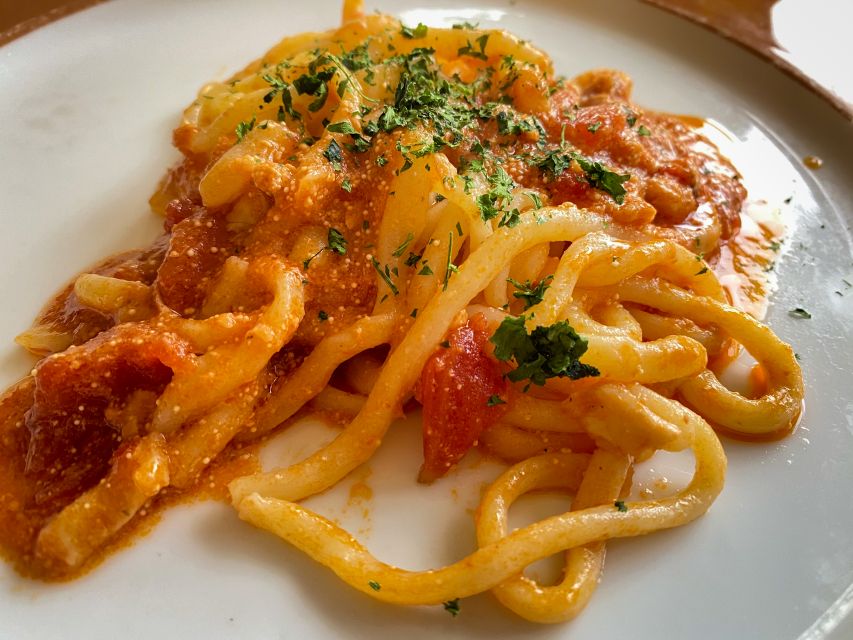
Aglione sauce is one of the most Tuscan choices. It is made with the region’s large, mild garlic and tomato, and it is a natural match for pici. You might also work with a meat ragù or cacio e pepe, the simple combination of cheese and black pepper.
These sauces are useful for a home cook because they do not depend on complicated technique. The important lessons are often small ones: how thick the sauce should be, when to add pasta water, and how to coat fresh pasta without drowning it.
Some sessions include bruschetta before the pasta. One farmhouse class included three different bruschette, with strawberries picked on the property used for one of them. That kind of detail can vary, but it shows the broader spirit of the experience: local ingredients, simple preparations, and a meal built around what is available.
If you are hoping for a fixed, printed menu, this may feel less predictable. If you prefer a class shaped by the host and the farm, that flexibility is part of its appeal.
The farmhouse setting adds real value
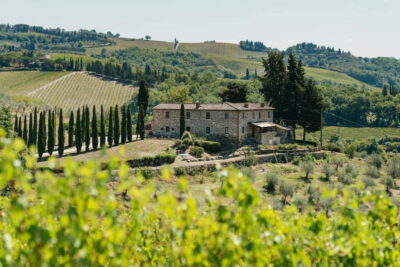
The setting is a major part of the experience. Past classes have taken place in authentic Tuscan farmhouses, with outdoor dining areas, open views, and room to sit over wine after the cooking is done.
One reported setting included a private farmhouse among the rolling hills, with a patio meal and friendly dogs on the property. Another had a quiet cooking space used only by a group of four. Those details are not guaranteed for every date, but they point to an experience that feels more like visiting a local home than attending a commercial kitchen session.
That difference matters. In a city cooking school, the food lesson is usually the whole event. Here, the house, garden, host, and shared table are part of the experience. You may spend as much time talking with the family as you do shaping dough.
The rural setting also creates the main practical drawback. A beautiful farmhouse outside town can be awkward without a car. Since transportation is not included and the exact location arrives after confirmation, check your route before committing. Do not assume that a short walk from Montepulciano’s historic center will get you there.
Same region, a completely different afternoon:
- Tuscany Day Trip from Florence: Siena, San Gimignano, Pisa and Lunch at a Winery
★ 5.0 · 21,634 reviews - Florence: Chianti Wineries Tour with Wine Tasting
★ 4.5 · 10,071 reviews - Small-Group Wine Tasting Experience in the Tuscan Countryside
★ 5.0 · 7,392 reviews - Pisa, Siena and San Gimignano Day Trip with Lunch & Wine Pairing
★ 4.5 · 6,006 reviews
Hosts who make the meal personal
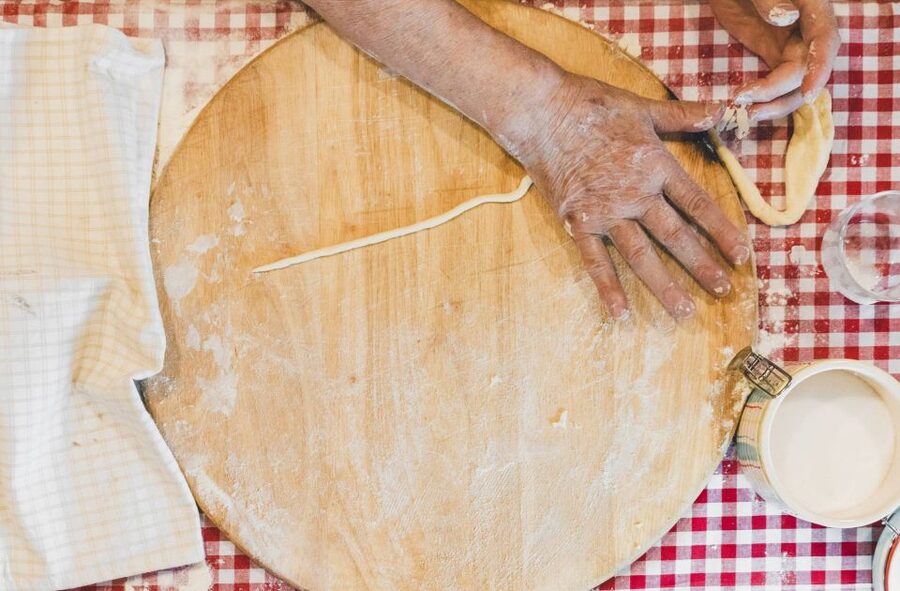
The strongest part of this activity is the host interaction. The class is taught by local cooks and families, rather than by a large rotating staff in a tourist facility.
Simonetta and her assistant Susanna have led sessions focused on pici with aglione. Irene has hosted small groups in a farmhouse setting. Daniela and Daniel have welcomed participants into a family property and used fresh ingredients grown on their farm. Maria, Alister, and Carmela have also been part of sessions praised for their warmth and clear instruction.
Because the host can vary, you should think of this as a local cooking visit rather than a guaranteed chef-led masterclass. English is available, though the level of English may differ from one host to another. The experience is designed to work across languages through demonstration, repetition, and hands-on practice.
That suits this type of food. Pici does not require a long lecture. You watch the movement, try it yourself, and get corrected as you go.
What you eat after the lesson
The best payoff comes at the table. You eat the pasta you prepared, served with the sauces made during the class, and pair it with wine.
The meal may include more than one pasta. Some sessions have covered pici, tagliatelle, and ravioli, along with two simple sauces. Others have centered on pici and aglione after a selection of bruschetta.
This variety gives you a fuller introduction to Tuscan pasta, but it also means the exact menu is not fixed in the information provided. If you have allergies, dietary restrictions, or strong dislikes, ask before booking rather than assuming the menu can be changed.
The wine is part of the meal, not a separate tasting flight. That keeps the event relaxed and practical. You are not trying to identify several vintages. You are enjoying a glass with the food you just made.
The apron is a small but useful touch. You receive a Tuscan chef apron as a gift, which gives you a physical reminder of the lesson and something practical to use when you try pici at home.
Is $141.61 a fair price?
At $141.61 per person, this is not a budget meal. The price makes more sense when you count the full package: a three-hour hands-on class, lunch or dinner, fresh pasta, sauces, wine, a small group, and the farmhouse setting.
You are paying for access to a local kitchen and host, not only for ingredients. The meal is part of the instruction, and the recipes are meant to be repeated after your trip. If you value food culture and personal contact, the price can be reasonable.
The value is weaker if you mainly want to eat pasta. You can find a cheaper meal in Montepulciano, and this is not a fast tasting stop. You need to give it three hours, reach the farmhouse independently, and take part in the preparation.
For couples, families, and small groups who want one memorable food activity in Tuscany, the cost is easier to justify. It is also a good use of time for anyone who prefers a shared meal to a formal sightseeing stop.
Who should book this experience?
I would choose this class if you want to do something active but not overly demanding. You do not need much cooking experience. The pici method is approachable, and the instructors are there to guide your hands rather than test your technique.
It suits families, couples, and friends traveling together. Children who enjoy working with dough may have a good time, though the supplied information does not specify an age range, so confirm that before booking for young children.
It is also a strong choice for repeat visitors to Tuscany. If you have already seen the major churches, towers, and wine cellars, making a local dish gives you a different way into the region.
I would be more cautious if your schedule is tight or your transport is uncertain. The class has a fixed duration, but the countryside location and pickup details require planning. Confirm the address and allow enough time to reach the farmhouse without rushing.
Practical details before you reserve
The activity lasts three hours, with starting times shown according to availability. The group is limited to 10 participants, and the host or greeter speaks Italian and English.
Lunch or dinner with the fresh pasta is included. Transportation is not. The meeting point is the farmhouse, but its location is supplied after booking confirmation. The activity ends back at that same meeting point.
You can cancel up to 24 hours in advance for a full refund. A reserve-now, pay-later option is also available, which can help if your Tuscany plans are still moving around.
The experience has a 4.7 rating from 39 reviews, a strong result that fits the repeated praise for the hosts, food, farmhouse setting, and clear teaching. The most consistent strengths are personal hospitality and the quality of the meal, not elaborate culinary theory.
Should you book the Montepulciano pasta class?
Book it if you want a warm, hands-on Tuscan meal and you can solve the transport question. The farmhouse setting, small group, handmade pici, wine, and shared table offer more personal contact than a standard restaurant meal.
Do not book it simply because you want a quick pasta tasting or a guaranteed fixed menu. The farmhouse location is shared after booking, hosts can vary, and the experience depends on your willingness to cook as well as eat.
For most food-focused visitors with three hours to spare, I think it is a good use of time. You leave with a full meal, a practical recipe, a chef apron, and a better sense of why pici belongs to Siena and its surrounding countryside.
FAQ
How long does the Montepulciano pasta class last?
The activity lasts three hours. Starting times depend on availability.
What pasta will I learn to make?
The main lesson is pici, a thick, hand-rolled Tuscan pasta. Depending on the session, you may also prepare tagliatelle and ravioli.
Is a meal included?
Yes. You eat lunch or dinner with the fresh pasta prepared during the class. A glass of wine is included with the meal.
Is transportation to the farmhouse included?
No. Transportation is not included. The farmhouse meeting point is communicated after booking confirmation.
What languages are available?
The host or greeter speaks Italian and English.
How large is the group?
The activity is limited to 10 participants.
More Workshops in Italy
- Rome: Pasta & Tiramisu Class with Fine Wine by the Vatican
★ 4.9 · 4,852 reviews - Rome: Pasta Making Class with Wine, Limoncello, and Dessert
★ 4.9 · 3,177 reviews - Florence: Cooking Class Pasta & Tiramisu Making Unlimited Wine
★ 5.0 · 2,234 reviews - Fettuccine & Tiramisù: Cooking Class with Wine & Limoncello
★ 4.9 · 2,103 reviews
Just added around Italy
- Wine Degustation Ebrezze★ 4.5 · 86 reviews
- Guided winery tour with tasting in Bolzano at the SKYWINE PAVILLON★ 5.0 · 61 reviews
- Bologna: Tagliatelle & Ragù Home Cooking Class with wine★ 4.5 · 55 reviews
- Bologna Food & Wine tour with a local Chef★ 3.0 · 30 reviews
- The downtown wine experience★ 5.0 · 35 reviews
- Parmigiano Wine and Balsamic Vinegar Experience from Bologna★ 5.0 · 30 reviews
- Eating Bologna Food and Wine Tour★ 5.0 · 96 reviews
- Private Bologna Food & Market Tour with 6 Tastings & Wine★ 5.0 · 102 reviews
Wine Tours in Italy, compared.
Tuscany Day Trip from Florence: Siena, San Gimignano, Pisa and Lunch at a Winery
Read our review →
Small-Group Wine Tasting Experience in the Tuscan Countryside
Read our review →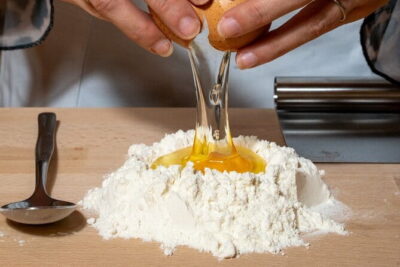
Pasta & Tiramisu Cooking Class with Unlimited Wine
Read our review →
Pisa, Siena and San Gimignano Day Trip with Lunch & Wine Pairing
Read our review →