
REVIEW · LISBON
Lisbon: Food and Wine Small Group Walking Tour
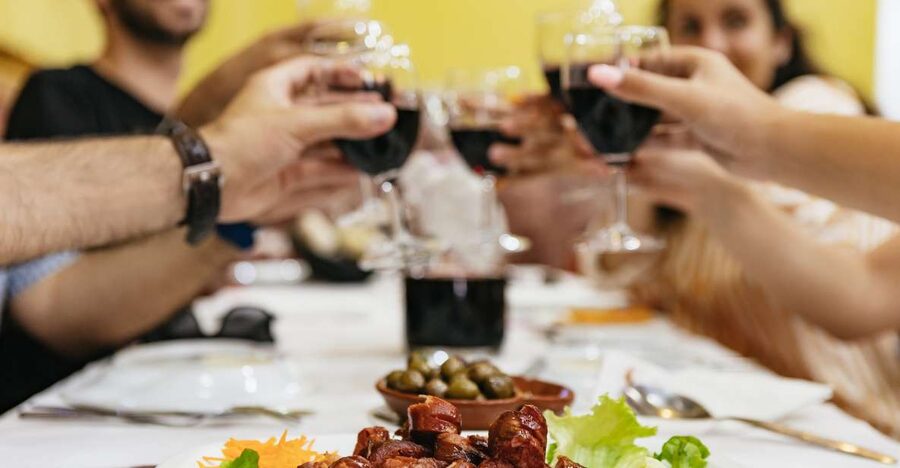
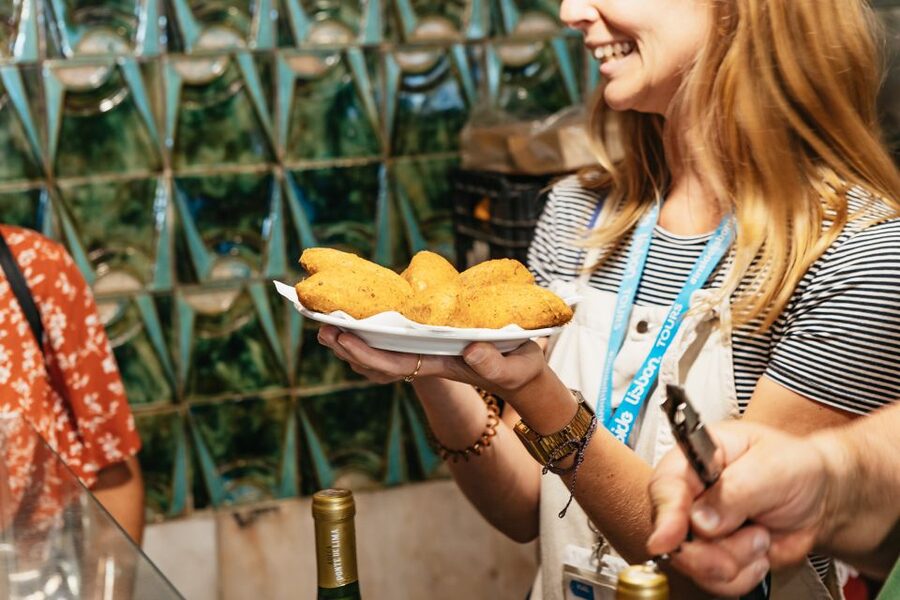
Lisbon’s best food lessons often happen at a counter, not in a museum. This three-hour walk leads you through six cafés, taverns, and restaurants for 15 tastings, including codfish cake with Vinho Verde, Port with cheese, a bifana pork sandwich, ginjinha, chouriço, rice, beer, and local wines.
I like the generous portions and the way each drink has a story behind it. I also like the short distances between stops, which leave more time for eating, chatting, and seeing Baixa instead of marching across town. The main drawback is clear: this is not a good match for vegans, people with celiac disease, or anyone needing strict vegetarian, kosher, or gluten-free choices.
I also like that the guides bring different strengths. José, Daniel, Filipa, Pedro, Martin, Carlos, Alex, and Guilherme are among the guides praised for their humor, local insight, and warmth. Come hungry, wear comfortable shoes, and expect a social outing with a fair amount of alcohol.
Key points at a glance
- Six close-together stops in Baixa: You spend more time tasting and less time walking long distances.
- 15 Portuguese tastings: The menu covers wine, beer, spirits, cheese, bread, pork, cod, chouriço, and a changing rice dish.
- Classic Lisbon drinks: Try Vinho Verde, Port, ginjinha, red and white wines, and draft beer.
- Traditional local settings: The route uses cafés, tascas, historic bars, and small food venues rather than only polished tourist restaurants.
- Guides shape the experience: José, Daniel, Filipa, Pedro, Martin, and others are known for humor, food knowledge, and practical Lisbon advice.
- A serious amount of food and drink: The servings can feel more like small meals than sample bites, so plan accordingly.
What the Lisbon food walk is really about
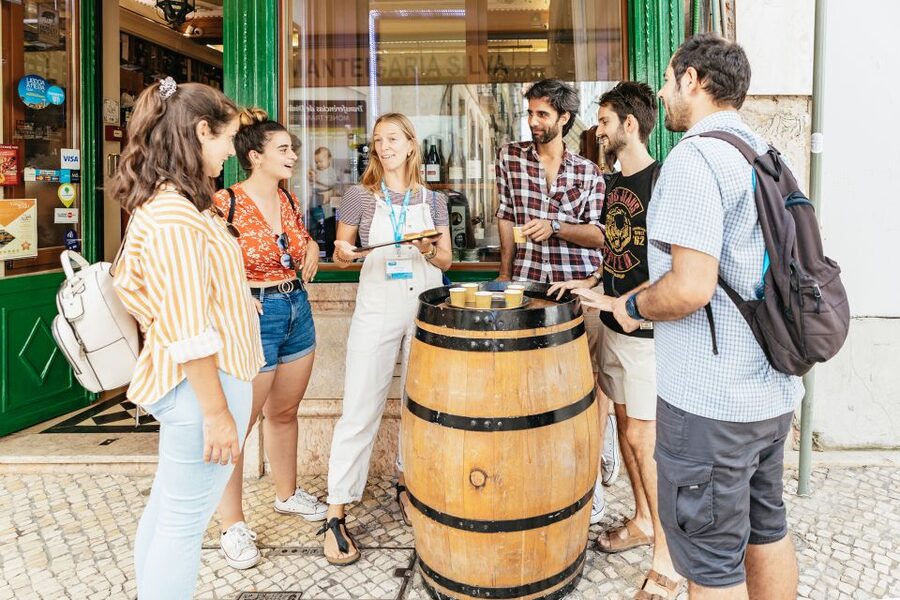
This is less a formal cooking lesson and more a guided introduction to how Lisbon eats and drinks. You move through central Baixa with an English-speaking guide, stopping often enough to keep the pace lively but not so often that every tasting feels rushed.
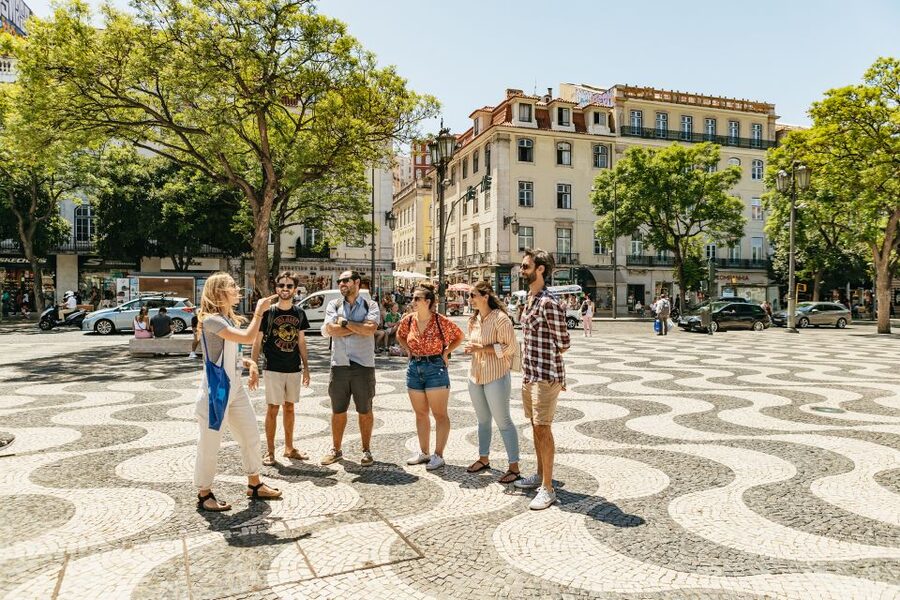
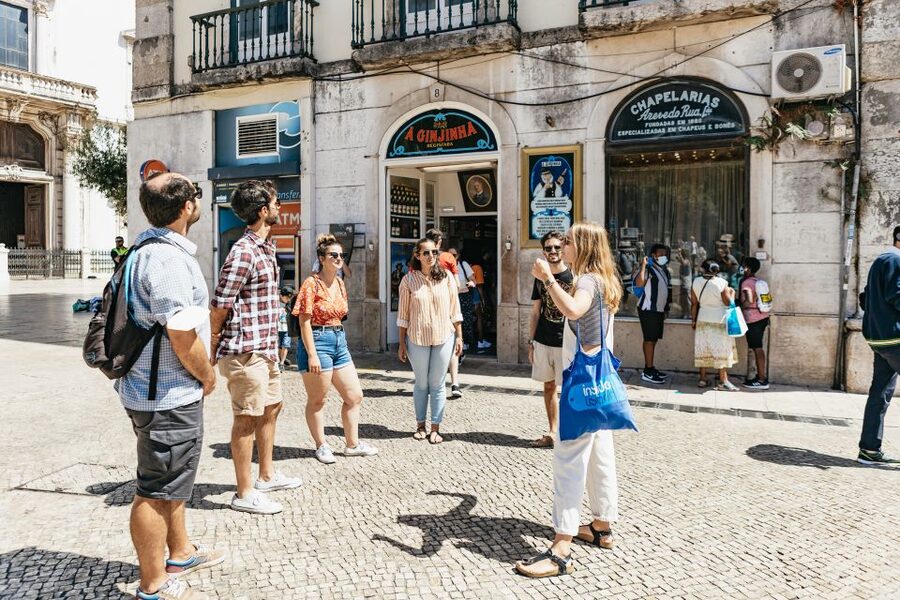
The route begins at Rossio Square, officially Praça Dom Pedro IV. From there, the group moves through nearby streets and squares, with most stops close together. The setting matters. You are not simply seated in one restaurant while plates arrive. You see the streets, hear the city, and step into the sort of cafés and taverns that give central Lisbon its everyday character.
The advertised total is 15 tastings across six popular spots. In practice, several tastings arrive together, so the number does not mean 15 separate stops. That is good news for your feet, but it also means you should pace yourself. Food and drinks appear throughout the three hours, and some servings are described as generous.
Group size can vary. Some departures may feel quite intimate, with only four people, while others can reach roughly 14 or 15. A smaller group gives you more time with the guide. A larger one creates a livelier social evening, though you may have to wait a little longer at crowded counters.
More Wine Tours in Lisbon
- Winner 2025 Undiscovered Lisbon Food & Wine Tour by Eating Europe
★ 5.0 · 6,390 reviews - Lisbon: Live Fado Show with Port Wine at Lisboa em Fado
★ 4.7 · 5,097 reviews - Lisbon Small-Group Portuguese Food and Wine Tour
★ 5.0 · 3,972 reviews
Rossio Square and the first taste of Portugal
Meet by the center statue in Rossio Square, near the column topped by D. Pedro IV. The guide carries a blue badge, blue bag, or black backpack. Be careful here: Lisbon has more than one famous square with a statue, and the correct meeting place is the one with two fountains and the tall column. If you see a man on horseback, you are in the wrong square.
The nearest Metro stop is Rossio on the green line. There is no hotel pickup, so you need to reach the square on your own.
The first stop usually introduces you to Vinho Verde, Portugal’s light, refreshing green wine. Despite the name, the wine is not green. It is typically young and crisp, making it a sensible opening drink before heavier food and stronger spirits appear.
The wine comes with a codfish cake, one of Portugal’s best-known snacks. This is a useful first lesson because salted cod is tied closely to Portuguese cooking, and the cake gives you a warm, savory bite without filling you too quickly.
The guide also begins placing the food in context. The better guides do not just name each dish. They explain how ingredients, trade, regional habits, and daily café culture shaped what you are eating. Guides such as Carlos, Pedro, and Martin have been especially praised for linking the dishes to Lisbon and the wider Iberian Peninsula.
Cheese, Port, and the old café tradition
A nearby café stop brings cheese and wine, with the guide explaining Portugal’s long relationship with Port. This fortified wine is stronger and sweeter than table wine, so the cheese pairing gives it a useful counterweight.
This part of the route is valuable for anyone who knows little about Portuguese wine. You do not need to memorize regions or grape names. Instead, you get a basic sense of how Port differs from Vinho Verde and from the dry red and white wines served later.
The venues are part of the lesson. Some are small, traditional places where space is limited and the atmosphere is informal. That can feel more personal than sitting in a large restaurant designed around tour groups. The tradeoff is that you may stand, share a table, or find the room crowded during a busy service.
One practical point: the food comes in a steady stream. If you usually eat lightly at lunch, do not assume these are tiny nibbles. Several servings are substantial enough to count as part of a meal.
St. Dominic’s Square and a taste of ginjinha
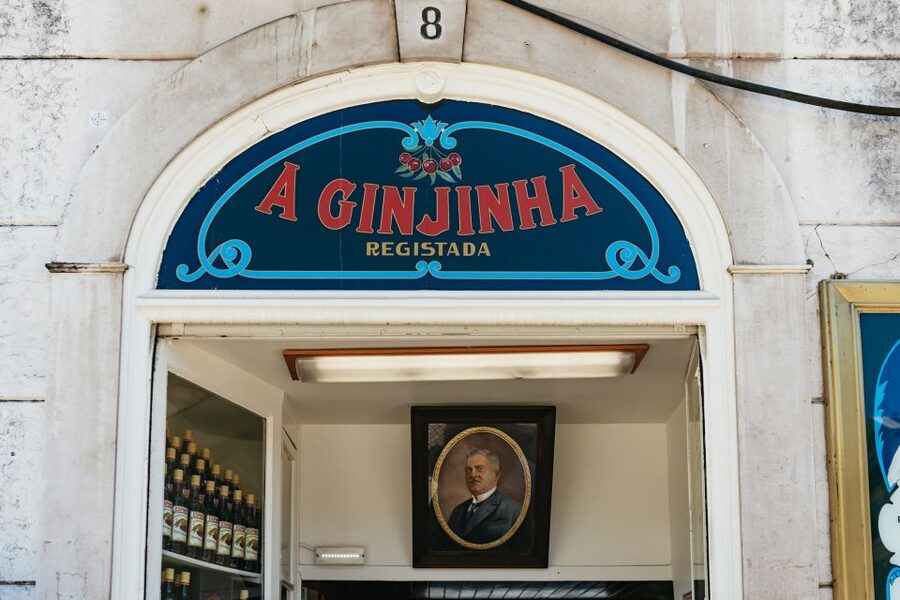
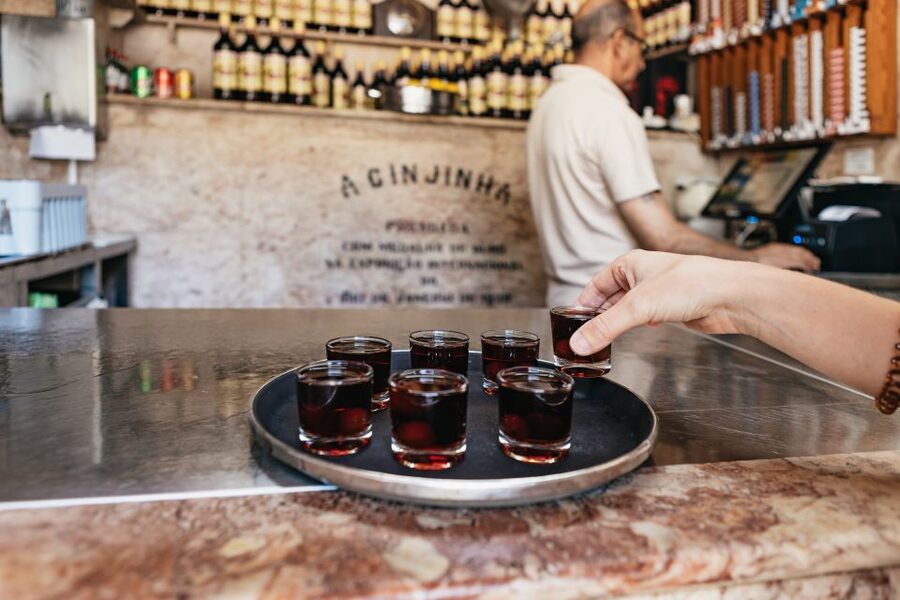
The walk continues to St. Dominic’s Square for ginjinha, Lisbon’s famous cherry liqueur. This is a short stop, but it carries plenty of local character.
Ginjinha is an aromatic cherry brandy served in small amounts. The tour visits a historic bar associated with the drink’s early commercial sale in 1840. That detail gives the tasting a sense of place: you are not simply drinking a generic fruit liqueur in a modern cocktail bar.
For many people, ginjinha is the most distinctly Lisbon drink on the route. It is sweet, strong, and easy to underestimate. If you are sensitive to alcohol, take your time. By this point, you may already have had wine and perhaps beer, so the cumulative effect matters more than any single pour.
This is also where the social side of the tour tends to grow. You are standing together in a central square, tasting the same drink, and swapping impressions with people from different countries. Solo visitors fit in well, and the guides make an effort to keep individuals involved rather than letting couples form a private bubble.
A few more wine days around Lisbon worth comparing
- Lisbon Food Tour with 10+ Tastings of Local Delicacies & Wines
★ 5.0 · 1,339 reviews - Award-Winning Original Lisbon Food Wine Tour: 19 Curated Tastings
★ 5.0 · 1,288 reviews - Private Lisbon Arrabida Wine Tour: Food & Wines, Mountain and Sea
★ 5.0 · 907 reviews - Lisbon Private Food Tour – Taste 10+ Local Dishes & Wines
★ 5.0 · 896 reviews
A real tasca, a bifana, and a cold beer
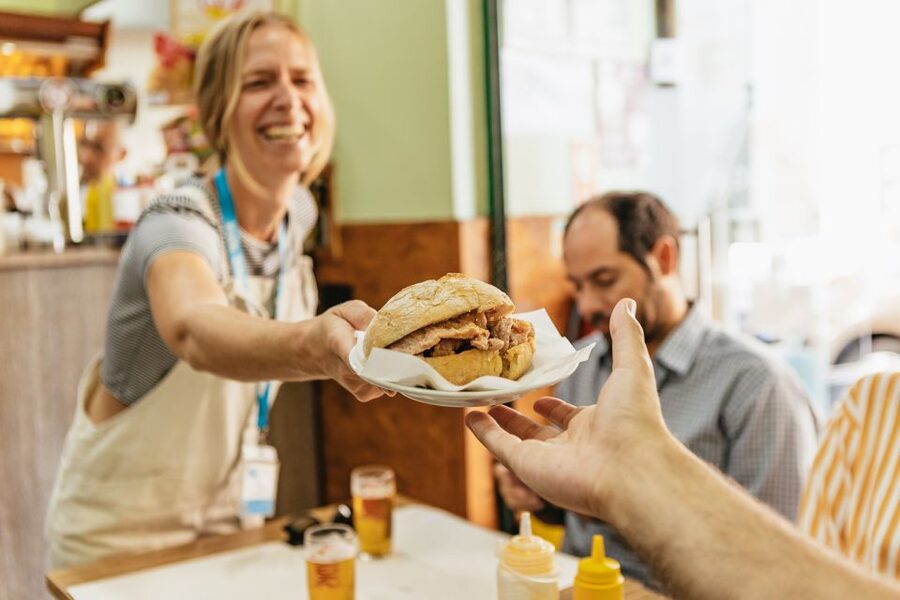
One of the most satisfying food stops is a traditional tasca, or Portuguese tavern. Here you try a bifana, a simple pork sandwich, with a cold draft beer.
The bifana is not fancy food, and that is exactly the point. It is a casual Portuguese staple, the sort of item you might order at a snack bar when you want something quick and filling. The pork is served in bread, and the beer pairing makes the stop feel like an everyday Lisbon meal rather than a staged tasting.
This is one of the places where the tour can save you time and guesswork. You could walk past dozens of cafés and taverns without knowing which ones have a local reputation. A guide who has a good relationship with the owners can also help the group feel welcome, rather than merely processed through the door.
The downside is that a bifana adds real weight to the meal. If you have already eaten breakfast late or had a large lunch, you may need to slow down. The tour does not offer vegan or celiac-friendly substitutions, and alternatives for vegetarians, people avoiding gluten, or anyone with other strict requirements may not be possible.
Chouriço, bread, cheese, and Portuguese red wine
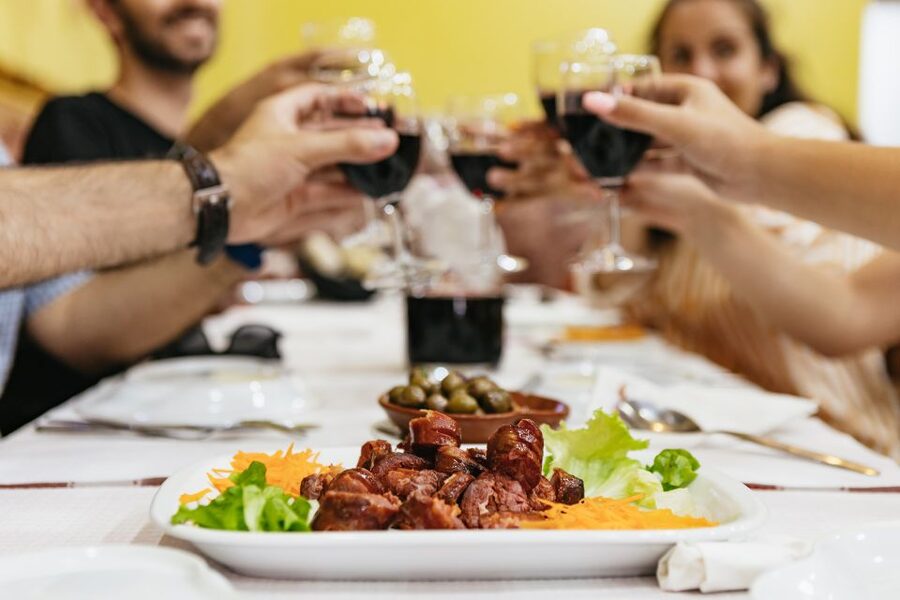
Another stop focuses on local products served with chouriço, Portuguese bread, cheese, and red wine. Chouriço brings a smoky, savory note, while the bread and cheese help balance the wine and make the tasting more filling.
The exact products can change, since the route uses working venues and fresh availability. That is a plus if you want an introduction to local eating rather than a fixed, identical plate at every departure. It also means you should not book this expecting a precise menu of named dishes.
A good guide makes this stop more than a series of bites. You learn what people commonly order, how the food fits into casual meals, and why the same ingredient may appear in different forms across Portugal. Daniel, Filipa, and Guilherme have been praised for explaining food clearly while keeping the mood light.
This is also a good point to ask for restaurant suggestions. Guides often share ideas for the rest of your stay, including places to eat and areas worth visiting. Write down anything useful, since the combination of wine, conversation, and city sights can make details disappear later.
The changing rice dish and a final glass of wine
The last major food stop is a traditional Portuguese rice dish prepared daily according to the available fresh ingredients. It comes with a carefully selected wine pairing.
Because the ingredients can change, you might find a soupy rice preparation or another regional style rather than one fixed recipe. That uncertainty is part of the appeal. The dish reflects how Portuguese kitchens work with what is good and available, not just what appears on a printed menu.
This is often the most comforting course of the afternoon or evening. After the sharper flavors of ginjinha, chouriço, cheese, and cured or salted foods, a warm rice dish gives the meal a softer finish.
The wine may be red or white, depending on the dish. That pairing helps you understand the practical side of Portuguese dining: wine is not only a tasting exercise but also part of the meal. The guide can explain why a particular style works with the food, giving you a useful idea to carry into later restaurant meals.
The route ends with drop-off in either Baixa de Lisboa or near Alfama. You are not returned to a hotel, but both areas are central and useful for continuing your evening.
How much walking is involved?
The tour lasts three hours, but it is not a long-distance walking tour. Stops are close together, and the route includes frequent pauses for food and drink. One guide-led departure had six stops close enough that a person with mild to moderate walking difficulty could manage it, though the activity still requires standing and moving through city streets.
Comfortable shoes are essential. Lisbon’s central streets can be hard on your feet, especially after several stops and a few drinks. The route is not designed for someone who wants a completely seated meal.
Weather can affect the experience because you move between venues. The food stops offer shelter, but you should bring suitable clothing for the season. Pets are not allowed.
Is $72 a fair price?
At $72 per person, the tour costs more than simply ordering a bifana, a glass of wine, or a ginjinha on your own. The value comes from the range: six venues, 15 tastings, a guide, neighborhood orientation, food history, and several drinks over three hours.
If you tried to recreate the full route independently, you would pay for each item separately and spend time finding the right places. You might also order a few tourist-oriented dishes without learning what they mean. The tour bundles that research and guidance into one outing.
The price looks strongest for a first visit to Lisbon, especially if you want food to help you understand the city. It is also useful on your first full day because the guide can point you toward restaurants and areas for the rest of your stay.
The value is weaker if you do not drink, eat very small portions, or already know Lisbon’s traditional food scene. Since alcohol is part of nearly every stage, this is not primarily a food tour with optional drinks. It is a food and wine walk, and the balance leans generously toward both.
Free cancellation up to 24 hours before the start gives you some flexibility, and you can reserve while paying later. Check the available start time when booking, since the exact schedule can vary.
Who will enjoy this most?
I would recommend this tour to first-time visitors, curious eaters, solo visitors, couples, and small groups who enjoy meeting other people. It works particularly well for anyone who wants a friendly orientation to Baixa without spending a full day on a formal sightseeing tour.
The guides are a major part of the experience. José is often praised for humor and warmth, Daniel for food knowledge and rapport with local venues, Filipa for storytelling, Pedro for his grasp of Portuguese and Iberian food, and Martin for his energy and practical advice. Guide assignments can change, but the repeated pattern is clear: personality matters here.
Families can consider it, but picky eaters may find the fixed tastings limiting. One family managed a very selective teenager with a thoughtful guide, but you should not count on substitutions. Children and non-drinkers also need special consideration because wine, beer, Port, and ginjinha are central to the route.
People with allergies or strict dietary rules should contact the operator before booking, but the stated limitations are firm. Vegan and celiac options are not available, and vegetarian, kosher, or gluten-free alternatives may not be possible at the traditional venues.
My recommendation for booking
Book this if you want a lively first taste of Lisbon, prefer local cafés and taverns to a polished restaurant meal, and enjoy a social group setting. The mix of codfish cake, bifana, chouriço, cheese, rice, Port, Vinho Verde, beer, red wine, white wine, and ginjinha gives you a useful food map of Portugal in three hours.
Skip it if you need full control over ingredients, avoid alcohol, or want a quiet sit-down dinner. For everyone else, $72 is a reasonable price for the amount of food, drink, guiding, and neighborhood orientation included. Arrive hungry, pace your drinks, and save room for the rice dish.
FAQ
Where does the Lisbon food and wine tour meet?
Meet your English-speaking guide at Rossio Square, officially Praça Dom Pedro IV. Look near the center statue for a guide with a blue badge, blue bag, or black backpack. The nearest Metro stop is Rossio on the green line.
How long does the tour last?
The walking tour lasts three hours. Starting times vary, so check availability when booking.
How many food and drink tastings are included?
The tour includes 15 tastings across six cafés, taverns, restaurants, and other local venues. Tastings include food, snacks, wine, beer, Port, cheese, and ginjinha.
Is hotel pickup included?
No. You must make your own way to Rossio Square, and the tour does not include hotel pickup or drop-off.
Are vegan, vegetarian, or gluten-free options available?
Vegan and celiac options are not available. The provider may also be unable to offer vegetarian, gluten-free, kosher, or other allergy-friendly alternatives at the traditional venues.
Can I cancel the booking?
You can cancel up to 24 hours in advance for a full refund. The reserve-now, pay-later option lets you hold a place without paying immediately.
More Walking Tours in Lisbon
- Barcelona Tapas and Wine Experience Small-Group Walking Tour
★ 5.0 · 5,804 reviews - Barcelona: Tapas Walking Tour with Food, Wine, and History
★ 4.8 · 4,261 reviews - Madrid Tapas & Wine Tasting Walking Tour – Small Group Local Bars
★ 5.0 · 3,644 reviews - Rome: Guided Food Walking Tour with Wine in Trastevere
★ 4.9 · 3,105 reviews
More Food in Lisbon
- Eat & Walk Through Lisbon: A Local Food & Wine Experience
★ 4.9 · 458 reviews - Private Lisbon Food Tour in Baixa with Wine & Local Delights
★ 4.9 · 418 reviews - Lisbon: Food & Wine Walking Tour Through Baixa
★ 4.9 · 287 reviews - Lisbon Small-Group Food & Wine Tour Eat & Drink like a Local
★ 4.9 · 77 reviews
Just added around Lisbon
- Sintra: Full-Day Tour from Lisbon with Wine Tasting★ 4.8 · 58 reviews
- Arrabida Wine Tour – Lisbon: Wineries-Tastings-Tile Factory★ 4.9 · 179 reviews
- Lisbon Sunset Sailing – Small Group (max 10) Wine & History★ 4.8 · 41 reviews
- Lisbon: Sunset Sailing Boat Cruise with Wine★ 5.0 · 75 reviews
- Lisbon: Sintra, Pena Palace & Wine Tasting Small-Group Tour★ 4.9 · 156 reviews
- Lisbon: Premium Port Wine Tasting & Tapas★ 5.0 · 54 reviews
- Lisbon: Sunset Sailing with Portuguese Wine and History★ 5.0 · 270 reviews
- Lisbon Small-Group Food & Wine Tour Eat & Drink like a Local★ 4.9 · 77 reviews
Wine Tours in Lisbon, compared.
Winner 2025 Undiscovered Lisbon Food & Wine Tour by Eating Europe
Read our review →
Live Fado Show with Port Wine at Lisboa em Fado
Read our review →
Lisbon Small-Group Portuguese Food and Wine Tour
Read our review →


2-Hour Lisbon Traditional Boats Sunset Cruise with White Wine
Read our review →
Lisbon Food Tour with 10+ Tastings of Local Delicacies & Wines
Read our review →Browse the lists this tour appears in