
REVIEW · ROME
Rome Cooking Class: Make Pasta, Dine & Drink Wine With Local Chef
Fresh pasta is the point here, but the real pleasure is learning it in a friendly Roman kitchen, then eating what you made while wine keeps arriving. You begin with aperitivo, prosecco, cured meats, cheese, and bruschetta, then work with a local chef on fettuccine, ravioli, sauces, and gelato.
I like the small-group format, which gives chefs such as Luca, Jamila, Stefano, Asia, and Gianmaria room to help at the worktable. I also like the setting in Trastevere, where you can step back into Rome’s old lanes after dinner. The main consideration is timing: three hours with food and drinks makes this a full evening, and the class may not suit anyone with celiac disease.
Key points to know before booking
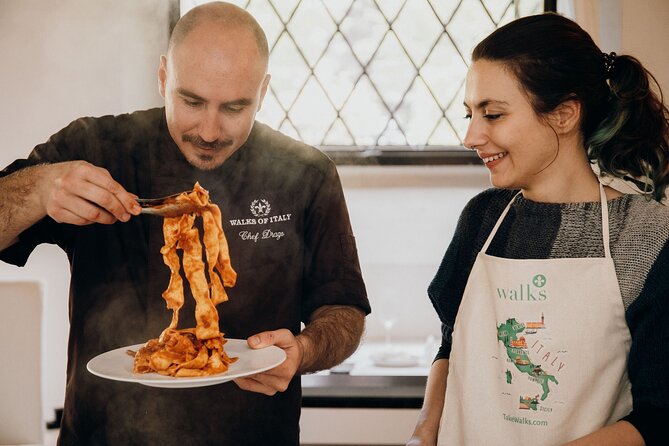
- You make two pasta dishes: The class covers handmade fettuccine and ravioli, paired with one red and one white sauce.
- Aperitivo starts the evening: Prosecco, cured meats, cheese, and bruschetta help break the ice before cooking begins.
- The meal is part of the lesson: You eat the pasta you prepared, with wine included, then finish with homemade gelato.
- The group can reach 14 people: That is still small enough for help at the table, though a group of four will naturally receive more individual attention.
- Trastevere adds a useful after-class plan: The class ends where it starts, leaving you in a good area for an evening walk.
- Pizza is another booking option: Select the pizza class if you prefer dough, unlimited wine and beer, and a Nutella-topped dessert.
Starting in Trastevere with aperitivo
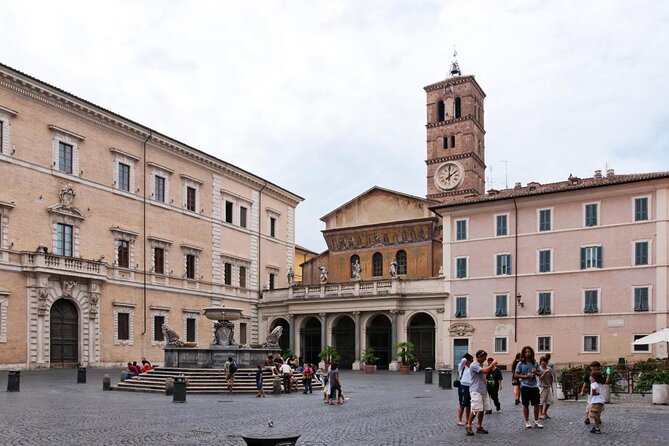
Meet at Piazza di San Giovanni della Malva, in Trastevere. The class takes place in a modern cooking school with a dining area set aside for the group, so you are not trying to follow a lesson in a crowded restaurant.
The evening begins in the Italian way, with something to drink and something small to eat. Prosecco, cured meats, cheese, and bruschetta give you time to meet the chef and the other people at your table before flour appears.
This opening matters more than it may seem. Pasta making is hands-on, and a relaxed start helps a mixed group settle into the rhythm. You may be cooking with a family, a honeymooning couple, solo visitors, or people from several different countries. The class is designed to make conversation part of the evening.
The meeting point is near public transportation, but hotel pickup and drop-off are not included. Plan to reach Piazza di San Giovanni della Malva on your own and allow a little extra time to find the square.
More Wine Tours in Rome
- Rome: Tuscany & Montepulciano Day Trip with Lunch & Wine Tasting
★ 4.5 · 5,232 reviews - Rome: Pasta & Tiramisu Class with Fine Wine by the Vatican
★ 4.9 · 4,852 reviews - Rome Food Tour: Unlimited Tastings with Fine Wine & Barolo
★ 5.0 · 3,365 reviews
Learning fettuccine and ravioli by hand
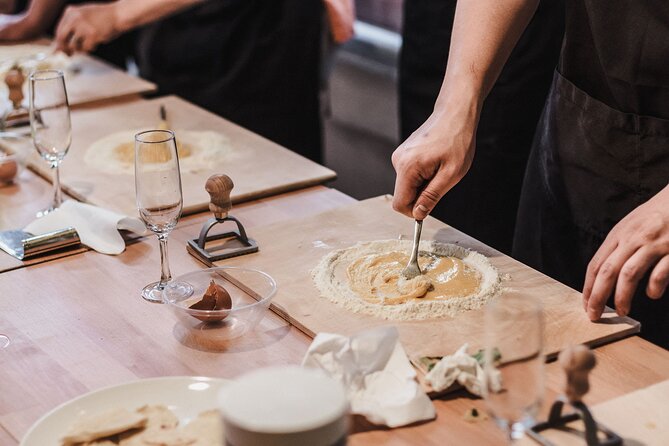
The chef first explains the basics of fresh pasta. You work with the ingredients provided and follow instructions for making the dough, shaping it, and preparing the two pasta types.
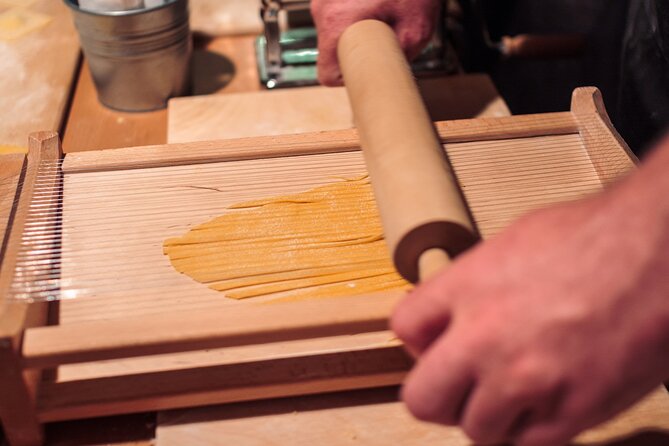
Fettuccine gives you a straightforward introduction to cutting pasta into long ribbons. Ravioli asks for a bit more care, since you need to fill, fold, and seal each piece. The class is suitable for beginners, and several chefs are praised for giving clear, patient instruction. Asia, in particular, is described as using an accessible hands-on approach, while Stefano is noted for his patience and energy.
You are not simply watching a demonstration and then receiving a plate from the kitchen. The value comes from handling the dough yourself. Your pieces may not look factory-perfect, which is part of the fun. You leave with practical techniques you can try at home, rather than only a pleasant dinner memory.
The chef also shares tips linked to Italian family cooking. These small details can be more useful than a long lecture. You learn how the dough should feel, how to work efficiently, and how to avoid treating homemade pasta like dried boxed pasta.
The class is conducted in English. Names of the chefs can vary by date, with Luca, Jamila, Stefano, Gianmaria, Julia, Alessandro, Elisa, Manuella, and others leading different sessions. The common thread is an active cooking format, with the chef acting as instructor and host.
Two sauces and a proper meal
The pasta is served with two traditional sauces, one red and one white. The exact menu changes with the season, so you should not assume the same sauces every time.
That seasonal flexibility is useful. Italian cooking depends heavily on simple ingredients at their best, and a changing menu keeps the class from becoming a fixed demonstration. At the same time, anyone hoping for a specific sauce should check before booking.
Once the pasta is ready, you sit down to eat. Wine is included and described as bottomless during the meal, adding to the social feel of the evening. It is a generous setup for the price, but you should still pace yourself. You have already had prosecco, and the class includes enough food to make this a substantial dinner.
The meal often becomes the payoff for the work at the table. You taste the difference between pasta made minutes earlier and pasta that has spent weeks in a package. You also get a better sense of why Italian cooking can rely on a short ingredient list when the texture and preparation are right.
The class is not a formal restaurant tasting menu. It is a shared meal built around your own work, with the rough edges and laughs that come from cooking together. If you want a quiet dinner with no participation, choose a restaurant instead.
Finishing with homemade gelato
While the pasta dries and settles, the chef prepares gelato for dessert. This keeps the class moving and gives you another Italian staple to learn about without adding a separate stop.
The gelato comes at the end of the meal, making the experience feel complete. You have aperitivo at the start, two pasta dishes in the middle, wine alongside dinner, and a sweet finish. The pacing also explains why the class lasts about three hours.
Several sessions include chefs who explain ingredients as they cook, not just the steps on the recipe. Jamila, for example, is praised for sharing information about food and Roman culture as well as pasta and gelato. That kind of context gives the class a stronger local connection than a generic cooking lesson.
One useful suggestion from a past session was to include a bread recipe among the take-home recipes. That is worth noting because the focus is firmly on pasta, sauces, and gelato. Do not book this expecting a broad Italian baking course.
More cooking classes with wine in Rome:
- Rome: Pasta Making Class with Wine, Limoncello, and Dessert
★ 4.9 · 3,177 reviews - Fettuccine & Tiramisù: Cooking Class with Wine & Limoncello
★ 4.9 · 2,103 reviews - Pasta Making & Wine Tasting with Dinner in Frascati from Rome
★ 5.0 · 1,326 reviews - Rome: Combo Pizza and Pasta Cooking Class with Wine
★ 4.6 · 1,180 reviews
What the small-group size really means
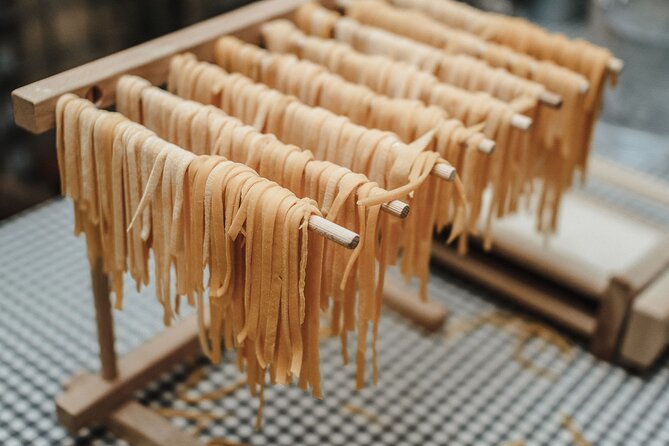
The maximum group size is 14 people. That is not a private lesson, but it is small enough to create a shared table rather than a lecture hall.
A group of 12 has been described as a comfortable size, and a group of four can feel especially personal. You should expect to work alongside others rather than receive one-on-one instruction for every step. The chef will move around the room, answer questions, and help when dough or ravioli needs attention.
This setup works well for families. It also suits solo visitors, since the aperitivo and shared meal make it easy to join conversations. One solo participant was made to feel included throughout the class, which is useful to know if you are visiting Rome alone.
Couples can enjoy it too, especially if you want an evening activity that is more memorable than another meal out. Honeymooners have used the class as a shared activity, though remember that one serious no-show complaint involved a honeymoon booking. The operator responded by asking for booking details so the matter could be investigated. That appears to be an isolated complaint among a large number of positive experiences, but it is still a reminder to keep your confirmation handy and arrive at the stated meeting point.
The Trastevere setting after class
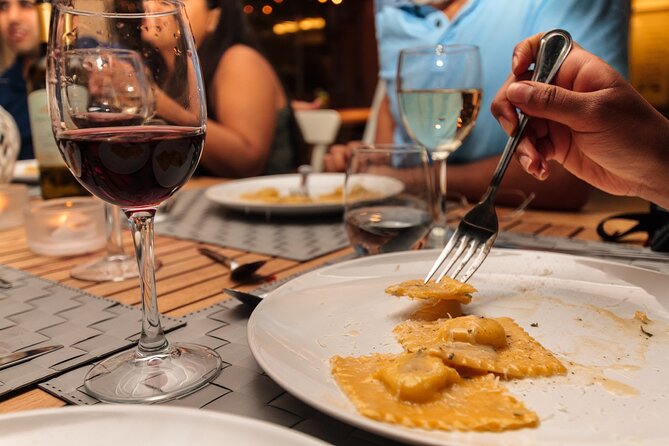
Trastevere is one of Rome’s most enjoyable areas for an evening walk. The class begins and ends at Piazza di San Giovanni della Malva, so you do not need to arrange a second pickup after dinner.
You can stay in the cooking school for a while with the people you met, or head out into the nearby streets. The location makes the class easy to pair with an evening stroll, though the meal itself may be enough for one night.
This is a good choice if you want your cooking class to feel connected to Rome rather than separated from it in an out-of-the-way venue. The school is described as clean and modern, with a pleasant dining area. You get practical kitchen facilities without giving up the neighborhood atmosphere outside.
The setting is not a historic palace or a rustic farmhouse. If that is what you want, this may feel more polished than atmospheric. The tradeoff is a clean, organized space designed for teaching, eating, and handling a full group.
Pasta class or pizza class?
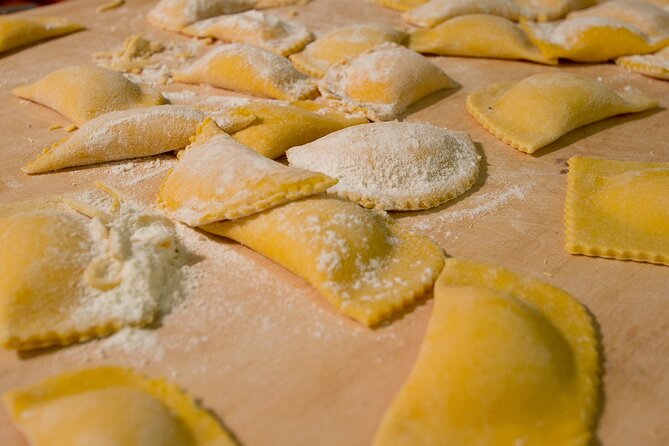
At booking, you can select the pizza-making option instead. The pizza version has you prepare pizza from scratch and includes unlimited wine and beer, followed by a Nutella-topped dessert.
Choose pasta if you want to learn two shapes and two sauces, with gelato to finish. Choose pizza if dough stretching, beer, and a chocolate-hazelnut dessert sound more appealing.
The pizza option may be especially good for families or groups with different tastes. The provided information does not give the same detailed pasta sequence for the pizza class, so check the selected option carefully before paying. You do not want to arrive expecting ravioli and discover you booked pizza, or the other way around.
Is $65.30 a fair price?
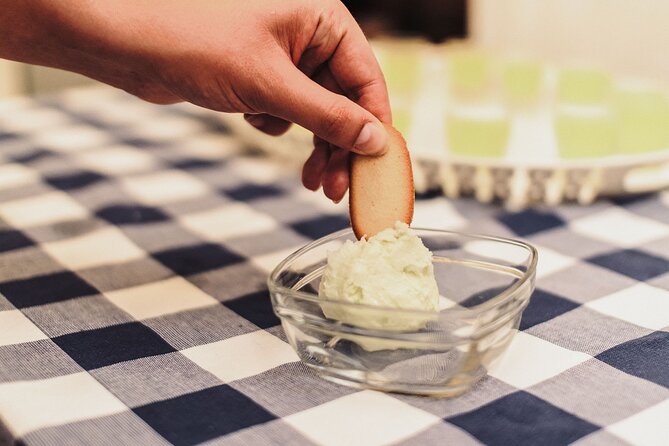
At $65.30 per person, the price is strong for what is included. You receive a chef-led lesson, all ingredients, aperitivo, prosecco, two pasta dishes, two sauces, wine, and gelato. You are also paying for a three-hour activity in central Rome, not just the ingredients on your plate.
The value is best if you count the class as both dinner and entertainment. A regular meal might cost less, but it would not teach you how to make pasta or give you the same social format. A private lesson would likely offer more personal attention, but this class keeps the price down by sharing the kitchen with a group of up to 14.
You should arrive hungry. The combination of aperitivo, pasta, wine, and gelato is filling, and the pizza version also includes a dessert. The drinks are a real part of the value, though anyone who does not drink alcohol may see less benefit in the package.
The class is offered in English, which makes it practical for English-speaking visitors. Dietary needs can be accommodated except for celiac disease. Contact the operator before joining if you have restrictions, since the kitchen needs time to arrange suitable food.
Timing, cancellations, and practical planning
The class lasts about three hours. Since it includes cooking, sitting down to eat, and dessert, allow the entire evening rather than trying to squeeze in a timed attraction afterward.
Confirmation is provided at booking. Free cancellation is available up to 24 hours before the start time for a full refund. Within 24 hours, you should expect no refund, and changes made that late are not accepted. The cutoff follows local Rome time.
The activity ends back at the starting point. Hotel transportation is not included, so public transportation or your own route to Trastevere is part of your planning.
The experience is recommended by 99 percent of participants and carries a 4.9 rating from 1,263 reviews. The high score fits the strongest pattern here: chefs are repeatedly praised for warmth, clear teaching, humor, and the quality of the finished food. Still, the one reported no-show shows why you should save the booking confirmation and know how to contact the operator if something goes wrong.
Who should book this Rome cooking class?
I would choose this for first-time pasta makers, families, couples, solo visitors, and anyone who wants a social evening with a practical result. You do not need cooking experience, and the class gives you a good mix of instruction, food, wine, and time in Trastevere.
It is also a smart choice if you want a break from museums and churches. You spend the evening doing something with your hands, then eating the result. That change of pace can be welcome after several days of sightseeing.
I would hesitate if you have celiac disease, dislike group activities, or want a quiet, highly polished dinner. The class is built around participation, conversation, and shared tables. You should also contact the operator before booking if you have dietary restrictions other than celiac disease.
Should you book it?
Yes, if you want an affordable Roman evening that combines a cooking lesson with a full meal. The strongest reasons are the hands-on pasta work, the small maximum group, the steady attention from chefs such as Luca, Jamila, Stefano, Asia, and Gianmaria, and the useful location in Trastevere.
Choose the pizza option if that menu suits you better. Otherwise, book the pasta class, arrive hungry, and keep the rest of the evening open for a walk through Trastevere. At $65.30, it offers more than dinner: you get a skill, a social night, and a meal you helped make.
FAQ
Where does the Rome cooking class meet?
The class meets at Piazza di San Giovanni della Malva, P.za di S. Giovanni della Malva, 00153 Roma RM, Italy, in Trastevere.
How long does the class last?
The experience lasts approximately three hours and ends back at the meeting point.
What food and drinks are included?
The pasta class includes aperitivo with cured meats, cheese, and bruschetta, prosecco, two homemade pasta dishes with two sauces, wine, and homemade Italian gelato.
Is the class offered in English?
Yes. The tour is conducted in English.
Can dietary restrictions be accommodated?
The class can adapt to dietary needs except for celiac disease. Contact the operator before joining so suitable food can be arranged.
Is there a pizza option?
Yes. You can select the Pizza Making Class option when booking. That version includes pizza made from scratch, unlimited wine and beer, and a Nutella-topped dessert.
More Workshops in Rome
- Rome: Pizza & Tiramisu Class with Free Flowing Fine Wine
★ 5.0 · 973 reviews - Super Fun Pasta & Gelato Class by Vatican with Wine + Oil Tasting
★ 5.0 · 726 reviews - Rome: Pizza & Tiramisu Class with Free Flowing Fine Wine
★ 4.9 · 697 reviews - Rome Cooking Class: Make Pizza and Pasta with Wine & Dessert
★ 4.5 · 651 reviews
More Pasta in Rome
- Learn to Make Pasta & Tiramisu with Wine and Limoncello Included
★ 5.0 · 2,345 reviews - Rome Pasta and Tiramisu Class: Ravioli, Fettuccine & Fine Wine 5*
★ 5.0 · 1,319 reviews - Rome: Pasta Making with Wine Tasting and Dinner in Frascati
★ 4.9 · 979 reviews - Rome: Fresh Pasta-Making Class with Wine and Gelato
★ 4.9 · 813 reviews
Just added around Rome
- Rome: Painting Class with Unlimited Wine★ 4.8 · 109 reviews
- Rome: Vatican Street Food and Wine Tour with Farmers Market★ 5.0 · 37 reviews
- Rome: Trastevere Wine Tasting with Food Pairing and Gelato★ 4.9 · 168 reviews
- Rome: Trionfale and Prati Food and Wine Tasting Tour★ 4.8 · 115 reviews
- Rome: Tipsy Painting Class with Fine Wine and Arts★ 4.9 · 178 reviews
- Rome: Testaccio Food & Market Tour with Pasta & Wine★ 5.0 · 38 reviews
- Rome: Trastevere Food Walking Tour with Beer and Wine★ 4.9 · 71 reviews
- Rome: Private Tuk Tuk Tour with Hotel Pickup and Prosecco★ 4.9 · 68 reviews
Wine Tours in Rome, compared.
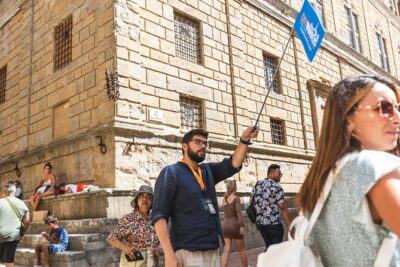
Tuscany & Montepulciano Day Trip with Lunch & Wine Tasting
Read our review →
Pasta & Tiramisu Class with Fine Wine by the Vatican
Read our review →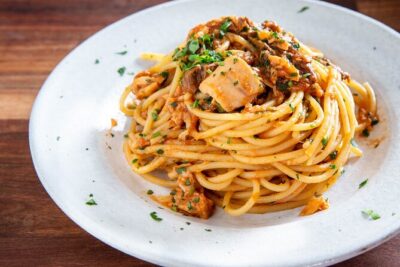
Rome Food Tour: Unlimited Tastings with Fine Wine & Barolo
Read our review →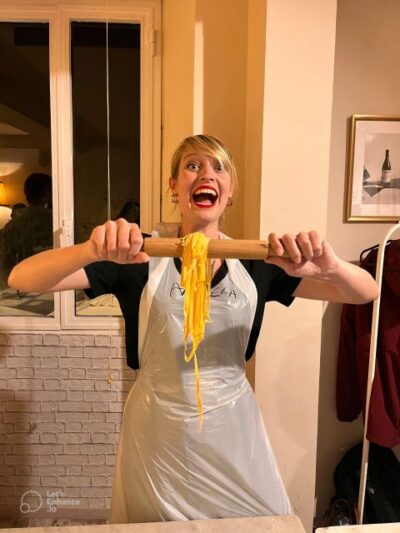
Pasta Making Class with Wine, Limoncello, and Dessert
Read our review →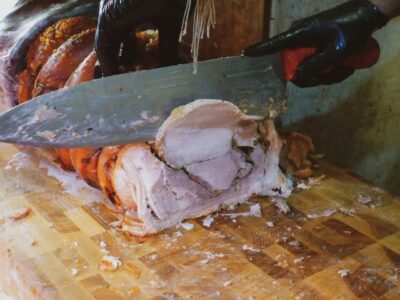
Guided Food Walking Tour with Wine in Trastevere
Read our review →
Tuscany & Montepulciano Day Trip with Lunch & Wines
Read our review →
Trastevere Food tour with Free-Flowing Fine Wine
Read our review →
Browse the lists this tour appears in