
REVIEW · PORTO
Porto: Tile Painting Workshop with Tea and Port Wine
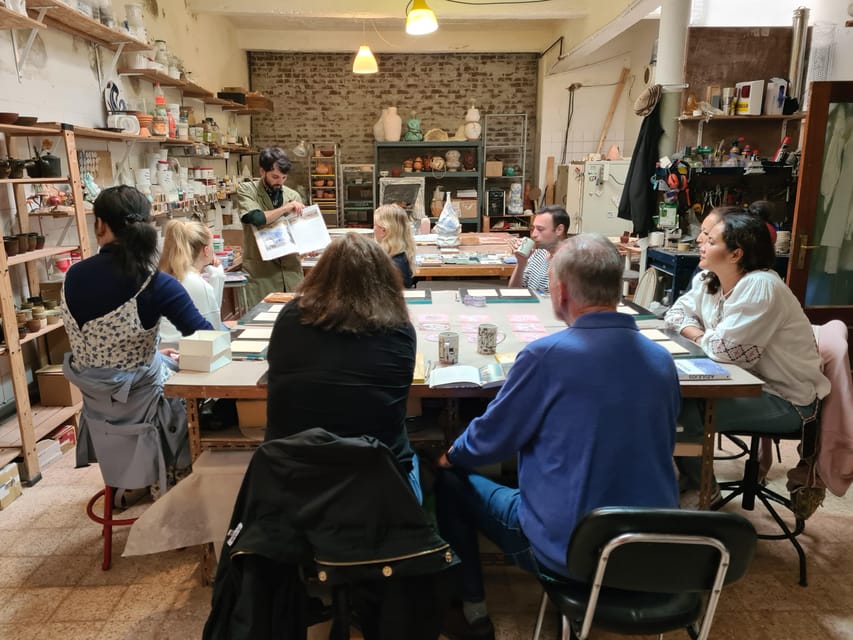
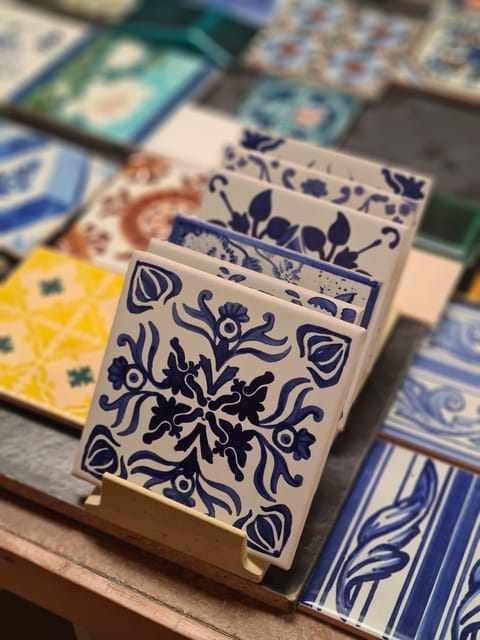
The best part of this Porto workshop is that you do not just admire tiled churches and railway halls. You learn how the designs are made, then create two tiles of your own. A local instructor explains the place of azulejos in Portuguese art before giving you the tools and advice to make a souvenir with your fingerprints all over it.
I like the mix of history and hands-on work, and I like that the finished tiles are fired and packed for collection the next day. Tea, biscuits, and a friendly studio setting add to the welcome. The main consideration is timing: you must return about 24 hours later, usually around 11:00 or 12:30, to collect the tiles.
Key points at a glance
- Paint two tiles per person: You get more than the single tile some people expect, giving you room to try two designs.
- Learn traditional methods: The session covers motifs, techniques, and the role of tiles on Portuguese homes and heritage buildings.
- Collect your fired work the next day: The studio fires, packages, and holds the tiles for you.
- Convenient Campanhã location: The workshop is near Porto-Campanhã train station and the TIC intermodal bus station.
- Tea and biscuits are part of the welcome: Herbal infusions and a relaxed studio atmosphere help set the tone.
- Best for creative families and couples: An eight-year-old, a teenager, and adults can all take part, with guidance available during the painting.
Why this workshop fits Porto so well
Porto can feel like an outdoor tile gallery. Blue and white panels, patterned facades, and decorative ceramic details appear on churches, homes, stations, and public buildings. You may photograph dozens of them in a day without knowing how they were planned or painted.
This workshop gives you that missing piece. You hear why tiles matter in Portugal, look at examples and inspiration material, and then work with the same broad visual language. You are not simply buying a souvenir from a shop. You are making one, with help from an artist and a chance to ask questions as you go.
The activity lasts two hours and costs $53 per person. That is not the cheapest creative class in a European city, but the price includes materials, instruction, tea and biscuits, firing, and packaging. Most important, it includes two tiles rather than one. If you value a personal memento and enjoy learning a craft, the package offers fair value.
You should also count the return visit as part of the cost in time. The tiles need to go into a kiln, so you cannot take them home at the end of the class. Plan to come back the next morning, generally around 11:00 or 12:30, when they are ready.
More Wine Tours in Porto
- From Porto: Douro Valley w/ Boat Tour, Wine Tasting & Lunch
★ 4.7 · 19,061 reviews - Complete Douro Valley Wine Tour with Lunch, Wine Tastings and River Cruise
★ 5.0 · 12,920 reviews - Porto: Douro Valley with Winery Lunch, Tastings & Cruise
★ 4.7 · 7,002 reviews
Arriving near Campanhã Station
The studio is near Porto-Campanhã train station and the new TIC, or Terminal Intermodal de Campanhã, bus station. A school and a taxi rank sit beside the station, which helps you identify the area.
This location is useful if you are arriving by train or bus, or if Campanhã is already part of your day. It is less convenient if you are driving. One participant specifically found the area unfriendly for parking, so I would not make a car trip your first choice.
Allow enough time to find the store without rushing. The meeting point is described by its position near the station, school, and taxi square. Comfortable shoes and comfortable clothes are sensible, especially since you will be sitting and working with materials for much of the session.
The central location also makes the next-day collection easier. You can fit it around a train departure or another Porto plan, provided you leave enough room for the pickup window.
The opening lesson on Portuguese azulejos
The class begins with an introduction to Portuguese tile art. You learn how tiles spread across the country and why they appear on monuments, houses, and heritage buildings. The point is not to turn you into a ceramic historian in two hours. It is to give your painting a cultural frame.
You may look through inspiration books and examples in the studio before choosing a direction. The instructor also shows different types of tiles and ceramic sculptures used for decoration. This makes the lesson more useful than a quick explanation followed by a work table.
The pace of this opening section may not suit everyone. One family felt the history and tea portion could have been shorter, leaving more time for painting. That is fair advice if you arrive eager to start drawing. I would see the introduction as part of the value, but you should know that the class is not two full hours of brushwork.
Tea and biscuits are served during this early portion. One account describes a self-planted herbal infusion, which adds a local, personal touch to the studio visit. Food is light, so do not treat it as a meal. Additional food and drinks are not included.
Learning the techniques before you paint
After the introduction, the instructor explains the tile-painting process and what to expect when the pieces are fired. You receive the materials you need, so there is no need to bring paint, brushes, or tiles from home.
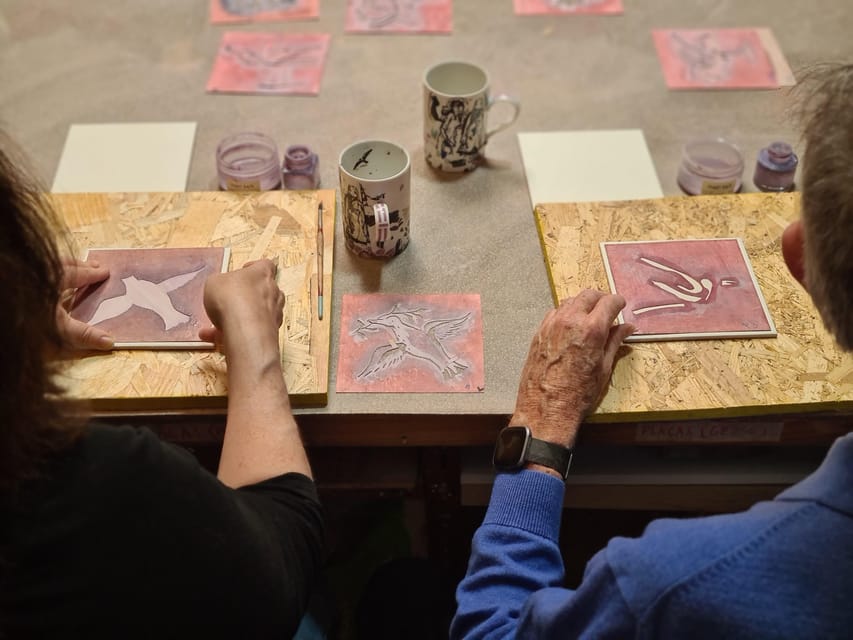
The workshop uses traditional motifs as a starting point. You can work from examples, inspiration books, or stencils supplied by the studio. The stencils help if you are not confident drawing patterns by hand, but they do not take over the project. You still choose how to arrange and color your design.
This balance is important. A completely free-form class can leave beginners staring at a blank tile. A paint-by-numbers session can feel too controlled. Here, you get a framework and assistance, while the final result remains yours.
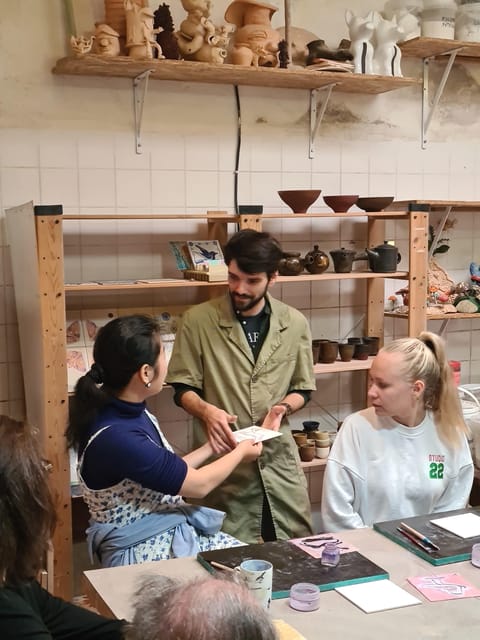
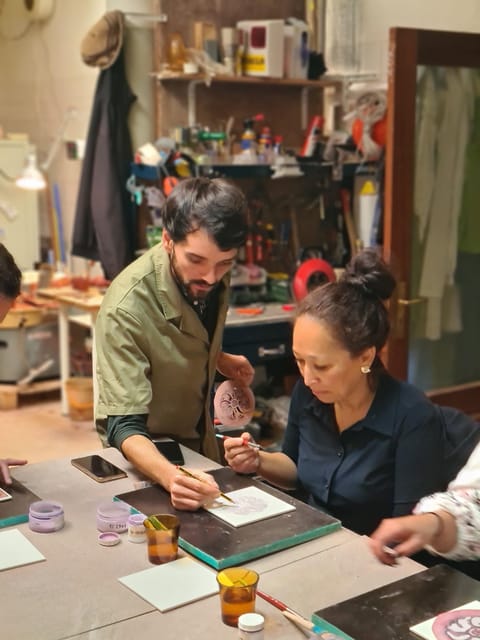
The instructor and assistant are available for questions and creative advice. A family account describes useful guidance during the work, with the staff showing the process without doing the tile for the participant. That makes the session workable for children and adults with different levels of confidence.
More port lodges and tastings:
- Porto: Live Fado Show with Glass of Port Wine
★ 4.8 · 6,498 reviews - Porto: Bridges Cruise & Sunset & Port Wine Cellar Option
★ 4.2 · 4,180 reviews - Porto: Fado & Port Wine in Traditional Portuguese Music Shop
★ 4.8 · 2,906 reviews - Porto: What is Fado? Commented Live Concert with Port Wine
★ 4.8 · 2,839 reviews
Painting two tiles with Porto-inspired designs
You paint two tiles per person. This is a generous detail, especially for families, since the second tile gives you another chance to try a pattern or make a different choice.
Your first piece may be a cautious attempt. On the second, you may feel freer to use a motif, change the layout, or accept that handmade work looks handmade. The aim is not perfect factory production. The value is in learning the method and leaving with something you created.
The class works well for people who like a clear activity but do not want a demanding art lesson. You can follow a traditional design, use a stencil, or take advice from the instructor. The available information does not promise a particular finished style, so you should expect guidance rather than a fixed template.
The two-hour limit can feel short if you want highly detailed work. The opening talk, tea, explanation, and cleanup all share the session. If painting is your main reason for booking, begin thinking about your design before you arrive. That way, you can use the studio time for making rather than staring at the inspiration books.
A welcoming workshop for families
This is one of the stronger family activities in the information provided. An eight-year-old, a teenager, and adults all took part in one family group, and the studio supplied two tiles for each person. That range matters: young children can enjoy the color and pattern work, while older participants can pay more attention to technique and history.
The workshop also suits couples and solo visitors who want something quieter than a standard sightseeing stop. You have a practical task, a local subject, and a souvenir that is not mass-produced.
It is less suitable if you dislike creative activities, need to leave Porto the same day, or want a class focused only on advanced ceramic technique. The session is friendly and accessible, but it is not described as a professional ceramics course.
Small groups are available. Group size affects how much individual help you can receive, so check the current option when booking. The teaching languages are English, Japanese, and French. If you need French or Japanese, say so when booking rather than assuming it will be arranged automatically.
The kiln wait and next-day collection
At the end of the painting session, your tiles remain at the studio for firing. The kiln changes the pieces from wet painted work into finished ceramics, so the next-day wait is part of the craft rather than a delay caused by poor planning.
The tiles are ready about 24 hours after the class. Pickup is usually the next morning around 11:00 or 12:30, and the studio provides proper packaging. That packaging matters if you are carrying the pieces through Porto, onto a train, or home by plane.
You need to organize your schedule around this. A workshop on the final day of your trip may not work unless you can return the next morning or arrange a pickup that fits your plans. The experience provider information does not state a shipping option, so do not count on the studio mailing the tiles.
This overnight step adds meaning to the souvenir. You leave the first session with an unfinished object and return to see the result after firing. It is a small reminder that handmade work needs time.
How Francisco Pessegueiro and the teaching style shape the visit
The experience is provided by Francisco Pessegueiro. One attendee also singled out an instructor named David for being personable, helpful, and good with questions. Since the supplied information names both Francisco and David, ask who will lead your specific session if the instructor matters to your booking.
The teaching style is clearly a major part of the experience. You receive an explanation of the materials, examples of Portuguese decorative ceramics, and advice while working. That support is especially useful if you arrive with no art background.
The studio atmosphere is described as warm and welcoming, with tea, browsing, and room for creative work. Keep expectations practical: this is still a two-hour activity, not a full studio apprenticeship. You will learn the basics and make two pieces, not master every stage of Portuguese tile production.
Is $53 a good value?
At $53, the workshop costs more than simply buying two decorative tiles in Porto. The comparison is not quite fair, since the price also covers instruction, all painting supplies, firing, tea and biscuits, and protective packaging.
I see the value in the complete process. You learn why Portuguese tiles matter, receive help from a local guide, paint two pieces, and collect the fired result later. If you are looking for a personal travel keepsake, those extras turn a small object into a memory tied to a place and an activity.
The value drops if you cannot make the next-day pickup. It also drops if you mainly want a long painting session, since part of the two hours is devoted to cultural background and refreshments. For most people who enjoy making things, the two tiles and kiln firing make the price reasonable.
The booking terms are useful for a changing itinerary. You can reserve now and pay later, and cancellation is free up to 24 hours before the activity for a full refund. The class needs at least two participants. If that minimum has not been reached one day before, the activity may be canceled.
Who should book this Porto tile class?
I would choose this workshop if you want a cultural activity with a clear result. It suits families, couples, creative adults, and anyone who has admired Porto’s tiled buildings and wanted to understand them better.
It is particularly good for:
- Families with children and teenagers
- People who prefer making a souvenir to shopping for one
- Visitors with an interest in Portuguese design and buildings
- Anyone who wants a break from walking tours and museums
- Small groups looking for a shared activity
I would think twice if you have no time for the next-day pickup, need guaranteed parking, or want a serious technical course. Also remember that the class may include more introduction and tea time than some painters expect.
Should you book the Porto tile painting workshop?
Yes, if you can return the next morning and enjoy a relaxed, hands-on class. The strongest features are the two tiles per person, practical guidance, cultural context, firing, and careful packaging. The result is a souvenir you made yourself, not just another object from a gift shop.
Book with your design time in mind, wear comfortable clothes, and leave room in your Porto schedule for collection around 11:00 or 12:30. If you want only uninterrupted painting, the history section may feel long. For a balanced introduction to azulejos with a friendly creative task, this is a smart $53 use of two hours.
FAQ
How long does the tile painting workshop last?
The workshop lasts two hours.
How many tiles do I paint?
You paint two tiles per person.
Are painting materials included?
Yes. All materials needed for the tile-painting activity are included.
Can I take the tiles home at the end of the class?
No. The tiles must be fired first. They are ready about 24 hours after the workshop.
When do I collect the finished tiles?
Pickup is the next morning, generally around 11:00 or 12:30.
Is packaging provided for the tiles?
Yes. The studio provides proper packaging for the fired tiles.
Where is the meeting point?
The store is near Porto-Campanhã train station and the TIC, or Terminal Intermodal de Campanhã, bus station. A school and taxi rank are beside the station.
Which languages are available?
The instructors offer English, Japanese, and French. If you need French or Japanese, state that when booking.
Is cancellation available?
Yes. You can cancel up to 24 hours before the activity for a full refund. You can also reserve now and pay later.
More Workshops in Porto
- Porto: Tile Painting Workshop with Porto Wine – Sé do Porto
★ 4.9 · 1,095 reviews - Porto: Pastel de Nata Cooking Class with Port Wine – Sé
★ 4.8 · 888 reviews - Port Wine class with 3 or 5 Port tasting and pairings
★ 4.9 · 441 reviews - Florence: Pasta Cooking Class with Unlimited Wine
★ 4.9 · 10,285 reviews
Just added around Porto
- Porto: Tuk tuk Tours with Port Wine Tasting★ 4.5 · 65 reviews
- Porto Wine Tasting Experience with Portuguese Tapas Plate★ 4.7 · 356 reviews
- Porto: Sunset Walking Tour with Port Wine and Views★ 4.6 · 95 reviews
- Porto: Taylor’s Port Cellar Tour & WOW The Wine Experience★ 4.5 · 136 reviews
- Porto: Self-Guided Bike and Boat Tour with Port Wine Tasting★ 4.7 · 52 reviews
- Porto: Douro River Boat Tour with Wine Tasting★ 4.9 · 167 reviews
- Porto: Douro River Cruise w/ Portuguese Wines & Local Host★ 4.9 · 166 reviews
- Porto: Private Douro River Charming Cruise w/wine tasting★ 5.0 · 63 reviews
Wine Tours in Porto, compared.

Douro Valley w/ Boat Tour, Wine Tasting & Lunch
Read our review →
Complete Douro Valley Wine Tour with Lunch, Wine Tastings and River Cruise
Read our review →
Douro Valley with Winery Lunch, Tastings & Cruise
Read our review →


Historical Sites, Wine Experience, Lunch & Cruise
Read our review →
Authentic Small Group Douro Wine Tour with Lunch & River Cruise
Read our review →
Bridges Cruise & Sunset & Port Wine Cellar Option
Read our review →Browse the lists this tour appears in