
REVIEW · PORTO
Porto: What is Fado? Commented Live Concert with Port Wine
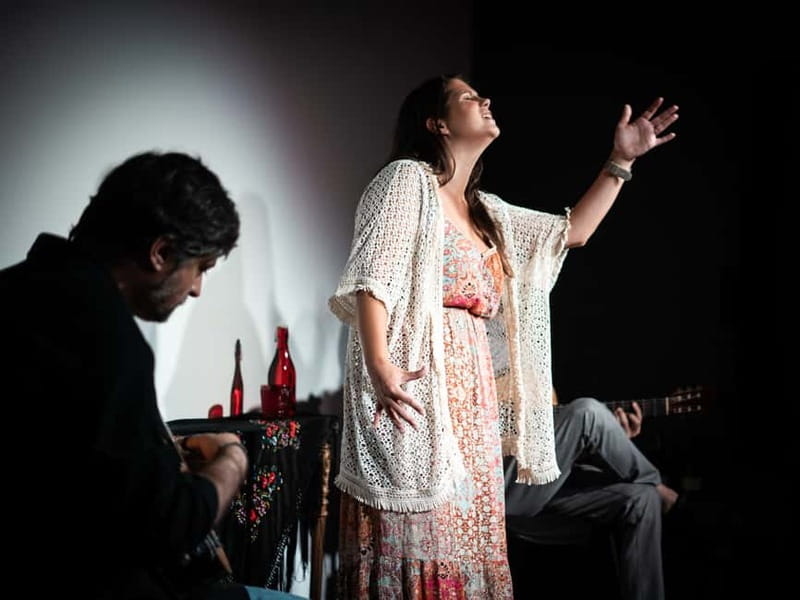
Fado na Baixa turns a one-hour concert into a clear introduction to Portugal’s most emotionally charged music. You hear male and female singers, the bright, intricate Portuguese guitar, and the more formal Coimbra style, while short films and personal accounts explain what the songs mean. The music is the star, but the context helps you hear it properly.
I especially like the mix of Lisbon and Coimbra Fado, plus the glass of Tawny Port served during the performance. The small auditorium near the Douro suits the music, and audience participation keeps the hour from feeling like a lecture. The main consideration is time: if you want a long evening of uninterrupted singing, this show may feel brief, and a few people find the vintage chairs less comfortable.
Key points
- Four performers in an intimate room: Hear two singers and two instrumentalists in a licensed 19th-century auditorium near Porto’s Ribeira.
- A guided path through Fado: The show moves from traditional Lisbon Fado to Coimbra songs, Amália Rodrigues, and contemporary forms.
- Portuguese guitar up close: Learn how this distinctive instrument differs from the standard guitar and how it supports the singers.
- Coimbra Fado by a former student: A male singer with Coimbra University ties performs the student tradition as custom requires.
- Port with the music: Your ticket includes a glass of Tawny Port, served as part of the cultural experience.
- Useful for first-time listeners: Commentary and audio support are available in Portuguese, English, Spanish, and French.
Why one hour of Fado works so well in Porto
Fado is often described as music of longing, fate, absence, and saudade, a Portuguese word that carries more feeling than a simple translation can manage. This performance helps you understand that emotional world before asking you to respond to it.
The format is smart. Instead of placing a full concert in front of an audience unfamiliar with the language, Fado na Baixa alternates live songs with short multimedia sections and personal testimonials. You hear the singers first, then receive enough background to understand the next musical style.
That balance matters. The commentary is not designed as a university lesson. It gives you the basic thread: where Fado began, how it developed, why the Portuguese guitar matters, and how different regions and generations shaped the music.
The result suits a first evening in Porto. You do not need prior knowledge of Portuguese music, and you do not need to understand every lyric to follow the feeling. You simply need to listen closely and allow the music a little space.
More Wine Tours in Porto
- From Porto: Douro Valley w/ Boat Tour, Wine Tasting & Lunch
★ 4.7 · 19,061 reviews - Complete Douro Valley Wine Tour with Lunch, Wine Tastings and River Cruise
★ 5.0 · 12,920 reviews - Porto: Douro Valley with Winery Lunch, Tastings & Cruise
★ 4.7 · 7,002 reviews
Entering Fado na Baixa near the Douro
The venue is at R. de São João 99, in the Ribeira area of Porto. That puts you in the historic center, close to the Douro River and within easy reach of the city’s main riverfront sights.
The concert takes place in a licensed auditorium inside a 19th-century building. It is not a large theater show with elaborate scenery. The setting is compact and intimate, which places the voices and instruments at the center of your attention.
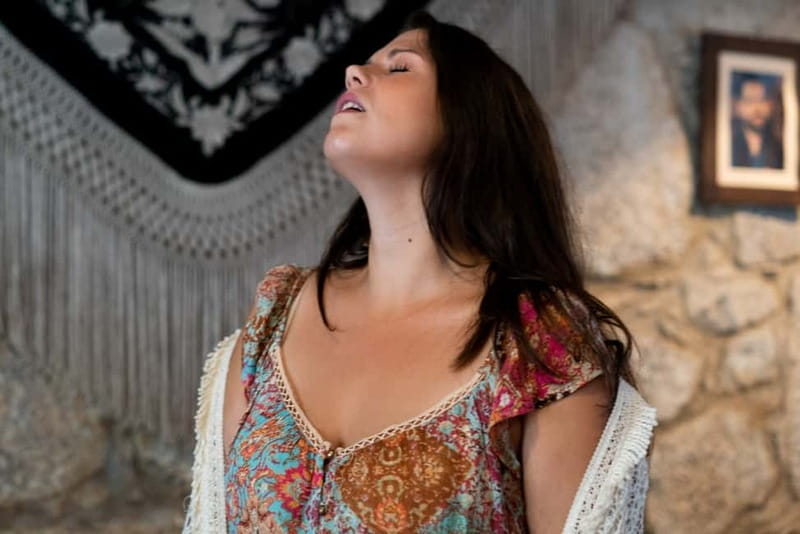
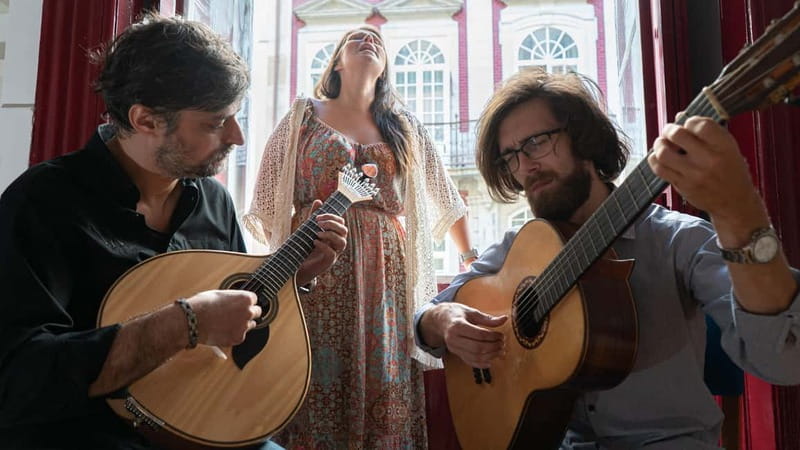
That closeness is important for Fado. You can watch the singers’ expressions and see the musicians’ hands at work. The Portuguese guitar, in particular, deserves a good look. Its sound is bright and ringing, with a character that can be missed when you hear it only as part of a larger concert.
The room has an old-fashioned feel. One local Portuguese audience member noted that the chairs look vintage and could use an upgrade, though they were adequate for a performance lasting about an hour. If you need especially supportive seating, keep the short running time in mind.
The opening: traditional Lisbon Fado
The first section presents traditional Fado, the style most closely associated with Lisbon. It is highly expressive and often carries a sense of hardship, separation, love, work, and fate.
You hear both male and female voices during the program. That contrast helps you notice that Fado is not one fixed sound. The singers bring different textures and moods, while the musicians provide a spare framework that leaves room for the words.
The songs may concern fishermen, loved ones left behind, and the emotional costs of ordinary life. Even when you cannot follow the Portuguese lyrics, the vocal phrasing makes the mood clear. Fado does not hide its sadness, but it is not simply gloomy. There is drama, elegance, and often a touch of theatrical control.
The performers invite you to hear Fado as an art form rather than background music. That is one reason the commentary works. You learn why the singer’s delivery matters and why the instrumental pauses are not empty space.
The Portuguese guitar and a glass of Tawny Port
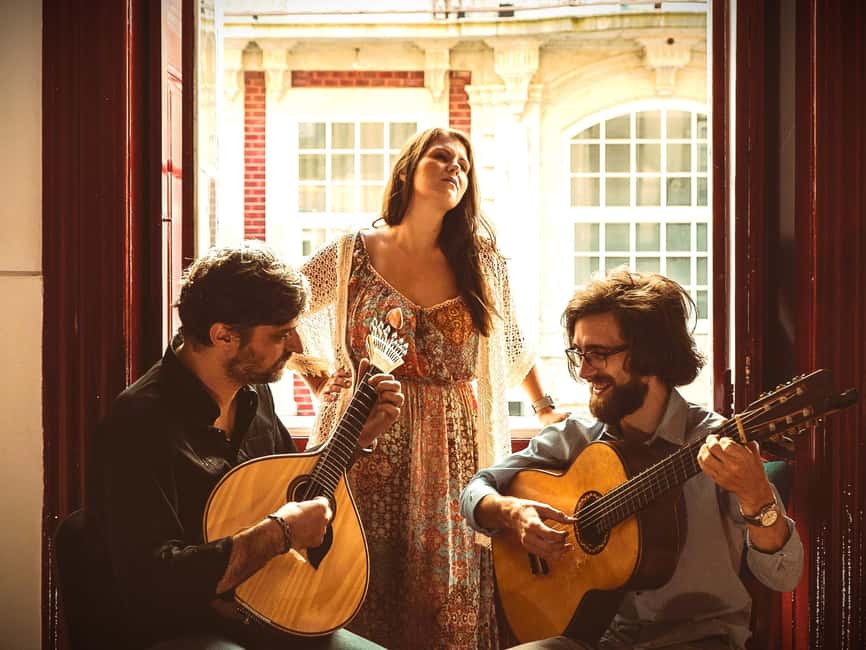
A central moment introduces the Portuguese guitar. It looks related to a standard guitar, but its bright tone and distinctive playing style give Fado much of its identity.
The program compares Lisbon and Coimbra techniques, allowing you to hear that the instrument is not used in exactly the same way everywhere. The playing can sound quick and shimmering, then shift into a more measured support for the voice.
One audience member who plays guitar found this part especially fascinating. That makes sense, but you do not need to be a musician to appreciate it. The show explains enough for any listener to notice the difference once the instrument returns.
At this point, you taste a glass of Tawny Port. The wine is not an unrelated extra added at the door. It connects the music to Portuguese culture and gives the audience a quiet sensory break between sections.
The port is generally described as a welcome part of the evening, though one practical point deserves mention: the standard inclusion is alcoholic. If you do not drink, one audience member wished for a non-alcoholic alternative. The supplied information does not confirm that another drink is available, so it is worth asking the venue if this matters to you.
More port lodges and tastings:
- Porto: Live Fado Show with Glass of Port Wine
★ 4.8 · 6,498 reviews - Porto: Bridges Cruise & Sunset & Port Wine Cellar Option
★ 4.2 · 4,180 reviews - Porto: Fado & Port Wine in Traditional Portuguese Music Shop
★ 4.8 · 2,906 reviews - Port Wine Lodges Tour Including 7 Port Wine Tastings (English)
★ 5.0 · 2,041 reviews
Coimbra Fado and the student tradition
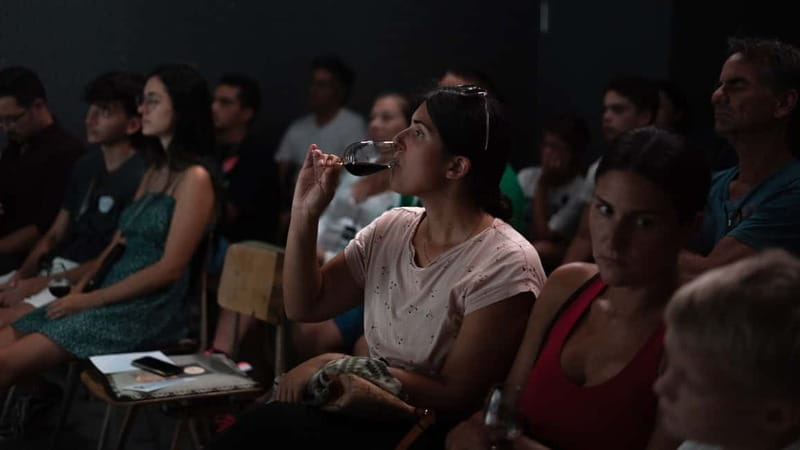
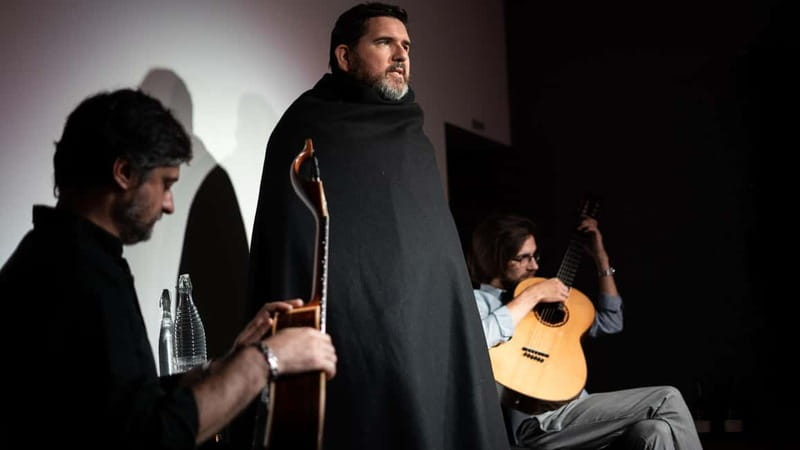
The Coimbra segment is one of the most distinctive parts of the program. Coimbra Fado is tied to the city’s university culture and is traditionally sung by men.
Here, the male singer is a former Coimbra University student, which connects the performance to the custom being explained. The style differs from the Lisbon tradition in tone and setting, and the commentary helps you hear that difference rather than treating all Fado as the same music.
This section also adds a younger, student-centered perspective to a genre often presented only through famous singers and old recordings. It shows how Fado can belong to a specific place, community, and stage of life.
A song associated with Coimbra, Balada de Despedida, made a strong impression on one audience member. Even without knowing the full text, you can sense why a farewell song connected to university life would carry special weight.
If you have already heard Fado in Lisbon, this section gives you a reason to include Porto’s presentation anyway. It does not simply repeat the most familiar version of the music.
Amália Rodrigues and the changing sound of Fado
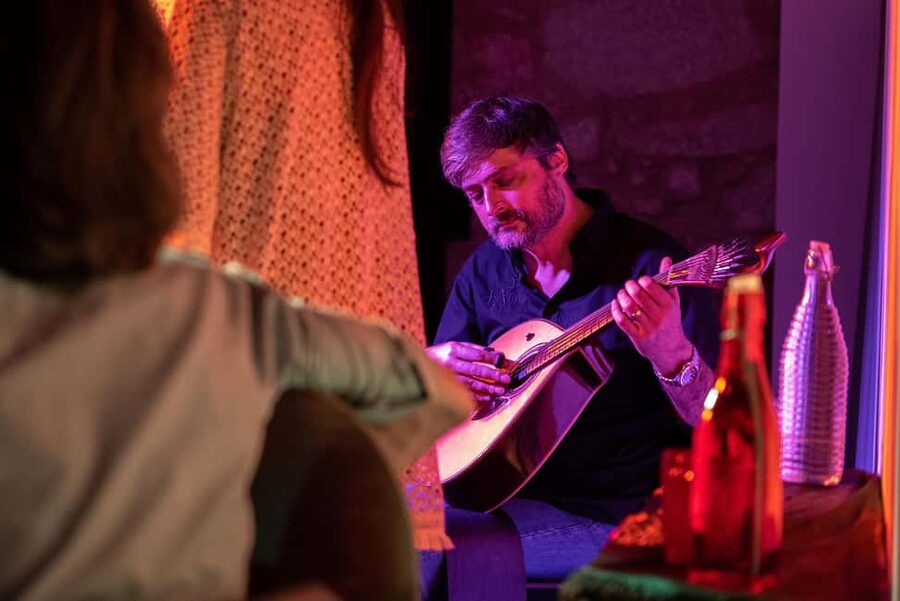
The program then turns to Amália Rodrigues, widely known as the queen of Portuguese Fado. Her importance is not treated as a name to memorize. Instead, the show explains how she reshaped traditional Fado and helped take it to a much wider audience.
This is useful context because Fado is sometimes presented as if it has remained unchanged for centuries. The story here is more interesting. Singers have honored older forms while changing the way Fado is performed, recorded, and heard beyond Portugal.
The presentation also shows how Fado continues through new poetry and combinations with other musical styles. The point is not that modern music replaces tradition. It is that tradition survives partly by being used, tested, and reinterpreted.
The short films support this section without taking over the concert. Several audience members specifically valued the way the videos explain the music between live performances. One described the amount of historical information as just right for a relaxed cultural activity, which is a fair description of the format.
Audience participation without losing the music
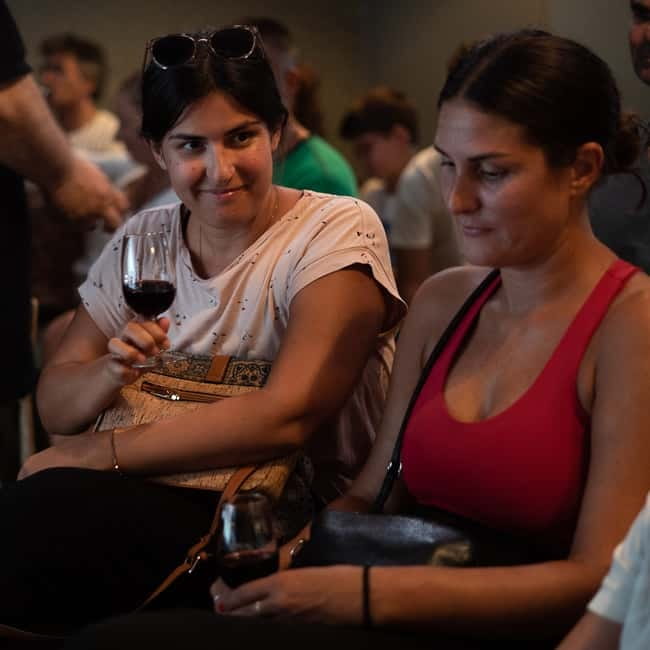
This is not a sit-in-silence concert from start to finish. At certain points, the singers guide the audience through a simple sing-along. You may also encounter moments of direct interaction.
That participation is gentle rather than demanding. You are not expected to perform a solo or know Portuguese songs in advance. The idea is to give you a small role in the room and let you feel how Fado can work as a shared tradition.
For some people, this will make the evening more memorable. It helps break down the barrier between stage and audience, especially when many people in the room are hearing Fado for the first time.
If you prefer a completely formal recital, this is worth knowing before booking. The interactive moments are part of the design, not an interruption. They are brief, but they do change the mood from concert hall to shared cultural gathering.
The performers and the sound of the room
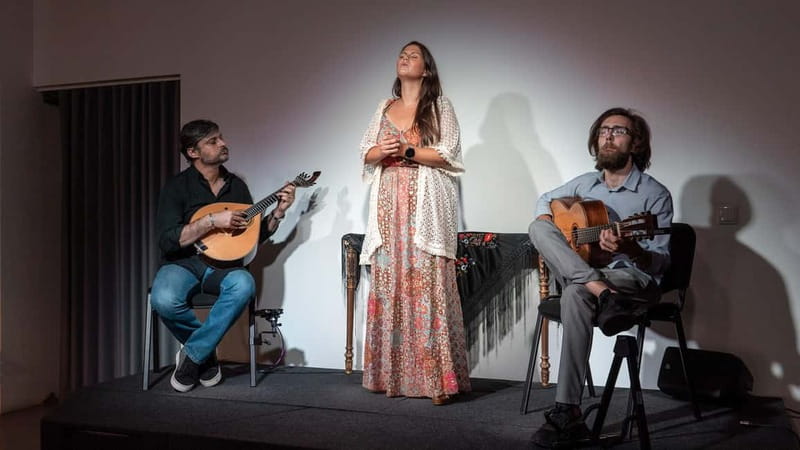
The core lineup is four artists: male and female Fado singers, a standard guitarist, and a Portuguese guitar player. The small room lets you hear the relationship between voice and instruments clearly.
The instrumental quality receives especially strong praise. One named musician, Mário Henriques, is identified as an excellent Portuguese guitar player, while Rato is also praised as a very good player. The available information does not identify every performer by name, but the musical roles are clear.
You should expect polished performance rather than an informal bar session. The singers are presented as experienced artists, and the program gives them room to show both tenderness and force.
At the same time, this is a compact introduction rather than a specialist recital. One Portuguese audience member noted that stronger singers can be found at some Porto Fado shows. That is a useful distinction. The show’s strength lies in combining music, explanation, and contrasting styles, not necessarily in offering the most demanding vocal performance in the city.
What the $18 price really includes
At $18 per person, this is good value if you want more than a short concert. Your ticket includes the live performance, multimedia material, an audio guide, and a glass of Port.
The audio support is available in English, French, Spanish, and Portuguese. The host or greeter languages include those four languages as well. This matters because Fado depends heavily on poetry, and even limited explanation makes the music easier to follow.
You are paying for a structured cultural hour in a central Porto venue, not just for a drink with background music. Compared with a longer dinner show, the price is modest, and the one-hour duration makes it easy to fit around an evening meal or other plans.
The value is less clear if your only goal is extended live singing. Several audience members wished the show were longer, and that is the main tradeoff. You receive a focused introduction, not a full night of Fado.
Who will get the most from this experience
I would recommend it first to anyone who has never heard Fado in Portugal. The combination of live music and explanation removes much of the guesswork.
It also suits you if you want:
- A short evening activity near Ribeira
- A cultural experience that does not require Portuguese
- Both Lisbon and Coimbra Fado in one sitting
- A closer look at the Portuguese guitar
- A glass of Port included in the ticket
- A family or teen-friendly introduction to Portuguese music
- A seated activity after a busy day of sightseeing
The format is also useful for music lovers. Guitar players and anyone interested in vocal traditions will get extra value from the comparison between instruments and playing styles.
You may want something else if you already know Fado well and want a long, uninterrupted set. You may also prefer a different venue if seating comfort is a major concern or if you do not drink alcohol and want a guaranteed alternative to Port.
Practical details before you book
The experience lasts one hour, with starting times based on availability. That short length is a strength for a packed Porto itinerary, but it also explains why the program moves quickly through several subjects.
The meeting point is Fado na Baixa at R. de São João 99, 4050-553 Porto, in the heart of Ribeira. Check the address carefully before setting out, especially if you are approaching from another part of the city.
The auditorium is wheelchair accessible. You can cancel up to 24 hours before the activity for a full refund, and the booking option allows you to reserve now and pay later. These policies are useful when your Porto plans depend on weather, arrival times, or other reservations.
The experience is offered with Portuguese, Spanish, English, and French support. The audio guide is available in the same four languages, so you can choose the language that helps you follow the historical sections most easily.
Should you book Fado na Baixa?
Book this experience if you want a well-paced first encounter with Fado, especially if you value context as much as performance. The strongest features are the intimate room, the mix of Lisbon and Coimbra styles, the Portuguese guitar, and the way short films make the music easier to understand.
At $18, the Port and audio material add practical value, while the one-hour format fits neatly into a busy Porto evening. Just set your expectations correctly: this is an educational concert with interactive touches, not a lengthy, song-after-song recital.
If you want to hear why Fado matters to Portuguese culture without giving up an entire evening, I would make room for it.
FAQ
Where does the Fado concert take place?
It takes place at the Fado na Baixa auditorium at R. de São João 99, 4050-553 Porto, in the Ribeira area near the Douro River.
How long does the experience last?
The performance lasts one hour.
What types of Fado are included?
The program includes traditional Lisbon Fado, Coimbra Fado, material about Amália Rodrigues, and discussion of how Fado continues through newer poetry and musical fusions.
Is Port wine included?
Yes. The ticket includes a glass of Tawny Port served during the experience.
Which languages are available?
Portuguese, Spanish, English, and French are available through the host or greeter support. The audio guide is also available in those four languages.
Is the venue wheelchair accessible?
Yes. The experience is listed as wheelchair accessible.
Can I cancel my booking?
Yes. You can cancel up to 24 hours in advance for a full refund. A reserve-now, pay-later option is also available.
More Concerts in Porto
- Porto: Fado Live Music, Wine & Cultural Introduction
★ 4.9 · 150 reviews - Warsaw Concert: Chopin – Painted by Candlelights with Wine
★ 4.8 · 1,442 reviews - Budapest: Prosecco Dinner Cruise with Live Music
★ 4.4 · 1,336 reviews - Porto: Authentic Fado Concert With Port Wine & Views
★ 4.8 · 543 reviews
Just added around Porto
- Porto: Tuk tuk Tours with Port Wine Tasting★ 4.5 · 65 reviews
- Porto Wine Tasting Experience with Portuguese Tapas Plate★ 4.7 · 356 reviews
- Porto: Sunset Walking Tour with Port Wine and Views★ 4.6 · 95 reviews
- Porto: Tile Painting Workshop with Tea and Port Wine★ 4.9 · 66 reviews
- Porto: Taylor’s Port Cellar Tour & WOW The Wine Experience★ 4.5 · 136 reviews
- Porto: Self-Guided Bike and Boat Tour with Port Wine Tasting★ 4.7 · 52 reviews
- Porto: Douro River Boat Tour with Wine Tasting★ 4.9 · 167 reviews
- Porto: Douro River Cruise w/ Portuguese Wines & Local Host★ 4.9 · 166 reviews
Wine Tours in Porto, compared.

Douro Valley w/ Boat Tour, Wine Tasting & Lunch
Read our review →
Complete Douro Valley Wine Tour with Lunch, Wine Tastings and River Cruise
Read our review →
Douro Valley with Winery Lunch, Tastings & Cruise
Read our review →
Historical Sites, Wine Experience, Lunch & Cruise
Read our review →
Authentic Small Group Douro Wine Tour with Lunch & River Cruise
Read our review →
Bridges Cruise & Sunset & Port Wine Cellar Option
Read our review →Browse the lists this tour appears in