
REVIEW · ROME
Rome: Food & Wine Tour of Campo de Fiori, Ghetto, Trastevere
Rome’s best food lesson may come one bite at a time. This walking tour links Campo de’ Fiori, the Jewish Ghetto, and Trastevere, with stops for market produce, pizza bianca, mozzarella, Roman salami, supplì, pasta, wine, and gelato.
I like two things in particular: you get a useful introduction to Roman eating habits, and the food is generous enough to replace a meal. Guides such as Natasha, Lisa, Mariel, and Valeria have made the walk lively with stories about neighborhoods, customs, and ingredients. The main drawback is simple: the tour is not suitable for vegans, people with food allergies, or wheelchair users.
Key points at a glance
- Campo de’ Fiori market: The morning option includes colorful produce, spices, and a look at one of central Rome’s best-known food markets.
- Roman classics: Expect pizza bianca with mortadella, mozzarella, salami, supplì, fried artichoke, fried codfish, pasta, wine, and gelato.
- Three distinct neighborhoods: The route connects market streets, the Jewish Ghetto, and Trastevere, so food comes with a sense of place.
- Small groups: Groups are limited to 15 people, with private tours also available.
- A substantial tasting: The stops are plentiful, and several people found themselves full before the final gelato.
- Best early in your stay: You’ll pick up restaurant ideas, ordering tips, and food knowledge you can use for the rest of your Rome visit.
Why this Roman food walk works
At $81 per person, this is not a cheap snack crawl. It is a guided meal, neighborhood walk, and introductory lesson in Roman food culture rolled into roughly two to three and a half hours.
That distinction matters. You are paying not only for samples, but also for someone to choose the stops, explain what you are eating, manage the timing, and connect the dishes to the streets around you. The included tastings are broad enough to give you a real sense of Roman food, from bakery fare and fried specialties to fresh pasta and gelato.
I especially like the range. A tour built around only pizza and gelato would be easy to enjoy but not very revealing. Here, you can compare crisp and creamy textures, simple market ingredients, fried street food, regional pasta, cured meat, cheese, wine, and dessert.
The amount of food is another reason the price can make sense. Several participants described being full before the last stop, so do not treat this as a light appetizer before dinner. For a morning departure, eat very little beforehand. For an afternoon or evening departure, plan your next meal carefully.
More Wine Tours in Rome
- Rome: Tuscany & Montepulciano Day Trip with Lunch & Wine Tasting
★ 4.5 · 5,232 reviews - Rome: Pasta & Tiramisu Class with Fine Wine by the Vatican
★ 4.9 · 4,852 reviews - Rome Food Tour: Unlimited Tastings with Fine Wine & Barolo
★ 5.0 · 3,365 reviews
Starting in Campo de’ Fiori
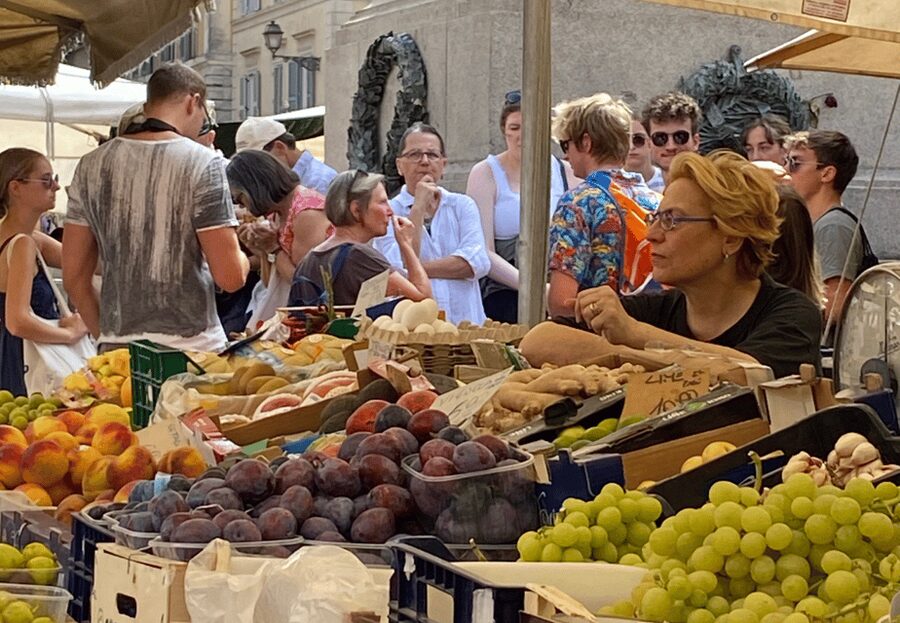
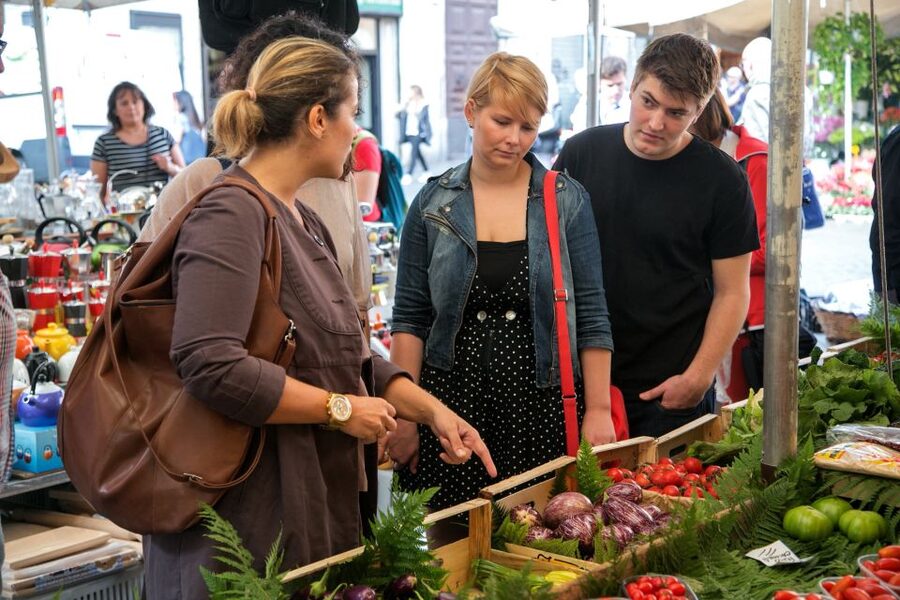
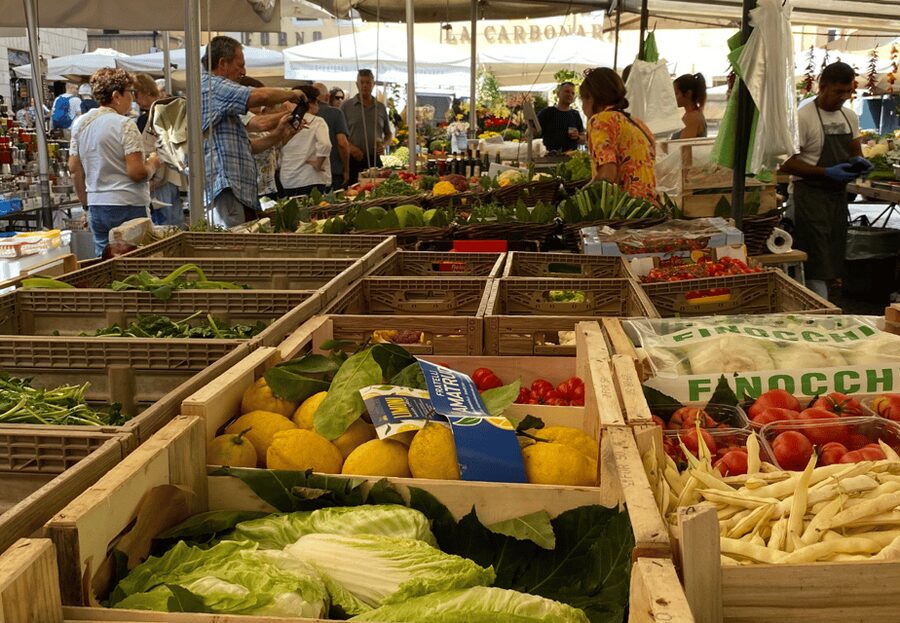
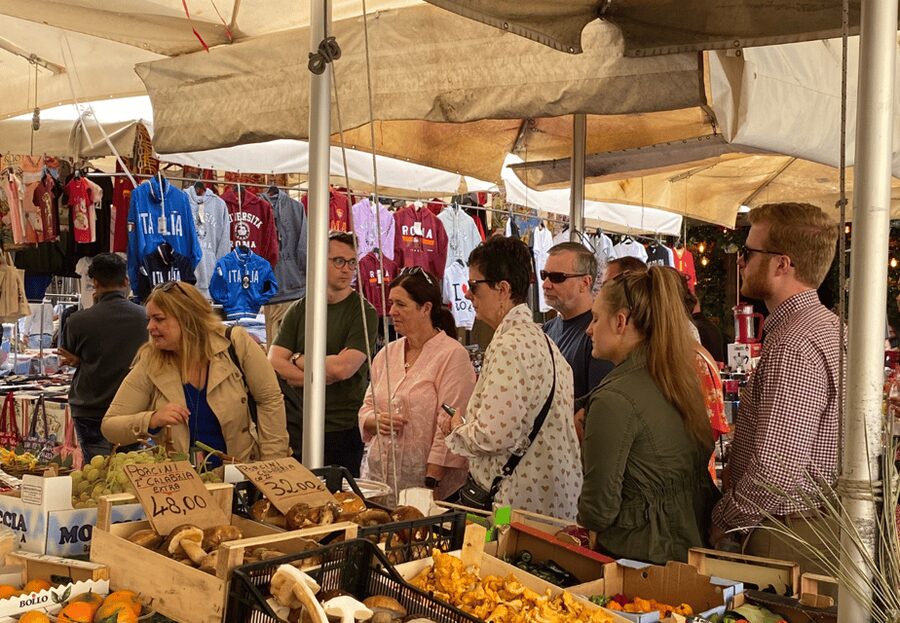
The morning tour begins with Campo de’ Fiori Market, one of the most useful places in the route for understanding how ingredients shape Roman cooking. You may see neatly arranged fruit and vegetables, spices, and other food products displayed for shoppers.
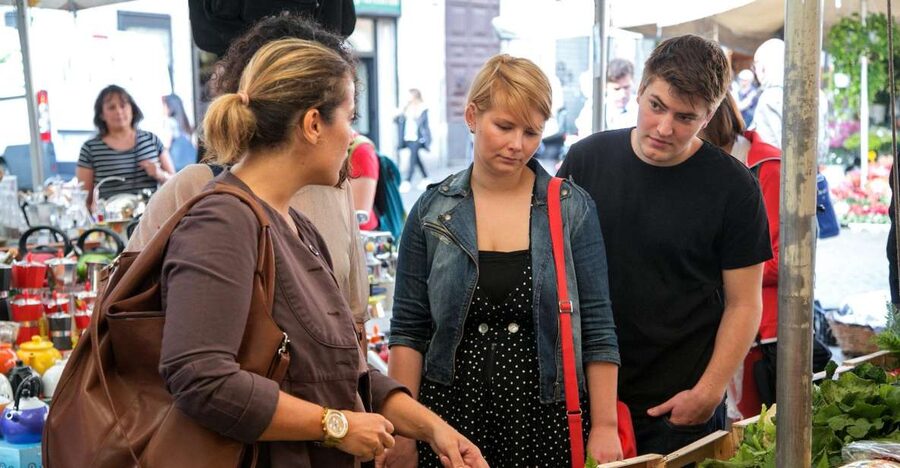
The market stop is not simply about taking photographs. Your guide can explain the ingredients and give you a sense of how Italians think about freshness, quality, and seasonality. This is also where the tour can move beyond the familiar Roman menu and show you the raw materials behind it.
The timing matters. The market is open in the morning, so the afternoon option does not include this visit. Instead, the later tour substitutes a typical grocery store and an aperitif. That is a fair replacement, but it is not the same experience. If the market is a priority, choose the morning departure.
Campo de’ Fiori is also a handy place to begin a food walk because it gives you an immediate orientation to the center of Rome. You are not just moving from restaurant to restaurant. You are looking at the food shops and public spaces that form part of daily city life.
Pizza bianca, mortadella, and the Roman snack break
One of the early food lessons is pizza bianca with thin slices of mortadella. This is a classic Roman combination: soft, airy bread with a savory filling, eaten as a quick snack rather than treated like a formal meal.
It is a good example of why a food tour can be more useful than a restaurant list. You learn what Romans grab between meals, not only what appears on a dinner menu. The combination is simple, but the guide’s explanation helps you pay attention to the bread, the meat, and the way the snack fits into the day.
The food arrives in portions, so you can focus on the taste without being expected to finish a full dish at every stop. Still, the total amount adds up quickly. If you are joining in the morning, leave room for everything that follows.
Cheese, salami, and the value of tasting comparisons
A mozzarella and Roman salami tasting adds a different lesson. You are comparing fresh cheese with cured meat, two foods that show how much Italian cooking can do with a short list of ingredients.
This stop is useful for shoppers as well as diners. You may come away with a better idea of what to look for in a food shop, how to judge a cheese display, and which local products deserve space in your suitcase or picnic. The tour is not presented as a formal cooking class, but it gives you practical food knowledge in small, memorable pieces.
The guide also explains how Italian food traditions vary from one region to another. That wider context keeps the walk from becoming a string of disconnected samples. You learn that Roman food has its own habits and preferences, even within the larger Italian food culture.
A few more wine days around Rome worth comparing
- Rome: Guided Food Walking Tour with Wine in Trastevere
★ 4.9 · 3,105 reviews - Rome: Trastevere Food tour with Free-Flowing Fine Wine
★ 5.0 · 2,853 reviews - Rome: Gourmet Food Tour with Dinner & Barolo Wine
★ 4.9 · 2,347 reviews - Rome: Award Winning Trastevere Group Food Tour with Wine
★ 5.0 · 2,273 reviews
Entering the Jewish Ghetto through its food
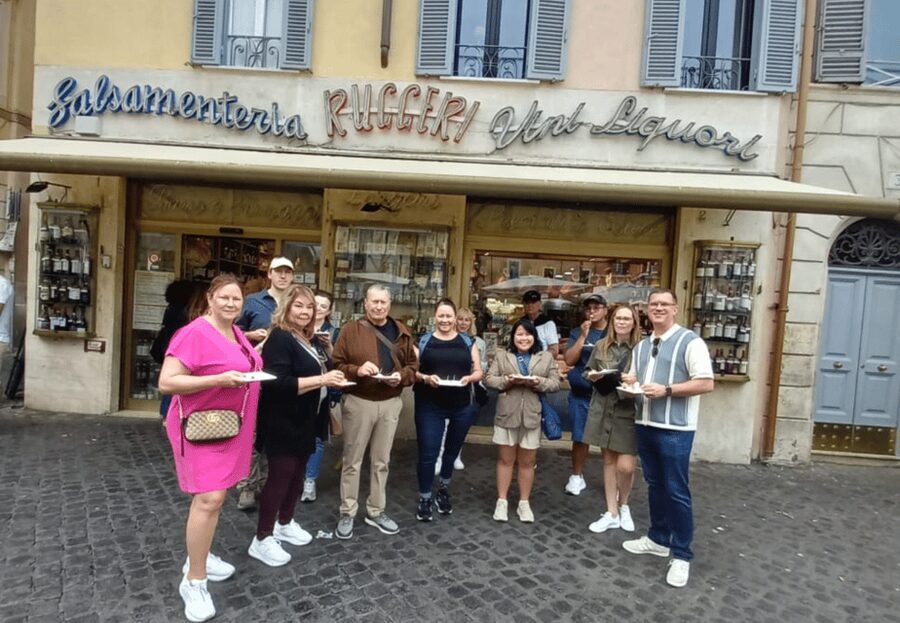
The Jewish Ghetto is one of the most rewarding sections of the route because food and neighborhood history are closely linked here. Your guide discusses the area while leading you to traditional Roman tastings.
Possible samples include fried artichoke, supplì, and fried codfish. The artichoke is a key local specialty, especially during its season. If you visit outside that period, you may not see the dish at its best or in every shop, but the tour still uses the area to explain typical Roman food.
Supplì is one of Rome’s essential fried snacks: a browned rice ball filled with tomato-seasoned rice and melted mozzarella. Cutting into one gives you the satisfying contrast of crisp coating, soft rice, and stretchy cheese. It is filling, so this is another reason not to eat a large meal before the walk.
Fried codfish shows a different side of the Ghetto’s food traditions. Along with the artichoke and supplì, it gives the tasting a clear Roman character rather than offering only the standard pasta and pizza menu.
I like this section because it makes the neighborhood more than a backdrop. You are tasting food associated with the area while learning how the streets, shops, and local customs fit together. Guides such as Natasha and Lisa have been praised for explaining the Ghetto in an engaging way, which is important because the food here deserves more than a quick stop and a photograph.
Pasta in Trastevere
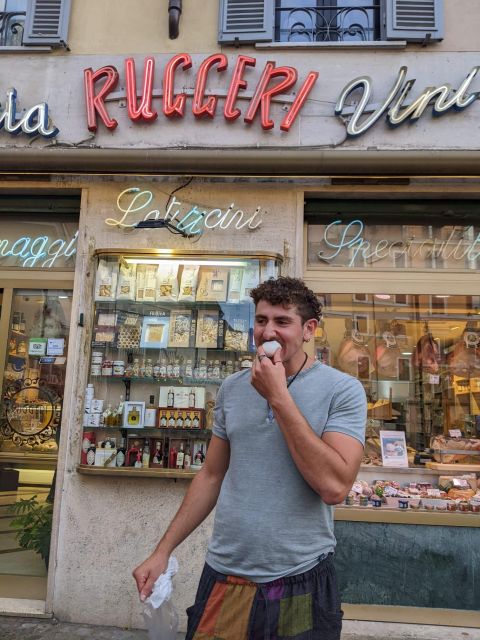
The tour continues into Trastevere for a pasta tasting. The exact pasta preparation can vary, so you should think of this as an introduction to Roman pasta rather than a promise of one named dish.
The guide explains what separates good pasta from the rest. That may include attention to the pasta itself, the sauce, cooking, and the way the dish is served. You will not become a pasta maker in one afternoon, but you should leave with sharper instincts when choosing a plate later in your trip.
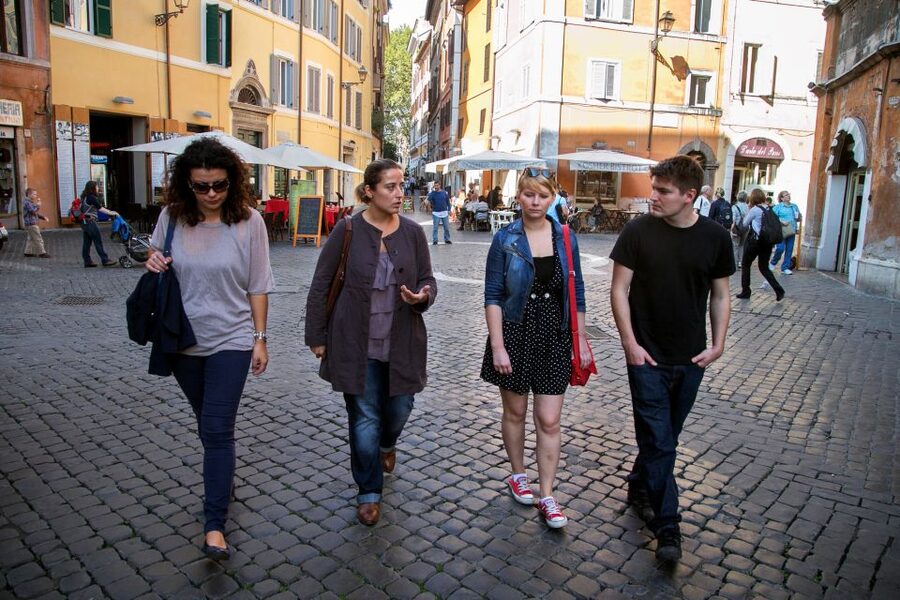
Trastevere gives the final stretch a different feel from the market and Ghetto. Its narrow streets, small restaurants, and food shops make it a natural place to finish a culinary walk. The route also gives you ideas for returning later, and several participants saved restaurants and shops to visit again.
The pacing is generally manageable. The walk covers a fairly broad area, but the food stops break it into short sections. You should still wear comfortable shoes, since this is a walking tour rather than a seated tasting in one location.
Finishing with gelato in Trastevere
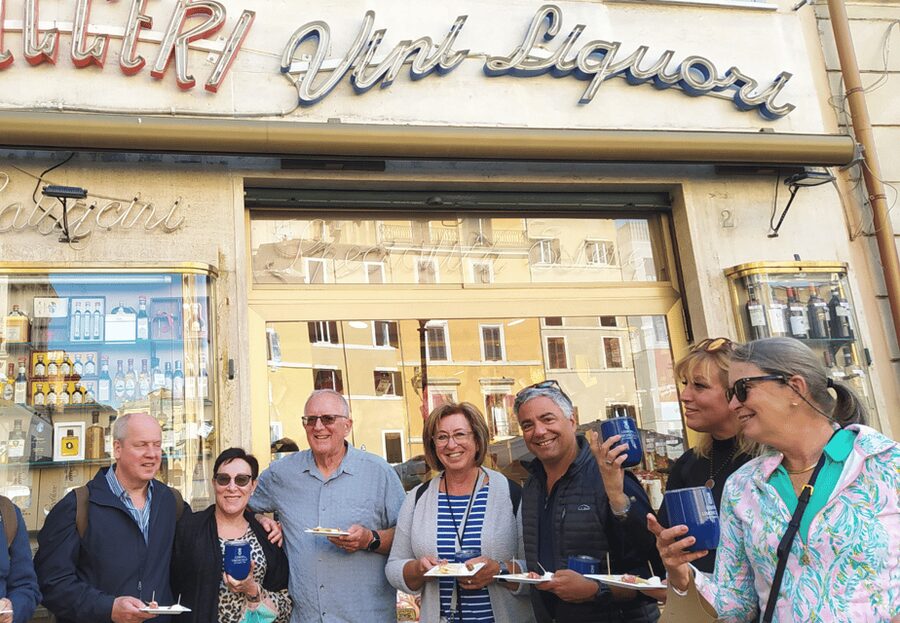
The final course is gourmet gelato in Trastevere. It is a smart ending: cool, sweet, and lighter in feel than another savory dish, though by this point you may already be full.
The guide can help you understand what makes gelato different from ordinary ice cream and how to spot a serious gelateria. That advice is practical because Rome has no shortage of colorful frozen dessert displays, and appearance alone does not tell you much about quality.
Gelato also gives the tour a satisfying finish after the heavier fried foods, cheese, salami, pasta, and bread. If you have been pacing yourself, it is a pleasant last stop. If you have eaten every sample at full size, it may require a little determination.
The guides shape the experience
The provider uses English-speaking foodie guides, and the names that appear most often include Natasha, Lisa, Mariel, Valeria, Gloria, Anastasia, Chiara, Federica, and Luca. The individual guide will affect the tone of your walk, but the pattern is clear: the guide is expected to explain both food and place.
Natasha has been praised for keeping people engaged and adding recipes, neighborhood stories, and Roman customs. Lisa is described as warm and hospitable, with a strong grasp of both food and local history. Mariel has been appreciated for knowing the restaurants and shops well and making sure everyone is included.
That personal element matters. Food tastes better when you understand why it belongs in the neighborhood and how locals use it. The best guides also answer the small questions that arise during a trip, such as where to eat later, what to order, and how to approach a food shop.
The group limit of 15 is helpful. It is small enough for questions and conversation, without the price of a private tour. Solo visitors can also find this format social, since the tastings naturally give the group reasons to talk.
Timing, weather, and what to bring
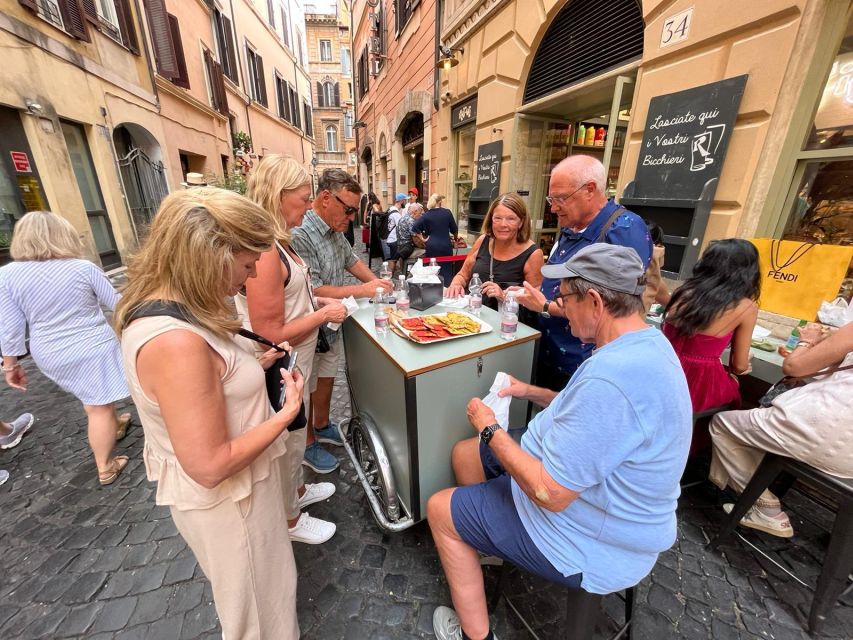
The experience is listed as lasting from two to three and a half hours, depending on the option booked. Check the exact starting time and meeting point when reserving, since the meeting point can vary.
The tour runs in all weather. Rome can be hot, sunny, or wet, so bring sunglasses, a sun hat, sunscreen, and an umbrella as needed. Comfortable shoes matter more than fashionable ones. The route includes walking through city streets and stops where you may stand while tasting.
Do not bring luggage or large bags. That rule is practical, since crowded food shops and restaurant stops are easier to manage with a small day bag.
Hotel pickup and drop-off are not included. You will need to make your own way to the meeting point and arrange your return afterward. Since the route ends in Trastevere, you may want to continue exploring there rather than treating the end of the tour as a return to your hotel.
Food restrictions and access
This is not a good choice for everyone. The activity is specifically listed as unsuitable for vegans, people with food allergies, and wheelchair users. The provider cannot guarantee accommodations for special dietary restrictions, so do not assume substitutions will be available.
Vegetarians may be accommodated in some cases, but you should ask before booking rather than rely on a last-minute adjustment. One vegetarian participant received good treatment, yet that does not amount to a guarantee for every departure or guide.
The walking format and historic streets may also be difficult for anyone who needs step-free access. If mobility is a concern, contact the provider before paying.
Is $81 a fair price?
The answer depends on how you use the tour. If you are looking only for a cheap plate of food, $81 is high. If you want several tastings, a guided walk through three central neighborhoods, food explanations, wine, and advice for the rest of your stay, the cost is reasonable.
You are also buying efficiency. In a few hours, you can try specialties that might take several meals to find on your own. You avoid spending your first days guessing which bakery, restaurant, or gelateria deserves your time.
The value is strongest when you book this near the beginning of your Rome visit. You can return to favorite stops, use the restaurant suggestions, and approach menus with more confidence. Booking it on your final day still makes a pleasant sendoff, but you lose the chance to act on the advice.
Free cancellation up to 24 hours before the tour and reserve-now, pay-later booking add flexibility. Those policies are useful when your Rome schedule is still changing, but check the terms for the exact option you choose.
Who should book this Rome food tour?
Book it if you want a generous introduction to Roman food and prefer learning while walking. It suits first-time Rome visitors, solo visitors looking for an easy group activity, couples, families with older children, and anyone who wants more than a list of famous restaurants.
It is also a strong choice if you enjoy history but do not want a formal sightseeing lecture. The Ghetto, Campo de’ Fiori, and Trastevere are explained through markets, shops, dishes, and everyday customs.
Skip it if you have serious food allergies, follow a vegan diet, need wheelchair access, or dislike eating at several stops in one stretch. You should also choose the morning option if Campo de’ Fiori Market is important to you.
Final verdict: a smart first-day food lesson
I would book this tour early in a Rome trip, especially for the mix of food and neighborhood context. The tastings are broad, the portions are substantial, and the small-group format leaves room for questions.
The best reasons to go are the Jewish Ghetto stop, the chance to try real Roman staples such as supplì and pizza bianca with mortadella, and the practical advice you can use afterward. Just arrive hungry, wear good shoes, check the market timing, and be honest about dietary or mobility needs before booking.
FAQ
How long does the food tour last?
The tour lasts between two and three and a half hours, depending on the option booked. Check the available starting times for your selected option.
What neighborhoods does the tour visit?
The route includes Campo de’ Fiori, the Jewish Ghetto, and Trastevere.
Is Campo de’ Fiori Market included on every departure?
No. The morning option includes the market visit. The afternoon option replaces it with a typical grocery store visit and an aperitif because of market opening hours.
What food is included?
The included tastings feature pizza bianca with mortadella, mozzarella with Roman salami, typical Roman food in the Jewish Ghetto such as fried artichoke, supplì, and codfish, pasta in Trastevere, and gourmet gelato.
Is wine included?
The experience includes shared food and wines of the region, and the included tasting list identifies wine as part of the food experience.
Is this a private tour?
The standard tour has a maximum group size of 15 people. A private group option is also available.
Is the tour offered in English?
Yes. The tour includes a live English-speaking guide.
Is hotel pickup included?
No. Hotel pickup and drop-off are not included. The meeting point can vary depending on the option booked.
Can vegans or people with food allergies join?
The activity is not suitable for vegans or people with food allergies. The provider cannot guarantee accommodations for special food restrictions.
What should I bring?
Bring comfortable shoes, sunglasses, a sun hat, sunscreen, and an umbrella as needed. Do not bring luggage or large bags.
More Food in Rome
- Rome by Night – Ebike Small Group Tour – Food and Wine (Option)
★ 5.0 · 1,275 reviews - Rome by Night: E-bike Small Group Tour -Food & Wine (Option)
★ 4.9 · 1,233 reviews - Rome Food Tour: Hidden Gems of Trastevere with Dinner & Wine
★ 5.0 · 1,166 reviews - Rome: Trastevere Guided Food and Wine Tour with 20+ Tastings
★ 4.9 · 1,022 reviews
Just added around Rome
- Rome: Painting Class with Unlimited Wine★ 4.8 · 109 reviews
- Rome: Vatican Street Food and Wine Tour with Farmers Market★ 5.0 · 37 reviews
- Rome: Trastevere Wine Tasting with Food Pairing and Gelato★ 4.9 · 168 reviews
- Rome: Trionfale and Prati Food and Wine Tasting Tour★ 4.8 · 115 reviews
- Rome: Tipsy Painting Class with Fine Wine and Arts★ 4.9 · 178 reviews
- Rome: Testaccio Food & Market Tour with Pasta & Wine★ 5.0 · 38 reviews
- Rome: Trastevere Food Walking Tour with Beer and Wine★ 4.9 · 71 reviews
- Rome: Private Tuk Tuk Tour with Hotel Pickup and Prosecco★ 4.9 · 68 reviews
Wine Tours in Rome, compared.
Tuscany & Montepulciano Day Trip with Lunch & Wine Tasting
Read our review →
Pasta & Tiramisu Class with Fine Wine by the Vatican
Read our review →
Rome Food Tour: Unlimited Tastings with Fine Wine & Barolo
Read our review →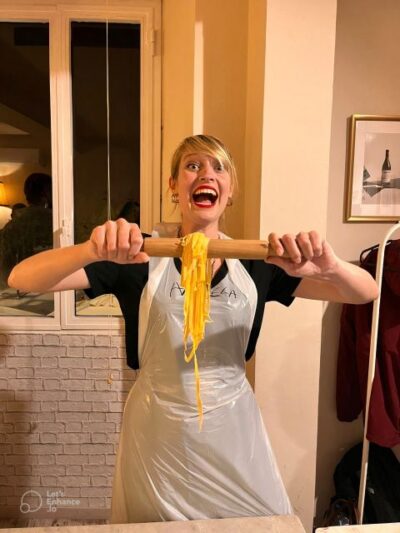
Pasta Making Class with Wine, Limoncello, and Dessert
Read our review →
Guided Food Walking Tour with Wine in Trastevere
Read our review →
Tuscany & Montepulciano Day Trip with Lunch & Wines
Read our review →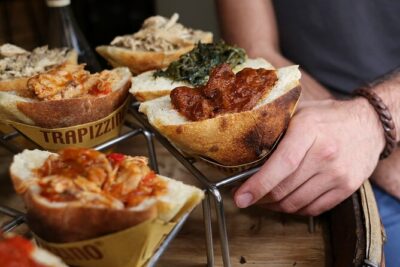
Trastevere Food tour with Free-Flowing Fine Wine
Read our review →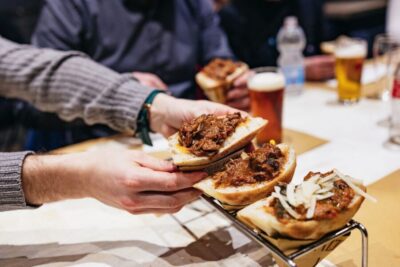
Browse the lists this tour appears in