REVIEW · ITALY
Rome: Food and Wine Tour, Trastevere and Jewish Ghetto
Rome’s best food tours do more than feed you. They show you how a neighborhood eats, where locals linger, and why a simple fried rice ball can matter as much as a grand church. This three-hour walk links Trastevere with the Jewish Ghetto, pairing Roman pasta, pizza, supplì, fried artichoke, gelato, and wine.
I like the route for two clear reasons: you get both famous Roman dishes and lesser-known Jewish-Roman food, and the walk gives context to each bite. Guides including Luca, Tiziana, and Alessia have been praised for warmth, humor, and strong knowledge of Rome. The main caution is timing: some outings have finished in about two hours, and the wine portions may be modest.
Key points to know before booking
- Two historic neighborhoods in one walk: Start at Piazza Trilussa, cross toward Tiber Island, and enter the Jewish Ghetto.
- Classic Roman food: Try pizza by the slice, supplì, carbonara, cacio e pepe, amatriciana, or gricia.
- A proper sit-down pasta stop: The tavern meal is the most substantial part of the food route.
- Jewish-Roman specialties: Taste carciofo alla giudia, a crisp fried artichoke from a kosher restaurant.
- Dessert finishes the tour: An artisanal gelato provides a sweet final stop.
- Useful caution: The tour is not suitable for celiac disease, lactose intolerance, serious mobility limits, or pets.
A food walk that connects two sides of Rome
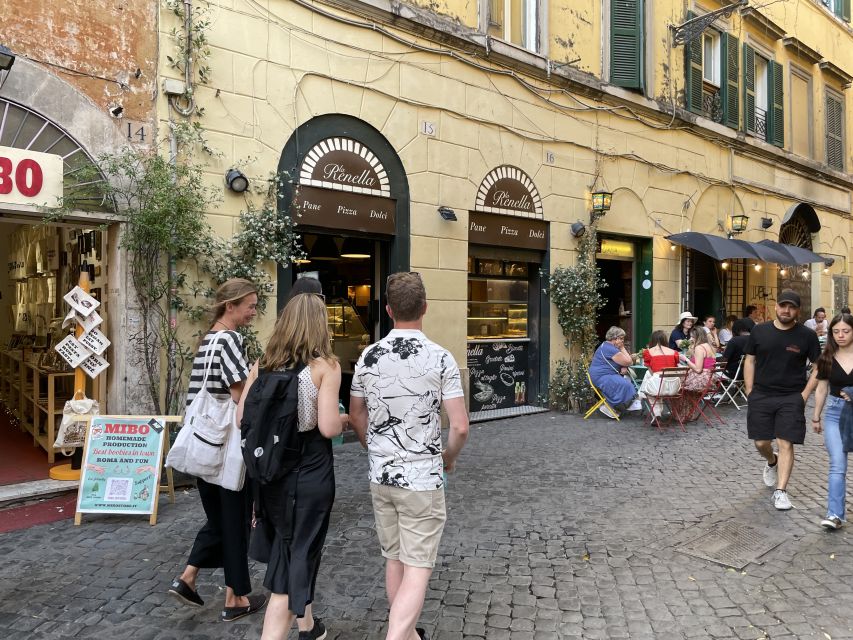
This tour works because the food is tied to place. Trastevere gives you old lanes, small squares, churches, taverns, and the unmistakable Roman habit of eating in public. The Jewish Ghetto adds a different food tradition shaped by Rome’s Jewish community.
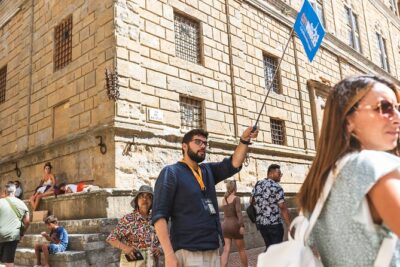
You begin in Piazza Trilussa, a useful meeting point on the Trastevere side of the Tiber. Look for the guide carrying a blue flag marked Doooing Experience. Arrive 15 minutes early, since the group begins on foot and the route does not include transportation.
The advertised duration is three hours. That is enough time for several tastings and a neighborhood walk without turning the experience into an all-day commitment. Still, you should keep your schedule flexible. At least two recent outings ended after roughly two hours, so the exact pace appears to depend on the guide, group, and stops.
The tour receives a 4.6 rating from 42 reviews, with the strongest praise directed at the guides. That matters here. Food stops are more enjoyable when someone explains what you are eating instead of simply handing you a plate.
A few more wine days around Italy worth comparing
- Florence: Chianti Wineries Tour with Wine Tasting
★ 4.5 · 10,071 reviews - Small-Group Wine Tasting Experience in the Tuscan Countryside
★ 5.0 · 7,392 reviews - Rome: Tuscany & Montepulciano Day Trip with Lunch & Wine Tasting
★ 4.5 · 5,232 reviews
Starting with Trastevere street food
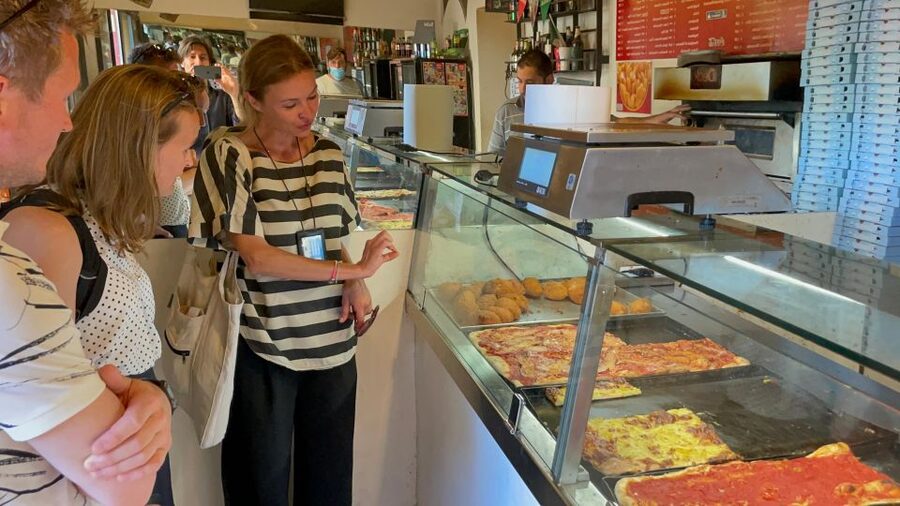
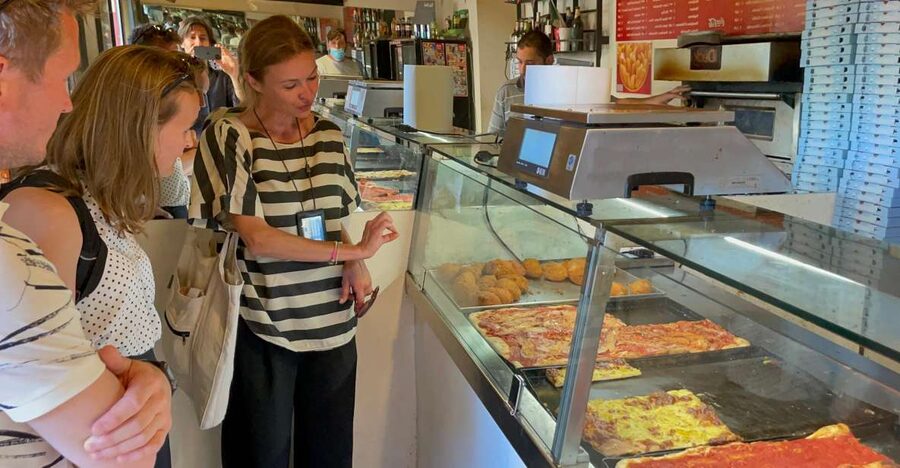
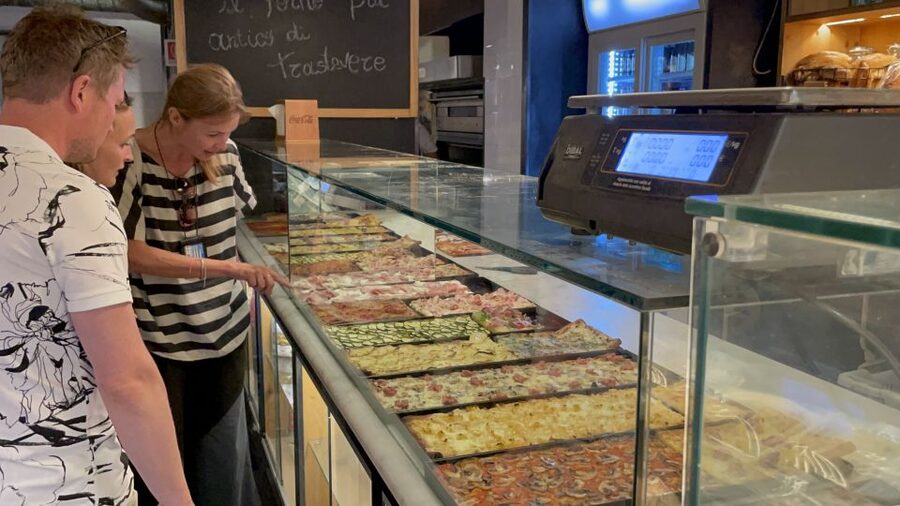
The first food stops introduce you to two dependable Roman favorites: pizza by the slice and supplì. Roman pizza al taglio is sold in rectangular pieces, usually cut from a large tray. It is casual, quick, and built for eating as you walk.
Supplì is a fried rice ball, generally associated with Roman street food. The outside is crisp, while the inside is soft and savory. It is the sort of snack that gives you a better sense of daily Roman eating than a formal restaurant meal would.
You also taste wine along the way. The drinks are included, along with one beer and water, but do not picture a long winery-style tasting. One account describes two 250-milliliter carafes shared among five people. That is enough to sample wine with the food, but not enough for anyone expecting generous pours or detailed wine instruction.
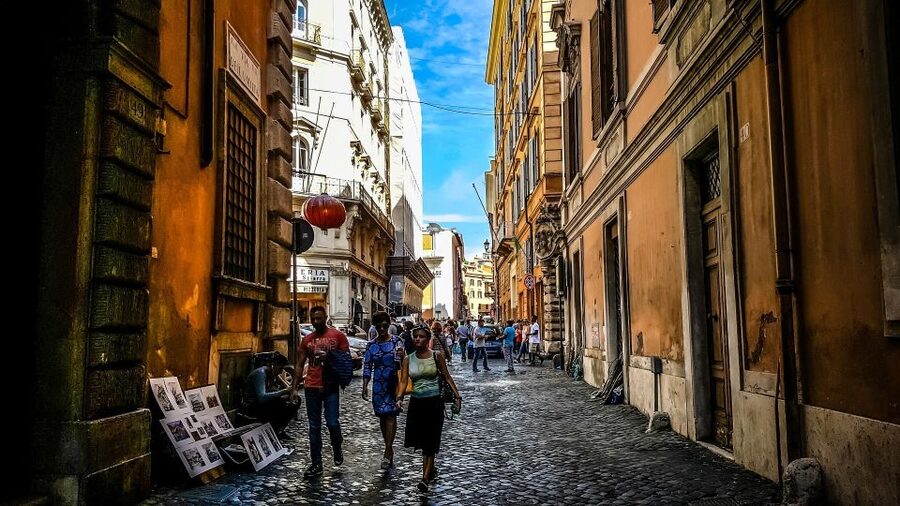
From Piazza Trilussa, the walk continues through Vicolo del Cinque and Via del Moro. These streets help you see Trastevere as a lived-in district rather than just a collection of restaurant tables. The guide adds stories and local details while you move between bites.
Santa Maria in Trastevere and its ancient columns
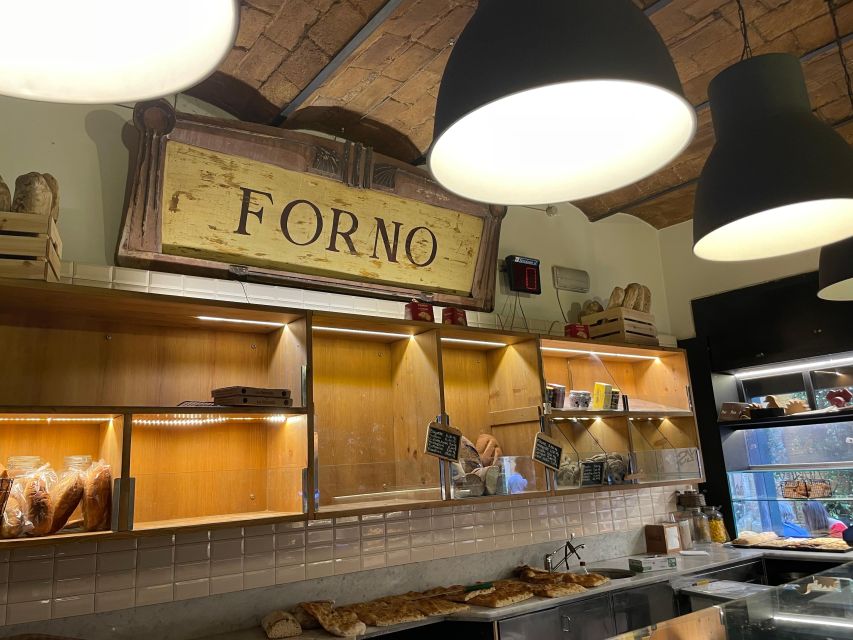
The route reaches Santa Maria in Trastevere, one of Rome’s oldest churches. Entry is included, so you are not only passing the façade for a quick photograph.
Inside, the church is known for its 22 granite columns, which came from the ruins of the Baths of Caracalla. Their Ionic and Corinthian capitals do not all match perfectly, which is part of the charm. Rome often asks you to look closely at reused stone, because a column may have already had a long life before arriving in the building you see today.
This stop also gives the tour a needed pause from eating. You can connect Trastevere’s present-day taverns and snack counters with the city’s older Roman layers. The church visit is guided, but the tour is not presented as a specialist art lecture. I would see it as a short historical stop that adds depth to the food walk.
Carbonara in a traditional tavern
The main meal takes place in one of Trastevere’s historic taverns. Here you choose one first course from a group of Roman standards:
- Carbonara
- Cacio e pepe
- Amatriciana
- Gricia
This is the point where the tour shifts from quick samples to a proper plate of food. Carbonara is the most famous choice, and the description specifically highlights it, but the other options let you explore a broader range of Roman pasta.
Carbonara is made with pasta, egg, cheese, and cured pork, with no cream in the traditional preparation. Cacio e pepe is simpler, built around cheese and black pepper. Amatriciana brings tomato and cured pork, while gricia is often thought of as a tomato-free cousin of amatriciana.
The tavern stop has been the most consistently praised food portion. One account described the pasta restaurant as very successful, while the other stops received more criticism for casual presentation. That distinction is useful. If you book this tour mainly for a carefully paced restaurant meal, you may find the pasta stop the most satisfying part.
The setting also matters. You sit at a table, sip wine, and get a chance to absorb what the tour calls the Trasteverina atmosphere. This is not just a collection of samples eaten at a counter. At least one stop gives you time to sit down and enjoy a complete course.
Same region, a completely different afternoon:
- Tuscany Day Trip from Florence: Siena, San Gimignano, Pisa and Lunch at a Winery
★ 5.0 · 21,634 reviews - Florence: Pasta Cooking Class with Unlimited Wine
★ 4.9 · 10,285 reviews - Florence: Pasta & Tiramisu Cooking Class with Unlimited Wine
★ 4.9 · 6,708 reviews - Florence: Pasta Cooking Class with Unlimited Wine
★ 5.0 · 6,413 reviews
Walking across the Tiber to the Jewish Ghetto

After the pasta, you walk toward Tiber Island and cross to the opposite side of the river. This movement gives the tour a clear shape. You begin in Trastevere, explore its food and streets, then shift into the Jewish Ghetto rather than treating the two areas as unrelated stops.
The Jewish Ghetto is one of Rome’s most distinctive food areas. Its cuisine reflects the long presence of Rome’s Jewish community, alongside Roman cooking and the pressures of a complicated past. Your guide explains the area’s history and curiosities while you walk through streets and Roman ruins.
I like this section because it prevents the tour from becoming a simple pasta crawl. You get a second food culture and a second neighborhood, with the Tiber providing a natural transition between them.
The route includes ruins of the Roman Empire. Exact access points can change, especially during the Jubilee, when some monuments may be under restoration and walking routes may be altered. Check messages from the operator before you go.
Carciofo alla giudia, the Jewish-Roman specialty
The Jewish Ghetto food highlight is carciofo alla giudia, a whole artichoke prepared and fried until the leaves become crisp. It is one of the signature foods associated with Roman Jewish cooking.
This is a dish worth tasting because it looks simple but depends on preparation. The artichoke is opened, seasoned, and fried so that it can be eaten almost like a savory flower. You receive it from one of Rome’s kosher restaurants.
The presentation may be informal. One account described the artichoke being served on top of a barrel, despite tables and chairs being nearby. That does not necessarily affect the taste, but it tells you what kind of tour this is. Some stops are polished sit-down experiences, while others are quick street-food moments.
If you prefer every course served with ceremony, this may frustrate you. If you care more about tasting a local specialty in the neighborhood where it belongs, the rough edges are easier to accept.
Gelato as the final course
The tour finishes with artisanal gelato. After pasta, fried food, wine, and beer, a cold sweet course is a sensible ending.
Gelato is also a useful test of your guide’s food judgment. Rome has plenty of gelato shops, and quality varies. The tour promises an artisanal stop, but the available information does not identify the shop or specific flavors, so you should not expect a named gelateria experience.
Still, the structure works. The food begins with salty street snacks, moves to a full pasta course, adds a Jewish-Roman specialty, and ends with dessert. You get a fairly broad introduction to Roman eating in a short period.
How much food and wine do you really get?
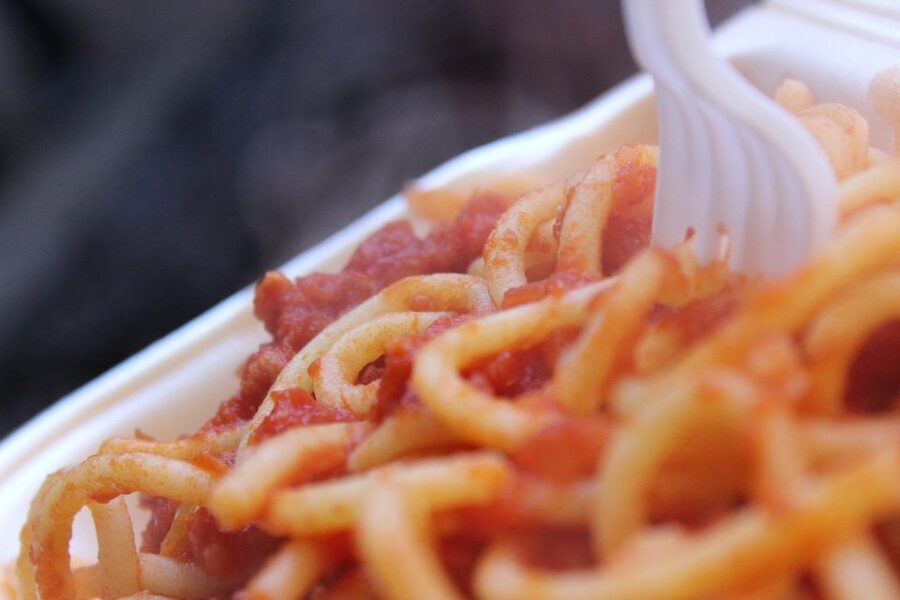
The tasting list is substantial on paper: pizza, supplì, pasta, fried artichoke, gelato, wine, beer, and water. In practice, the portions are not all full meals.
The pasta is the normal-sized restaurant portion. The pizza, supplì, artichoke, and gelato are samples or small servings. One account described the non-pasta items as snacks, including a small piece of focaccia with mortadella and fried artichoke. That is normal for a food walk, but it is worth knowing if you arrive expecting five full restaurant courses.
The wine is also best understood as a pairing rather than a formal tasting. You receive selected wine during the tour, but the portions may be shared and limited. The included beer gives you another drink option, while water helps keep the walk comfortable.
I would eat a light breakfast before the tour, not a large lunch. You want room for the pasta and gelato, but you should not arrive hungry enough to expect every sample to fill you.
Price and value at about $94
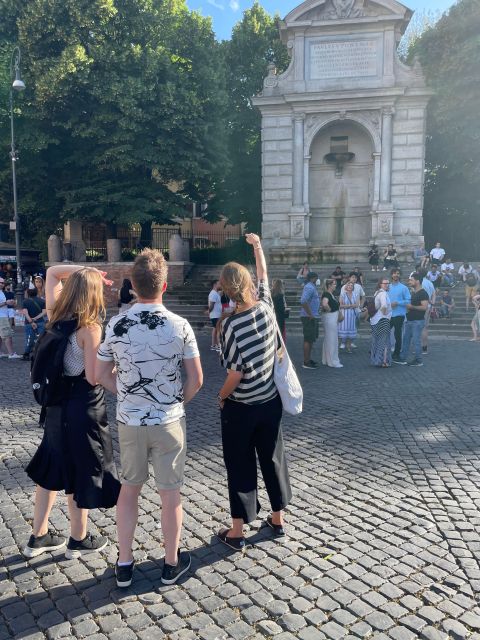
At about $94 per person, this is not a cheap snack walk. The price covers the guide, food samples, wine, one beer, water, the church visit, and the neighborhood commentary.
The value depends on what you want from a food tour. If you are mainly buying dinner, you can spend less at a Roman trattoria. If you want an organized route through two historic districts, several tastings, and a guide who connects food with local history, the price is easier to defend.
The guides are the strongest reason to book. Luca has been singled out for warmth, energy, and his ability to explain the food and neighborhoods. Tiziana has been praised for patience and an appealing manner, and Alessia has been described as bringing Roman history and odd local stories to life. Small groups can make a major difference. One couple ended up with what felt like a private tour because they were the only participants.
The weak point is consistency. A three-hour tour that ends in two hours offers less value at this price. The limited wine portions also matter if drinks are a major reason for booking. I would choose this experience for the guided neighborhood access and food range, not for quantity alone.
Who should book this Rome food tour?
I think it suits you best if you want an introduction to Roman food without spending a full day at restaurants. It is especially useful early in your Rome stay, since you can learn the names of several dishes and return later for a second plate of your favorite pasta.
It also suits people who like walking with their meals. You move through streets, squares, church interiors, river crossings, and historic districts. Wear comfortable shoes, and expect uneven routes and regular walking.
The tour is less suitable if you have serious food restrictions. Because of cross-contamination, it is not recommended for people with celiac disease or lactose intolerance. If you have a serious food allergy, you must sign an allergy waiver at the start. Pets are not allowed.
It is also not recommended for people with limited mobility. The route crosses neighborhoods on foot, and access routes may change during the Jubilee because of restoration work.
The tour is offered in English and Italian. Transportation is not included, so you need to reach Piazza Trilussa on your own and return from there at the end.
Should you book it?
Book this tour if you want Roman food, Jewish-Roman specialties, and neighborhood stories in one compact walk. The pasta, artichoke, and guide-led history make it more useful than a simple series of restaurant tastings.
Go in with realistic expectations. You may get a shorter outing than the advertised three hours, modest wine pours, and informal service at some stops. If those limits are acceptable, the route offers a good first look at Trastevere and the Jewish Ghetto, especially when you draw a lively guide such as Luca, Tiziana, or Alessia.
FAQ
Where does the Rome food tour begin?
The tour begins in the middle of Piazza Trilussa, directly in front of the stairs. Look for a guide carrying a blue flag with the Doooing Experience logo.
How long does the tour last?
The stated duration is three hours. Exact timing can vary, and some outings have finished in about two hours.
What food is included?
You taste pizza by the slice, supplì, a Roman pasta such as carbonara, cacio e pepe, amatriciana, or gricia, carciofo alla giudia, and artisanal gelato.
Are drinks included?
Yes. Wine tastings, one beer, and water are included. The wine is served during the route and may be shared among the group.
Does the tour enter Santa Maria in Trastevere?
Yes. Entry to the Basilica di Santa Maria in Trastevere is included, along with a guided visit.
Is transportation included?
No. Transportation is not included. You must make your own way to Piazza Trilussa, and the tour returns there.
Is the tour suitable for food allergies or celiac disease?
The tour is not suitable for people with celiac disease or lactose intolerance because of cross-contamination risks. Anyone with a serious food allergy must sign an allergy waiver at the start.
Is the tour accessible for people with limited mobility?
No. The tour is not recommended for people with mobility impairments. Comfortable shoes are advised, and pets are not allowed.
Just added around Italy
- Wine Degustation Ebrezze★ 4.5 · 86 reviews
- Guided winery tour with tasting in Bolzano at the SKYWINE PAVILLON★ 5.0 · 61 reviews
- Bologna: Tagliatelle & Ragù Home Cooking Class with wine★ 4.5 · 55 reviews
- Bologna Food & Wine tour with a local Chef★ 3.0 · 30 reviews
- The downtown wine experience★ 5.0 · 35 reviews
- Parmigiano Wine and Balsamic Vinegar Experience from Bologna★ 5.0 · 30 reviews
- Eating Bologna Food and Wine Tour★ 5.0 · 96 reviews
- Private Bologna Food & Market Tour with 6 Tastings & Wine★ 5.0 · 102 reviews
Wine Tours in Italy, compared.
Tuscany Day Trip from Florence: Siena, San Gimignano, Pisa and Lunch at a Winery
Read our review →
Small-Group Wine Tasting Experience in the Tuscan Countryside
Read our review →
Pasta & Tiramisu Cooking Class with Unlimited Wine
Read our review →
Pisa, Siena and San Gimignano Day Trip with Lunch & Wine Pairing
Read our review →