
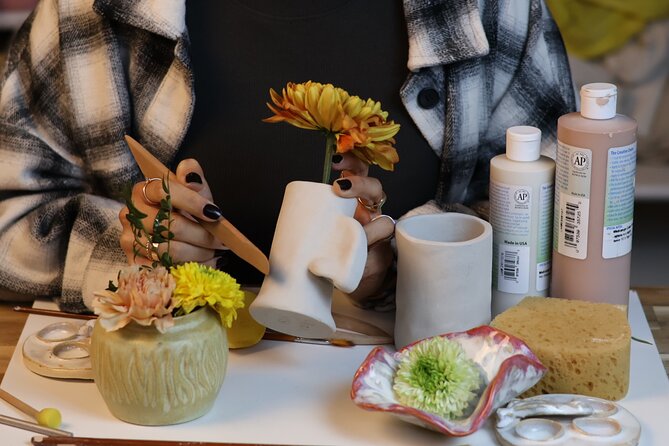
REVIEW · BARCELONA
Pottery Workshop and Wine – Barcelona
Making pottery by hand is a fine way to slow down in Barcelona. At Tiwona, you shape clay with your fingers and simple tools, then add your own textures, patterns, and odd little details. No wheel experience is needed, and the class is built for beginners.
I like the private 1:1 guidance and the relaxed drink-in-hand setting. Instructors demonstrate each step, stay available as you work, and help you turn a soft lump of clay into something useful or sculptural. Lesli has earned especially warm praise for patience, clear teaching, and fluency in English, Spanish, French, and Italian.
The main caution is not the pottery itself. It is the follow-up. Finished pieces take about two to three weeks, and collection arrangements have caused serious frustration when times or workshop access were unclear. Confirm the pickup plan before you leave Barcelona.
Key points to know before booking
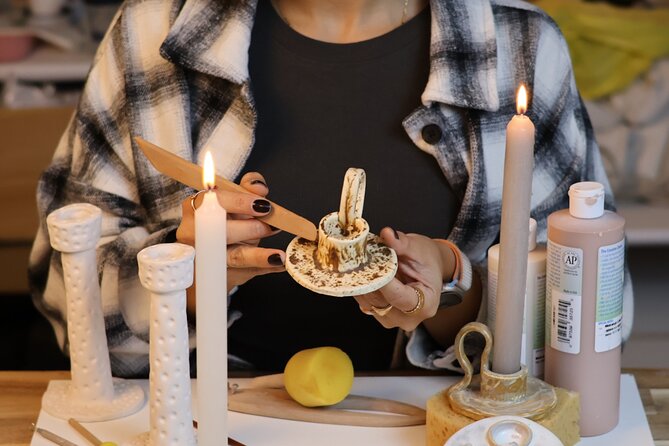
- Handbuilding, not wheel throwing: You pinch, coil, and slab-build your piece with your hands and basic tools.
- Private group format: Only your own group takes part, with step-by-step help from a ceramic artist.
- Wine, cava, or tea included: Wine is available only to people aged 18 and over.
- Several types of pottery are possible: You can make a cup, bowl, vase, or small sculptural object, depending on size and time.
- Your clay work is fired and glazed: The finished piece is usually ready for collection after about two to three weeks.
- Central meeting point: The class begins and ends at Tiwona, on Carrer de Sant Pere Més Alt in Ciutat Vella.
What the two-hour pottery class feels like
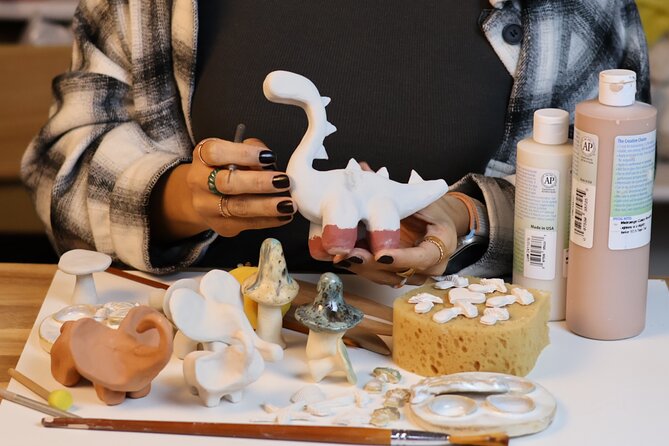
This is a hands-on workshop rather than a pottery demonstration. You do the making yourself, while the instructor explains the clay and shows you how to build a form without a wheel. The class lasts about two hours, which gives you enough time to learn the basics and decorate your work without turning the session into a full-day craft course.
You begin with an introduction to clay and the main handbuilding methods. Pinching lets you form a vessel directly from a ball of clay. Coiling uses rolled ropes of clay stacked and joined to build height. Slab-building uses flattened sheets to create more angular shapes.
These techniques matter because they give you several ways to make a personal object, even if your hands have never touched clay before. A cup or bowl can be shaped by pinching. A vase may call for coils or slabs. A small sculpture gives you more freedom to combine methods.
The instructor provides demonstrations and step-by-step tuition. You are not expected to know how thick the clay should be, how to join sections, or how to keep a form stable. That help is the real value of the class. Without it, beginners can easily make walls too thin, attach pieces poorly, or build something that collapses before it reaches the kiln.
The private format also helps. Your group is the only group taking part, so you can ask for help when a rim cracks or a shape begins to lean. It is a better setup for a couple or a small group of friends than a large class where you must wait for the teacher to come around.
More Wine Tours in Barcelona
- Montserrat Half-Day Tour with Tapas and Gourmet Wines
★ 5.0 · 7,359 reviews - Montserrat & Cogwheel Train, Gourmet Wine Tasting & Tapas/Lunch
★ 5.0 · 6,290 reviews - Barcelona Tapas and Wine Experience Small-Group Walking Tour
★ 5.0 · 5,804 reviews
Pinching, coiling, and slab-building your own piece
The most rewarding part is deciding what to make. The choices listed for this class include a cup, bowl, vase, or sculptural object, but the final result depends on your size, technique, and the time available. I would arrive with a loose idea rather than a detailed plan.
A cup may be the most practical choice, but it is not necessarily the easiest. You need an even opening and a base that sits properly. A bowl allows a little more freedom with shape, while a vase lets you experiment with height and surface decoration. A sculptural object is ideal if function matters less than expression.
Once the basic form is in place, you can personalize it with patterns, textures, and other decorations. Simple marks can make a plain surface feel like your own. You might press texture into the clay, add small details, or shape an unusual edge. The point is not to produce factory-perfect pottery. It is to make an object that carries the marks of your hands.
The teacher can help you decide what is practical. Large or oversized work may need extra kiln space and can incur a small additional fee. The class includes firing for your creations, with the number of pieces depending on their size. Smaller pieces may allow you to make more than one.
That detail is worth clarifying at the start. Ask how many pieces your group can reasonably fire and if your planned object counts as oversized. It is better to know before building a large vase than after the clay has been shaped.
Wine, cava, or tea while you work
A drink is included during the class, with wine, cava, or tea available. It gives the session a social feel and makes the workshop a natural choice for a date or an afternoon with friends. Several comments specifically praise the friendly atmosphere, good wine, and unhurried pace.
This is not a wine tasting, so you should book it for the pottery rather than the drinks. Still, the refreshment adds value to a two-hour activity priced at $60.24 per person. You are paying for materials, tools, instruction, firing, and a finished object, not just a short lesson.
Wine is served only to people over 18. Tea is the straightforward choice for younger participants or anyone who does not want alcohol while working. Since this is a creative class, the drink is best treated as a pleasant extra rather than the main feature.
The combination works especially well for a first date. You have something to do with your hands, plenty of chances to talk, and a shared object at the end. It is less stiff than sitting across a restaurant table, though clay work can get messy and the final pottery may look more charming than polished.
Why the instructors matter
Good instruction makes or breaks a beginner pottery class. The strongest praise has gone to Lesli, who is described as patient, attentive, and skilled at explaining details. Lesli is also fluent in English, Spanish, French, and Italian, which is useful in a mixed-language setting.
You may not necessarily have Lesli as your instructor, since the workshop is taught by professional ceramic artists and another comment refers to a male teacher. The key point is that the class is designed around active guidance, not simply handing you clay and leaving you alone.
The best teaching happens in small corrections. An instructor can show you how to smooth a join, support a weak wall, or add a decoration without damaging the form. Clear demonstrations are particularly helpful for the first few minutes, when the clay feels unfamiliar.
There is also a personal side to the teaching. One positive account describes an instructor who stayed attentive throughout the class and never rushed the creative process. That is exactly what you want here. Pottery can feel awkward at first, and a patient teacher keeps the experience playful instead of stressful.
Still, the teaching appears to be less consistent at times. A negative account describes poor patience and an unpleasant attitude. I would not treat that as proof that every class has the same problem, but it is a fair reason to keep expectations measured. The instructor assigned to your session matters.
A few more wine days around Barcelona worth comparing
- Barcelona: Fluorescent Paint and Wine Workshop
★ 4.7 · 255 reviews - Barcelona: Wine and Van Gogh Paint and Sip Painting Class
★ 4.7 · 161 reviews - Paella Class & Bottomless Wine: Las Ramblas Views
★ 5.0 · 159 reviews - Pottery Workshop and Wine – Barcelona
★ 4.7 · 138 reviews
The studio location and meeting point
The listed meeting point is Tiwona, Taller de Cerámica Barcelona, at Carrer de Sant Pere Més Alt, 46, in Ciutat Vella. The activity begins and ends there, and the studio is near public transportation.
That central location makes this easy to fit between sightseeing stops. You are not committing to a long ride outside Barcelona, and you can return to the same point after class. The area is also described as easy and safe to reach in one positive account.
Take the address seriously and check it shortly before departure. One serious complaint involved arriving 15 minutes early at the supplied address, only to learn that the workshop had moved. The group then needed a 15-minute taxi ride to another location and could not complete the class because of the time lost.
That is an avoidable problem, but it shows why you should confirm the exact studio location on the day. Arrive early, as suggested, and keep the workshop contact details handy. If the activity is important to your schedule, do not place it immediately before a timed train, flight, or major attraction.
Drying, firing, glazing, and getting your pottery back
Your piece does not go home with you. After the class, the studio handles drying, firing, and glazing. That is why the finished item takes about two to three weeks.
The wait is normal for handmade ceramics. Clay needs to dry safely before firing, and the final finish comes later. The delay also means this is not an ideal souvenir if you leave Barcelona the next morning and cannot arrange delivery.
The standard plan is to collect the piece when it is ready. Shipping is available for an additional cost. Ask about shipping before the class ends if you are not staying in Barcelona for two or three weeks. Do not assume it is included in the $60.24 price.
Collection needs special attention. A WhatsApp group may be used to share photographs and arrange pickup, but communication has not always been reliable. Problems have included delayed pieces, changed pickup times, a closed workshop at the agreed time, and unanswered messages. One person was still waiting for the pottery two months later.
I would treat pickup as part of the booking, not as an afterthought. Confirm the expected completion date, the collection hours, and the shipping option in writing. If you are staying locally, choose a pickup time you can adjust. If you are leaving, get clear shipping instructions before you go.
Is $60.24 a fair price?
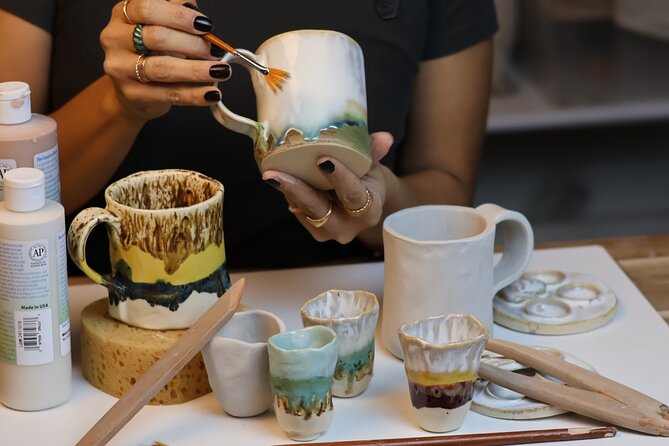
At $60.24 per person, the value depends on what you want from the afternoon. It is not the cheapest way to spend two hours in Barcelona, but the fee covers clay, tools, instruction, drinks, firing, and usually more than one small piece depending on size.
The firing is important. A simple craft session where you take home unfired clay would offer less lasting value. Here, the studio handles the technical work that turns your fragile creation into usable ceramic. Glazing is also included, so you do not need to arrange another studio visit for the finish.
The private group structure adds value for couples and friends. You avoid being mixed with strangers, and the teacher can focus on your group. Group discounts may be available, which could make the price more attractive for a larger party.
There are two possible extra costs. Shipping is not included, and oversized pieces may need additional kiln space for a small fee. Ask about both before you choose a large design.
I see the price as reasonable for a creative activity with a lasting result, provided you can collect the work or accept the shipping charge. If your main aim is a cheap indoor activity, it may feel expensive. If you want personal instruction and a handmade Barcelona souvenir, the fee makes more sense.
Who will enjoy this most?
This class suits beginners best. You do not need previous pottery experience, and the instructor explains the basic methods from the start. It also works well for a couple, a group of friends, or anyone who wants a quiet break from sightseeing.
It is a good choice for people who like making things rather than simply looking at them. You will spend most of the session shaping and decorating clay, so the pleasure comes from the process as much as the final piece.
Families may also consider it, but remember that wine is restricted to people over 18. The available information says most people can participate and service animals are allowed. Since the activity is private, your group can work together without sharing the session with strangers.
I would be more cautious if your schedule is tight. The class itself is about two hours, but the finished pottery takes weeks, and the collection process needs follow-up. It is also not a good fit if you want a polished, professional-looking object every time. Handmade pottery includes wobbly rims, uneven textures, and surprises.
Should you book the Barcelona pottery workshop?
Book it if you want a social, beginner-friendly activity with real hands-on work and a keepsake that you helped create. The private format, clear demonstrations, included materials, and drink make it appealing for couples and small groups. Lesli’s patient teaching and language skills are a particular plus if Lesli leads your session.
Before booking, make sure you can manage the later collection or shipping. Confirm the exact meeting address, ask how many pieces are included for your planned size, and get a clear pickup plan. If the studio confirms those details, this is a worthwhile way to spend two hours in central Barcelona.
If you need a souvenir in hand before leaving, choose another activity. The pottery must dry, fire, and glaze, and the follow-up arrangements have not always been dependable. For everyone else, the class offers a relaxed way to make something personal, with enough guidance to help a beginner enjoy the clay instead of fighting it.
FAQ
How long does the pottery workshop last?
The class lasts approximately two hours.
Where does the activity begin and end?
It begins and ends at Tiwona, Taller de Cerámica Barcelona, Carrer de Sant Pere Més Alt, 46, Ciutat Vella, Barcelona.
Do I need previous pottery experience?
No. The workshop is designed for beginners and includes step-by-step instruction in handbuilding techniques.
What can I make during the class?
You can make a cup, bowl, vase, or sculptural object, then add textures, patterns, decorations, or other personal details.
Is a drink included?
Yes. Wine, cava, or tea is available during the class. Wine is served only to people aged 18 and over.
When can I collect my finished pottery?
The studio expects pieces to be ready after about two to three weeks. Shipping is available for an additional cost, and oversized pieces may require a small extra kiln-space fee.
Just added around Barcelona
- 2 Wineries Small Group Tour with Free Hotel PickUp from Sitges★ 5.0 · 83 reviews
- Barcelona: Wine Tasting and 5 Course Tapas Pairing Dinner★ 4.5 · 129 reviews
- Barcelona: Guided Rooftop Wine Tasting – Enjoy 6 Spanish Wines★ 4.5 · 61 reviews
- Viticulture and Wine-Tasting 3-Hour Trip from Barcelona★ 4.5 · 59 reviews
- Bohemian Barcelona Neighborhood Evening Tapas & Wine Tour★ 5.0 · 419 reviews
- Wine Tasting Experience in Barcelona★ 5.0 · 172 reviews
- Barcelona Tapas & Wine Experience as a Local at Hidden Wineries★ 5.0 · 71 reviews
- Barcelona Gothic Quarter VIP Tapas & Wine Tour★ 5.0 · 276 reviews
Wine Tours in Barcelona, compared.

Montserrat Half-Day Tour with Tapas and Gourmet Wines
Read our review →
Montserrat & Cogwheel Train, Gourmet Wine Tasting & Tapas/Lunch
Read our review →
Barcelona Tapas and Wine Experience Small-Group Walking Tour
Read our review →
Montserrat, Cogwheel, Black Madonna & Winery Tour
Read our review →
Montserrat with Black Madonna & Medieval Winery with Tapas/Lunch
Read our review →
Tapas Walking Tour with Food, Wine, and History
Read our review →
Montserrat Lunch & Wine at Farmhouse Small Group from Barcelona
Read our review →
Browse the lists this tour appears in