
REVIEW · ITALY
Orvieto: Pozzo della Cava Entry Ticket
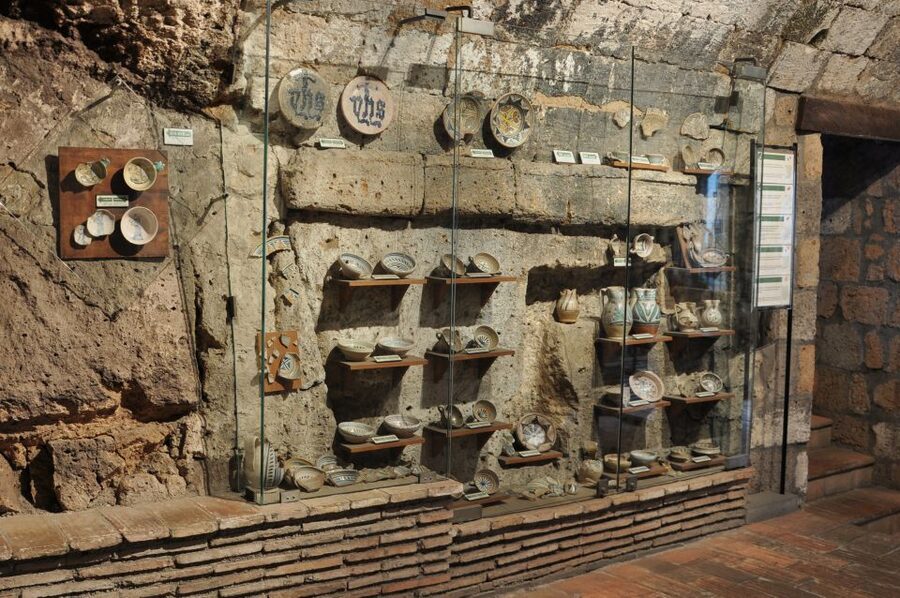
Orvieto’s Pozzo della Cava takes you below the medieval streets into nine connected caverns shaped by twenty-eight centuries of use. You’ll see an ancient Etruscan water cistern, medieval underground rooms, Renaissance excavations, and objects left behind by the people who used these spaces.
I like the freedom to walk at your own pace, stopping at the clear signs rather than following a guide. I also like the price: at $5 per person, this is an easy addition to a day in Orvieto, especially when the cool underground air offers relief in summer.
The main drawback is its small scale. You can see the complex in roughly 30 minutes, or about an hour if you read every panel, so it should complement Orvieto’s larger sights rather than replace them.
Key points to know before you go
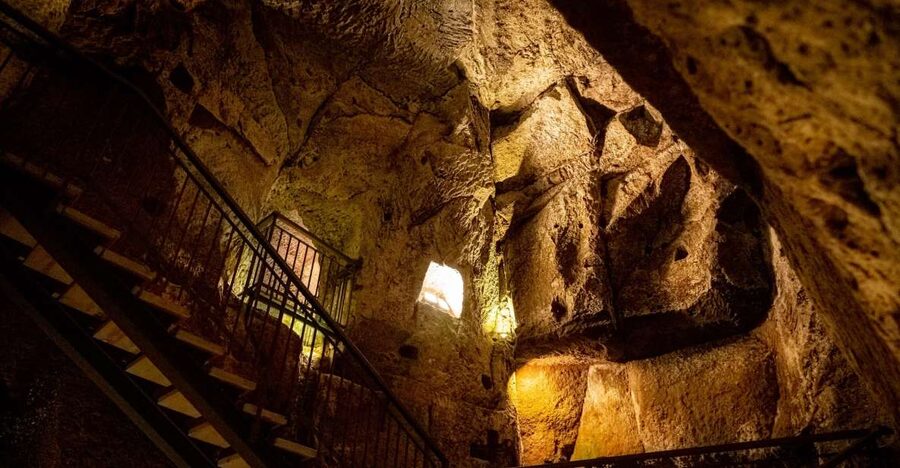
- Nine underground caverns: Follow a compact route through spaces used from Etruscan times through the Middle Ages and Renaissance.
- The oldest section comes first: See a cistern lined with cocciopesto plaster and remains linked to ancient Etruscan use.
- Self-guided, not a guided tour: Multilingual signs in Italian, English, and French explain the rooms and artifacts.
- A good hot-weather stop: The underground chambers are noticeably cooler than Orvieto’s streets.
- About 30 to 60 minutes: The visit is short, making it easy to fit around the Duomo and other sights.
- Child-friendly explanations: A special itinerary helps younger visitors follow the story.
What the Pozzo della Cava reveals beneath Orvieto
Orvieto is famous for its hilltop setting and grand cathedral, but much of its story sits below street level. At Pozzo della Cava, you enter the underground side of the city, where people cut rooms into the soft volcanic rock and adapted them over many centuries.
This is not a single, polished archaeological chamber. It is a group of spaces beneath the Cava neighborhood, linked by a route through nine caverns. The appeal comes from seeing how one place changed as Orvieto changed above it.
The earliest part connects to the Etruscans, the ancient people who lived in this part of central Italy before Roman power took hold. Later residents reused and reshaped the underground rooms during the Middle Ages and Renaissance. You are not simply looking at one isolated monument. You are following the practical life of a city through its water supply, storage areas, work spaces, and buried structures.
I find that this makes the visit especially useful after walking Orvieto’s streets. Above ground, the town can feel unified and medieval. Below ground, you see the layers that came before and after that period.
More cava cellars near Italy:
- Barcelona: Coastline Boat Trip with Snacks and Cava
★ 4.9 · 1,905 reviews - From Barcelona: Penedés Vineyards Tour by 4WD w/Wine & Cava
★ 4.8 · 808 reviews - Barcelona Small Group Sailing with Snacks and Cava
★ 5.0 · 758 reviews
The Etruscan cistern and Orvieto’s first water source
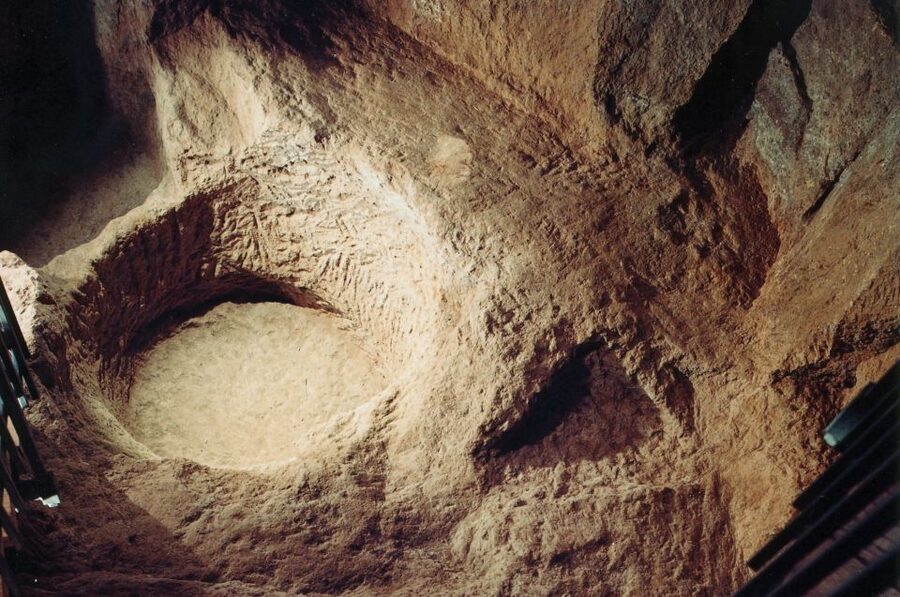
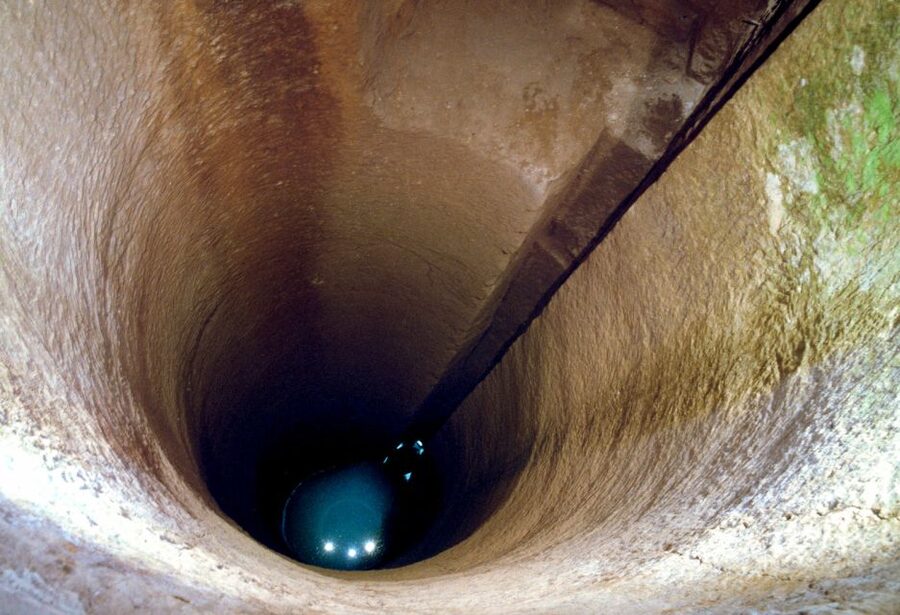
The route begins in the oldest part of the complex, where the cistern is lined with cocciopesto plaster. This waterproof material was used in ancient construction, and its presence helps explain how the chamber could hold water.
The site is connected with Orvieto’s first spring water well. That detail gives the opening section real purpose. You are not only looking at a hole cut into rock. You are seeing part of the basic system that allowed an ancient settlement to function.
You might also find ancient Etruscan burial remains and other traces from the earliest period. The setting is intimate, so you will not get the scale of a large museum collection. Instead, the value lies in standing inside a structure designed for a practical need and seeing how ancient builders dealt with water underground.
The explanations help place the construction in time. If you read the panels carefully, you can connect the physical features around you with the different phases of Orvieto’s development.
Three-story medieval basements below the Cava district
After the oldest section, the route leads into the underground maze associated with Urbs Vetus, the medieval name for Orvieto. Here, the most interesting feature is the way houses extended downward.
The underground spaces could form three-story basements beneath buildings on the medieval streets. That arrangement gives you a better sense of how limited space was managed in a hilltop town. The rooms below were not separate from daily life above. They were part of the same homes and working areas, built into the rock as the settlement expanded.
This section rewards a slow pace. Look at the connections between the chambers and consider how much effort was needed to create them by hand. The route is compact, but the structure is more complex than the $5 admission suggests at first glance.
The signs are available in Italian, English, and French. That matters here because the rooms alone cannot always explain how they were used. The written information gives you a basic timeline and helps distinguish the ancient parts from the medieval changes.
You will not have a guide walking beside you, so the experience depends on your willingness to read. That is a benefit if you prefer independence, but less helpful if you want a detailed spoken account or the chance to ask questions.
Renaissance excavations and the final cave
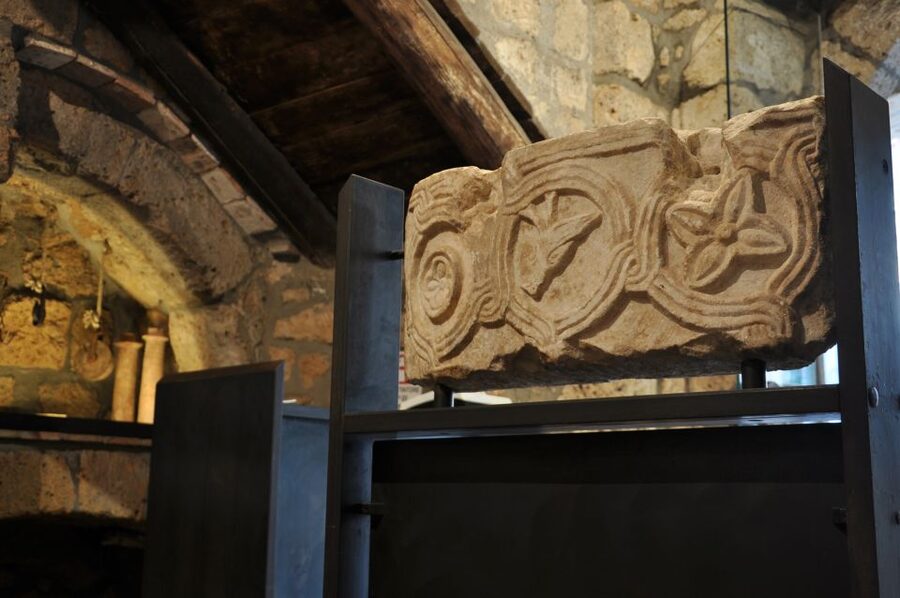
The final section shows how the site continued to change during the Renaissance. The most recent parts of Pozzo della Cava were excavated during this period, adding another stage to the complex’s long development.
The last cave is particularly effective because it preserves traces of changes made over twenty-eight centuries. Rather than ending with a single dramatic object, the route closes by showing how repeated building and excavation left marks on the underground spaces.
This long time span is the main reason to visit. You can begin with Etruscan engineering, pass through medieval domestic spaces, and finish with Renaissance work in the same short walk. The experience gives you a useful counterpoint to Orvieto’s cathedral, which presents a more polished and monumental view of the town.
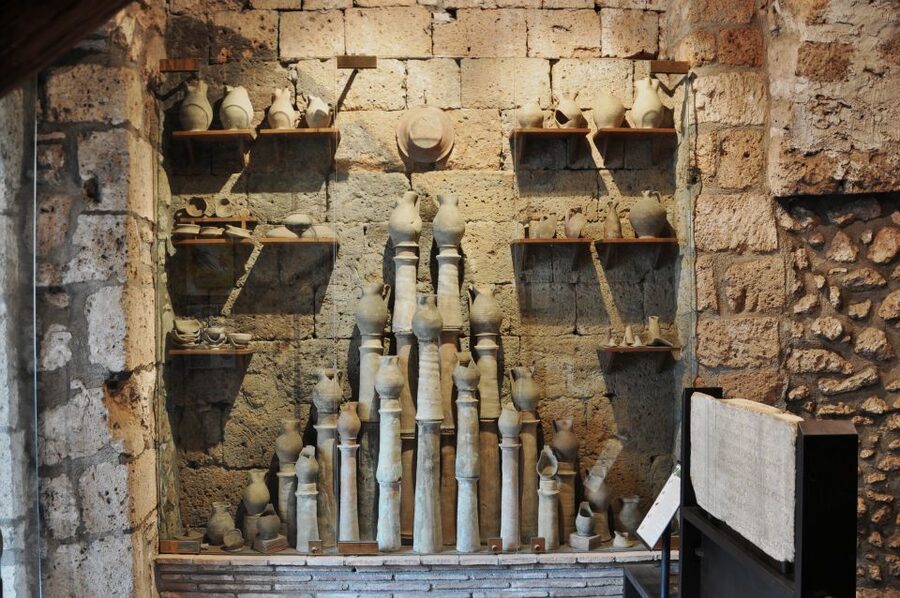
The artifacts are also important. You might see objects and remains connected with Etruscan, medieval, and Renaissance life. They are not presented as a huge collection, but their setting makes them easier to understand. They remain close to the rooms and structures where they were found or used.
A few more wine days around Italy worth comparing
- Pisa: Cathedral Guided Tour and Tower tickets & wine tasting
★ 4.8 · 78 reviews - Paris: Moulin Rouge Cabaret Show Ticket with Champagne
★ 4.7 · 16,088 reviews - Bordeaux: Cité du Vin Entry Ticket and Wine Tasting
★ 4.6 · 3,885 reviews - London Eye – Champagne Experience Ticket
★ 4.5 · 665 reviews
A self-guided visit with a relaxed pace
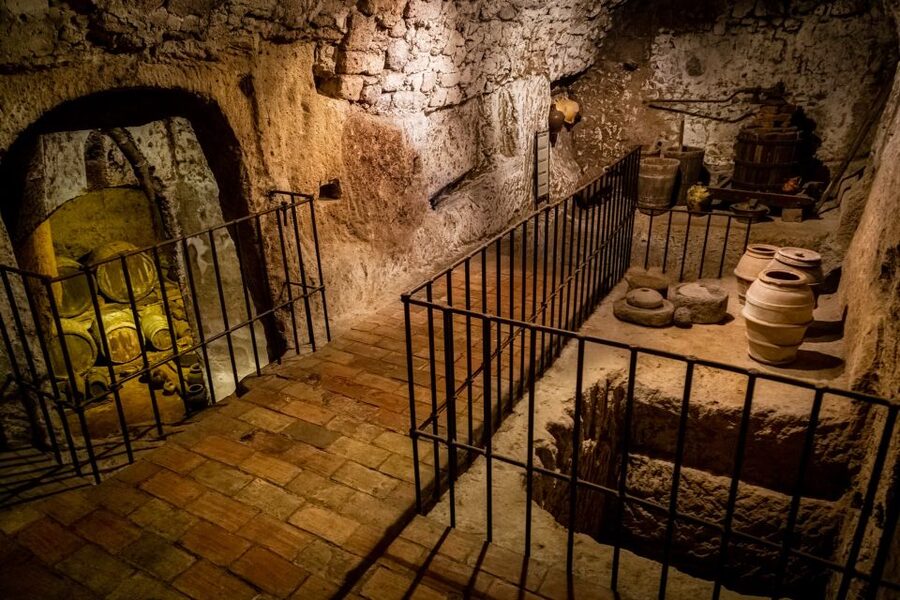
This is a self-guided attraction. You receive entry to the underground complex, then follow the route and interpretive panels without a scheduled guide or app.
That format works well for this site. The path is short, and the information panels are designed to carry the basic story. You can pause at an artifact, read a section twice, or move on without holding up a group.
If you want a quick stop, allow about 30 minutes. That is enough for a straightforward walk through the caverns. If you read all the explanations and take time to look at the construction, plan closer to an hour.
This flexible timing makes Pozzo della Cava easy to pair with a full day in Orvieto. It does not require a large block of your schedule, and the ticket is valid for one day. You can check the available starting times when booking, but the attraction itself is not presented as a long timed tour.
The lack of a guide is worth considering before you pay. If you enjoy figuring out a site through signs, you will probably appreciate the freedom. If you prefer stories, questions, and local interpretation from a person, you may find the visit limited.
Why the $5 ticket offers good value
At $5 per person, this is one of the lower-cost paid sights in Orvieto. The visit is short, but the price reflects that. You are paying for access to a real underground complex with preserved structures and artifacts, not for a long guided program.
I see the best value in using it as a supporting sight. It adds a different side of Orvieto to a day that might otherwise focus on churches, piazzas, and viewpoints. The combination of ancient water engineering, medieval basements, and Renaissance excavation gives the ticket more substance than a simple atmospheric walk.
You should not book it expecting a major museum or a huge cave system. The complex is small, and one of the main advantages is that you can see it without giving up half your day. For that reason, the short length is not a weakness for every visitor. It is useful when you want one more historical stop between larger attractions.
The ticket also includes multilingual explanations and a special itinerary for children. Those features improve the value for families and for anyone who does not speak Italian.
Location and how to fit it into your day
Pozzo della Cava is in the medieval Cava neighborhood, on the far side of Orvieto from the Duomo area. It remains close enough to reach on foot, but you should not confuse it with another underground cave tour that starts near the cathedral.
That distinction matters. Orvieto has more than one underground experience, and Pozzo della Cava is the smaller, self-guided option. If you want to see both, you can use them to compare different underground areas of the city. If you only have time for one, check the description carefully before booking.
Its position makes it a useful stop while exploring the older district. You can walk there as part of your route rather than treating it as a separate excursion. The site’s location also gives the visit a stronger connection to the neighborhood above, since the caverns run beneath the medieval streets.
There is no need to build an entire morning around it. I would place it before or after a larger Orvieto sight, then continue through the Cava district.
The cool air is a real summer benefit
Several details make this visit especially pleasant in warm weather. The underground chambers offer a break from the heat, and the temperature change is noticeable as soon as you move below the streets.
That practical benefit should not be the only reason you go, but it adds to the appeal. After walking Orvieto’s steep streets, a short, cool indoor stop can be welcome. In summer, consider visiting earlier in the day or using the caverns as a midday pause.
The site has also been described as quiet during some morning visits, with no queue at opening time or around midmorning. Conditions can change, so I would not treat that as a guarantee. Still, the short format and skip-the-ticket-line option make it less demanding than a major attraction with a fixed group departure.
Who will enjoy Pozzo della Cava most
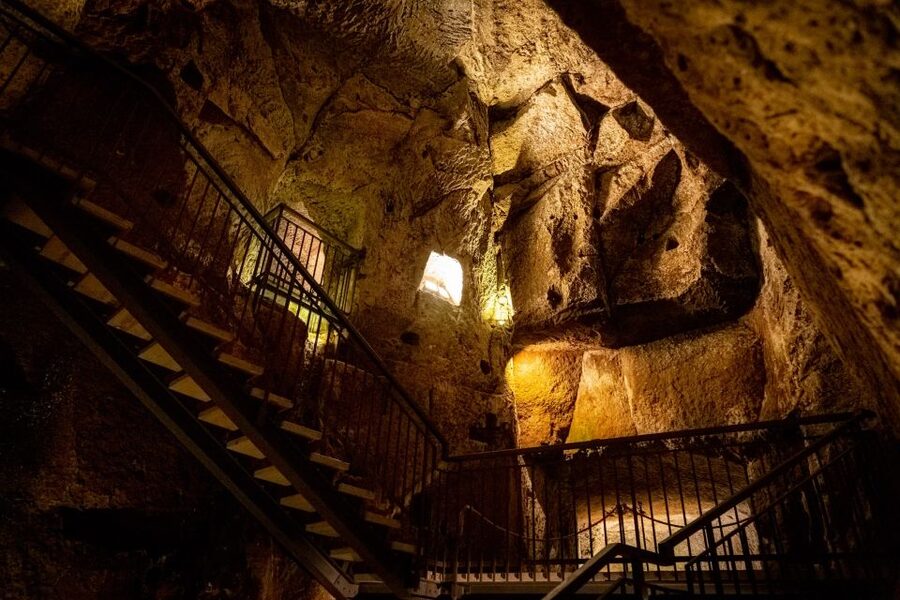
I would recommend this experience to you if you like archaeology, old construction, and places that show ordinary city life rather than only grand monuments.
It is a good choice for:
- History-minded visitors who want to see Etruscan, medieval, and Renaissance layers in one place.
- Families who benefit from the child-focused route and short visit.
- Independent sightseers who prefer reading signs and setting their own pace.
- Summer visitors looking for a cool break from Orvieto’s streets.
- Budget-conscious visitors who want a low-cost cultural stop.
- Repeat visitors to Orvieto who have already seen the Duomo and want a less familiar side of the town.
I would be more cautious if you have limited time and have not yet seen Orvieto’s main sights. One comment on the experience makes the fair point that there is much more to see in town. Start with the cathedral and other major attractions, then add Pozzo della Cava if your schedule allows.
Practical details that affect the experience
The entry includes access to the underground complex, multilingual explanations, and the child-friendly itinerary. The available languages are Italian, English, and French, while the host or greeter can also assist in those languages.
There is no guided tour included. You should plan to explore independently, using the signs to follow the story from the Etruscan cistern through the medieval rooms and Renaissance sections.
The activity has free cancellation up to 24 hours before the visit for a full refund. You can also reserve now and pay later, which may help if your Orvieto plans are still changing.
The advertised validity is one day, and you should check availability for the current starting times. The ticket also offers skip-the-ticket-line access, though the actual wait can vary by date and time.
Should you book Pozzo della Cava?
Book it if you want a short, inexpensive look at Orvieto from below street level. The Etruscan cistern, the three-story medieval basements, and the final Renaissance cave give the visit a clear historical progression, while the signs let you explore without a group.
Skip it if your time in Orvieto is extremely tight or if you want a full guided underground tour with detailed live commentary. For most people, though, the $5 price and 30 to 60 minute visit make it an easy extra. I would especially choose it on a hot day, with children, or after seeing the Duomo when you are ready for a smaller and more hands-on piece of the city’s past.
FAQ
Where is Pozzo della Cava located?
Pozzo della Cava is in Orvieto’s medieval Cava neighborhood. It is on the far side of town from the Duomo area, but still close enough to reach on foot.
What does the ticket include?
The ticket includes entry to the underground Pozzo della Cava complex, multilingual explanations, and a special itinerary for children.
Is Pozzo della Cava a guided tour?
No. The experience is self-guided, with interpretive signs rather than a live tour guide or app.
Which languages are available?
Explanations are available in Italian, English, and French. Host or greeter assistance is also listed in those three languages.
How long does the visit take?
The visit commonly takes about 30 minutes, though you may spend closer to an hour if you stop to read the panels and examine the caverns carefully.
Is the experience suitable for children?
Yes. A special itinerary for children is included, giving younger visitors a simpler way to follow the site’s history.
Can I cancel or pay later?
You can cancel up to 24 hours in advance for a full refund. Reserve now and pay later is also available, subject to the booking conditions.
Just added around Italy
- Wine Degustation Ebrezze★ 4.5 · 86 reviews
- Guided winery tour with tasting in Bolzano at the SKYWINE PAVILLON★ 5.0 · 61 reviews
- Bologna: Tagliatelle & Ragù Home Cooking Class with wine★ 4.5 · 55 reviews
- Bologna Food & Wine tour with a local Chef★ 3.0 · 30 reviews
- The downtown wine experience★ 5.0 · 35 reviews
- Parmigiano Wine and Balsamic Vinegar Experience from Bologna★ 5.0 · 30 reviews
- Eating Bologna Food and Wine Tour★ 5.0 · 96 reviews
- Private Bologna Food & Market Tour with 6 Tastings & Wine★ 5.0 · 102 reviews
Wine Tours in Italy, compared.

Tuscany Day Trip from Florence: Siena, San Gimignano, Pisa and Lunch at a Winery
Read our review →
Small-Group Wine Tasting Experience in the Tuscan Countryside
Read our review →
Pasta & Tiramisu Cooking Class with Unlimited Wine
Read our review →
Pisa, Siena and San Gimignano Day Trip with Lunch & Wine Pairing
Read our review →
Tuscany & Montepulciano Day Trip with Lunch & Wine Tasting
Read our review →Browse the lists this tour appears in