
REVIEW · SPAIN
Jerez: Bodegas Álvaro Domecq Guided Tour with Wine Tasting
Jerez’s Álvaro Domecq bodega makes sherry production feel less like a museum display and more like a working family craft. In 90 minutes, you move through old cellars, see American oak barrels, and learn why fino, oloroso, brandy, vermouth, and vinegar all follow different paths.
I like the small-bodega atmosphere and the way the tour goes beyond sherry alone. I also like the generous, unhurried tasting, where you can compare styles instead of simply sipping one house wine. The main consideration is that English and Spanish may be mixed in one group, and a large bilingual group can make parts of the explanation harder to follow.
Key points to know before you go
- A 90-minute tour in central Jerez: The bodega is reached from Calle San Luis and returns you to the same area.
- See the solera and criaderas system: The tour explains how younger wine is refreshed with older wine through rows of American oak barrels.
- Taste more than standard sherry: Typical pours include fino, oloroso, cream, Pedro Ximénez, and sometimes vermouth or brandy.
- Ask about the V.O.R.S. option: These wines have aged for more than 30 years and add a special touch for serious sherry fans.
- Guides make a difference: Cristina, Laura, Lucia, and other guides have been praised for clear explanations and warm, flexible hosting.
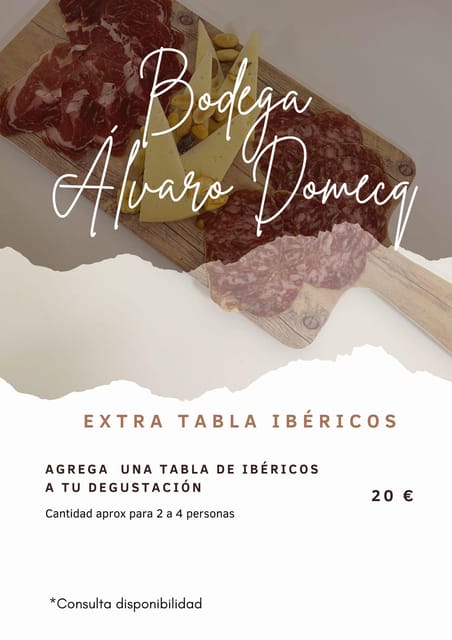
- Food is optional: An Iberian-products plate can be added, with enough food for roughly two to four people.
Why this Jerez bodega visit works so well
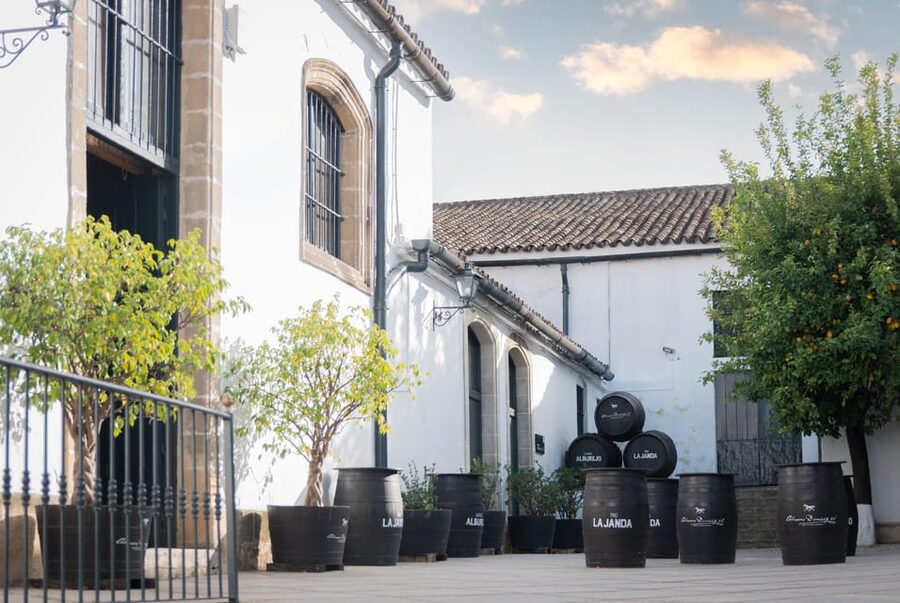
Jerez is the place to study sherry at its source. The town’s name is tied to the fortified wines that have shaped local commerce, food, and social life for centuries. At Álvaro Domecq, you get more than a tasting-room introduction. You walk through the places where the wines age, and the setting helps explain why the process takes time.
The bodega traces its roots to an 18th-century establishment and carries the name of Álvaro Domecq, known locally not only as a wine producer but also as a horseback bullfighter. That family connection gives the visit a strong sense of place, though the real star is the cellar system itself.
I especially like the balance of history and practical explanation. You are not expected to arrive knowing the difference between fino and oloroso. The guide starts with the basics, then builds toward the more unusual products. If you already enjoy sherry, you still get useful detail about age, oxidation, grape varieties, and the role of the barrel.
More tastings around Spain:
- Montserrat & Cogwheel Train, Gourmet Wine Tasting & Tapas/Lunch
★ 5.0 · 6,290 reviews - Madrid Tapas & Wine Tasting Walking Tour – Small Group Local Bars
★ 5.0 · 3,644 reviews - Toledo Tour & Vineyard Walk with Wine Tasting from Madrid
★ 5.0 · 2,546 reviews
Finding Calle San Luis and the bodega entrance
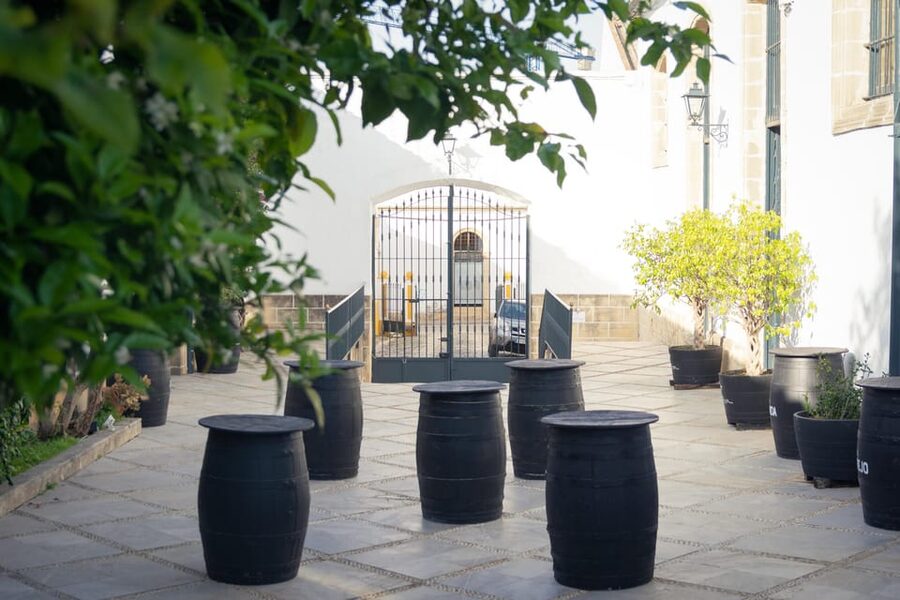
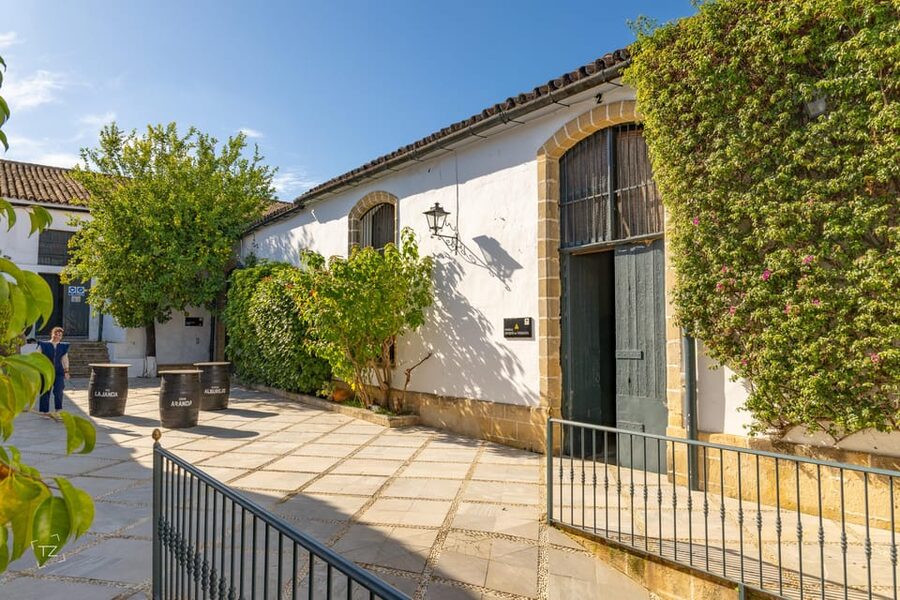
The meeting point is on a small lane off Calle Madre de Dios, beside the Tablao Flamenco Puro Arte. You are told to ring the bell. That instruction matters because the entrance is not simply a large, obvious visitor gate with a sign facing a broad square.
Plan to arrive with enough time to locate the lane and the bell. The tour begins in the town center, and one booking described the bodega as easy to reach from the railway station. Even so, narrow central streets and a tucked-away entrance can make a last-minute arrival stressful.
One guide, Laura, allowed a late-arriving group to join, but I would not build your plan around that kindness. Arriving early gives you time to check in, look over the setting, and settle before the group moves into the cellars.
The tour is offered in English and Spanish. Guides such as Cristina and Laura have been praised for speaking clear English, while another visit included a mostly Spanish explanation with extra English help. If your booking is advertised as English, it is fair to expect substantial English instruction, but the exact balance may depend on the group that day.
Inside the old cellars
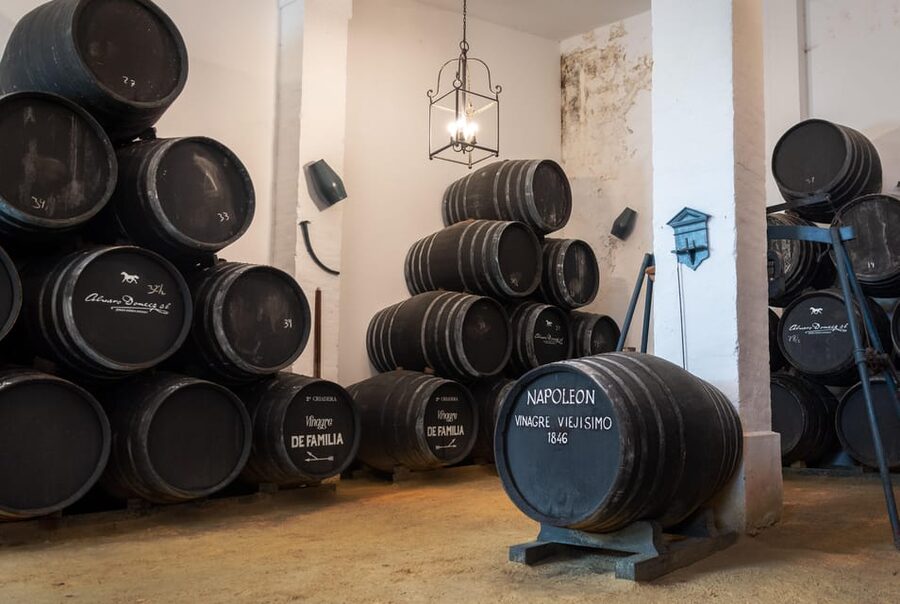
The first part of the visit introduces the bodega and its production areas. You see the character of a historic winery rather than a modern visitor center built only for tourism. The barrels, cellar rooms, and dark timber setting give you a physical sense of how Jerez wine is kept and handled.
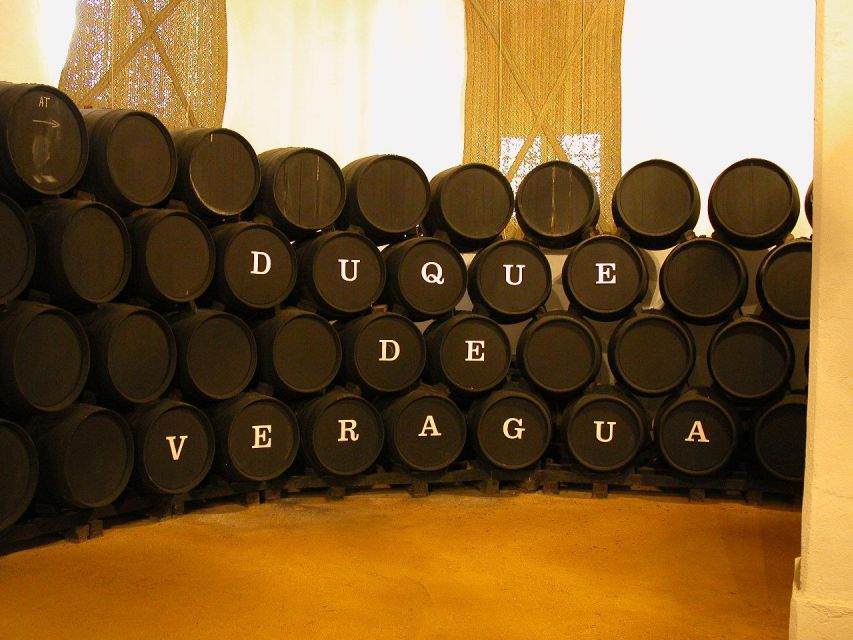
The route includes several distinct areas. You may visit the brandy production spaces, the Oloroso cellar, the Duque de Veragua Cellar, the Fino Wines Cellar, and the Vinegar Cellar. Each room serves a different purpose, so the tour does not feel like a single repeated view of barrels.
A short audiovisual presentation in the Oloroso cellar adds background to the wine and the house. English subtitles are available, but one useful tip is to sit near the front if you need to read them easily. The print may be difficult to follow from the back of the room.
The tour can also include a short flamenco performance or an arrangement connected with lunch and flamenco at the nearby tablao. Treat this as an added possibility, not as the central promise of the bodega tour. The listed experience includes the winery visit and tastings, while food and any flamenco arrangement are separate matters.
How solera and criaderas make the wine
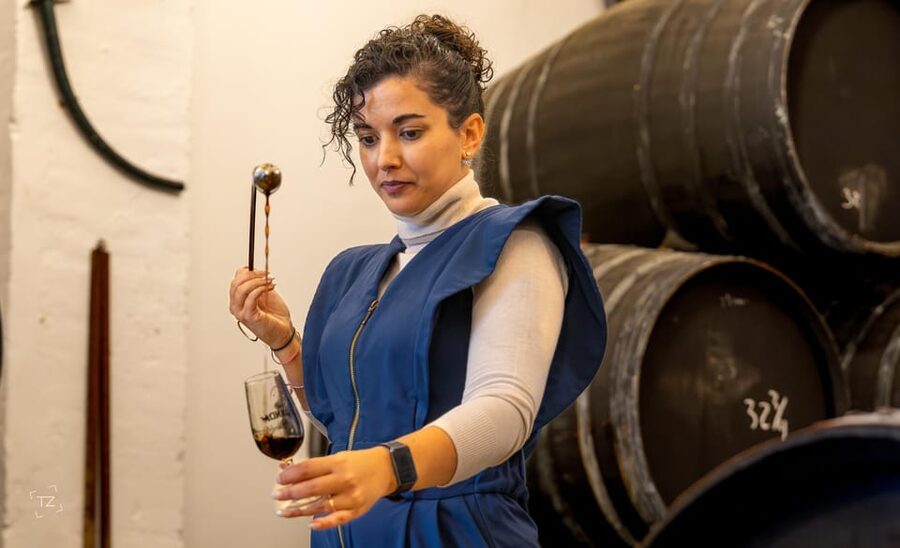
The most valuable part of the tour is the explanation of the solera and criaderas system. It is easy to hear these terms in a tasting room and leave without understanding them. Here, the barrel rows make the idea easier to grasp.
Wine is held in several levels, or criaderas, with the oldest wine in the solera. A portion is drawn from the oldest level for bottling, then replenished with wine from the next level, which is itself replenished by younger wine. This keeps the style consistent while allowing the wine to develop over many years.
The process is not simply a matter of leaving one barrel untouched for a fixed number of years. It is an ongoing cycle. That detail helps explain why a sherry labeled by style can taste remarkably consistent from year to year, even though the liquid inside represents a blend of different ages.
At Álvaro Domecq, traditional American oak barrels are part of this story. The guide explains how the wood, air, yeast, and time affect the wine. Fino develops under a layer of flor, while oloroso follows a different aging path with more exposure to oxygen. You do not need technical wine vocabulary to follow the explanation, and the best guides keep it tied to what you can see.
A few more wine days around Spain worth comparing
- Barcelona: Tapas Walking Tour with Food, Wine, and History
★ 4.8 · 4,261 reviews - Sevilla Food Tour: Tapas, Wine, History & Traditions
★ 5.0 · 3,468 reviews - Barcelona: Food Walking Tour with Tapas and Wine
★ 4.9 · 2,180 reviews - Madrid: Tapas & Wine Tasting Tour with Local Guide
★ 4.8 · 2,171 reviews
Fino, oloroso, cream, and Pedro Ximénez
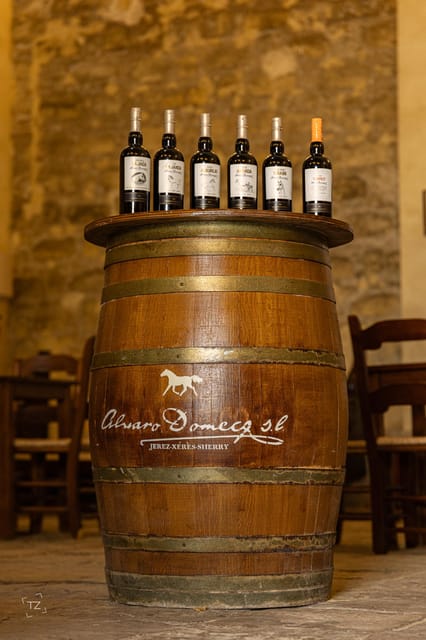
The tasting is much more useful once you understand the range of wines. Fino La Janda is the dry, lighter style most closely associated with flor aging. It is a good starting point if you want to understand why sherry is not one single flavor.
Oloroso Alburejo offers a darker, fuller style. It has more weight and a stronger nutty character, making it a natural match for hearty food. Aranda Cream then shows how sweetness changes the picture. Cream sherry is not simply a sweeter version of fino, and tasting the styles side by side helps make that clear.
Pedro Ximénez Viña 98 brings a dense, sweet finish. Pedro Ximénez grapes create a very different drink from the dry wines, and it is often the pour that makes newcomers rethink sherry. If you usually prefer dessert wine, pay close attention to this one.
The exact number of standard pours can vary with the chosen tasting. Several visits included three or four sherries, while another tasting featured four sherries and vermouth. The tasting is generally leisurely rather than rushed, with notes or explanations to help you identify the differences.
The brandy, vermouth, and vinegar surprise
A major strength of the visit is that Álvaro Domecq is not presented as a sherry-only producer. You also learn about brandy, vermouth, and vinegar, which gives the cellar a wider role in Jerez’s food and drink culture.
The brandy range includes Solera Gran Reserva Duque de Veragua and Solera Reserva Veragua. If you normally focus on wine, the brandy section gives you a useful comparison. The same broad ideas of oak, blending, and time appear in a different form, but the result is warmer and stronger.
The vermouth is worth asking about during the tasting. One particularly practical tip is to request a sample if it is not already included. It has been singled out as an excellent extra, and it gives you another way to see how a Jerez producer uses fortified wine outside the classic sherry categories.
Then there is the vinegar cellar. Álvaro Domecq produces Jerez vinegar, including Vinagre Reserva de Familia and Vinagre Gran Reserva 1730. The tour presents Jerez vinegar as the only vinegar with a Designation of Origin in the world. That claim is part of the provided tour information, and it makes this stop more than a quick side note.
For me, the vinegar section is one of the best reasons to choose this visit over a basic sherry tasting. You see how the same regional food tradition reaches into cooking, not just into the glass.
The V.O.R.S. tasting option
If you are interested in old fortified wines, ask about the V.O.R.S. selection. V.O.R.S. refers to wines aged for more than 30 years, and the featured bottles include Amontillado 1730, Palo Cortado 1730, and Oloroso 1730.
This is not necessary for a first introduction to sherry. The regular tasting already gives you a useful spread of styles, and $26 is a reasonable price for the standard 90-minute experience. But the older wines can be worth the extra cost if you already know you enjoy sherry or want to mark a special occasion.
The tasting notes are easier to appreciate after the cellar explanation. Amontillado and Palo Cortado can be confusing on a menu, especially when you are used to thinking only in terms of dry or sweet. The guide can connect the bottle to the aging method, which gives the tasting more meaning than simply sampling an expensive pour.
The V.O.R.S. option has been described as worth paying extra for, but your choice should depend on your interest and budget. If you are traveling with people who are new to sherry, spend the money on the standard tasting first. If the group already enjoys fortified wine, the older bottles may be the highlight.
What the tasting room feels like
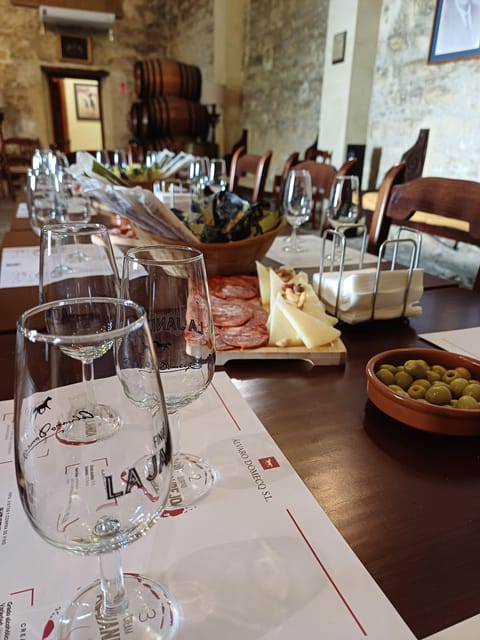
The tasting concludes in a comfortable area where you can take your time. Several visits described generous pours and enough space to savor each wine rather than rush through a row of samples.
This is where the guide’s style matters most. Cristina has been praised for her friendly, clear presentation, and Laura for her enthusiasm and ability to explain the subject in both English and Spanish. Other guides, including Lucia, have also been described as warm and well prepared. Guide assignments can change, but the experience benefits from a person who can explain the wines without turning the session into a lecture.
The setting is informal enough for beginners. You can ask basic questions without feeling out of place, and you can also get more detail if you want to understand the production process. A good approach is to taste from dry to sweet and save any brandy or dessert-style pour for later, though the guide may set the order.
An Iberian-products dish can be added separately. The stated quantity is suitable for about two to four people, so it makes more sense to share than to order one plate per person. This is a practical option if you want food with the wine, but it is not included in the $26 base price.
Is $26 good value?
At $26 per person, the tour offers solid value for a central Jerez activity. You get a guided visit through the winery, an explanation of the aging system, and wine tastings within 90 minutes. You are paying for access and instruction as well as the liquid in the glass.
The value is strongest if you are new to sherry. Buying several bottles and trying to understand the labels on your own can cost more and teach you less. Here, the guide gives you a framework that helps you shop and order with confidence later.
It is also good value for a short afternoon plan. The tour does not take half a day, so you can fit it between Jerez’s other sights, lunch, or a flamenco performance. If you add the Iberian food plate or V.O.R.S. tasting, your final price rises, but those extras are optional rather than required.
The main limitation is that the tour cannot show every stage of production at every visit. One person found that bottling and distillation were not visible. That is normal for a working bodega, but you should book this for the cellars, explanation, and tasting, not for a guaranteed look at every machine or production task.
Who should book this experience?
I would recommend it to anyone who wants a clear introduction to Jerez wine without committing to a long technical tour. Beginners get the basic styles and production story, while experienced drinkers can add older V.O.R.S. wines and ask sharper questions.
It also suits people interested in Spanish food beyond wine. The brandy and vinegar sections add real range, and the optional Iberian plate makes the visit easy to turn into a longer food break.
You may want to choose another plan if you dislike fortified wines, do not want to drink alcohol, or need a fully private English-language tour. The bilingual format can work well, but a large mixed-language group may leave less time for individual questions. If subtitles are important to you, sit close to the screen during the cellar presentation.
Cancellation is free up to 24 hours before the activity, and you can reserve without paying immediately. Starting times depend on availability, so check the schedule before building the rest of your day around it.
Should you book the Álvaro Domecq tour?
Book it if you want to understand how Jerez sherry is made, taste several styles, and visit a historic independent bodega without spending a full day. The strongest features are the solera explanation, the range beyond sherry, and the guides, especially Cristina and Laura, who bring warmth and clarity to a technical subject.
Choose the regular tasting for a first visit. Add the V.O.R.S. pours if you already enjoy aged sherry, and add the Iberian food plate if you want a shared snack afterward. Just arrive early, find the Calle Madre de Dios entrance, and be prepared for some Spanish and English mixing.
For $26, this is a practical, well-balanced way to get acquainted with Jerez’s most distinctive drink. It gives you enough detail to be useful, but keeps the afternoon relaxed.
FAQ
How long does the Bodegas Álvaro Domecq tour last?
The experience lasts 1.5 hours, including the guided winery visit and wine tasting.
Where does the tour meet?
The meeting point is on a lane off Calle Madre de Dios, beside Tablao Flamenco Puro Arte. You need to ring the bell.
What languages are available?
The tour is offered in English and Spanish. The exact balance can depend on the language mix in the group.
What wines can I taste?
The featured Álvaro Domecq range includes Fino La Janda, Oloroso Alburejo, Aranda Cream, and Pedro Ximénez Viña 98. Tastings may also include vermouth, brandy, or additional sherry styles.
What is included in the price?
The $26 price includes the winery tour in central Jerez and wine tastings.
Is food included?
Food is not included in the base activity. You can select an extra dish of Iberian products, with a quantity intended for roughly two to four people.
Can I cancel the booking?
You can cancel up to 24 hours before the activity for a full refund. The reservation option also allows you to book now and pay later.
Just added around Spain
- Bilbao Pintxo Tasting Paired With Spanish Wines★ 5.0 · 55 reviews
- Rioja wine region with visit to winery & Vitoria-Gasteiz★ 4.5 · 32 reviews
- La Rioja Boutique Wine Tour & Charming Lunch (From Bilbao)★ 5.0 · 62 reviews
- Rioja Wine Tour: 2 Wineries From Bilbao★ 5.0 · 111 reviews
- Rioja & Txakoli Wine Tasting in Bilbao with a Local Sommelier★ 5.0 · 40 reviews
- Basque Best Bites – #1 Food & Wine tour of Bilbao★ 5.0 · 268 reviews
- Complete winery experience: visit, tasting and traditional food★ 4.5 · 175 reviews
- 2 Wineries Small Group Tour with Free Hotel PickUp from Sitges★ 5.0 · 83 reviews
Wine Tours in Spain, compared.

Montserrat Half-Day Tour with Tapas and Gourmet Wines
Read our review →
Montserrat & Cogwheel Train, Gourmet Wine Tasting & Tapas/Lunch
Read our review →
Barcelona Tapas and Wine Experience Small-Group Walking Tour
Read our review →
Montserrat, Cogwheel, Black Madonna & Winery Tour
Read our review →
Montserrat with Black Madonna & Medieval Winery with Tapas/Lunch
Read our review →
Tapas Walking Tour with Food, Wine, and History
Read our review →
Madrid Tapas & Wine Tasting Walking Tour – Small Group Local Bars
Read our review →
Sevilla Food Tour: Tapas, Wine, History & Traditions
Read our review →Browse the lists this tour appears in