
REVIEW · GREECE
Chania Area: Food Tasting Tour with Winery Visit
The oldest recorded olive tree in the world is the headline here, but the food makes the day. At Vouves, you see a living tree estimated at 3,000 to 5,000 years old. Later, you taste the everyday staples that make Cretan cooking so satisfying: fresh bread, rusks, cheese, honey, olives, tomatoes, and olive oil.
I like the way this tour connects small local producers instead of sending you from one grand attraction to another. I also like the amount of food and drink included for $44, especially with hotel pickup and a full seven hours on the road. The main caution is that the winery feels more like a working production facility than a polished boutique tasting room, and pickup arrangements may need careful checking.
Key points at a glance
- The Vouves olive tree: See a living natural monument with a bole measuring about 12.5 meters around.
- Real Cretan food: Taste bread, rusks, cheese, honey, olives, tomatoes, and olive oil at village producers.
- Linda’s guiding: Expect lively English commentary about Cretan food, farming, wine, and local traditions.
- Family-run stops: Visit a traditional bakery, an olive grove, a cheese producer, and Pnevmatikakis Winery.
- Strong value: The $44 price includes transport, guiding, tastings, insurance, and hotel pickup.
- Plan for practical details: Bring sun protection and check your pickup point the day before.
Why this seven-hour food tour works
Crete is easy to reduce to beaches and ancient ruins. This excursion gives you a better sense of the island’s daily table. Olive oil, bread, honey, cheese, and wine are not decorative extras here. They are the basic language of Cretan hospitality.
You leave your hotel between 8:00 and 9:20, depending on where you are staying. The exact time and pickup point arrive by email the day before. You may be collected at your hotel, or at a nearby meeting point if the coach cannot reach the entrance.
The day usually ends between 16:20 and 17:20. That is a long outing, but the stops are varied enough to keep it moving. You are not sitting through seven hours of one extended tasting. Instead, you shift between an ancient tree, village food production, an olive grove, and wine.
The tour is conducted in English. Linda is the main host named in the experience details, and her style is warm, energetic, and full of small facts. Driver Tasos has also been singled out for safe, timely driving and a friendly manner. The bus is air-conditioned, although one account describes a bumpy ride and inconsistent cooling, so do not expect luxury-car comfort.
More wineries worth an afternoon in Greece:
- Santorini: Small-Group Sunset Wine Tour with Santo Winery
★ 4.9 · 801 reviews - Santorini: Guided Tour to 3 Wineries with Wine Tastings
★ 4.8 · 693 reviews - Santorini: Wine Tasting Tour to 3 Wineries with Transfer
★ 4.7 · 455 reviews
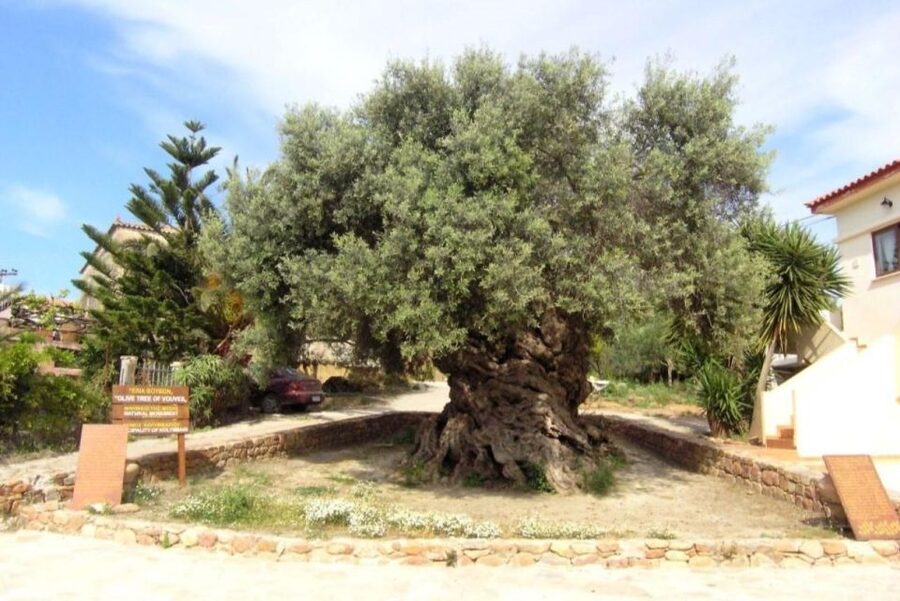
Vouves and its 3,000-year-old olive tree
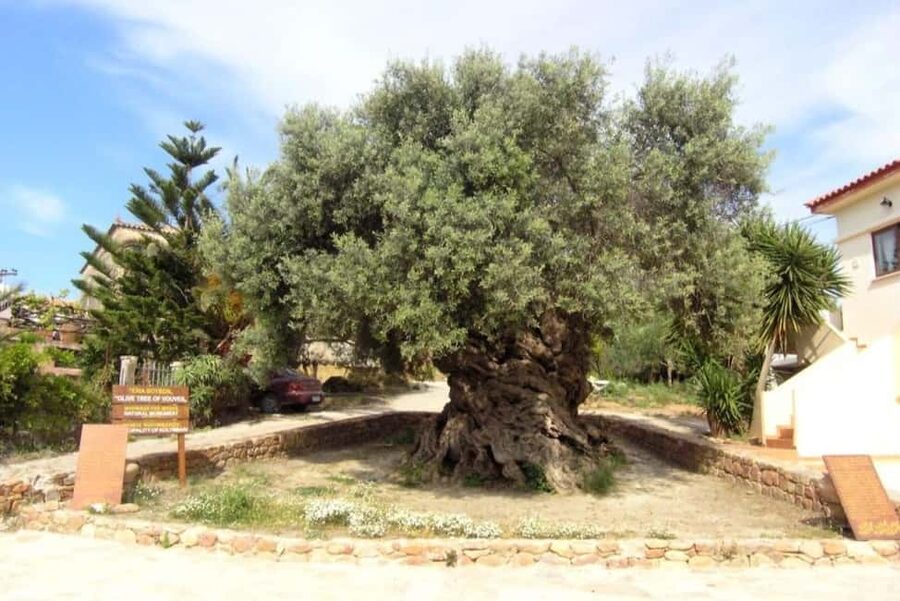
The first major stop is the village of Ano Vouves, reached around 9:45. Here you see the ancient olive tree that gives the morning a real sense of place.
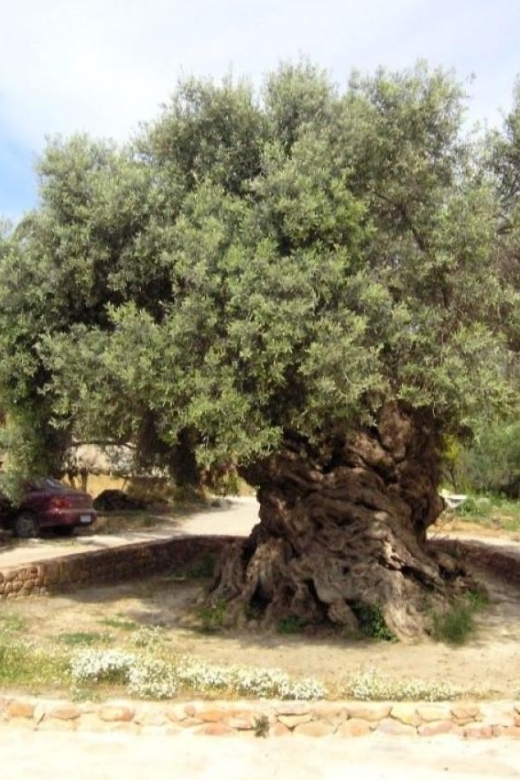
Its age cannot be fixed with complete certainty. Estimates place it between 3,000 and 5,000 years old, and it is still alive and producing olives. The tree began as a wild olive and was later domesticated through the Tsounati variety. Its trunk has been hollowed and shaped by centuries of growth, giving it the look of a natural sculpture.
The measurements are hard to picture until you are standing beside it. The bole has a circumference of about 12.5 meters and a diameter of roughly 4.6 meters. This is not a neat ornamental tree in a manicured garden. It is a massive, weathered survivor.
You have about 25 minutes before departing at 10:15. That is enough time to see the tree, take photographs, and hear the explanation, but it is not a long museum visit. If you want quiet time for photographs, move promptly after the guide finishes speaking.
One practical point: this stop is outdoors. In the Cretan sun, a hat, sunglasses, sunscreen, and water are sensible. The ancient tree is the most visually memorable stop, but the food stops are where the tour becomes more personal.
Perivolakia Village and the Cretan table
Around 10:45, you reach Perivolakia Village. This is the heart of the food portion, with a bakery, olive grove, honey and cheese explanations, and a generous tasting.
The bakery uses a traditional wood oven. You get a closer look at how Cretan bread, rusks, and other savory baked goods are made. Rusks are especially useful to understand because they are more than a snack. Their firm texture makes them practical food for a warm island climate, and they work beautifully with tomato, olive oil, cheese, and honey.
Do not expect a theatrical cooking class. The value is in seeing a working local bakery and learning how familiar foods are produced. The setting also helps you understand why Cretan meals often begin with very simple ingredients handled well.
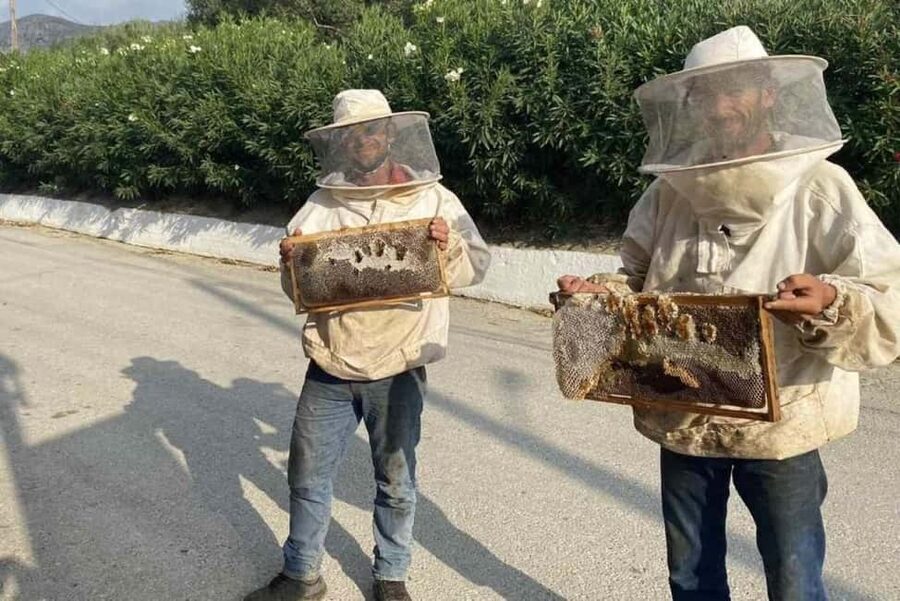
You then visit an olive grove. This is a chance to see the trees that shape both the countryside and the local economy. The discussion covers olive cultivation and the way Cretan honey is made, linking the grove to the bees and flowers that support honey production.
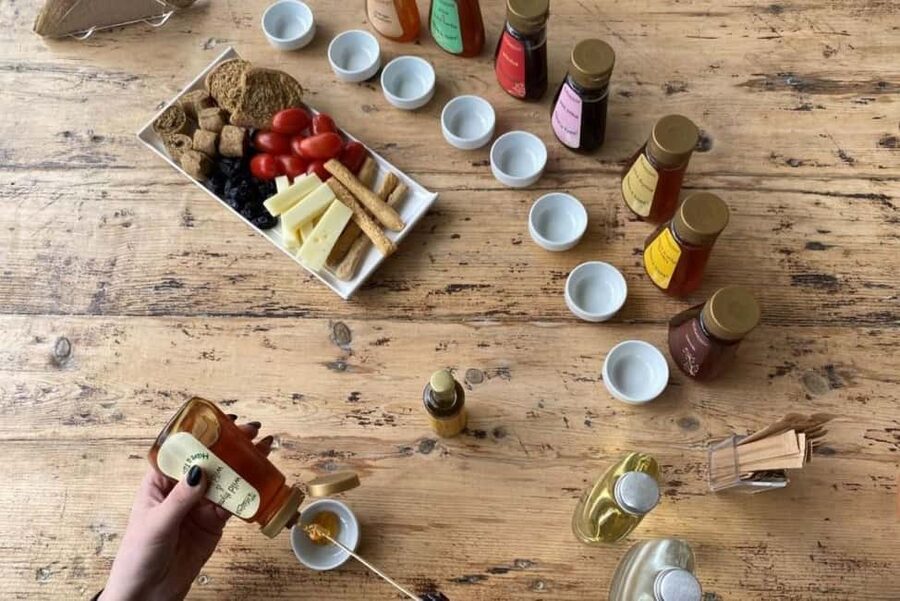
The tasting is the strongest part of this stop. You sample olive oil, bread, olives, cheese, tomatoes, and honey, with other traditional Cretan items included on the platter. This is the sort of food that can look modest but tastes complete because the ingredients are fresh and balanced.
Cheese, honey, and olive oil without the fuss
The cheese portion adds useful context to what is on your plate. You visit a traditional, multi-awarded cheese factory and learn how local cheese is produced.
If cheese is being made during your visit, you may enter and see the process. If not, the guide explains the method before the tasting. That distinction matters. This is not a guaranteed behind-the-scenes production demonstration every day, so you should book it for the food and explanation rather than for a live factory show.
The honey presentation also has a strong human element. The producer explains the process with clear enthusiasm, and the tasting lets you compare honey with bread and other local foods. The olive oil, cheese, and honey are not treated as isolated samples. You see how they work together in an ordinary Cretan meal.
Bring some room in your luggage if you like to take food home. The village stops sell products, and people often buy pastries, honey, olive oil, cheese, and other treats. One useful warning: cash may be needed at at least one stop because card payment is not guaranteed everywhere.
You should also pace yourself. The platter is substantial, and there is still wine ahead. This is not a tour where you receive one tiny sample and then wait for lunch.
A few more wine days around Greece worth comparing
- Santorini: Top Sights Day Trip, Wine Tasting, & Oia Sunset
★ 4.6 · 2,492 reviews - Tour and Wine Tasting in Mykonian Land
★ 5.0 · 1,357 reviews - Santorini Wine Stories: Sunset Tour with Tasting & Dinner
★ 5.0 · 1,285 reviews - Athens: Food Market Visit and Cooking Class with Wine
★ 4.9 · 1,087 reviews
Pnevmatikakis Winery and the wine tasting
At 12:45, the coach reaches Pnevmatikakis Winery in Kissamos. This family-run winery has a long connection with Cretan wine production and offers an introduction to the local winemaking process.
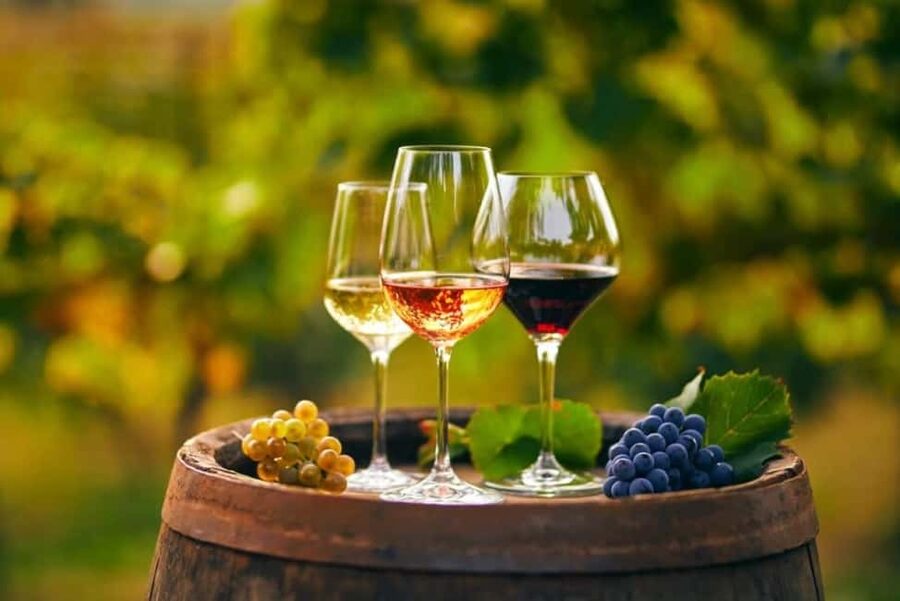
You learn how the wine is made and taste several locally produced varieties. The samples come with local delicacies, so the tasting feels like part of the food day rather than a separate technical lecture.
The winery is open to families. Children receive a special platter and drinks prepared by the family, which makes this a more practical choice for parents than an adult-only wine excursion.
The setting and format deserve a realistic explanation. This is a working winery with production on a significant scale, not necessarily a small, design-focused estate where every barrel and label receives a long presentation. The tasting may feel fairly informal and, depending on your expectations, more like a factory visit than a refined wine appointment.
That can be a positive if you want to see how wine is made for a wider market. It may disappoint if you have already visited small specialist wineries and want a carefully staged comparison of vintages. The quality of the wine is a personal matter, but this stop is best understood as a broad introduction to Cretan varieties rather than the sole reason to book the day.
The visit ends around 13:45. You then have the return journey, reaching hotels between 16:20 and 17:20. A beach stop has appeared on some versions of the day, including time at Nopigia Beach, but it is not part of the stated core schedule. Do not book this tour expecting guaranteed swimming time.
The guide, bus, and pace
A good guide matters on a food tour because the samples alone do not explain much. Linda is presented as an enthusiastic English-speaking host who keeps the day moving and adds details about Cretan culture, food, and history. Her humor and energy suit a full coach day, especially once the wine tasting loosens everyone up.
The driver and guide work as a team. Tasos has received specific praise for safe, timely transport, which matters on roads where you may prefer to look out of the window rather than concentrate on driving.
The air-conditioned bus takes away the stress of navigating rural roads and arranging a designated driver after wine tasting. Still, this is not a private car experience. You share the vehicle, and the ride can be bumpy. On very hot days, cooling may not feel consistent throughout the journey.
The schedule is orderly but fairly packed. The ancient tree stop is short. The Perivolakia visit carries the most food content. The winery follows soon after, so you should arrive hungry but not empty. If you prefer slow meals and long conversations at each producer, this may feel brisk.
What the $44 price really includes
At $44 per person, this is unusually good value for a seven-hour excursion if you want several tastings in one day. The price includes hotel pickup and drop-off, an English-speaking guide, air-conditioned transport, full liability insurance, the superior tasting package, and the winery visit.
The value comes from the combination. Booking separate transport to Ano Vouves, a village bakery, an olive grove, a cheese producer, and a winery would take time and cost more. You also avoid driving after wine tasting.
There are a few possible extra costs. Products bought at the bakery, cheese factory, olive grove, or winery are not part of the tour price. Bring a card if you prefer, but carry cash as well because one stop may not accept cards.
The price also makes this a good first-day orientation to western Crete. You get outside Chania, see how olive oil and other foods connect to the island, and learn which products you may want to seek out later. It is less useful for someone who already has a full private winery program arranged.
Who should book it
I would recommend this tour to first-time visitors who want an easy introduction to Cretan food without planning several rural stops themselves. It suits couples, families, and small groups who enjoy tasting rather than formal cooking lessons.
It is also a good fit if you want transport included. The route covers enough ground that a rental car would make the day more tiring, especially with wine involved.
Families should note the child-friendly winery arrangement. Children receive their own platter and drinks, so the tasting is not designed only for adults.
You may want another kind of experience if you want an intimate private tour, a specialist wine education, or a long visit at one producer. You should also think twice if you dislike coach travel, outdoor heat, or buying products at the stops.
The rating is 4.4 out of 5 from 99 ratings, and that matches the main strengths: friendly guiding, good organization, generous food, and easy transport. The weaker points are practical rather than dramatic: pickup changes, a rough ride, heat, a short first stop, and a winery that may feel more industrial than intimate.
Final call on the Chania food tour
Book this if you want a well-priced, full day built around the foods that Cretans actually eat. The ancient olive tree gives the excursion a memorable start, but the bread, honey, cheese, olive oil, and local wine provide the lasting value.
I would choose it for a first visit to Crete, especially if you are staying near Chania and want to see the countryside without renting a car. Check the pickup email carefully, confirm the meeting point, carry cash, and bring sun protection. If you set your expectations at local food production and a broad winery introduction, rather than luxury wine tourism, this is a sensible and tasty day out.
FAQ
How long does the Chania food tasting tour last?
The tour lasts about seven hours. Pickup is scheduled between 8:00 and 9:20, and hotel returns are expected between 16:20 and 17:20.
What is included in the $44 price?
The price includes hotel pickup and drop-off, an English-speaking guide, an air-conditioned bus, the superior tasting package, and full liability insurance.
Is hotel pickup included?
Yes. You are picked up at your hotel or at the closest practical point. The exact pickup time and location are sent by email one day before the tour.
What language is the tour conducted in?
The live guiding is in English.
Will I see the oldest olive tree in the world?
You will visit the oldest recorded olive tree in the world at Ano Vouves. Its age is estimated between 3,000 and 5,000 years, although the exact age cannot be confirmed.
What food do I taste?
The tastings include traditional bread, rusks, tomatoes, olives, cheese, honey, olive oil, and other Cretan delicacies. Local foods are also served with the wine tasting.
Is the cheese-making process always shown?
Not necessarily. If cheese is being produced during your visit, you may enter the facility. If not, the guide explains the production process before the tasting.
Can children join the winery visit?
Yes. The winery is open to families, and children receive a special platter and drinks prepared by the winery family.
Can I cancel or pay later?
You can cancel up to 24 hours before the tour for a full refund. Reserve now and pay later is available, so you do not need to pay at the time of booking.
More Food in Greece
- Mykonos: Winery Vineyard Experience with Food & Wine Tasting
★ 4.9 · 446 reviews - PREMIUM Semi-Private Athens Afternoon Food Tour & Wine Tasting
★ 5.0 · 363 reviews - Mykonos: Cooking Class with Food and Wine
★ 4.9 · 282 reviews - Santorini: Tour of Wineries with Wine Tasting & Food
★ 5.0 · 279 reviews
Just added around Greece
- Athens: Greek Wines Tasting with Sommelier and Acropolis Views★ 5.0 · 88 reviews
- Athens: Wine Workshop Create your Own Wine under the Acropolis★ 5.0 · 77 reviews
- Small-Group Wine Tour in Athens with Tasting★ 5.0 · 33 reviews
- Wine Trails Private Tour/ Nemea visit 3 wineries from Athens or Nafplion (10 h)★ 5.0 · 44 reviews
- Private Day Trip to Santorini from Athens: Sightseeing Highlights★ 5.0 · 39 reviews
- Acropolis Private Wine Tasting @ Finewine store★ 5.0 · 46 reviews
- Greek Gastronomy & Wine Pairing Cruise with a Sommelier in Athens★ 5.0 · 120 reviews
- Sail the Athenian Coastline on a Catamaran with Meal & Wine★ 5.0 · 165 reviews
Wine Tours in Greece, compared.

Top Sights Day Trip, Wine Tasting, & Oia Sunset
Read our review →
Santorini Wine Adventure with 12 Wine Tastings, Tapas and Sunset
Read our review →
Santorini Wine Stories: Sunset Tour with Tasting & Dinner
Read our review →
Classic Cooking Class with Market Visit and Wine
Read our review →
Food Market Visit and Cooking Class with Wine
Read our review →
Swimming Cruise with Lunch, Wine & Live DJ on Board
Read our review →
Greek Cuisine Cooking Class in Santorini with Recipes and Wine
Read our review →Browse the lists this tour appears in