REVIEW · ITALY
Apulia: Guided Wine Tasting with Local Appetizers
The best part of this Apulian wine tasting is its setting: you sip local wine among the rows of vines at Vigna il Castagno, a family-run farm in the Itria Valley. I like the clear focus on indigenous grapes, and I like that each of the four glasses comes with a homemade appetizer rather than a generic plate of snacks.
The main thing to consider is transport. The two-hour visit takes place at the farm, and a pickup service is not part of the standard inclusions, although Vincenzo arranged pickup and drop-off for one visitor. Wine choices may also change if a bottle is unavailable.
Key points to know before booking
- Four local grapes: Taste Verdeca, Moscato, and Nero di Troia in white, rosé, and red wines.
- A real vineyard setting: The tasting includes a walk among the vines, not just a seated sampling indoors.
- Food with every pour: Four typical Apulian appetizers are paired with the four wines.
- A family-run atmosphere: The visit feels tied to farming and local production rather than a formal wine school.
- Useful for beginners and enthusiasts: Guides explain grapes, harvesting, organic farming, and winemaking in English or Italian.
- Good value at $37: You receive four wines, four food pairings, a vineyard walk, and two hours with a guide.
Arriving at Vigna il Castagno in the Itria Valley
This is a farm visit first and a wine lesson second, which is exactly why the setting matters. Vigna il Castagno is part of the Puglia dei Trulli experience in Apulia’s Itria Valley, an area known for its vineyards, farm products, and distinctive rural traditions.
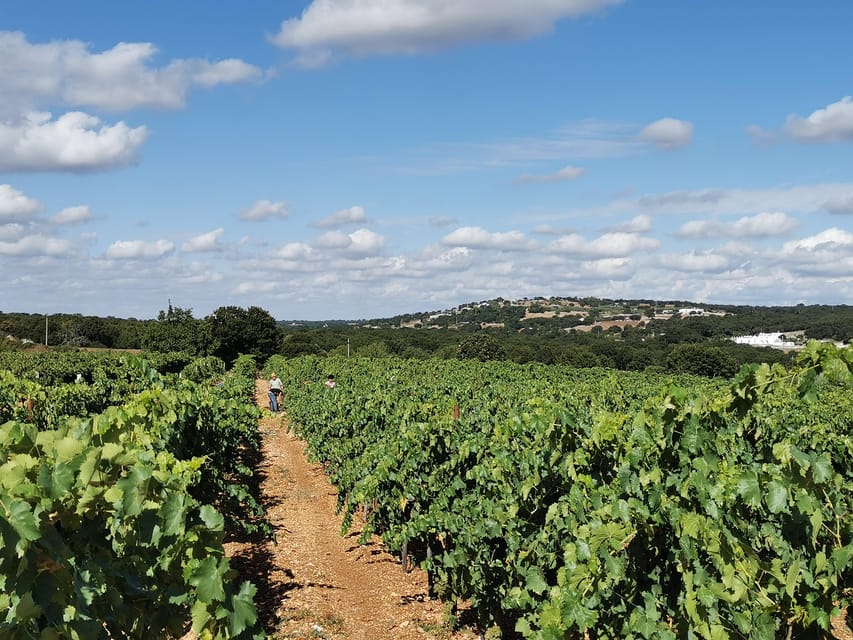
You begin with a walk through the vineyard. That simple start gives the tasting a useful sense of place. Instead of hearing about grapes as an abstract subject, you are among the vines where the work begins. The walk also gives the guide a natural chance to explain harvesting and the way the farm produces its wines.
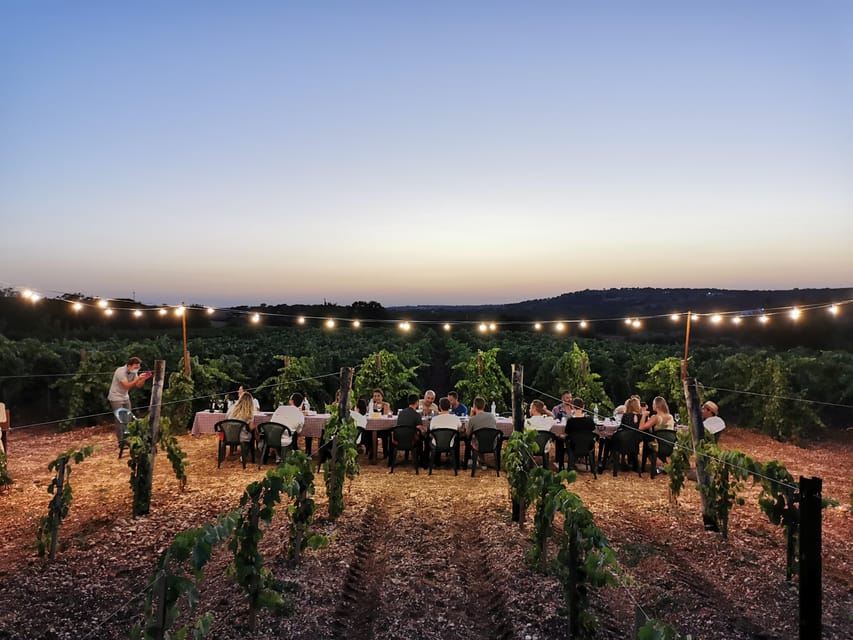
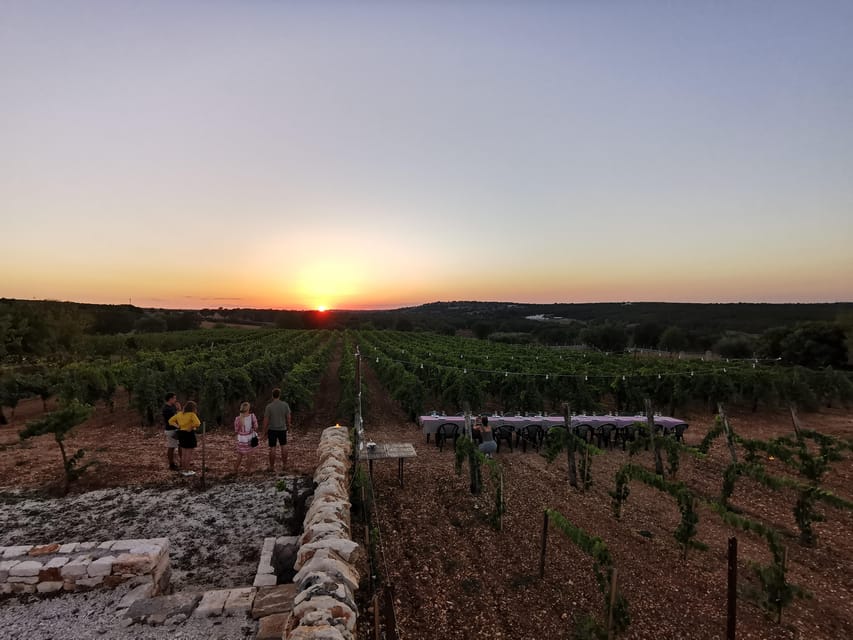
I would arrive ready to spend time outdoors. The experience takes place on a farm and in the vineyard, so comfortable shoes are a sensible choice. The exact starting time depends on availability, and some sessions may take place near sunset. That timing can add a lovely evening feel, but you should not book it expecting a guaranteed sunset unless the time is confirmed.
The farm’s character is part of the appeal. The atmosphere is friendly and personal, with the owners also selling their olive oil, wine, and spices. That gives you a chance to see how wine fits into a wider pattern of Apulian agriculture rather than treating it as a standalone product.
More tastings around Italy:
- Florence: Chianti Wineries Tour with Wine Tasting
★ 4.5 · 10,071 reviews - Small-Group Wine Tasting Experience in the Tuscan Countryside
★ 5.0 · 7,392 reviews - Rome: Tuscany & Montepulciano Day Trip with Lunch & Wine Tasting
★ 4.5 · 5,232 reviews
Four wines made from Apulian grape varieties
The tasting includes four glasses from Vigna il Castagno. The point is not simply to sample four bottles. You get to compare how different grapes behave across several styles, including two expressions of Nero di Troia.
Here is what you can expect:
- Pietra Viva IGP Valle d’Itria: A still white made from 100 percent Verdeca, at 12 percent alcohol.
- 1929 Moscato IGP Puglia: A dry, naturally colored white made from 100 percent Moscato di Trani, at 12.5 percent alcohol.
- 1° Luglio IGP Puglia: A still rosé made from 100 percent Nero di Troia, at 12.5 percent alcohol.
- Terra Viva IGP Puglia: A still red made from 100 percent Nero di Troia, at 13 percent alcohol.
Verdeca gives you a chance to try a grape closely tied to the Valle d’Itria area. If you usually order familiar Italian whites, this is one of the more useful glasses in the lineup because it introduces a local variety rather than repeating a widely known international grape.
The Moscato is also a welcome surprise for anyone who assumes Moscato always means a sweet wine. This version is described as dry, with a natural color, and is made from Moscato di Trani. The guide can explain how the grape changes from the sweeter style many people already know.
The rosé and red both use Nero di Troia, making them especially useful side by side. You can consider how one grape changes when made into a lighter rosé and a fuller red. That comparison gives the tasting a little more structure than four unrelated pours.
The listed wines may change depending on availability. If you have your heart set on one specific bottle, keep that in mind. The reliable feature is the focus on Apulian grapes, not a rigid promise that every glass will always be identical.
Homemade appetizers that make the tasting more useful
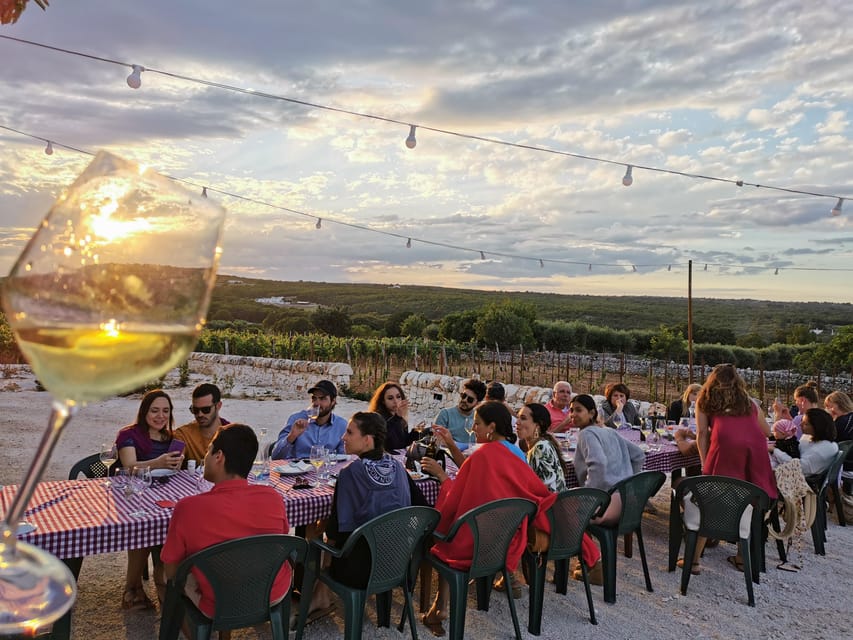
Four typical Apulian appetizers are included, with one small plate paired to each wine. The exact foods are not specified, so you should not expect a fixed menu. What you can count on is a local food component designed to match the character of each glass.
This matters because food changes how you read wine. A white may seem sharper or rounder beside a savory bite. A rosé can feel more substantial with something salty. A red often makes more sense once you taste it alongside a heartier appetizer. The pairings turn the event into a practical lesson rather than a series of isolated sips.
The portions are described as generous, but this is still a tasting, not a full dinner. I would plan a meal later if you arrive hungry. The appetizers are enough to make the wine sampling comfortable and satisfying, but they should not replace dinner plans.
I also like the balance here. Apulia is known for food that feels tied to the farm, and the homemade appetizers help connect the wines to that cooking tradition. You are not just learning grape names. You are seeing how the local table and the local vineyard work together.
What the guide explains during the two hours
The guided portion is aimed at a wide range of experience levels. You do not need to know Italian wine terminology before arriving, and you will not be out of place if you already know your way around a tasting room.
The guide explains how each grape produces different wines and how the grapes are harvested. The farm’s move toward organic farming is also part of the conversation, giving you a better idea of the work behind the bottles.
That farming discussion is valuable because wine tasting can otherwise focus too heavily on flavors and scores. Here, you can connect the glass to the soil, seasonal work, and the choices made by a small producer. If your guide is Vincenzo, you may also get the warm, personal service that helped arrange transport for one visitor who needed it. English and Italian are offered.
The tone appears to be relaxed rather than academic. I would expect clear explanations, questions, and a friendly pace instead of a technical lecture. That makes the visit suitable for couples, families with adult children, and mixed groups where one person knows a lot about wine and another is simply curious.
A few more wine days around Italy worth comparing
- SMALL-GROUP Wine Safaris: Tuscan Wine Tasting Tours from Florence
★ 5.0 · 5,088 reviews - Winner 2025 Florence Sunset Food & Wine Tour by Eating Europe
★ 5.0 · 5,015 reviews - San Gimignano, Siena, Monteriggioni, Chianti Day Trip with Lunch & Wine Tasting
★ 4.5 · 4,432 reviews - From Florence: Small Group Wine Tasting Tour to Tuscany
★ 4.9 · 3,902 reviews
A family business rather than a polished wine show
The strongest appeal of this experience is its personal scale. You are visiting a family business with a friendly atmosphere, not a large commercial attraction built around a production line.
That can mean a more genuine connection to the farm. You may hear about organic methods, harvesting, and the wider products made or sold there. The setting also gives the visit a sense of everyday rural Apulia, especially when the light softens in the evening.
There is a tradeoff. A small farm experience may not provide the elaborate facilities or highly staged presentation you would find at a major winery. If you want a full cellar tour, detailed production equipment, or a long technical seminar, this may feel modest.
For most people, that modesty is a strength. The visit is built around the vineyard, the guide, the wines, and the food. I would choose it for a more relaxed introduction to the region rather than for a formal wine qualification.
How the $37 price compares with what you receive
At $37 per person, the value is strong. The two-hour visit includes the vineyard walk, a live guide, four glasses of wine, and four typical Apulian appetizers. That works out to about $18.50 per hour before assigning any separate value to the food and instruction.
The price also covers variety. You are not paying for one glass and a quick explanation. The lineup includes a white made with Verdeca, a dry Moscato, a Nero di Troia rosé, and a Nero di Troia red. That range makes the tasting useful even if you already know some Italian wines.
The value is especially good if you are staying nearby and can reach the farm easily. Since standard transportation is not listed as included, add your own transport costs when comparing this with a city-based tasting. If you need help arranging pickup, ask before booking rather than assuming it comes with the ticket.
You may also want to budget for purchases. The farm sells wine, olive oil, and spices, so the tasting can easily turn into a chance to take home products from the same agricultural setting. Buying is optional, of course, but it is a practical benefit if you want a souvenir you will actually use.
Who will enjoy this Apulia wine tasting most
I would recommend this experience to anyone who wants a gentle introduction to Apulian wine without spending a full day at a winery. It is also a good fit for people who care more about local character and food than about formal tasting technique.
You will likely get the most from it if you:
- Want to try lesser-known Italian grape varieties.
- Enjoy farm settings and outdoor walks.
- Prefer small, friendly visits to large organized attractions.
- Like having food served with wine.
- Are curious about organic farming and harvesting.
- Need an activity that works for both casual drinkers and serious wine fans.
It is less suitable if you need a full meal, want guaranteed transport, or expect a fixed wine list with no substitutions. It may also be a poor match for anyone who dislikes outdoor settings or prefers a formal indoor tasting room.
The experience lasts two hours, which is a useful length during a busy Apulia itinerary. It is long enough to slow down and learn something, but short enough to fit around sightseeing in the Itria Valley.
Booking details worth checking
You can cancel for a full refund up to 24 hours in advance, and the reserve-now, pay-later option keeps your plans flexible. Starting times vary, so check the available slot before arranging dinner or transport.
English and Italian are the available tour languages. Group size is not specified, so I would ask if the size matters to you. A smaller group may allow more questions, while a larger one can feel more social.
The experience provider is Puglia dei Trulli, and the farm is Vigna il Castagno. Use those names when planning your route, especially if you are comparing this tasting with other activities in Apulia.
Should you book Vigna il Castagno?
I would book this if you want local wine, homemade food, and a real vineyard setting at a sensible price. The strongest reasons are the indigenous grape lineup, the two different Nero di Troia wines, and the chance to hear about harvesting and organic farming from a guide in a family-run setting.
I would pause only if transport is difficult or if you need a substantial dinner rather than tasting portions. Confirm the meeting details, available wines, and pickup options before paying.
For most visitors spending time in the Itria Valley, this is a well-priced way to spend an evening. You get a walk among the vines, four wines, four food pairings, and a clearer sense of how Apulia’s farms turn local grapes into something meant for the table.
FAQ
How long does the Apulia wine tasting last?
The experience lasts two hours.
How much does the wine tasting cost?
The listed price is $37 per person.
How many wines are included?
Four glasses of Vigna il Castagno wine are included.
Which grape varieties will I taste?
The tasting focuses on Verdeca, Moscato di Trani, and Nero di Troia. Nero di Troia is served as both a rosé and a red.
What wines are listed for the tasting?
The listed wines are Pietra Viva Verdeca white, 1929 Moscato dry white, 1° Luglio Nero di Troia rosé, and Terra Viva Nero di Troia red.
Is food included?
Yes. Four typical Apulian appetizers are included, with one appetizer paired with each wine.
Is the tour offered in English?
Yes. The live guide can conduct the experience in English or Italian.
Can I cancel the booking?
Yes. You can cancel up to 24 hours in advance for a full refund.
Just added around Italy
- Wine Degustation Ebrezze★ 4.5 · 86 reviews
- Guided winery tour with tasting in Bolzano at the SKYWINE PAVILLON★ 5.0 · 61 reviews
- Bologna: Tagliatelle & Ragù Home Cooking Class with wine★ 4.5 · 55 reviews
- Bologna Food & Wine tour with a local Chef★ 3.0 · 30 reviews
- The downtown wine experience★ 5.0 · 35 reviews
- Parmigiano Wine and Balsamic Vinegar Experience from Bologna★ 5.0 · 30 reviews
- Eating Bologna Food and Wine Tour★ 5.0 · 96 reviews
- Private Bologna Food & Market Tour with 6 Tastings & Wine★ 5.0 · 102 reviews
Wine Tours in Italy, compared.

Tuscany Day Trip from Florence: Siena, San Gimignano, Pisa and Lunch at a Winery
Read our review →
Small-Group Wine Tasting Experience in the Tuscan Countryside
Read our review →
Pasta & Tiramisu Cooking Class with Unlimited Wine
Read our review →
Pisa, Siena and San Gimignano Day Trip with Lunch & Wine Pairing
Read our review →