REVIEW · ITALY
Alba: Wine Tasting and Tour with a Local Producer
The best part of this Alba experience is its direct connection to the producer. You walk among the vines on Altavilla hill, see the cellar where the wine ages, and taste six local wines with the people who make them. I especially like the hilltop views over the Langhe and the chance to learn about eco-sustainable vineyard work, not just wine labels.
The $29 price is fair for two hours, six wines, food, and a guided visit. The main drawback is getting there: the estate is close to Alba, but not in the town center, and a taxi can be costly, especially in bad weather. Comfortable shoes are essential.
Key points to know before booking
- Six wines, including Barbaresco: The tasting includes a Barbaresco every time, plus five other local wines.
- A real vineyard walk: You’ll walk between vine rows and continue uphill to a viewpoint, so this is not only a cellar tasting.
- Producer-led hosting: Jessica and Roberto welcome you at Cascina Piccaluga and explain the work behind the bottle.
- Food is part of the tasting: Local cured meats and cheeses are served, and a vegetarian dish was prepared for one booking when requested.
- A strong value at $29: The fee covers the vineyard and cellar tour, six wines, food, and two hours with the producer.
- Transport needs planning: The estate is about four minutes from central Alba by the stated description, but it is not a walk-in town-center stop.
Why this Alba wine visit feels personal
Piedmont wine can seem complicated at first. Alba sits at the heart of the Langhe, a part of the region known for serious red wines, and names such as Barbaresco carry plenty of weight. This visit keeps the subject grounded in ordinary sights: vine rows, cellar barrels, harvest work, and food on the table.
You meet Jessica and Roberto at Abellonio Roberto Cascina Piccaluga, their estate on Altavilla hill. The visit is built around conversation and explanation rather than a quick pour followed by a sales pitch. You learn how the wine begins in the soil, changes during fermentation, and develops during aging in wood.
I like that the experience gives you both the outdoor and indoor parts of wine production. The vineyard makes the work visible, while the cellar shows why patience, storage, and careful handling matter. You also hear about the history and legends of Langhe wine, which gives the tasting a sense of place without turning it into a lecture.
The tone appears relaxed and welcoming. One recent visit included a warm fire during poor weather, and another included a clear explanation of wine conservation. That makes this a useful choice even when the view is hidden by clouds. Still, the hilltop setting means the weather matters, and the outdoor portion can be less enjoyable in rain or cold.
More tastings around Italy:
- Florence: Chianti Wineries Tour with Wine Tasting
★ 4.5 · 10,071 reviews - Small-Group Wine Tasting Experience in the Tuscan Countryside
★ 5.0 · 7,392 reviews - Rome: Tuscany & Montepulciano Day Trip with Lunch & Wine Tasting
★ 4.5 · 5,232 reviews
Walking the vines on Altavilla hill
The tour begins with a walk between the rows of vines. This is the point where you can connect the finished wine with the land that produces it. Instead of simply hearing that a bottle is local, you see the vineyard and learn how the producer works with it.
A key subject is eco-sustainable agriculture. The available details do not list each farming method, so you should expect an explanation of the approach rather than a technical field demonstration. The useful part is the chance to ask how the producer manages the vines and why those choices matter for the grapes and the final wine.
Wear shoes with a firm sole. The route includes walking between the vine rows and going up a hill, and the ground may be uneven or soft after rain. This is not a long mountain hike, but it is more active than a tasting held entirely indoors.
The vineyard walk also helps you understand the seasonal side of winemaking. You can look across the rows, hear about harvest, and follow the story from grape to cellar. If your interest in wine is mostly about drinking rather than production, this section adds context without taking over the visit.
The hilltop view across vineyards and mountains
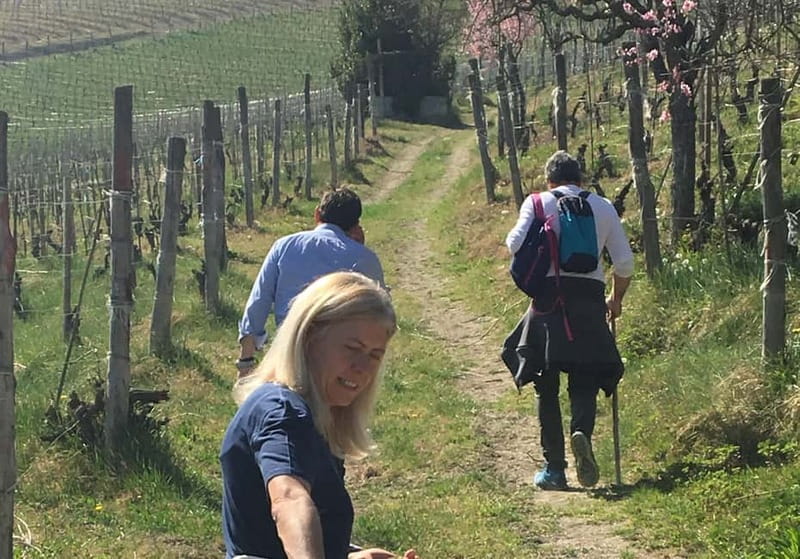
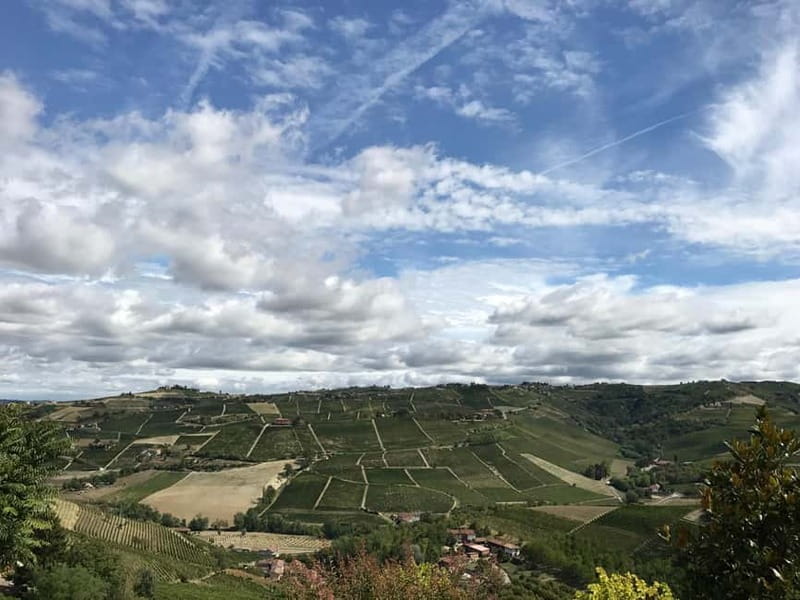
The route continues to the top of the hill, where the estate opens onto views of surrounding vineyards and mountains. This is one of the most appealing details of the experience. Alba is easy to reach for a town visit, but the hilltop setting gives you a different sense of the region.
The view is especially useful because it shows how closely the villages, slopes, and vineyards fit together. Wine here is not an isolated product made behind a door. It is part of the countryside you are standing in.
Weather can change the mood of this stop. On a clear day, you should get the broadest view of the mountains and valleys. On an overcast day, the panorama may be muted, but the visit can still work well. A recent November booking went ahead in cloudy weather, with the vineyard walk remaining an interesting part of the experience.
Bring a layer and check the forecast before leaving Alba. The tour moves outdoors before returning to the cellar, so clothing that works for both a walk and a cool indoor tasting room is the sensible choice.
Inside Cascina Piccaluga’s cellar
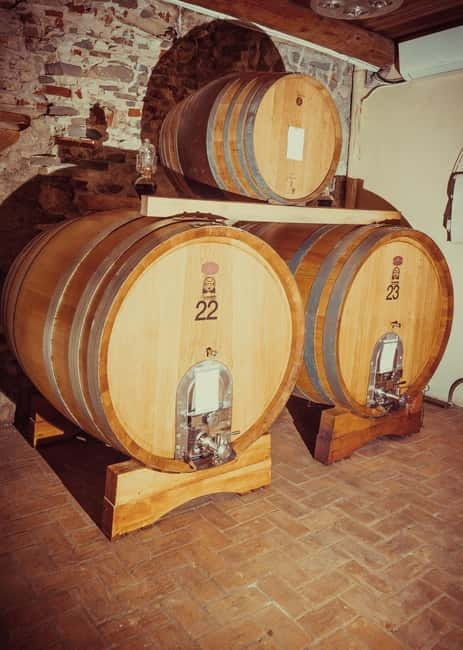
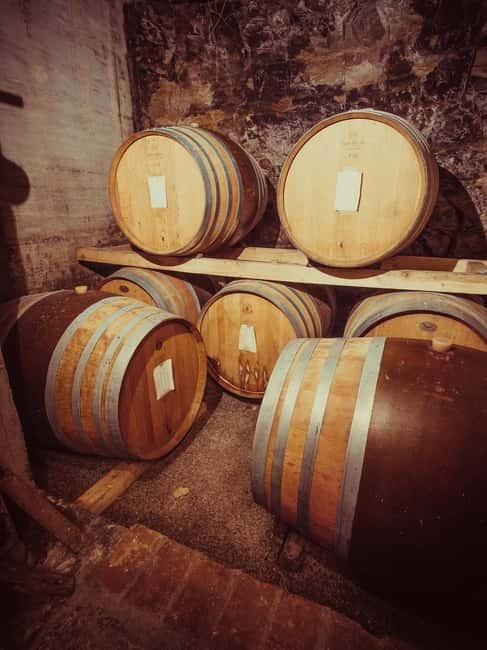
After the vines and viewpoint, you head into the cellar to follow the wine’s next stages. Here, the focus shifts from farming to production, including the period after harvest and the role of wood aging.
This is where the visit becomes especially helpful for anyone who knows wine mainly from restaurant menus. You can ask how storage affects the wine, why different wines spend different amounts of time aging, and what changes between the harvest and the bottle. The explanations cover wine science as well as local tradition, so the visit should suit beginners without boring people who already know a little.
The cellar also connects the producer’s work to the tasting that follows. You are not sampling anonymous bottles from a large collection. You are tasting wines tied to the vines and methods you have just seen.
The experience does not promise a large production facility or a grand historic building. Its appeal is simpler: you meet the people responsible for the wine and see the working spaces behind it. That direct scale is a plus if you want a local encounter rather than a polished attraction.
A few more wine days around Italy worth comparing
- SMALL-GROUP Wine Safaris: Tuscan Wine Tasting Tours from Florence
★ 5.0 · 5,088 reviews - Winner 2025 Florence Sunset Food & Wine Tour by Eating Europe
★ 5.0 · 5,015 reviews - San Gimignano, Siena, Monteriggioni, Chianti Day Trip with Lunch & Wine Tasting
★ 4.5 · 4,432 reviews - From Florence: Small Group Wine Tasting Tour to Tuscany
★ 4.9 · 3,902 reviews
Six wines and a Barbaresco tasting
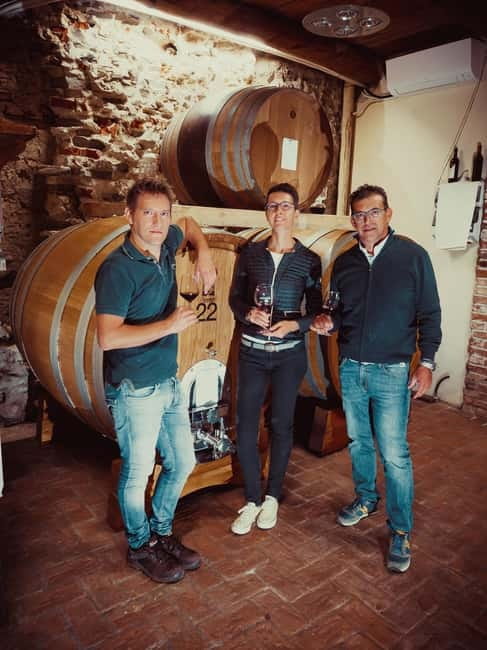
The tasting lasts about one hour and includes six wines. Barbaresco is always included, which is important for anyone coming to Alba specifically to understand one of Piedmont’s best-known wines.
You should expect the tasting to be guided rather than a series of un explained pours. The hosts discuss the wines, their production, and the surrounding wine culture as you taste. The exact order and selection can change, but the central promise is six local wines, with Barbaresco guaranteed.
For a first visit to the area, this gives you a useful range. You can compare the Barbaresco with other wines from the producer and notice differences in style, structure, aroma, and aging. The point is not to memorize tasting vocabulary. It is to leave with a clearer idea of what you like and what to look for when wine shopping in Piedmont.
Food makes the tasting more substantial. Local cured meats and cheeses are served alongside the wines, giving you something to eat while you taste. This is practical as well as enjoyable, since six pours over an hour are better handled with food.
Vegetarian visitors should contact the producer in advance. A vegetarian dish was prepared for one booking instead of the meat, which shows that an adjustment may be possible, but it should not be treated as an automatic part of every reservation.
What makes the food pairing useful
The cured meats and cheeses are not just decoration on a plate. They help show how wine fits into everyday Piedmontese eating. Salt, fat, creaminess, and sharper flavors can change how a wine tastes, and the pairing gives you a simple way to notice those changes.
I like this part because it keeps the tasting connected to local life. You are not only studying wine in isolation. You are seeing the sort of table setting that makes sense in the region.
The food also means you do not need to arrange a separate snack during the two-hour visit. It is not a full lunch, so plan another meal if you are hungry, but it should be enough to accompany the tasting.
If you have dietary restrictions, ask before booking. The information confirms a vegetarian substitution was made, but it does not list a full range of dietary accommodations or ingredients.
The practical question: how do you reach the estate?
The meeting point is Abellonio Roberto Cascina Piccaluga, a yellow house marked with signs for ABELLONIO ROBERTO and CASCINA PICCALUGA. Directions say you will find the signs about one kilometer before the end of the approach. Keep an eye out rather than relying only on a general Alba map.
The estate is described as about four minutes from the center of Alba, but transportation is not included. That distinction matters. You are close to town, yet this is not necessarily a convenient walk from the train station, particularly with luggage or poor weather.
One booking from Alba involved an expensive taxi because the weather made other options less appealing. I would plan your transport before the day of the tour and allow time to locate the yellow house. If you arrive by train, include the taxi cost when judging the total price.
The return is to the same estate. Since the tour lasts two hours, you can fit it into a half-day in Alba, but do not schedule a tight appointment immediately afterward. The outdoor walk, directions, and tasting are easier to enjoy with a little breathing room.
Who will enjoy this two-hour experience?
I would recommend this visit to anyone who wants more than a tasting-room stop. It suits people who enjoy meeting a producer, seeing vines up close, and learning why a wine tastes the way it does.
It is also a good fit for first-time visitors to Piedmont. You do not need advanced wine knowledge, and the mix of stories, farming, cellar work, and tasting gives you a useful introduction in a short period.
Couples and small groups who want a scenic break from Alba’s center should find the format appealing. Food lovers will appreciate the cheese and cured meats, while anyone focused on Barbaresco gets a guaranteed sample.
This is not the right choice for someone who cannot manage an uphill walk or uneven ground. The activity is specifically unsuitable for wheelchair users and people with mobility impairments. It also may disappoint anyone seeking a long winery tour, a full meal, or a detailed technical course. The scheduled visit is two hours, with about 40 minutes for the guided tour and one hour for tasting.
The language options are Italian and English. If you want the most detailed discussion, booking in the language you understand best will make a real difference, especially during the cellar explanation and wine tasting.
Is $29 a fair price?
At $29 per person, the value is strong. You receive a guided vineyard and cellar tour, six wines, Barbaresco, cured meats and cheeses, and two hours with the producer. Many tastings charge a similar amount for fewer wines and no outdoor visit.
The price is less attractive if you must pay a high taxi fare on top of it. That is not a flaw in the wine experience itself, but it affects your real budget. If you are already in Alba with easy transport arranged, the cost is easier to justify.
The food is a pairing rather than a full meal, and personal purchases are not included. You should not book this expecting bottles, souvenirs, or transportation to be part of the fee.
The strongest value comes from the combination of access and explanation. You are not only paying for wine in a glass. You are paying for time among the vines, a cellar visit, local food, and direct conversation about the work behind the wines.
Booking advice for weather, shoes, and timing
Wear comfortable walking shoes, not fashion footwear with a slick sole. The tour includes vine rows and an uphill section, and the outdoor ground may not be perfectly even.
Check the forecast and dress in layers. A clear day will show the mountain and vineyard views at their best, while a cold or wet day calls for a jacket that works outdoors. Poor weather does not cancel the cellar and tasting portion of the experience, but it can reduce the pleasure of the hilltop stop.
The booking terms allow free cancellation up to 24 hours before the start time, and you can reserve while paying later. Check the available start times for your date, since the experience lasts two hours and timing affects transport from Alba.
Should you book this Alba wine tour?
Book it if you want a producer-led introduction to Langhe wine with a real vineyard walk, a cellar visit, six wines, and local food. The guaranteed Barbaresco and the hilltop views make it especially appealing for a first visit to Alba.
Think twice if you need step-free access, dislike walking uphill, or want a full meal and a long formal winery tour. Also price in a taxi if you are coming from the train station or visiting during bad weather.
For most able-bodied wine lovers staying in Alba, $29 is a sensible spend. You get a personal look at how wine is grown, made, stored, and served, with enough food and scenery to make the two hours feel like part of the Piedmont experience rather than a quick tasting stop.
FAQ
How long does the Alba wine experience last?
The experience lasts two hours. About 40 minutes are set aside for the guided tour, followed by about one hour of wine tasting.
How many wines are included?
The tasting includes six local wines. Barbaresco is always included.
Is food included with the wine tasting?
Yes. The tasting is paired with local cured meats and cheeses. A vegetarian dish was prepared for one booking, so vegetarian visitors should ask about arrangements ahead of time.
Where is the meeting point?
The meeting point is Abellonio Roberto Cascina Piccaluga, a yellow house on the estate. Signs read ABELLONIO ROBERTO and CASCINA PICCALUGA, and the directions indicate that they appear about one kilometer before the end of the approach.
Is transportation from Alba included?
No. You must arrange transportation to and from the cellar. The estate is described as about four minutes from central Alba, but a taxi may be expensive, especially in poor weather.
Is the tour suitable for wheelchair users?
No. The experience includes walking between vine rows and going uphill, and it is not suitable for wheelchair users or people with mobility impairments.
Just added around Italy
- Wine Degustation Ebrezze★ 4.5 · 86 reviews
- Guided winery tour with tasting in Bolzano at the SKYWINE PAVILLON★ 5.0 · 61 reviews
- Bologna: Tagliatelle & Ragù Home Cooking Class with wine★ 4.5 · 55 reviews
- Bologna Food & Wine tour with a local Chef★ 3.0 · 30 reviews
- The downtown wine experience★ 5.0 · 35 reviews
- Parmigiano Wine and Balsamic Vinegar Experience from Bologna★ 5.0 · 30 reviews
- Eating Bologna Food and Wine Tour★ 5.0 · 96 reviews
- Private Bologna Food & Market Tour with 6 Tastings & Wine★ 5.0 · 102 reviews
Wine Tours in Italy, compared.
Tuscany Day Trip from Florence: Siena, San Gimignano, Pisa and Lunch at a Winery
Read our review →
Small-Group Wine Tasting Experience in the Tuscan Countryside
Read our review →
Pasta & Tiramisu Cooking Class with Unlimited Wine
Read our review →
Pisa, Siena and San Gimignano Day Trip with Lunch & Wine Pairing
Read our review →